
Brazil's Senate Votes Today on Ending the 6x1 Work Week
Brazil's Senate holds the final debate on PEC 221/2019 and votes in first round on ending the 6x1 work schedule, a 44-to-40-hour cut that allies of President Lula say has the votes.
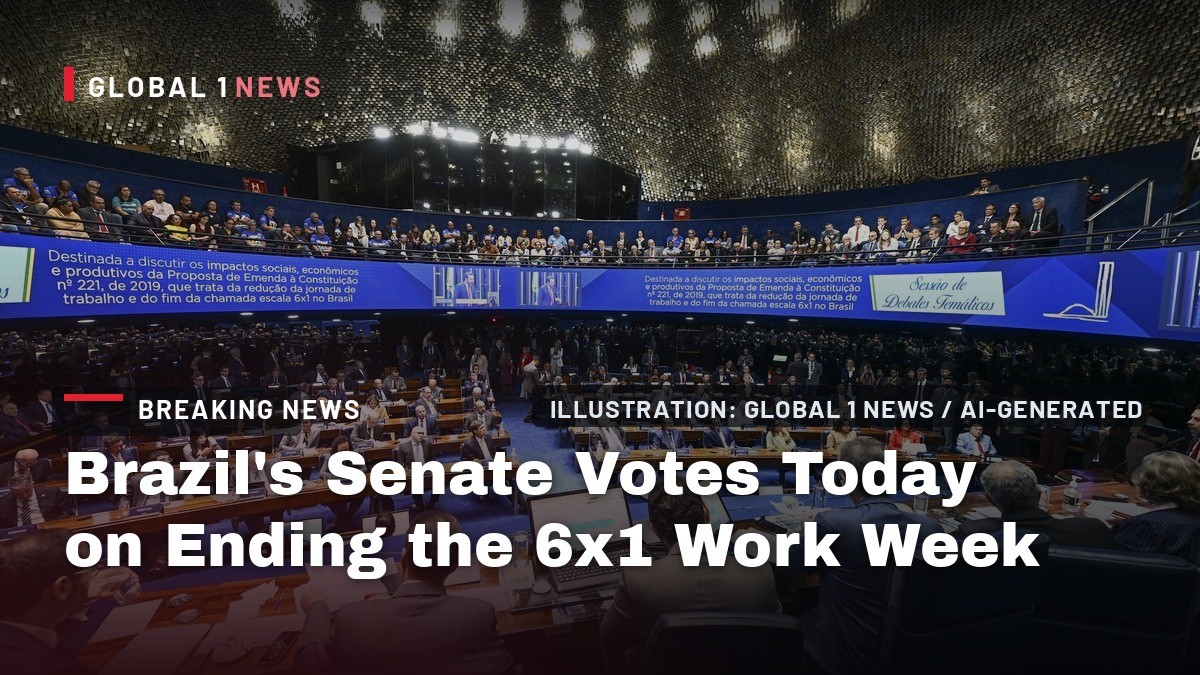
Brazil's Federal Senate holds the fifth and final discussion session on the constitutional amendment to end the 6x1 work schedule on the afternoon of Wednesday 14 October, then votes the text in first round. The proposal would cut the maximum working week from 44 to 40 hours and guarantee two paid weekly rest days, with no reduction in pay. A constitutional amendment needs 49 votes in each of two rounds, and both government and opposition senators say the numbers are there.
Brazil's Senate Votes Today on Ending the 6x1 Work Week
Brasília, Brazil — The Senate plenary is scheduled to open at 14:00 Brasília time in semi-presential format for session 591267, the fifth and final discussion of PEC 221/2019, and then to vote the text in first round. The proposal, authored by Deputy Reginaldo Lopes, amends Article 7 of the Federal Constitution to reduce the maximum weekly working hours and provide for two paid weekly rest days, without any salary reduction. The rapporteur, Senator Omar Aziz, has recommended approval and the rejection of all 36 amendments.
A Work Week Written Into the 1988 Constitution
The 44-hour week now in force was set by the 1988 Constitution, when the charter cut the working week from 48 hours. A 2002 study by economists at PUC-Rio and the University of São Paulo found no negative effects on employment levels from that change, concluding that the 1988 changes "não aumentaram a probabilidade de o trabalhador afetado perder o emprego". The current proposal was presented in December 2019 and received a rapporteur in the Chamber's Constitution and Justice Committee only in March 2023. It left that committee in April 2026 with the approval of the report of Deputy Paulo Azi. The Chamber of Deputies approved the text in late May 2026 under rapporteur Deputy Leo Prates, with 472 votes to 22 in the first round and 461 to 19 in the second, against a required 308.
The Fifth Session, Then the First Round
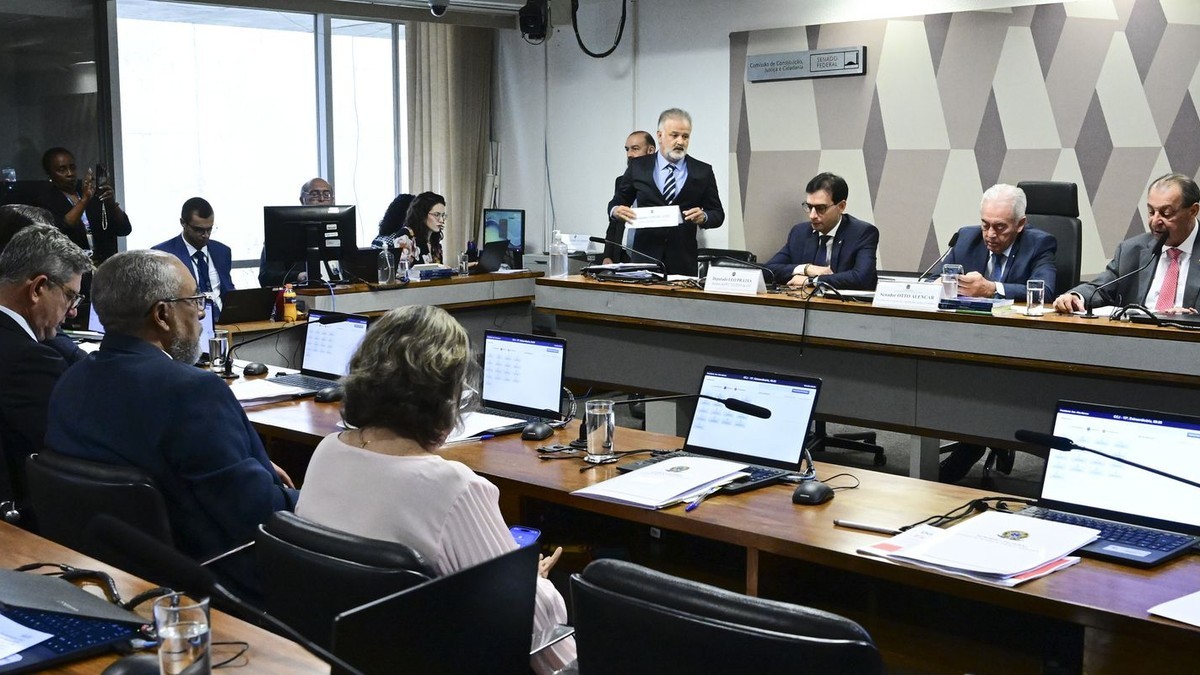
The Senate's Constitution and Justice Committee approved the proposal on Wednesday 2 September 2026, in a symbolic vote after almost seven hours of debate. Of 27 members, four voted against: opposition leader Rogério Marinho, Hamilton Mourão, Tereza Cristina and Jaime Bagattoli. The first of the five discussion sessions was held on 6 October 2026, two days after the first round of the general election, and most senators of the PL stayed away. The Senate president, Davi Alcolumbre, scheduled the first-round vote on 9 October, saying: "Pautei para quarta-feira (14) a votação, em primeiro turno, da PEC 221, de 2019, que trata do fim da escala 6x1". He added: "Cumpro, assim, o compromisso de colocar a proposta em votação, com responsabilidade, diálogo e respeito ao rito regimental."
The Motion That Could Finish It in One Afternoon
The rules require three more discussion sessions and a minimum gap of five business days between the two rounds. Kept literally, the final vote would fall after the runoff. The government leader in the Senate, Senator Teresa Leitão, has filed a request for a special calendar to break that interstice after the first-round vote. Alcolumbre said on Tuesday 13 October that the necessary signatures are already in place, and the request is to be deliberated in plenary on the afternoon of Wednesday 14 October. If it passes, the second-round vote follows immediately. Alcolumbre said on 8 October: "Se o requerimento aparecer, eu vou colocar para deliberação, e o Plenário é soberano, a vontade da maioria vai prevalecer." The idea circulating in the Senate is to promulgate the amendment by Thursday 22 October, days before Brazilians vote again.
What Actually Changes, and When
Within 60 days of promulgation, the maximum week falls from 44 to 42 hours and the two paid weekly rest days take effect, one of them preferably on Sundays. One year after that first step, hours fall from 42 to 40 per week. The total transition runs up to 14 months. The change does not proportionally reduce working hours already set at 40 hours a week or less. Salary protection applies to sectoral wage floors, and no reduction may be nominal, proportional or of any other kind. Workers with a university degree earning more than 2.5 times the INSS ceiling, R$ 21,188.87 a month, are not covered by the new hours-and-time-clock rules; for them a cut in hours depends on the employer or a collective agreement. That exception does not apply to public servants, and outsourced workers on public contracts move to the new week through contract addenda or after a maximum adaptation period of 12 months.
Fourteen Million People on the Six-Day Week
Ministry of Labour and Employment data show that of 50.3 million formal employment contracts in Brazil, the largest share, 29.7 million, already works a 5x2 schedule, while 14.8 million Brazilians work the 6x1. Seventy-four percent of formal workers are on a 44-hour week. The sectors most dependent on the 6x1 are air transport at 53.2 percent, accommodation services at 52 percent, food services at 47.1 percent and commerce at 42.2 percent. By company size, 35 percent of micro and small firms operate the 6x1, close to the agricultural sector's 35.4 percent, and 33.7 percent of large companies operate it. The movement behind the campaign is "Vida Além do Trabalho", founded by Rick Azevedo, then a pharmacy counter clerk, who said: "As pessoas querem trabalhar, mas também querem viver de forma digna, de forma justa, porque o trabalhador é gente, tem família para cuidar."

Why the Opposition Stopped Fighting the Calendar
The opposition's original plan was to obstruct the vote and push it past the runoff; failing that, to pass an amendment altering the text so it would have to return to the Chamber, blocking promulgation before 25 October. CNN Brasil reported that this calculus changed: people around the Bolsonaro campaign concluded that voting against could be more damaging electorally, that there is "um temor muito grande" of it being "muito difícil comunicar" the disagreement to voters, and that social media cuts could put the campaign in the position of being against the worker. PL senators are reported to favour releasing the party's bench rather than imposing a line. Senator Flávio Bolsonaro announced on the morning of Tuesday 13 October that he will vote in favour "de acordo com a vontade da maioria do povo trabalhador brasileiro", while repeating that he disagrees with the text and adding that "quem vai pagar essa conta vai ser o governo". The opposition had for months championed an alternative by Senator Rogério Marinho providing hourly pay instead of a shorter week, and allowing pay cuts when hours fall.
The Rapporteur Who Refused All Thirty-Six Amendments
Senator Omar Aziz rejected all 36 amendments, including ones that would have kept 6x1 schedules or weeks longer than 40 hours, one that would have extended the transition from 14 months to up to four years, one deferring implementation to a later complementary law, and one for fiscal compensation to companies. He said: "todas as emendas que foram apresentadas, as 36 emendas, nenhuma pede mais benefício para o trabalhador". On the economic warnings, he said: "Quando se criou o 13º salário, diziam que o Brasil ia quebrar, ia ter problema. Depois que se reduziu de 48 horas para 44 horas, também [apontaram] os mesmos problemas." On individual bargaining he said: "Acordo individual é assédio ao trabalhador, sim! Acordo coletivo, não!" He noted that 60 PL federal deputies voted for the proposal in the Chamber.
Two Sets of Numbers, One Argument
The National Confederation of Industry projects a loss of R$ 76 billion in Brazilian GDP, or 0.7 percent, from cutting the week from 44 to 40 hours, with industry GDP down 1.2 percent and average price rises of 6.2 percent. The industry body also says a productivity gain to offset the shorter hours is unlikely, and its president, Ricardo Alban, said: "Nossa indústria vai perder participação no mercado doméstico e internacional." The National Confederation of Commerce, Goods, Services and Tourism says the shorter week would raise payroll costs by 21 percent, with pass-through to consumer prices reaching 13 percent. The Institute for Applied Economic Research finds the extra labour cost would not exceed 10 percent in the worst-affected sectors, averaging 7.8 percent, and that measured against total company costs the impact runs from 1 percent in commerce and industry to 6.6 percent in private security. Its researcher Felipe Pateo notes that real minimum-wage increases of 12 percent in 2001, 7.6 percent in 2012 and 5.6 percent in 2024 caused no negative employment effects.
What Still Has to Survive After Today
Unlike ordinary bills, a constitutional amendment is promulgated by Congress itself, with no presidential sanction or veto. If the merits of the text are changed in the Senate, it must go back to the Chamber of Deputies, which would prevent promulgation before 25 October. The special calendar request still has to be deliberated in plenary before any second-round vote can be scheduled. The internal count by allies of President Lula put 57 senators in favour, according to Deputy Reginaldo Lopes, the author of the proposal, who said on 8 October: "Se colocar para votar, passa." In Tuesday 13 October's semi-presential session, 71 of the 81 senators registered presence. The Unicamp economist Marilane Teixeira argues the fight is not purely technical but a distributive conflict over where productivity gains go.
The Runoff Sitting Behind the Vote
The first round of Brazil's general election was 4 October 2026. The presidential runoff on Sunday 25 October 2026 is between President Luiz Inácio Lula da Silva, seeking a fourth term, and Senator Flávio Bolsonaro, who led the first round. Lula's campaign treats the end of the 6x1 as a priority and he has used it on the trail. On the opposition shift, Lula said on 13 October: "Me parece que, depois da pressão da sociedade, depois de todas as manifestações de rua desse Brasil, o partido do PL resolveu votar o fim da escala 6x1." Opposition leader Rogério Marinho called the timing "oportunista" and demanded the full rite: "A estratégia é que o regimento seja cumprido, que haja discussão, que haja o interstício, que haja as sessões subsequentes."
By Jessica Ali, Staff Writer
This article was produced with AI-assisted research and editorial support. Sources: Agência Brasil, Agência Senado, G1, O Globo, CNN Brasil, Forbes Brasil, Estadão, Gazeta do Povo and CUT.
What's Your Reaction?
 Like
0
Like
0
 Dislike
0
Dislike
0
 Love
0
Love
0
 Funny
0
Funny
0
 Wow
0
Wow
0
 Sad
0
Sad
0
 Angry
0
Angry
0

Editor-in-Chief at Global1.News. Atlanta-based journalist who cuts through the BS and tells it like it is. Lead anchor, host, and the voice you hear when the spin stops and the truth starts.















Comments (0)