
Not building third runway would be 'huge missed opportunity', warns Heathrow boss
Heathrow’s chief executive, Thomas Woldbye, warned on BBC Radio 4’s Today programme that refusing to build a third runway would amount to a “huge missed opportunity” for the United Kingdom.
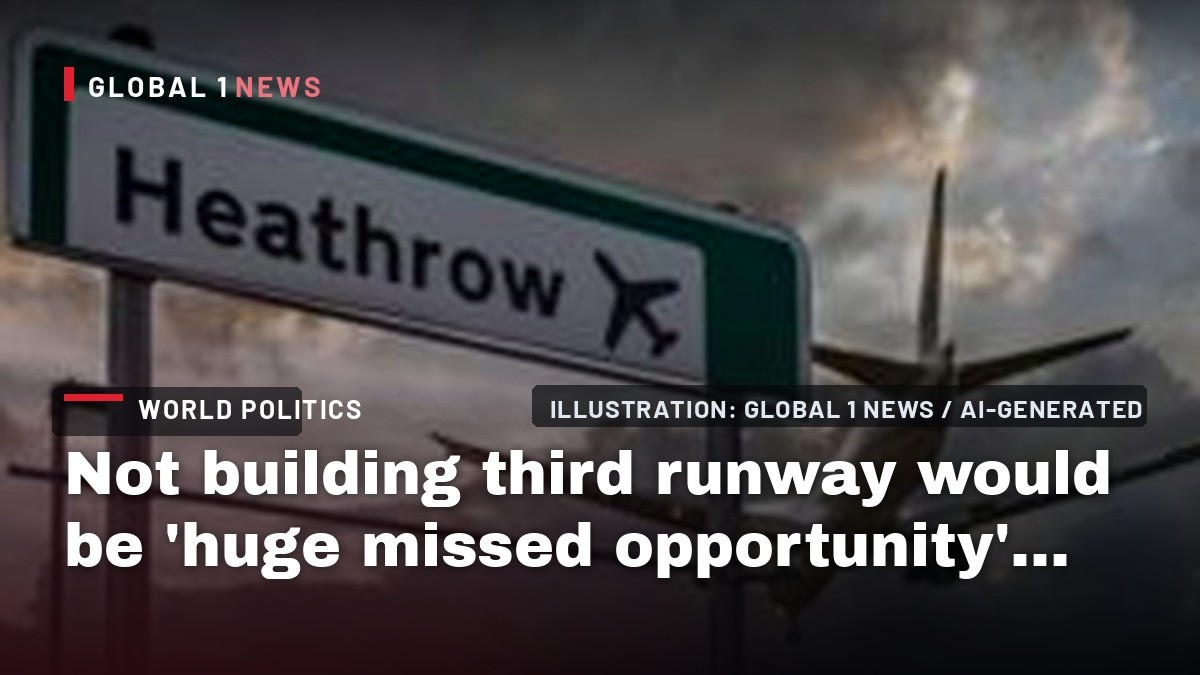
Heathrow’s chief executive, Thomas Woldbye, warned on BBC Radio 4’s Today programme that refusing to build a third runway would amount to a “huge missed opportunity” for the United Kingdom. His comments came after Prime Minister Andy Burnham declined to state whether his government backs the expansion, leaving the future of the project in limbo as the Department for Transport (DfT) continues to review the consultation responses.
Political dead‑lock and the prime minister’s stance
Burnham, who previously opposed the scheme as Mayor of Greater Manchester, told the BBC that the decision “is for London and Londoners”. He argued that the voices of local residents should be heard first, signalling a reluctance to intervene directly in the consultation. Downing Street declined to comment on Woldbye’s remarks, leaving the prime minister’s position ambiguous at a time when the DfT is expected to decide on the next steps.
The lack of a clear governmental signal has prolonged uncertainty for Heathrow, which, according to its chief executive, is “full” under the current two‑runway configuration. Woldbye warned that without a decisive verdict, the airport’s contribution to the economy could stall, and private investors would look elsewhere for returns.
Economic arguments from Heathrow and the government
Heathrow’s owners – a consortium led by French private‑equity firm Ardian, alongside the Qatar Investment Authority, Saudi Arabia’s Public Investment Fund and China Investment Corporation – argue that the third runway would unlock significant economic benefits. The DfT’s spokesperson cited a potential £40 billion boost to the national economy, while the airport itself points to the capacity to increase annual flights from the current cap of 480,000 to 720,000, roughly 2,000 flights a day.
Woldbye stressed that the investment required for the runway – estimated at £33 billion – is private money, not public funds. He warned that if the consortium cannot invest in Heathrow, the capital will be deployed “somewhere else in the world”, depriving the UK of both the direct financial injection and the downstream jobs and supply‑chain activity that would accompany the project.
Infrastructure challenges and timeline uncertainties
The proposed third runway would necessitate major civil‑engineering works, including the demolition of hundreds of homes, the diversion of rivers and a tunnel for the M25 motorway between junctions 14 and 15. Although the runway was originally slated to open by 2035, Heathrow now anticipates a possible four‑year delay, pushing the target to 2039 due to planning and regulatory hurdles.
Woldbye indicated that Heathrow is preparing a planning application to be submitted within the next couple of years, but any decision will hinge on the forthcoming Airports National Policy Statement – the policy framework last updated in 2018 – which the DfT is still finalising.
Environmental and community concerns
Opposition to the third runway has been persistent, driven by local residents, politicians and climate campaigners. Critics point to the environmental impact of expanding capacity, the noise increase for surrounding communities and the broader carbon implications of additional flights.
Woldbye countered these concerns by noting a “stark” reduction in noise levels over the past four decades at Heathrow, and he suggested the trend would continue despite higher traffic. He framed the main issue as “years of uncertainty”, arguing that a clear decision would allow both the airport and nearby residents to move forward.
Labour’s earlier commitment and the political backdrop
Last year, then‑Chancellor Rachel Reeves announced government backing for the expansion, describing a third runway as “badly needed” and warning that the government could not “duck the decision any longer”. That statement positioned the project as a priority for the previous administration, but the change in leadership to Prime Minister Burnham has introduced a degree of ambivalence.
The shift underscores the political volatility surrounding Heathrow’s expansion. While the unions have expressed support for the project, Burnham’s reluctance to endorse it outright leaves the decision vulnerable to further debate within the cabinet and among regional stakeholders.
Potential wider economic impact
Heathrow serves over 80 million travellers annually across four passenger terminals and two runways. The airport’s management argues that the third runway would not only boost Heathrow’s own revenue but also generate a ripple effect across the UK’s supply chain, from the north to the south. Woldbye highlighted that the airport’s contribution to the economy is “dramatic” and warned that without expansion, the sector could “stop contributing” or at least see its growth plateau.
Heathrow’s claim that the benefits would be felt nationwide aligns with the government’s broader narrative that airport expansion, where it meets environmental tests, can “contribute to growth and opportunity”. The promised £40 billion economic uplift, if realised, would be distributed through construction jobs, increased tourism, and ancillary services linked to higher passenger volumes.
The road ahead: uncertainty and the need for clarity
With the DfT still reviewing consultation feedback and finalising the Airports National Policy Statement, the timetable for a definitive decision remains unclear. Woldbye urged the prime minister to “come along” with the project, emphasizing that the lack of certainty is the greatest obstacle for both the airport and the communities it serves.
As the debate enters its fourth decade, the core question remains whether the UK will prioritise private investment and potential economic gain over environmental concerns and local opposition. The outcome will shape not only Heathrow’s capacity but also the nation’s approach to balancing growth with sustainability in the post‑pandemic aviation era.
This article was produced with AI-assisted research and editorial support. Reporting is based on the source material cited below. Sources: BBC News UK; bbc.co.uk; Global1.News (14 October 2026).
By Erica Thornton, Staff Writer
What's Your Reaction?
 Like
0
Like
0
 Dislike
0
Dislike
0
 Love
0
Love
0
 Funny
0
Funny
0
 Wow
0
Wow
0
 Sad
0
Sad
0
 Angry
0
Angry
0

US Politics and Policy Correspondent at Global1.News. Based in Washington DC, covering American politics, policy, elections, and the courts. Knows how the system works and tells you what it actually means.












Comments (0)