
AIIMS Study Reveals How Air Pollution Disrupts Foetal Growth During Pregnancy
A groundbreaking study from the All India Institute of Medical Sciences (AIIMS) in Delhi has, for the first time in India, mapped the precise molecular pathways through which airborne particulate matter disrupts foetal development. The research, published in EMBO Molecular Medicine, demonstrates that PM2.5 and PM10 particles cross the placental barrier, trigger oxidative stress
A groundbreaking study from the All India Institute of Medical Sciences (AIIMS) in Delhi has, for the first time in India, mapped the precise molecular pathways through which airborne particulate matter disrupts foetal development. The research, published in EMBO Molecular Medicine, demonstrates that PM2.5 and PM10 particles cross the placental barrier, trigger oxidative stress and inflammation, and reduce activity of the growth-regulating gene IGFBP3, with direct consequences for the 2.3 to 2.5 crore babies born in India every year.
AIIMS Delhi Uncovers Molecular Pathways Linking Air Pollution to Adverse Pregnancy Outcomes
New Delhi, Delhi – June 5, 2026 — Researchers at the All India Institute of Medical Sciences (AIIMS) in Delhi have identified, for the first time in Indian medical research, the specific molecular routes by which particulate matter in polluted air alters biological processes critical to healthy foetal growth. The study, published in EMBO Molecular Medicine, shows that pollutants reduce the placenta's ability to deliver nutrients, impair blood vessel development, and alter the activity of genes that regulate growth.
How Particulate Matter Reaches the Unborn Child
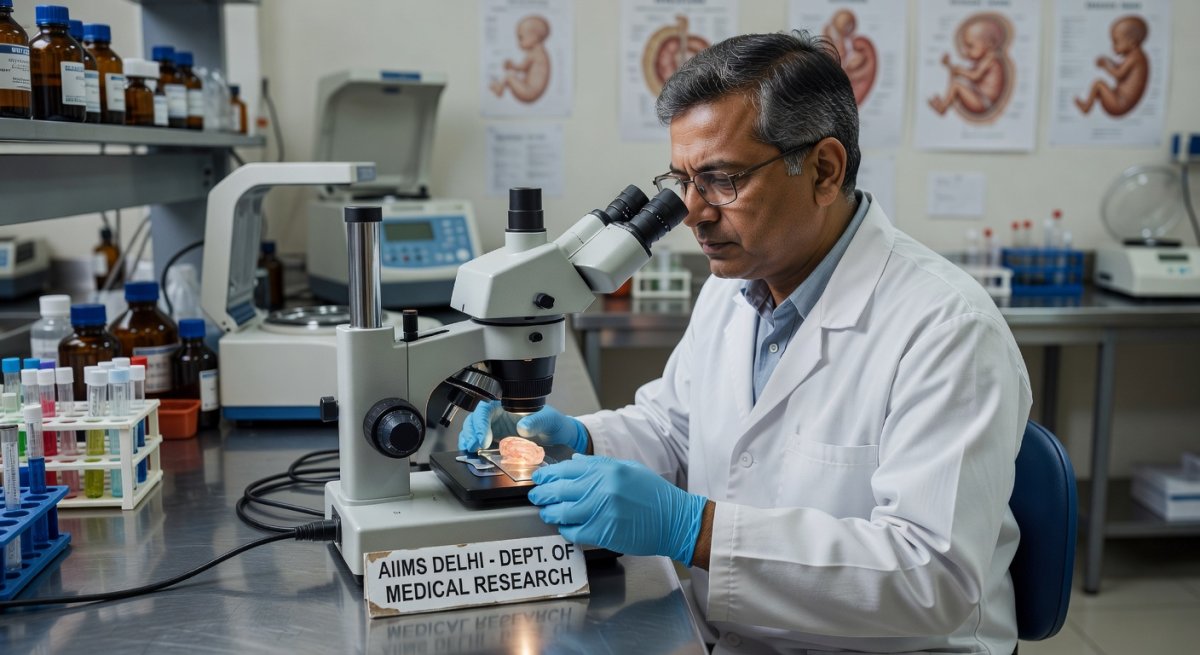
The study establishes that very small polluting particles — PM2.5 and PM10 — can cross the placental barrier, the organ that supplies oxygen and nutrients from mother to foetus. Once there, these particles trigger inflammation and cellular stress, interfering with the placenta's normal functioning. Proteomic and transcriptomic analyses conducted at AIIMS revealed an inflammatory signature inside placental tissue, demonstrating that pollution-induced damage operates at the molecular level, not merely as a generalised health risk.
Gene IGFBP3 Identified as Key Disruption Point
One particularly important finding was the identification of a growth-related gene called IGFBP3, whose activity was significantly reduced by pollution-induced inflammation. Dr Subhradip Karmakar, professor of biochemistry at AIIMS and lead author of the study, told India Today that "this may increase the risk of pregnancy complications such as premature birth, low birth weight, and conditions like pre-eclampsia or dangerously high blood pressure during pregnancy." The suppression of IGFBP3 represents a direct mechanistic link between air quality and foetal development outcomes that had not previously been demonstrated at this level of detail in Indian populations.
Multi-Layer Evidence: Laboratory, Animal and Population Data
The AIIMS researchers built their case across three parallel lines of evidence. In laboratory cell-line models, urban particulate matter increased pro-inflammatory cytokines and oxidative stress pathways, impairing trophoblast invasion, angiogenesis, and nutrient transport. Rodent studies revealed smaller litter sizes, abnormal placental morphology, and foetal growth arrest after controlled exposure to Delhi-level PM2.5 concentrations — with postnatal neurodevelopmental alterations observed in offspring. Human population data from high-exposure regions of northern India showed elevated rates of babies born below 2.5 kilograms, consistent with the national low-birth-weight prevalence of 18 percent.
India's Pollution Burden in Numbers
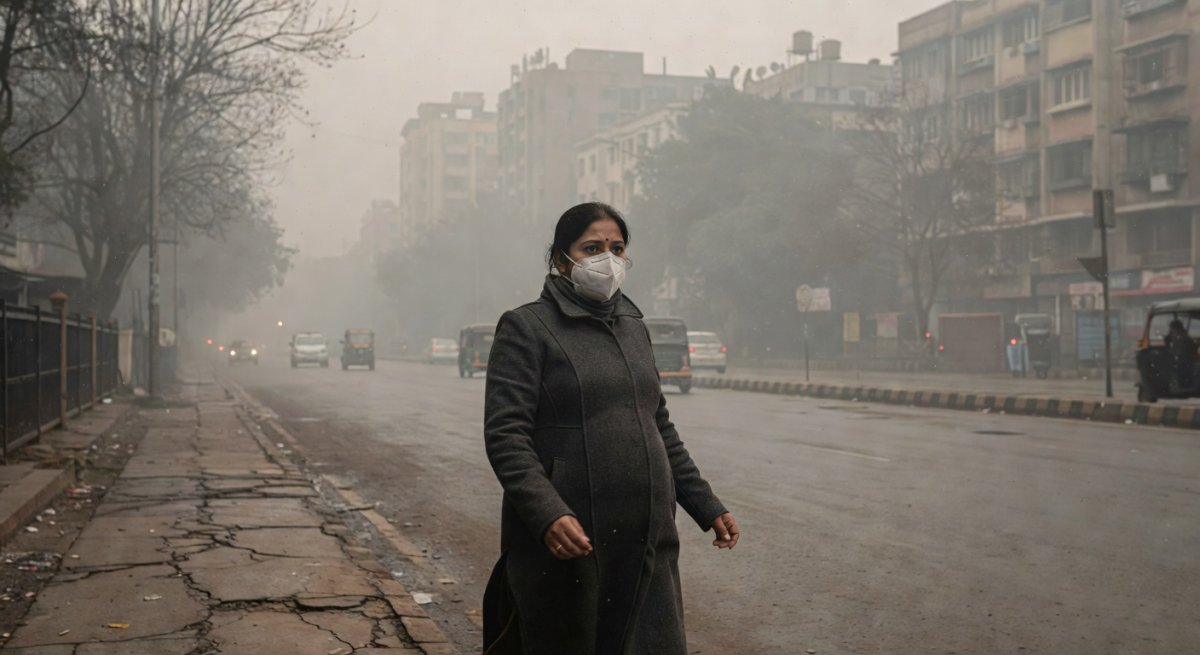
A report by the Centre for Research on Energy and Clean Air Analysis published in late 2025 revealed that people in 60 percent of India's districts are exposed to polluted air throughout the year, not just in winter months. During winter, large parts of northern India — including Delhi and its adjoining areas — record air quality index readings of 500 or above, driven by dangerously high levels of PM2.5 and PM10. Long-term exposure to high PM2.5 concentrations has already been linked to rising cases of respiratory illnesses, cardiovascular disease, cancers, and reduced life expectancy across Indian cities. Every year, nearly 2.3 to 2.5 crore babies are born in India, and low birth weight — defined as less than 2.5 kilograms at birth — affects 18 percent of newborns, representing a major public health challenge.
What This Means for India's Maternal Health Policy
The AIIMS findings carry direct implications for India's healthcare framework. Low birth weight remains one of the strongest predictors of neonatal mortality and long-term developmental complications, placing significant financial burden on state health budgets and families alike. The study supplies mechanistic evidence that can inform stricter enforcement of emission norms under the National Clean Air Programme (NCAP) and expanded clean-air interventions for pregnant women during winter inversion episodes. With 60 percent of districts already exposed to year-round pollution, integrating air quality metrics into standard antenatal care protocols at primary health centres in northern states could enable early identification of high-risk pregnancies.
Expert Perspectives and the Path Forward
Dr Karmakar and his team have emphasised that reducing exposure to polluted air — through cleaner environments, better air quality policies, and protective measures during pregnancy — could yield meaningful benefits for both maternal and child health outcomes. The Indian Council of Medical Research (ICMR) could expand surveillance to include placental biomarkers in high-risk pregnancies, while urban planning decisions in the Delhi-NCR region and surrounding industrial clusters now carry direct consequences for reproductive outcomes. The study also highlights that the gut microbiome dysbiosis observed in exposed animal models suggests broader metabolic disturbances that warrant further investigation in human populations.
The Bottom Line
The AIIMS study transforms our understanding of air pollution from a generalised respiratory hazard to a specific, molecular-level threat to foetal development. For Indian policymakers, healthcare providers, and the 2.3 crore families expecting a child each year, the message is unequivocal: the air a pregnant woman breathes directly shapes the biological environment in which her baby grows. Addressing the placental-level damage documented by AIIMS researchers represents both a scientific necessity and a public health imperative that cuts across environmental, health, and economic policy domains.
— By Dr. Raj Patel, Staff Writer
This article was produced with AI-assisted research and editorial support. Reporting is based on sources cited in the article.
What's Your Reaction?
 Like
0
Like
0
 Dislike
0
Dislike
0
 Love
0
Love
0
 Funny
0
Funny
0
 Wow
0
Wow
0
 Sad
0
Sad
0
 Angry
0
Angry
0

Editor-in-Chief at Global1.News. Atlanta-based journalist who cuts through the BS and tells it like it is. Lead anchor, host, and the voice you hear when the spin stops and the truth starts.















Comments (0)