
Will War Overshadow the World Cup? Iran Granted Visas but Banned from US Overnight Stays
Introduction In a recent BBC News report examining whether war will overshadow the World Cup, the unprecedented situation of a host nation engaged in conflict with a qualified participating team has been laid out in stark terms. The 2026 FIFA World Cup, co-hosted by the United States, Canada, and Mexico, now carries the weight of active geopolitical hostilities between Washingt
Introduction
In a recent BBC News report examining whether war will overshadow the World Cup, the unprecedented situation of a host nation engaged in conflict with a qualified participating team has been laid out in stark terms. The 2026 FIFA World Cup, co-hosted by the United States, Canada, and Mexico, now carries the weight of active geopolitical hostilities between Washington and Tehran. This development marks the most political World Cup in modern history, where sporting competition collides directly with military tensions and diplomatic restrictions that no previous tournament has confronted at this scale.
The key development centers on the United States granting visas to Iran's national team on Friday, according to White House sources cited by Reuters. Despite this approval, the conditions attached represent a departure from any prior World Cup arrangement. Iran's players and staff must navigate entry protocols that reflect ongoing hostilities, setting the stage for a tournament defined by exceptional security measures rather than standard hospitality extended to all qualified nations.
This situation forces a reconsideration of what hosting obligations actually mean under international sporting agreements. The US, as co-host alongside Canada and Mexico, accepted standard responsibilities under FIFA's hosting framework. Yet the restrictions placed on Iran suggest those obligations have been subordinated to national security priorities in ways the tournament's governing body did not anticipate when awarding the bid in 2018.
Visa Breakthrough — With Conditions
A White House official confirmed to Reuters that visas have been issued for the Iranian players and essential staff on a case-by-case basis under strict security screening protocols. This exemption process reflects the broader US-Iran conflict while still permitting participation for a team that qualified on merit for the expanded 48-team tournament. The US State Department has coordinated these approvals to balance national security priorities with FIFA obligations, though the process has required extensive vetting not applied to teams from nations without active hostilities against the United States.
The limitations imposed prevent any overnight stays on US soil for the Iranian delegation. Instead, the team must return to Mexico after each match, creating a daily cross-border routine that FIFA has accepted under the current arrangement. This restriction stems directly from the state of war between the two countries and has forced Iranian officials to accept terms that alter standard team logistics in ways never before seen at a World Cup hosted by a participating nation in conflict.
Iran set clear pre-conditions for participation, including multiple-entry visas and formal guarantees from US authorities that players with mandatory military service backgrounds would not face harassment at border crossings. The Iranian Foreign Ministry conveyed these requirements through diplomatic channels, emphasizing that any deviation could jeopardize the team's involvement. These demands highlight the regime's insistence on protected movement even as it navigates participation in an event hosted partly by its adversary.
Tijuana: An Unprecedented Base Camp
Iran's national team will operate from a base camp in Tijuana, Mexico, after Mexican President Claudia Sheinbaum agreed to host the delegation. Matches in Los Angeles at Inglewood and Seattle will require same-day border crossings into the United States, with the team returning to Tijuana each evening. This arrangement allows the players to fulfill their schedule while complying with the no-overnight-stay rule imposed by US authorities amid the ongoing conflict.
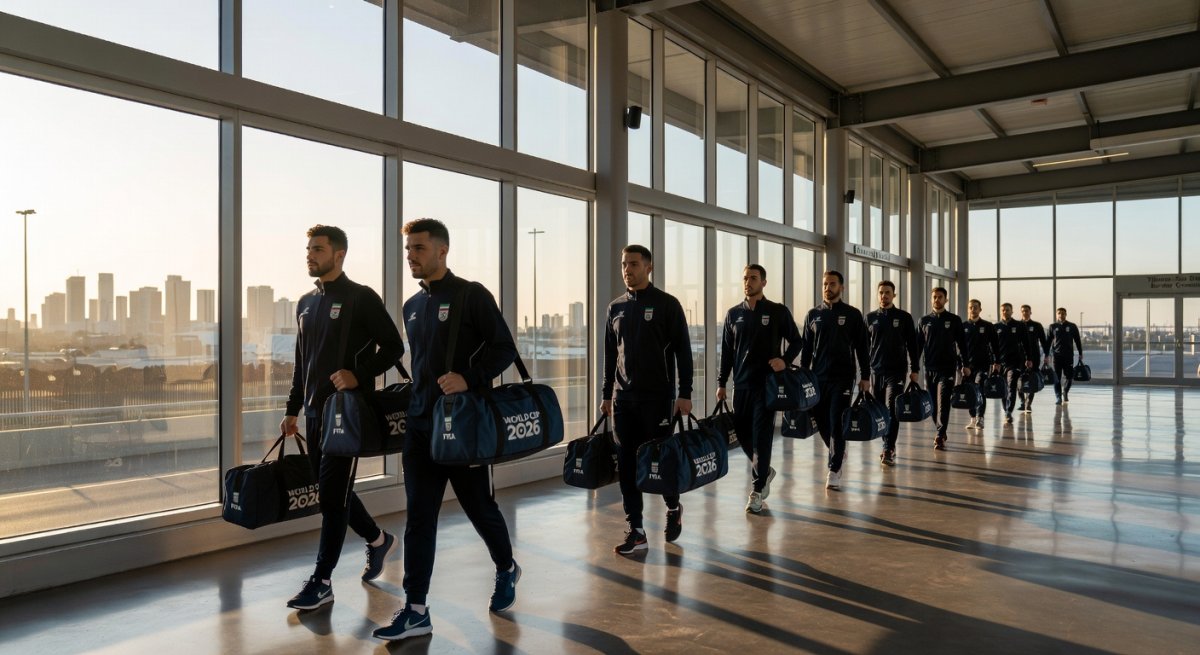
The situation is historic because it marks the first instance of a qualified World Cup team being denied accommodation options by a host nation due to geopolitical tensions. The security and political calculus behind the decision reflects Washington's determination to limit Iranian presence on its territory during active hostilities. FIFA has navigated this by endorsing the Mexican base as a practical solution that preserves Iran's right to compete after earning qualification through standard pathways.
Border logistics raise concerns about potential ICE enforcement actions at crossings and stadiums, alongside the practical challenges of game-day commuting across international lines. FIFA's approval of this setup acknowledges the extraordinary circumstances created by the US-Iran war, yet it also exposes the difficulties of maintaining normal tournament operations when one host nation restricts movement for a qualified participant. Iranian officials have coordinated closely with Mexican authorities to streamline daily entries and exits.
Infantino's Dilemma: Politics vs. Football
FIFA President Gianni Infantino has maintained a firm position that there is no Plan B, C, or D, only Plan A, underscoring that Iran earned its place through qualification and must be accommodated accordingly. This stance aligns with FIFA's broader commitment to include all eligible teams regardless of external conflicts. Infantino has reiterated that the tournament's integrity depends on honoring sporting merit over political disputes between nations.
The contradiction lies in Infantino's documented close relationship with US President Donald Trump, including a prior trophy ceremony tied to a peace prize initiative, set against FIFA's mandate to protect equal treatment for every participating team. While the organization has approved the Tijuana base arrangement, critics argue this reflects a pragmatic accommodation rather than a robust defense of neutrality. The US-Iran war has placed Infantino in a position where his personal diplomatic ties intersect with institutional responsibilities.
Accusations have surfaced that FIFA should have challenged US hosting rights following the escalation with Iran, rather than accepting conditions that single out one qualified team. Some observers claim Infantino has prioritized his relationship with Trump over the principle of footballing integrity. These criticisms highlight tensions within global sports governance when host nations impose restrictions that reshape participation rules for teams from adversarial states.
The Flag Controversy and Iranian Opposition
A separate controversy has emerged over symbols, with Iran's regime pushing FIFA to ban the pre-revolutionary Lion and Sun flag, known as Shir-o-Khorshid, which serves as an emblem for opposition groups and the diaspora. The Islamic Republic has argued that only the current national flag should appear at the tournament, framing the alternative symbol as a direct challenge to state authority. FIFA has faced pressure to adjudicate this matter amid the already complex visa and basing arrangements.
This issue connects to broader patterns of dissent, including circulated lists of Iranian footballers who have faced imprisonment or worse for political reasons. The regime views the World Cup as an opportunity to project legitimacy on the international stage, even while enforcing strict controls over representation. Iranian opposition voices have used the tournament platform to highlight these internal conflicts, creating additional layers of tension beyond the US-Iran hostilities.
The Islamic Republic simultaneously demands participation rights while attempting to police its own symbols and narratives during the event. This approach mirrors longstanding efforts to manage international exposure, yet it clashes with the open nature of a global tournament where diaspora communities and critics also seek visibility. The flag dispute underscores how Iran's internal politics intersect with external geopolitical pressures at the 2026 World Cup.
Geopolitical Implications: Russia and the Global Order
From Moscow's perspective, the US-Iran dynamics at the World Cup illustrate Washington's readiness to weaponize even sporting events for geopolitical leverage. Russia has encountered comparable isolation in international sport following its own conflicts, making the current restrictions on Iran a familiar pattern. Analysts in Moscow note that the visa conditions and Tijuana base reflect a broader strategy of using every available domain, including athletics, to exert pressure during hostilities.
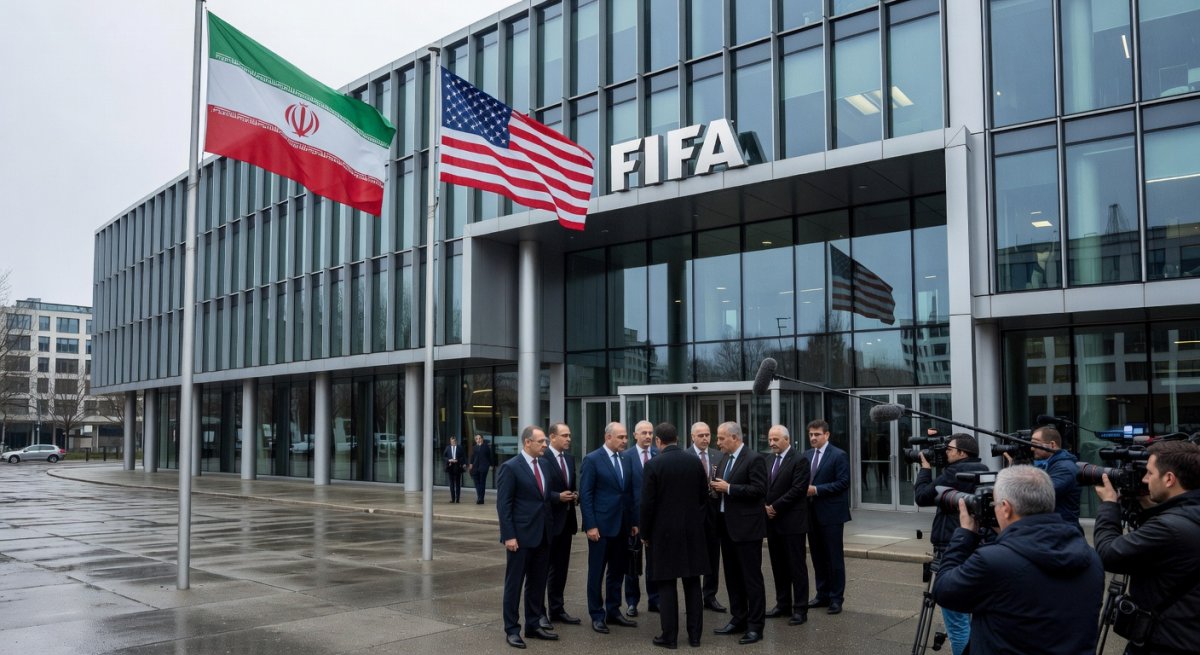
The concept of sporting neutrality faces direct challenges when a host nation can restrict a qualified team's movement based on ongoing conflict. This development undermines the traditional understanding that international tournaments operate outside political disputes. The precedent established here raises questions about whether future hosts will impose similar limitations, eroding the separation between sport and statecraft that FIFA has long sought to maintain.
Analysts suggest this situation could set a dangerous precedent for tournaments hosted by nations in conflict with qualified teams, potentially fragmenting global sporting governance. If such restrictions become normalized, events like the World Cup risk losing their claim to universal participation. Russia's own experience with sanctions in sports provides context for viewing the Iranian case as part of a wider trend where geopolitics increasingly dictates access and logistics.
What Comes Next
Iran's matches in Los Angeles at Inglewood and Seattle will proceed under heavy policing, with anticipated protests from both Iranian opposition groups and pro-regime supporters. Security measures will extend beyond standard tournament protocols due to the active state of war and the cross-border commuting requirement. Mexican and US authorities have coordinated to manage these events, though the underlying tensions remain unresolved as the tournament approaches.
The broader question centers on whether a World Cup can serve as a moment of unity when the host nation is actively at war with one of the participants. Infantino continues to insist that football can proceed independently, yet developments this month indicate otherwise. The conditions attached to Iran's involvement have already altered expectations around hosting responsibilities and team treatment in ways that extend beyond this single tournament.
The United States has issued the visas, but the attached conditions have rewritten the rules of what it means to host a global tournament. Football continues for now, yet the game itself has changed under the weight of geopolitical realities. The arrangement with Tijuana as a base and the limitations on US soil presence will influence how future conflicts intersect with international sporting events, leaving lasting implications for governance and participation standards.
The outcome of this experiment — whether Iran competes without major incidents, and whether the politicization of participation damages or merely reshapes the World Cup — will carry lessons for future hosts. For Moscow and other capitals observing closely, the message is clear: global sport is no longer a domain separate from great-power competition. It has become another theater where that competition plays out, and the consequences for teams caught in the middle are only beginning to be understood.
By Irina Volkov, Staff Writer
This article was produced with AI-assisted research and editorial support. Reporting is based on sources cited in the article.
What's Your Reaction?
 Like
0
Like
0
 Dislike
0
Dislike
0
 Love
0
Love
0
 Funny
0
Funny
0
 Wow
0
Wow
0
 Sad
0
Sad
0
 Angry
0
Angry
0
Russia/Eastern Europe Correspondent at Global1.News. Covering Russian politics, energy, security, and the shifting dynamics of the post-Soviet space. Provides clear-eyed analysis on one of the world's most opaque regions.










Comments (0)