
2026 Korea-Africa Foreign Ministers Meeting Advances Seoul Partnership
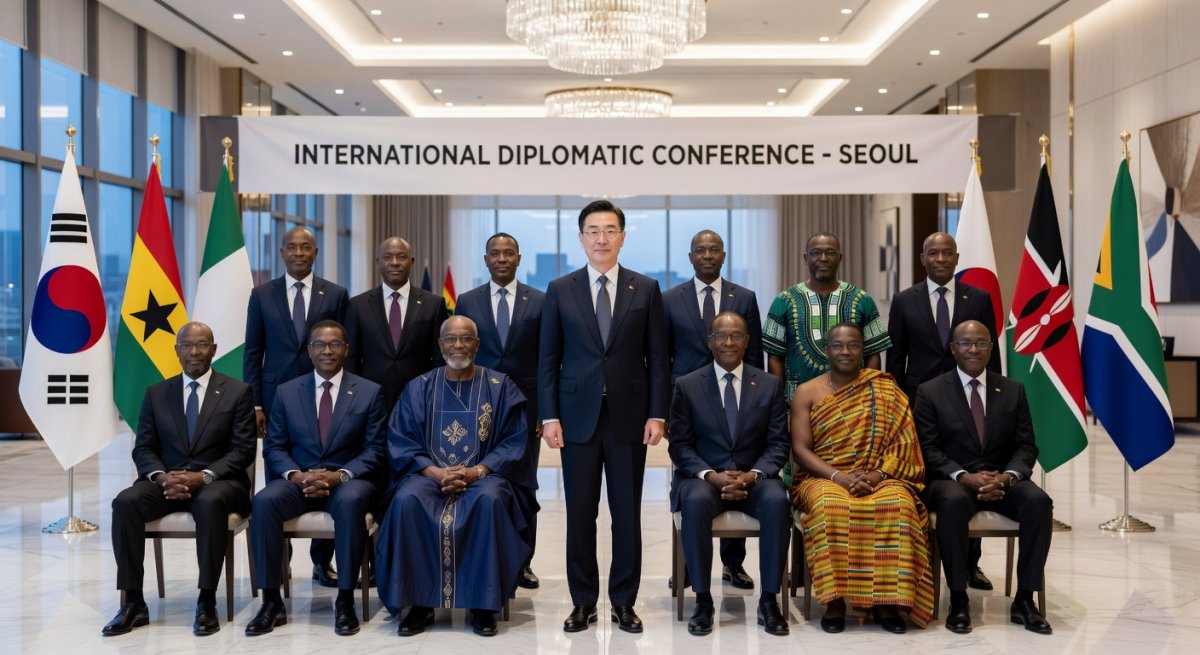
The first-ever Korea-Africa Foreign Ministers' Meeting convened on June 1, 2026, at the Lotte Hotel Seoul in Jung-gu. Fifty African countries participated alongside four regional organizations: the African Union, the African Development Bank, the AfCFTA Secretariat, and Africa CDC. South Korean Foreign Minister Cho Hyun hosted the gathering under the theme "Korea-Africa Partner
The first-ever Korea-Africa Foreign Ministers' Meeting convened on June 1, 2026, at the Lotte Hotel Seoul in Jung-gu. Fifty African countries participated alongside four regional organizations: the African Union, the African Development Bank, the AfCFTA Secretariat, and Africa CDC. South Korean Foreign Minister Cho Hyun hosted the gathering under the theme "Korea-Africa Partnership for Joint Response in a Global Transition Era."
2026 Korea-Africa Foreign Ministers Meeting: A New Institutional Pillar in Seoul's Diplomatic Architecture
Seoul, South Korea – June 4, 2026 — The 2026 Korea-Africa Foreign Ministers' Meeting marks a significant institutional step in Seoul's decade-long effort to deepen ties with the African continent. Held against a backdrop of global supply-chain realignment and intensifying competition for critical resources, the gathering produced a joint statement spanning economic cooperation, health security, climate resilience, and peace and security — a comprehensive agenda reflecting both sides' ambitions for a structured, multi-year partnership.
Architecture of Korea-Africa Institutional Ties
This ministerial meeting forms the second tier of the summit architecture launched at the 2024 Korea-Africa Summit, which drew 48 African heads of state. The 2026 format institutionalizes annual foreign-minister-level consultations between the two sides. By establishing a regular channel below the heads-of-state level, Seoul creates a mechanism for continuous policy coordination rather than episodic high-level encounters. The meeting featured two dedicated working sessions: the first reviewed ongoing cooperation projects in trade, investment, infrastructure, and food security, while the second addressed global challenges including climate change, health crises, and peace and security.
Economic Instruments and Trade Architecture
The joint statement adopted at the close of the meeting commits both sides to expand networks of bilateral investment treaties, double-taxation avoidance agreements, and comprehensive economic partnership agreements. Participants endorsed support for the African Continental Free Trade Area as a platform for Korean firms seeking continental-scale market access. Korea linked its existing development programs, notably the K-Ricebelt initiative and the Korea Project on International Agriculture, to AfCFTA implementation. These programs target staple-crop productivity and value-chain integration, areas where Korean agricultural technology transfer can complement African production goals without requiring new large-scale funding commitments at this stage.
In his opening remarks, Foreign Minister Cho Hyun stressed that "the world is facing complex challenges in various areas, including supply chains, energy, and food security," adding that "close cooperation between Korea and Africa is more important than ever." The joint statement specifically noted the need to strengthen institutional frameworks through bilateral investment treaties, double taxation avoidance agreements, air services agreements, social security agreements, and comprehensive economic partnership agreements.
Critical Minerals Dialogue and Supply-Chain Resilience
A centerpiece outcome was the commitment to convene the second Korea-Africa Critical Minerals Dialogue. The mechanism responds directly to Korea's need for diversified sourcing of battery and semiconductor inputs amid global supply-chain restructuring. Unlike broad resource-for-infrastructure swaps pursued by other Asian economies, the dialogue emphasizes joint geological mapping, processing technology transfer, and environmental standards that align with emerging OECD due-diligence expectations. Discussions also touched on maritime route security, reflecting Korea's dependence on stable sea lanes for both mineral imports and manufactured exports. References to geopolitical instability in Ukraine and the Middle East underscored the shared interest in preventing chokepoint disruptions that could affect both Korean industrial output and African export revenues.
Health Security, Climate, and Peacekeeping Dimensions
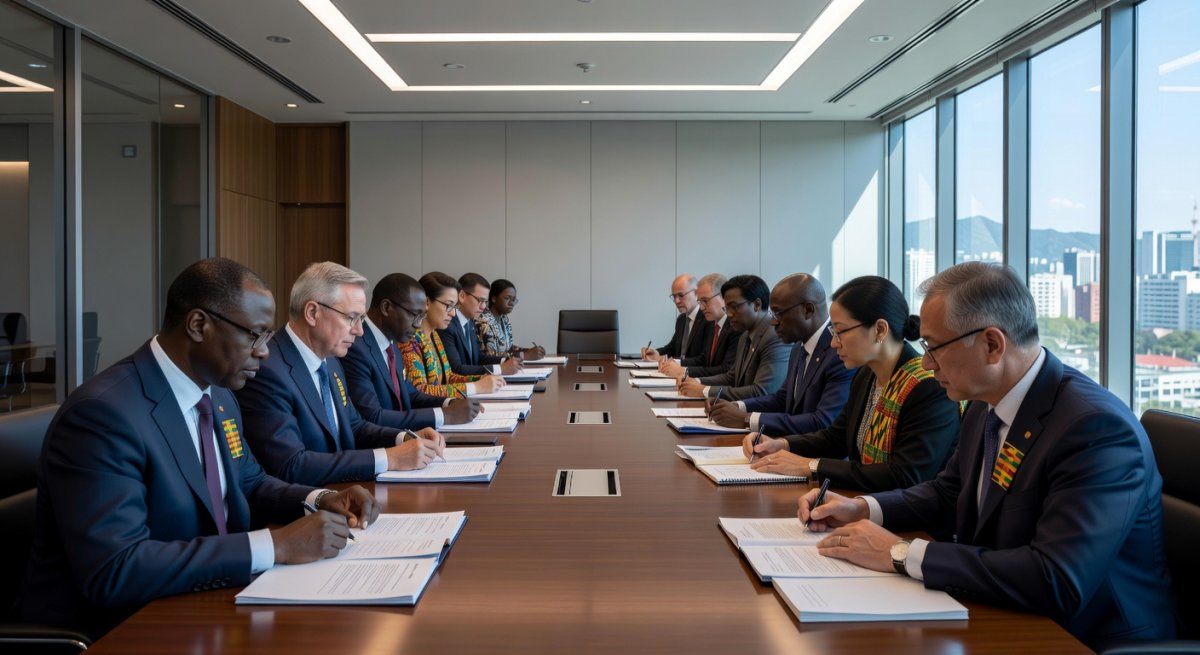
The second working session examined non-traditional security challenges. Health cooperation centered on Africa CDC capacity building and Korea's experience with pandemic preparedness, with specific reference to the ongoing global Ebola outbreak. Climate discussions linked Korean green-technology exports to African adaptation needs, including forest restoration projects with GGGI and UNEP. Peace and security talks reviewed Korea's contributions of USD 26.4 million over the past decade through the African Union Peace Fund, ongoing deployment of the Hanbit Unit under UN peacekeeping operations in South Sudan, and participation in international efforts to combat piracy off the coast of Africa.
Strategic Implications for Korean Foreign Policy
The 2026 meeting advances Korea's diplomatic diversification strategy at a moment when traditional alliances face renewed strain. By engaging the African Union and AfCFTA structures directly, Seoul positions itself as a middle-power partner that offers technology and capital without the political conditionalities often attached to larger actors. The proposal to convene a follow-on Korea-Africa Summit in 2029 signals that this relationship is intended to operate on a predictable, multi-year cycle rather than through ad-hoc initiatives. For Korean chaebols, the ministerial outcomes provide clearer policy signals on investment protection and tax treatment across African markets. For African governments, the framework offers access to Korean expertise in critical minerals processing and agricultural modernization without locking them into single-buyer arrangements. The institutionalization of the dialogue therefore serves both sides' interests in reducing exposure to external economic shocks.
Looking Ahead
The joint statement welcomed Korea's proposal to hold the next Korea-Africa Summit in 2029, with specific details to be discussed through the next Senior Officials' Meeting. Meanwhile, the eighth Korea-Africa Economic Cooperation Ministerial Conference, scheduled for September 2026, will provide the next major checkpoint for tracking implementation of the commitments made in Seoul. As global competition for critical minerals intensifies and supply-chain diversification remains a strategic priority for both Seoul and African capitals, the institutional architecture established through this ministerial meeting provides a framework that will likely deepen in scope and specificity over the coming years.
By Prof. David Park, Staff Writer
This article was produced with AI-assisted research and editorial support. Reporting is based on sources cited in the article.
What's Your Reaction?
 Like
0
Like
0
 Dislike
0
Dislike
0
 Love
0
Love
0
 Funny
0
Funny
0
 Wow
0
Wow
0
 Sad
0
Sad
0
 Angry
0
Angry
0

World Politics Analyst at Global1.News. Based in Beijing, covering US-China relations, global trade, and geopolitical strategy. Brings deep analytical perspective to the power dynamics shaping international affairs.















Comments (0)