
Zamboanga City Observes Day of Mourning After Deadly Ateneo de Zamboanga School Shooting
In a recent ANC 24/7 report, Zamboanga City was shown in a state of collective grief as it observed a Day of Mourning following the August 18 school shooting at the Ateneo de Zamboanga University (ADZU) that claimed the life of a 15-year-old student.
In a recent ANC 24/7 report, Zamboanga City was shown in a state of collective grief as it observed a Day of Mourning following the August 18 school shooting at the Ateneo de Zamboanga University (ADZU) that claimed the life of a 15-year-old student. The tragedy, which unfolded just as classes were about to begin, has shaken families across the Zamboanga Peninsula and reignited urgent conversations about school safety, firearm accountability, and the mental health of Filipino youth. For parents in Zamboanga City and beyond, the question is no longer abstract: could this happen in our children's school?
Zamboanga City Observes Day of Mourning After Deadly Ateneo de Zamboanga School Shooting
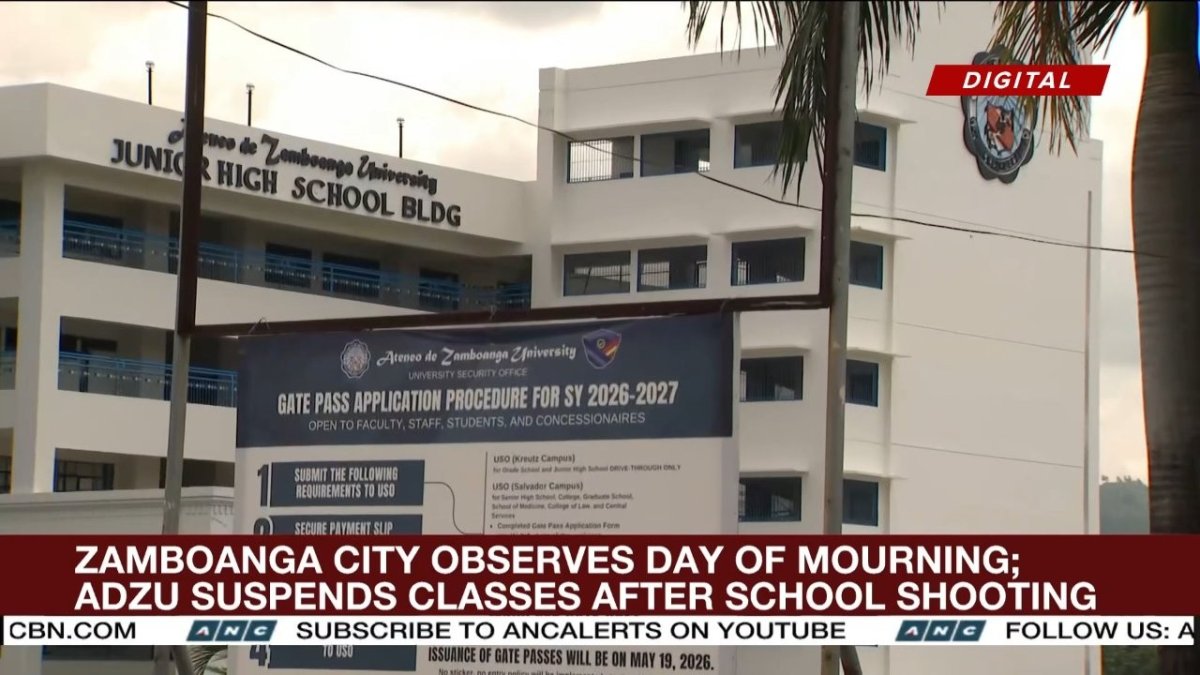
Manila, Philippines — The city of Zamboanga came to a standstill on Wednesday, August 19, 2026, as Mayor Khymer Adan Olaso declared an official Day of Mourning across the entire city and ordered the suspension of classes at all levels in both public and private academic institutions. The announcement came less than 24 hours after a 14-year-old student opened fire inside the junior high school building of the Ateneo de Zamboanga University, killing a Grade 10 student and injuring 23 others before taking his own life. The city government's official statement captured the mood of a community in shock: "August 18, 2026 was a very, very sad and tragic day for Zamboanga City."
The Story of the Day of Mourning
The Day of Mourning was not merely a symbolic gesture — it was a practical response to a community grappling with trauma. With classes suspended at all levels, from kindergarten to college, students across Zamboanga City stayed home while teachers, counselors, and local officials regrouped. The suspension allowed families to process the events without the immediate pressure of sending children back to classrooms, many of which are now associated with fear and uncertainty.
Ateneo de Zamboanga University President Father Guillrey Anthony Andal went further, declaring a day of mourning and prayer on August 19 across all ADZU campuses. The university then extended its class suspension through August 20, giving the school community additional time to recover before the Ninoy Aquino Day holiday on August 21. This extended break, school officials said, was necessary to allow students and faculty to access psychosocial support and begin the slow process of healing.
The Day of Mourning also served as a moment of unity for Zamboanga City, a city that has weathered security challenges before but never a school shooting of this nature. Local officials, religious leaders, and community members came together in prayer vigils and memorial gatherings, reflecting the deep sense of loss felt across the city. For many residents, the tragedy felt personal — the victim, 15-year-old Patrick Dylan Wee, was a Grade 10 student at ADZU, a school deeply embedded in the community's identity.
The Shooting and the Student
The incident began at approximately 7:50 a.m. on August 18, 2026, at the ADZU Junior High School campus in Barangay Tumaga, just as students were settling into their first classes of the day. According to police reports, the perpetrator — identified as Mohammad Mael Jalani, a minor student described in ANC reports as a 14-year-old — entered the school's basement to avoid being frisked, concealing two firearms in a bag. He then made his way to the fourth floor, where he started a Facebook livestream on a body camera before approaching a classroom door.
What followed was a sequence of events that investigators have since pieced together with chilling precision. Jalani pointed a gun at a teacher, but his weapon jammed. Students and staff fled to another classroom, but Jalani fixed the jam and fired numerous shots into that room, killing Patrick Dylan Wee. He then showed his face to the camera and shot himself. The entire ordeal was livestreamed on Facebook, which has since suspended the shooter's account.
Mayor Olaso described Jalani as a "very bright student" and a "Roblox fanatic," while Interior Secretary Jonvic Remulla noted that the student was "top of the class" with no previous incidents of bullying. Investigators are now looking into the student's gaming and messaging history, with reports suggesting he was under pressure over his grades and reportedly suffering from depression. His father told authorities that Jalani had no experience with firearms — a statement that raises troubling questions about how the weapons were accessed in the first place.
How the Guns Were Accessed
The firearms used in the attack have become a central focus of the investigation, and the details are deeply troubling for advocates of stricter gun control. Jalani used a Glock 22 .40 caliber semi-automatic pistol issued by the Bureau of Customs to his father, an enforcement official at the Port of Zamboanga. He also carried a 9mm caliber pistol with a conversion kit — his father's licensed personal firearm. Both weapons were left in a bag inside the father's car, which Jalani drove to campus on the morning of the attack.
Customs Commissioner Ariel Nepomuceno confirmed that the guns were taken from the father's car and placed the father under preventive suspension. The Bureau of Customs has since launched a review of firearms accountability, examining how a government-issued weapon could end up in the hands of a minor. This incident has exposed a critical gap in firearm security protocols — not just for the Bureau of Customs, but for all government agencies that issue firearms to their personnel.
Interior Secretary Jonvic Remulla did not mince words. He called on Congress to pass a law banning first-person shooter games and demanded tougher penalties for gun owners who leave firearms accessible to minors, saying the shooting strengthened calls for changes in firearm law. The DILG has ordered a full probe into the shooting, and Senate President Sherwin Gatchalian has called for a thorough investigation into how the gunman brought two firearms into the school premises without detection.
The DSWD and DepEd Response
The national government's response was swift, with two Cabinet secretaries personally traveling to Zamboanga City on Wednesday, August 19. Department of Social Welfare and Development (DSWD) Secretary Rex Gatchalian flew to the city to visit the wounded students, including a 15-year-old girl who suffered a gunshot wound to the back and a 16-year-old boy who was transported to the hospital. Twenty-one others were treated at the scene for injuries sustained while fleeing and for panic attacks.
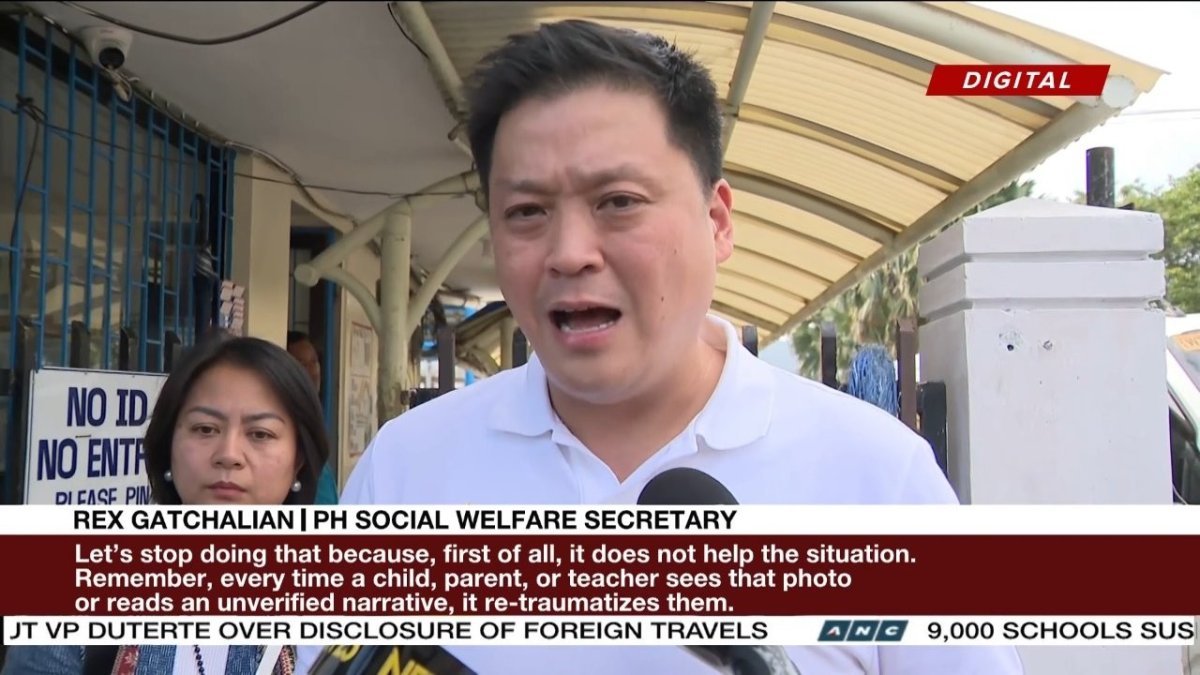
Secretary Gatchalian issued a plea that resonated far beyond Zamboanga City: he urged the public to stop sharing details and footage of the shooting incident online, warning that the circulation of such material compounds the trauma of those directly affected and causes additional distress to their loved ones. The DSWD has coordinated psychosocial support and psychological first aid for affected students, families, and school personnel, recognizing that the emotional scars of this tragedy will take far longer to heal than physical wounds.
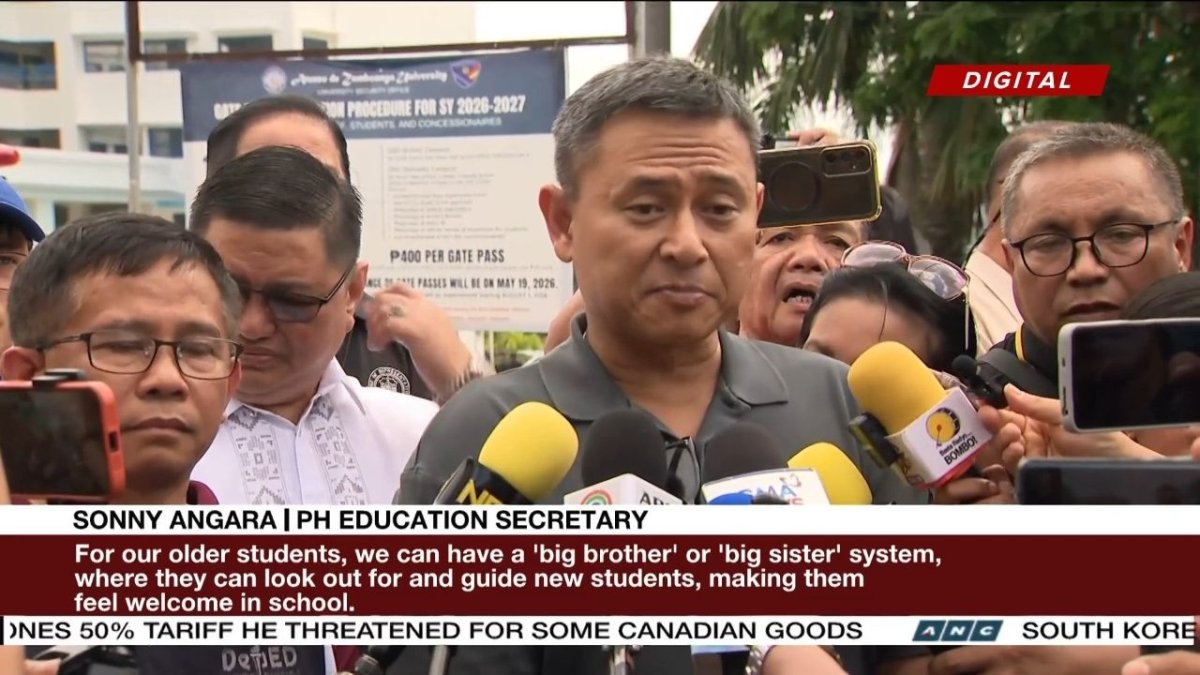
Education Secretary Sonny Angara also visited Zamboanga City on Wednesday, attending a situation briefing with ADZU officials, the local government, and the Philippine National Police. He inspected the school vicinity and directed the Department of Education's Regional Office IX (Zamboanga Peninsula) to provide psychosocial support to affected learners and staff. "As a father, my heart goes out to the parents who are grieving today," Angara said. "My sympathies are likewise with all the families affected by this tragedy, as well as the teachers, learners, and school personnel who experienced this terrible incident."
DepEd issued the same appeal to the public, media, and content creators to refrain from sharing and posting sensitive material connected to the shooting — echoing the university's own plea to "choose compassion over clicks" and respect the privacy and dignity of the affected families. The agency is strengthening counseling and mental health programs as long-term solutions against school violence, and Angara urged communities to adopt a whole-nation approach to school safety and to check on students' well-being in the days and weeks ahead.
Parents' Fears and Mental Health
In the days following the shooting, parents of students at Ateneo de Zamboanga and other Zamboanga City schools have voiced deep concerns over their children's safety and mental well-being. Many are asking schools to strengthen security measures, while others are seeking guidance on how to talk to their children about what happened. The trauma is compounded by the fact that the shooting was livestreamed — many students saw the footage before it was taken down, and the viral spread of the video has made it nearly impossible to shield young people from the graphic details.
Mental health professionals in the region are warning that the psychological impact of this event will be felt for months, if not years. Students who were in the building, those who witnessed the livestream, and even those who merely heard about the attack from classmates are all at risk of developing anxiety, depression, and post-traumatic stress disorder. The DSWD's psychosocial support teams are working with schools to provide counseling services, but the demand far exceeds the available resources.
Across Zamboanga City, parents are grappling with a painful reality: the places they trusted to educate and protect their children have been breached in the most violent way imaginable. In ANC 24/7 interviews, parents of ADZU students and children at other Zamboanga City schools voiced the same fears — asking how schools will strengthen security, what support will be available for students struggling with anxiety, and how families are supposed to move forward when the unthinkable happened in a classroom down the hall.
Reactions in Government and Congress
President Ferdinand Marcos Jr. has ordered authorities and agencies to strengthen protection for students and expressed condolences to the families of the deceased. The President's directive signals a recognition that school safety must be a national priority, not just a local concern. However, advocates are calling for concrete action, not just statements of sympathy.
In Congress, lawmakers are already positioning for legislative responses. Interior Secretary Remulla's call for a ban on first-person shooter games has sparked debate, with some lawmakers questioning whether such a ban would be effective or constitutional. Others are focusing on more practical measures: stricter penalties for gun owners who fail to secure their firearms, mandatory safe storage laws, and increased funding for school security infrastructure.
Senate President Sherwin Gatchalian has called for a thorough investigation into how the gunman brought two firearms into the school premises, noting that ADZU has 25 security guards — 15 on morning duty and 10 on night duty. The fact that a student could bypass security with two guns in a bag has raised serious questions about the adequacy of school security protocols, not just at ADZU but at schools across the country.
House lawmakers and education advocates, including Akbayan party-list representatives, have called for better school safety measures. Davao City and Negros Oriental have already strengthened security measures in their schools, signaling that the impact of this tragedy is being felt nationwide. The Bureau of Customs is reviewing its firearms accountability procedures, and the father's preventive suspension is just the beginning of what is likely to be a lengthy legal process.
What to Watch For
School shootings are rare in the Philippines, which has relatively strict gun ownership regulations including background checks and psychological evaluation requirements. However, illegal firearms remain in circulation, and the June 2026 shooting at a public high school in Tacloban — where two students killed three people and injured 20 others — demonstrated that this is not an isolated phenomenon. The Tacloban incident had prompted ADZU to begin conducting active shooter drills, a grim preparation that proved tragically insufficient.
This shooting is also a separate incident from the 2022 Ateneo de Manila University shooting, another attack within a Jesuit educational institution. The pattern is deeply concerning for the Jesuit network of schools, which now finds itself at the center of two of the most high-profile school shootings in Philippine history. The ADZU community, founded in 1912 by Jesuits as an all-boys parochial school of the Zamboanga Cathedral, is now confronting a tragedy that challenges its very identity as a safe haven for learning.
In the coming weeks, the nation will be watching several key developments: the results of the DILG probe, the Bureau of Customs' investigation into firearm accountability, and the legislative response in Congress. But beyond the official inquiries, there is a deeper question that Filipino families are asking themselves: what does it mean to keep our children safe? The answer, as this tragedy has made painfully clear, requires more than just security guards and metal detectors. It requires a fundamental reckoning with how we address mental health, how we regulate firearms, and how we build communities where no student feels so desperate that they would resort to violence.
The Day of Mourning in Zamboanga City has passed, but the mourning has not. As students eventually return to classrooms, as the wounded recover, and as investigators piece together the full story of what happened on that August morning, the nation must confront a sobering truth: the safety of our children cannot be taken for granted. It must be actively, deliberately, and collectively protected — by parents, by schools, by government, and by every Filipino who believes that no family should ever have to bury a child because of a preventable tragedy.
By Bella Reyes, Staff Writer
This article was produced with AI-assisted research and editorial support. Reporting is based on sources cited in the article.
What's Your Reaction?
 Like
0
Like
0
 Dislike
0
Dislike
0
 Love
0
Love
0
 Funny
0
Funny
0
 Wow
0
Wow
0
 Sad
0
Sad
0
 Angry
0
Angry
0

Philippines/Southeast Asia Correspondent at Global1.News. Manila-based journalist covering Philippine politics, environment, maritime security, and social issues. Passionate about marine conservation and the communities protecting the Philippines' natural heritage.











Comments (0)