
DOLE: Work Suspension Allowed Amid Habagat, Pay Rules Apply
DOLE reminds private employers that work may be suspended amid the southwest monsoon under Labor Advisory No. 14. The 'no work, no pay' rule applies unless company policies or CBAs provide better terms, with full pay for six hours worked and proportionate pay for fewer hours.
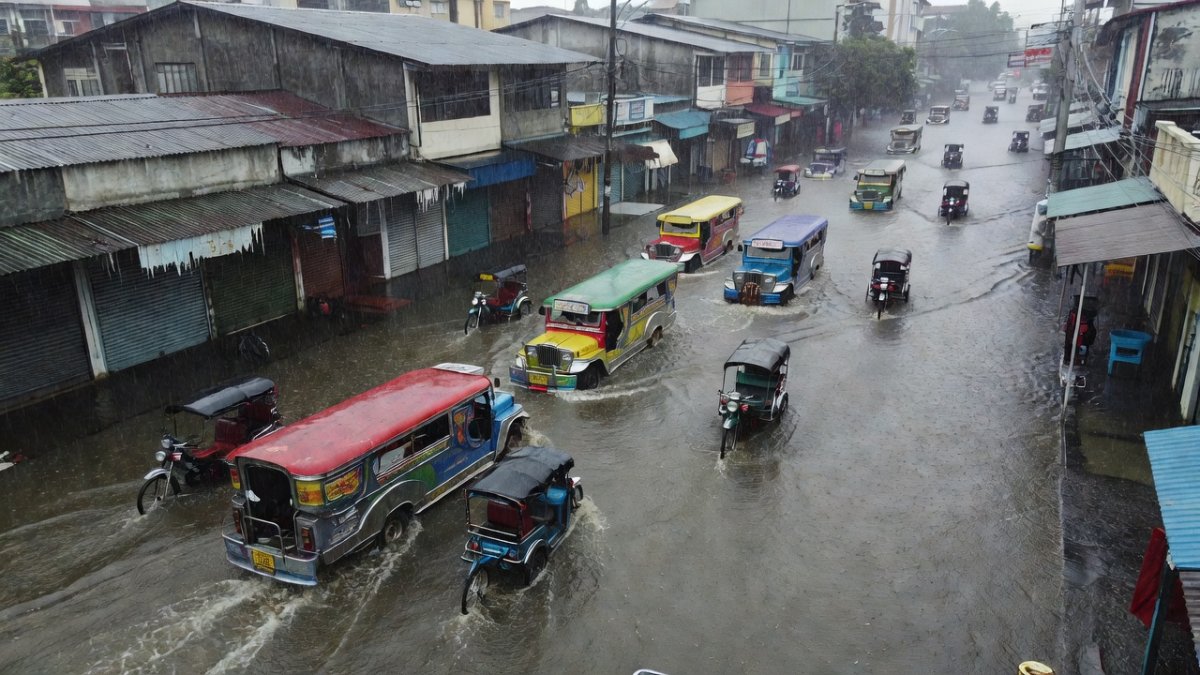
The southwest monsoon, or habagat, has been dumping relentless rain over Metro Manila and large parts of Luzon for nearly a week now, turning streets into rivers and forcing thousands of workers to wade through floodwaters just to get to their jobs. In the midst of this weather turmoil, the Department of Labor and Employment (DOLE) has stepped in with a crucial reminder for private sector employers: you are allowed to suspend work operations to keep your people safe, but there are clear rules on how to pay them.
In Labor Advisory No. 14, series of 2026, released on Wednesday, August 19, the labor agency laid down the ground rules that every employer, from large corporations to the neighborhood sari-sari store, must understand. This is not just a bureaucratic memo; this is about the daily struggle of the minimum-wage earner, the factory worker, and the office employee who braves the storm just to provide for their families. For many, a day of suspended work means a day without pay, and that is a heavy burden to carry, especially when the bills do not stop just because the rain does not stop.
What the Labor Advisory Actually Says
The core of Labor Advisory No. 14 is simple: employers may suspend work when weather conditions pose a danger to their employees. This is a proactive measure, not a penalty. The advisory explicitly states that employers may suspend operations "to ensure the safety and health of workers amid weather disturbances and similar circumstances." This means that a business owner who decides to close shop because the floodwaters are rising is not violating any labor rule; in fact, they are being encouraged to prioritize human life over productivity.
However, the advisory also clarifies the financial side of this decision. The default rule is "no work, no pay." If an employee decides not to report for work because of the bad weather, the employer is not obligated to pay them for that day, unless the company has a more generous policy or a collective bargaining agreement (CBA) that says otherwise. This is a critical point for workers to understand. Many employees, especially those in the informal sector or those without strong unions, may not realize that their right to refuse dangerous work does not automatically come with a right to be paid for that missed day.
But the advisory does not stop there. It also provides a clear formula for those who do manage to report to work. An employee who works for six hours is entitled to their full regular pay for that day. Those who work for less than six hours must receive a proportionate amount of their regular pay, based on the exact number of hours they rendered. This protects the worker who arrives late because they had to wait for the floodwaters to subside or had to take a longer, safer route to the office.
The Six-Hour Rule and Proportionate Pay Explained
Let us break this down for the ordinary worker. Imagine a factory worker in Valenzuela whose shift is supposed to start at 8 a.m. The rain is pouring, and the streets are impassable. The worker arrives at 10 a.m. and works until 4 p.m., a total of six hours. Under this advisory, that worker is entitled to a full day's pay. This is a significant protection because it recognizes that the worker made the effort to come in, even under difficult circumstances, and should not be penalized for the weather's timing.
Now, consider a call center agent in Quezon City who lives in a flood-prone area. They manage to get to work by 11 a.m. but their shift ends at 3 p.m. because the company decides to close early due to the worsening weather. That is only four hours of work. The employer must pay the agent for those four hours, calculated proportionally. This means the daily rate is divided by the standard number of working hours, and then multiplied by the actual hours worked. It is a fair system that ensures the worker is compensated for the time they actually gave, even if it was less than a full day.
This is where the human impact becomes clear. For a minimum-wage earner in Metro Manila, losing even a few hours of pay can mean the difference between a full meal and a meager one for their family. The proportionate pay rule is a lifeline, ensuring that the effort to brave the storm is not met with a completely empty wallet. It also encourages employers to be fair, rather than simply sending workers home with nothing after they have already risked their safety to get to work.
Protection from Sanctions and the Call for Extra Incentives
One of the most reassuring parts of the advisory is the explicit protection it grants to workers who choose safety over attendance. The agency stressed that employees who refused or failed to report to work due to "impending danger brought by severe weather conditions shall not be subjected to administrative sanctions." This means an employer cannot fire you, suspend you, or give you a written reprimand simply because you decided not to risk your life wading through chest-deep floodwater. This is a powerful safeguard against the fear that many workers feel when they have to choose between their job and their personal safety.
This protection is especially important for those in industries where attendance is strictly monitored, such as retail, food service, and business process outsourcing. The advisory sends a clear message: your life is more important than your attendance record. It also aligns with the broader principle of labor law that prioritizes the health and safety of workers above all else. No employer should ever force a worker to choose between drowning and being fired.
Furthermore, the advisory encourages employers to go beyond the minimum requirement. It states, "To alleviate the plight of employees during weather disturbances and similar occurrences, employers may provide extra incentives or benefits to employees who reported to work on the said days." This is not a mandatory rule, but it is a strong suggestion rooted in the spirit of bayanihan. For employers who can afford it, providing a meal allowance, a transportation stipend, or even a small cash bonus to those who showed up is a way of acknowledging their dedication and helping them cope with the additional costs of commuting during a storm.
What This Means for Government Workers and the Broader Community
While this advisory is specifically for the private sector, the report also notes that government workers have already shifted to alternative work arrangements for almost a week now. This means that many employees in national government agencies and local government units (LGUs) are working from home or on a skeletal workforce schedule. This is a practical response to the persistent rains, allowing essential services to continue while keeping most workers safe at home. It is a recognition that in times of crisis, the government must lead by example in prioritizing the well-being of its employees.
For the rest of us, this advisory is a reminder of the realities of living in a country that faces typhoons and monsoon rains every year. It is a story that resonates with the jeepney driver who navigates flooded streets to earn a living, the tricycle driver who ferries commuters through knee-deep water, and the market vendor who still opens their stall despite the downpour. These are the unsung heroes of every storm, and this advisory is a small but significant acknowledgment that their safety and their pay matter.
The situation also highlights the importance of community solidarity. In many barangays, we see the spirit of bayanihan alive and well, with neighbors helping each other evacuate, sharing food, and checking on the elderly and the vulnerable. The labor advisory is a formal, institutional version of that same spirit, ensuring that the rules of the workplace do not add to the burden of a natural disaster. It is a reminder that we are all in this together, from the boardroom to the barangay hall.
Practical Advice for Workers and Employers
For workers, the key takeaway is to know your rights. If you are an employee in the private sector and you are unsure about how your company is handling pay during these weather disruptions, you should ask for a copy of your company policy or your collective bargaining agreement. If you believe your employer is withholding pay that you are entitled to under this advisory, you can file a complaint with the nearest DOLE office. The department has a Single Entry Approach (SEnA) program that provides a fast and free way to resolve labor disputes, and it is there to help you.
For employers, the message is to be fair and transparent. The advisory is not a license to dock pay arbitrarily; it is a framework for making decisions that respect both the safety of your workers and their right to compensation. If you are suspending operations, communicate clearly with your employees about when they will be paid and how the rules apply. If you can afford to provide extra incentives, do so. It will build loyalty and trust, which are invaluable assets in any business.
As the rains continue to pour over Metro Manila and Luzon, this advisory serves as a crucial guide for navigating the storm. It is not just about legal compliance; it is about recognizing the dignity of every worker who shows up, day after day, to build a better life for themselves and their families. In a country where the weather can change in an instant, having clear, fair rules is a form of protection that every Filipino worker deserves.
This article was produced with AI-assisted research and editorial support. Sources: Philstar.com
By Bella Reyes, Staff Writer
What's Your Reaction?
 Like
0
Like
0
 Dislike
0
Dislike
0
 Love
0
Love
0
 Funny
0
Funny
0
 Wow
0
Wow
0
 Sad
0
Sad
0
 Angry
0
Angry
0

Philippines/Southeast Asia Correspondent at Global1.News. Manila-based journalist covering Philippine politics, environment, maritime security, and social issues. Passionate about marine conservation and the communities protecting the Philippines' natural heritage.













Comments (0)