
Unitree Robotics Soars 460% in Landmark Shanghai Debut
Unitree Robotics Soars 460% in Shanghai Debut, Cementing China’s Bid for Humanoid Robot Supremacy A Landmark Listing on the Star Market Unitree Robotics, officially known as Yushu Technology Co Ltd, delivered a stunning stock market debut on Shanghai’s technol
A Landmark Listing on the Star Market
Unitree Robotics, officially known as Yushu Technology Co Ltd, delivered a stunning stock market debut on Shanghai’s technology-focused Star Market on Wednesday, with shares closing at 845 yuan ($125.30) after being offered to investors at 150.80 yuan ($22.36) each. The more than 460 percent surge on the first day of trading marks a watershed moment for Beijing’s strategic ambitions in the robotics and artificial intelligence sectors. The listing, widely anticipated by global investors, is the first mainland China debut for a humanoid robot manufacturer and signals a maturation of an industry that Beijing has designated a "strategic priority" in its pursuit of advanced technology leadership.
The Star Market, often dubbed "China’s Nasdaq," has become the preferred venue for technology companies aligned with the country’s industrial policy goals. Unitree’s explosive debut is not merely a financial event; it is a validation of the state-backed ecosystem that has nurtured the firm since its founding in 2016. The company, headquartered in Hangzhou, sits at the heart of a "golden cluster zone" of robotics firms in eastern China that have benefited from substantial government investment. According to state-run China Daily, that support helped drive a more than threefold increase in the number of Chinese robotics firms between 2020 and 2024.
The Strategic Calculus Behind Beijing’s Robotics Push
For Beijing, humanoid robotics is not a niche commercial venture but a pillar of the broader Dual Circulation strategy and the 14th Five-Year Plan’s emphasis on technological self-sufficiency. The sector represents the physical embodiment of AI—what Fei Qin, an associate professor at the University of Bath, describes as the moment "where AI leaves the screen and enters the economy" in factories, hospitals, and potentially the home. This framing aligns with China’s long-term demographic challenges: an ageing population is expected to create significant labour shortages, and robots are increasingly viewed as a critical solution to maintain productivity growth.
The strategic importance extends beyond domestic economics. The United States and China are engaged in a fierce battle to dominate the global market for robots and the AI models that power them. Washington has moved to curb imports of foreign-made robots, a restriction that Jack Pearson from investment firm RoboStrategy notes makes Unitree’s success a "turning point" for China’s robotics industry. The listing provides a gauge of investor appetite for the sector and sets a benchmark for other manufacturers seeking public capital. It also offers the public a rare opportunity to invest directly in a humanoid robotics company, democratizing access to a sector previously dominated by private capital and state funds.
Unitree’s Competitive Edge: Cost Leadership and Scale
Unitree’s market position is built on a simple but powerful advantage: price. The company’s robot dogs start at $2,700, a fraction of the roughly $70,000 price tag for Boston Dynamics’ four-legged Spot. Harold Soh, a researcher from the National University of Singapore, acknowledges that the products are "not exactly comparable" due to size differences, but emphasizes that "the price is a big difference." This cost leadership is not accidental; it reflects China’s mature supply chain ecosystem, economies of scale, and aggressive government subsidies that have lowered production costs across the robotics value chain.
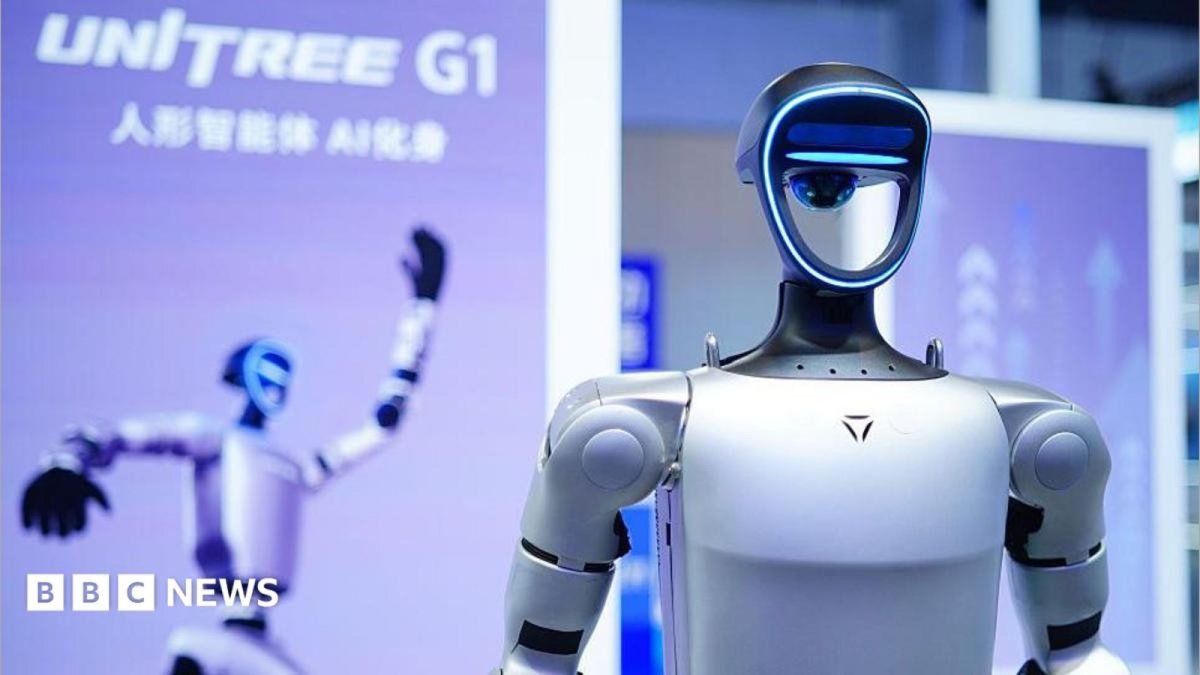
The company shipped more than 5,500 humanoid robots last year, a figure that underscores growing demand. Crucially, Unitree is one of the few profitable players in the sector, delivering a net profit of 278 million yuan in 2025. This profitability distinguishes it from many global competitors, including Tesla, which has yet to begin delivering its Optimus humanoid robot. Unitree has been selling humanoid robots since 2023, with its $13,500 child-sized G1 model hitting the market the following year. The combination of scale, profitability, and competitive pricing gives Unitree a formidable position as it expands globally.
The Marketing Machine: From Spring Festival Gala to World Games
Unitree’s rise has been accompanied by a sophisticated marketing push that has captured global attention. In February, the company’s G1 robots performed martial arts moves during China’s Spring Festival Gala, a live broadcast that robotics researcher David Hsu described as showing moves "in a way we’d never seen before." Hsu called it "an indication of a rise of an industry." This week, Unitree’s machines are competing in the 2026 World Humanoid Robot Games in Beijing, an event featuring hundreds of teams in competitions ranging from running and football to more practical challenges like box opening and sorting library books.
These public demonstrations serve multiple purposes. Domestically, they reinforce the narrative of technological progress and national pride, aligning with the Communist Party’s messaging on innovation and self-reliance. Internationally, they position Unitree as a credible alternative to Western developers, showcasing capabilities that rival—and in some cases surpass—those of US competitors. The marketing blitz also primes consumer and industrial markets for broader adoption, normalizing the presence of humanoid robots in everyday settings.
Geopolitical Implications: The Multipolar Technology Order
Unitree’s debut must be understood within the broader context of US-China technological competition. Washington’s export controls on advanced semiconductors and AI technologies have accelerated Beijing’s push for self-sufficiency across the technology stack. The robotics sector is a key battleground because it integrates multiple critical technologies: sensors, actuators, AI algorithms, and battery systems. By nurturing domestic champions like Unitree, Beijing aims to reduce dependence on foreign components and establish alternative standards that could appeal to the Global South and non-aligned nations.
The implications for global supply chains are profound. As US restrictions on foreign-made robots take shape, Chinese manufacturers are likely to find eager markets in Southeast Asia, the Middle East, Africa, and Latin America—regions that may be wary of over-reliance on either Washington or Beijing but are attracted by cost-effective solutions. This dynamic could accelerate the fragmentation of the global technology order into distinct spheres of influence, with China offering a more affordable, if less software-polished, alternative to US products. Soh’s observation that US robots have more user-friendly software but struggle to compete on price captures the trade-off that many developing economies will face.
Comparative Landscape: UBTech and the Broader Ecosystem
Unitree’s IPO comes almost three years after smaller Chinese rival UBTech Robotics listed on the Hong Kong stock market. In July this year, UBTech drew global attention when it unveiled what Chinese state media described as a "hyper-realistic" robot designed to offer "emotional support and everyday interaction." The contrast between the two companies illustrates the diversity of China’s robotics ecosystem: Unitree focuses on agile, cost-effective machines for industrial and commercial use, while UBTech explores the consumer and companion robot market. Both benefit from the same state support and supply chain advantages, but they are pursuing different market segments and technological approaches.
The presence of multiple listed players in China’s humanoid robotics sector is significant. It provides investors with a range of options and creates competitive pressure that drives innovation. It also signals to international markets that China’s robotics industry is not a single-company phenomenon but a broad-based industrial movement. The "golden cluster zone" in Hangzhou and surrounding regions has become a magnet for talent, capital, and research institutions, creating a self-reinforcing ecosystem that is difficult for competitors to replicate.
Challenges Ahead: Software, Standards, and Sustainability
Despite its impressive debut, Unitree faces significant challenges. The company’s robots, while cheaper, may lack the sophisticated software ecosystems of US competitors. Soh’s observation about user-friendly software highlights a potential vulnerability as applications become more complex and require seamless integration with existing enterprise systems. Additionally, the humanoid robotics market is still nascent, and widespread adoption in homes and hospitals remains years away. The technology must overcome safety, regulatory, and social acceptance hurdles before it can achieve the scale that would justify current valuations.
Sustainability is another concern. Unitree’s profitability is notable, but it operates in a capital-intensive industry where research and development costs are high. The company will need to maintain its cost advantage while investing in next-generation capabilities, including more advanced AI models and improved dexterity. The competitive landscape is also intensifying: Tesla, BYD, and Amazon are all developing two-legged machines, and US restrictions on foreign robots could limit Unitree’s access to certain markets. The company’s ability to navigate these challenges will determine whether its stock market success translates into long-term industrial leadership.
Conclusion: A Bellwether for China’s Technological Ambitions
Unitree’s spectacular debut is more than a financial milestone; it is a statement of intent. Beijing has made clear that robotics and AI are central to its vision of technological self-sufficiency and global influence. The listing provides a liquid, transparent mechanism for public participation in this strategic sector, aligning private capital with national objectives. For international observers, Unitree’s success offers a window into the effectiveness of China’s industrial policy and its capacity to nurture globally competitive technology firms.
The coming years will test whether Unitree can translate its early advantages into sustained leadership. The company must navigate geopolitical headwinds, technological evolution, and intensifying competition from both US and Chinese rivals. Yet its debut has already achieved something significant: it has demonstrated that China’s humanoid robotics industry is not merely a state-directed experiment but a commercially viable, investor-backed enterprise capable of competing on the global stage. As the US and China continue their battle for technological supremacy, Unitree’s trajectory will serve as a bellwether for the broader multipolar technology order—and a reminder that the race to build the machines of the future is far from decided.
This article was produced with AI-assisted research and editorial support. Sources: BBC News, China Daily.
By Marcus Chen, Staff Writer
What's Your Reaction?
 Like
0
Like
0
 Dislike
0
Dislike
0
 Love
0
Love
0
 Funny
0
Funny
0
 Wow
0
Wow
0
 Sad
0
Sad
0
 Angry
0
Angry
0

World Politics Analyst at Global1.News. Based in Beijing, covering US-China relations, global trade, and geopolitical strategy. Brings deep analytical perspective to the power dynamics shaping international affairs.















Comments (0)