
Herzog Hands Eisenkot the Mandate, and Netanyahu Answers With a Call for Unity
Israel's president will hand Gadi Eisenkot the mandate to form a government at 5 p.m. Sunday, twelve days after an election left both camps short of a majority. Netanyahu answered with a call for unity.

Israel's president has made his choice, and it is not the man who has run the country for most of the last two decades. Isaac Herzog will hand Gadi Eisenkot the mandate to form Israel's next government at five o'clock on Sunday afternoon at the President's Residence in Jerusalem, a ceremony his office says will be broadcast live. Benjamin Netanyahu, the longest-serving prime minister in Israel's history, is not the man receiving it.
Herzog Hands Eisenkot the Mandate, and Netanyahu Answers With a Call for Unity
Jerusalem, Israel — The announcement came late on Saturday evening, eleven days after an election that left both camps short of a majority and put the choice of who governs next in the president's hands.
The Announcement, and What It Is Not
Herzog's office said the president informed both Eisenkot and Netanyahu of his decision on Saturday night, after consultations with every Knesset faction on Wednesday and Thursday and further talks with figures across the political spectrum over the weekend, including the two rivals. The statement described Saturday's step as the notification of intent; the mandate itself is conferred at Sunday's ceremony.
The distinction matters because several early reports ran ahead of the paperwork. Some outlets and one prominent American correspondent reported that Herzog had already given Eisenkot the mandate on Saturday. The President's Residence statement, and the account given in Hebrew by the political commentator Amit Segal, describe a formal handover scheduled for five o'clock on Sunday. Until that ceremony happens, Netanyahu remains the caretaker prime minister and no clock has started.
Herzog had signalled the timing two days earlier. "I intend to task a member of Knesset with forming the government this coming Sunday," he said on Thursday, while making clear the recommendation count would not decide the question on its own.
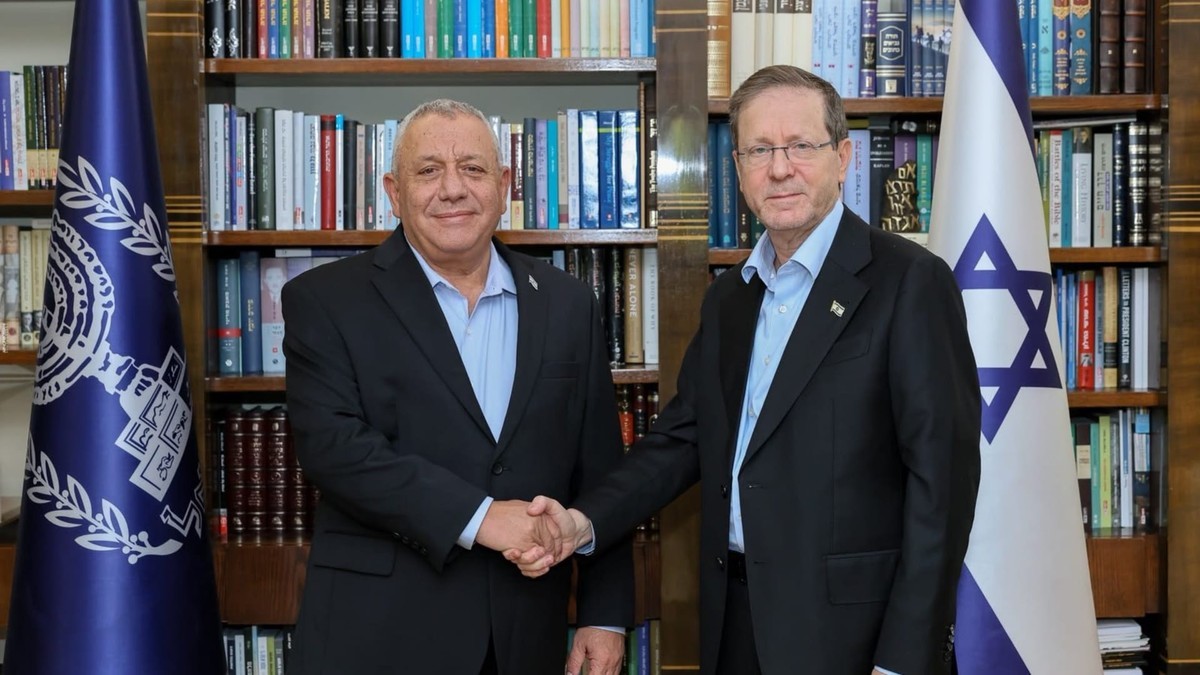
The Man Receiving It at Five O'Clock
Eisenkot is sixty-six, born in Tiberias and raised in Eilat, the son of Moroccan Jewish immigrants, and he spent his entire adult life in uniform before entering politics. He served as the Israel Defense Forces chief of staff from 2015 to 2019, joined the National Unity alliance for the 2022 election, and became a minister without portfolio and an observer on the war cabinet after the Hamas-led attack of 7 October 2023.
He left the government with the rest of National Unity in June 2024 and now leads Yashar, the party he took into October's election as the main challenger to Netanyahu.
His personal cost is public knowledge in Israel. His son, Master Sergeant Gal Meir Eisenkot, twenty-five, was killed fighting in northern Gaza in December 2023, and two of his nephews were also killed in the war. The Straits Times notes that he has vowed to crack down on extremist West Bank settlers, describing recent incidents as "Jewish terror" abetted by Netanyahu's government, and that his working-class roots are part of his political appeal.
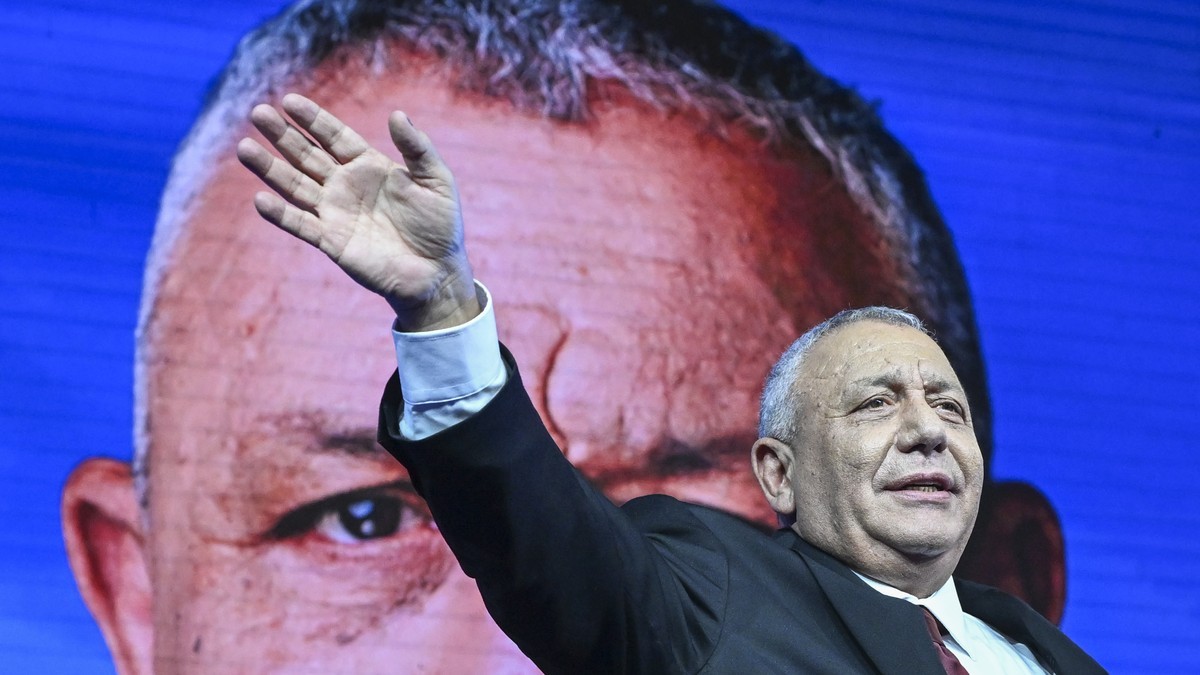
The Numbers, and What They Do Not Say
The Central Elections Committee published the final results on 4 November. Turnout was 77.98 per cent, with 5,716,665 votes cast and roughly 25,887 disqualified.
Likud remains the largest single party with 27 seats. Yashar took 21, Naftali Bennett's B'Yachad 12, the Joint List 11, the Democrats 8, Ra'am 8, Yisrael Beytenu 7, Otzma Yehudit 7, United Torah Judaism 7, Shas 6 and Religious Zionism with Zehut 6.
Those eleven lists divide into three blocs: Netanyahu's 53 seats, Eisenkot's 48, and 19 for the Arab-led parties. A government needs 61. Two features of that result stand out. The Arab-led parties rose from ten seats to nineteen, and Shas fell to six, its lowest showing since 1992. The new Knesset is sworn in on 10 November, with 47 new lawmakers taking seats.
The Four Principles That Gate Everyone
Eisenkot has set four conditions that any party or lawmaker must accept to join a government he leads. The first is recognition of Israel as a Jewish, democratic, liberal and egalitarian state. The second is commitment to the values of Israel's Declaration of Independence. The third is mandatory military, national or civilian service for all Israeli citizens. The fourth is recognition of Hamas as a terrorist organisation and a commitment to dismantling its military and governing power in Gaza.
That last clause carries a small, deliberate word change. In his earlier formulation Eisenkot used "destruction" of Hamas's military and governing capacity; by Friday he was using "dismantling" — a shift the Times of Israel reads as potentially leaving the door open to diplomatic solutions for Gaza rather than military ones, which the Arab-led Ra'am party might find easier to accept.
His framing is that the door is open to anyone who signs. "Any other party or MK who agrees to my four core principles will be invited to join, whether immediately or at a later stage," he said.
Why 67 Recommendations Are Not 61 Seats
The consultations gave Eisenkot 67 recommendations against 46 for Netanyahu, with the seven-seat United Torah Judaism declining to recommend either man. On paper that is a majority of the 120-member house. In practice the 67 are not a coalition.
Nineteen of those recommendations came from the Arab-led Joint List and Ra'am, and Eisenkot has ruled out forming a government with them. Drop them and he is at 48. Winning over United Torah Judaism and Shas, thirteen seats between them, would put him at exactly 61, the barest possible majority.
That route runs straight through the third of his principles. The Haredi parties are opposed to mandatory service for their constituents, and much of Eisenkot's own bloc campaigned on sending both Netanyahu and the ultra-Orthodox parties into opposition. The Times of Israel reports that hawkish members of the bloc are publicly opposed to relying on Ra'am and the Joint List at all.
Netanyahu's Answer: A Government 'With Supporters of Terrorism'
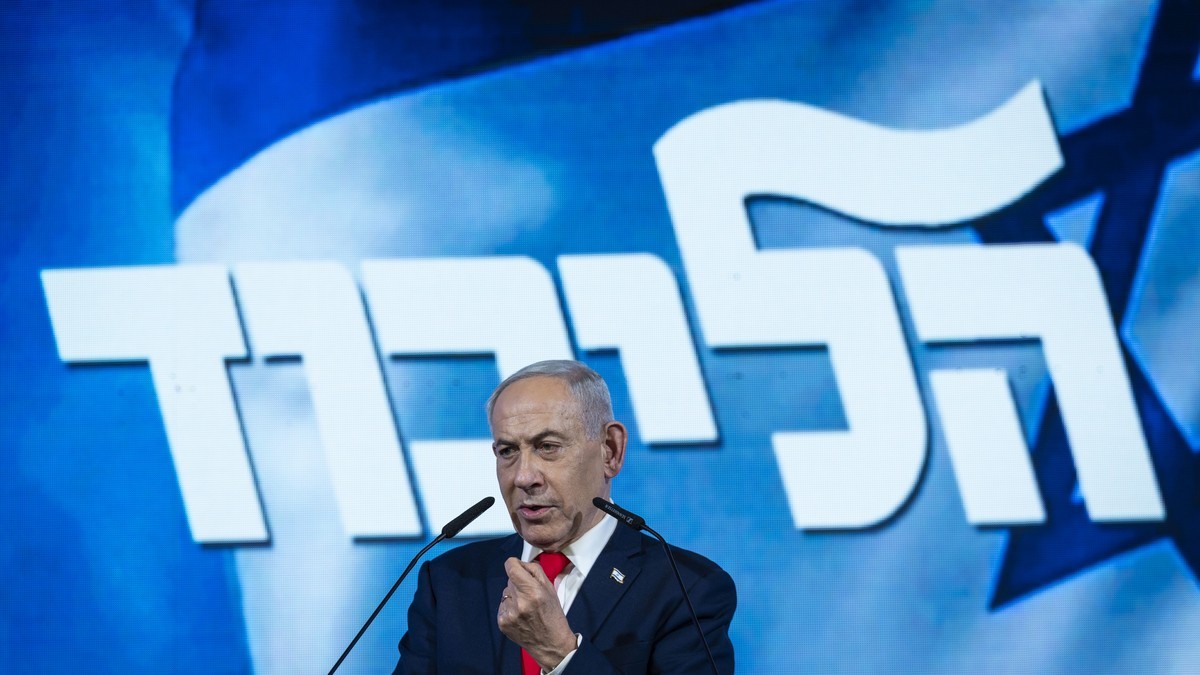
Shortly before the president announced his decision, Netanyahu released his second recorded video statement since election day. Its theme was unity, and its target was the coalition being assembled against him.
"This is a time for unity," he said. "You know that I called for it during the election campaign and repeated that call afterward. It is what the people want, and it is what this moment demands. Because as early as next week, some are planning to hastily swear in a government with supporters of terrorism. To establish a government with those who seek to destroy the State of Israel. With those who want to establish a Palestinian state on its ruins."
He also warned against what he called coalitions with Islamists. The Jerusalem Post reported that it was his first call for a unity government since the election, and that it landed a day before the mandate was due to change hands.
Yashar's Answer: 'Pathetic Political Spin'
Eisenkot's party did not let it pass. In a statement, Yashar said Netanyahu had delivered a "hysterical speech," and that "the man who divided, polarized and sowed discord in Israeli society is heard uttering the word 'unity' only when he realizes his days in office are numbered."
"Unity is an important value for Israel, but Netanyahu has worked systematically and relentlessly against it, even during the most difficult war in our history," the party said, adding that he had formed unity and emergency governments and then worked to undermine them from within.
It then set a price for Likud. "If Likud and its allies are suddenly interested in 'unity' and a broad government, they are more than welcome to publicly announce that they are severing their alliance with the extremists, accepting Gadi Eisenkot's four principles and agreeing to join a government led by Prime Minister Eisenkot. Until then, this is nothing more than a pathetic political spin."
Shas Says the Report Is 'Complete Fake News'
By Sunday morning the fight had moved to the ultra-Orthodox parties, whose thirteen seats sit at the centre of every possible coalition. Shas issued a statement calling reports that it was joining a potential Eisenkot-led coalition "complete fake news," after an N12 report said Yisrael Beytenu chairman Avigdor Liberman had dropped his veto on forming a government with the Haredi parties.
The Democrats' Yair Golan said he was seeking a partnership with the Haredim over draft legislation and did not want to "punish" them, while insisting that Netanyahu "cannot be a part of fixing Israel." Ahmad Tibi, of the Joint List, went further, calling Netanyahu the "greatest destroyer of the State of Israel."
Separately, the Bereaved Families' Forum asked the Shin Bet to investigate an alleged Ra'am voter-tracking application, named Aswatcom, which reporting says allowed activists to monitor turnout at individual polling stations in real time.
The Clock: 6 December, or 20 December
Under Basic Law: The Government, the 28-day count begins when the mandate is formally handed over on Sunday. Israel Hayom puts the initial deadline at 6 December. If Eisenkot asks for the maximum 14-day extension, the cut-off moves to 20 December.
Nothing in Sunday's ceremony installs a prime minister. It starts a statutory negotiation, and the law is specific about what happens if it fails. Herzog can then task another member of Knesset. If that second attempt fails, 61 lawmakers can ask the president to give a third candidate a final fourteen days. If all three fail, the Knesset dissolves and Israel returns to the polls within ninety days, with Netanyahu continuing as caretaker premier in the meantime.
What Collapses, and What Does Not
The immediate pressure on Eisenkot is arithmetic, but the deeper pressure is political. He argued that allowing a caretaker prime minister commanding only a minority of the Knesset to keep directing the security establishment and law enforcement was "dangerous" and must not continue "even for one more day." That argument only works if he can produce a government quickly.
There is an outside variable too. On 3 November, in a phone interview with Fox News as Americans voted, President Donald Trump said the United States would cut nearly four billion dollars in annual military aid to Israel at the end of the year, claiming Netanyahu had proposed it. The Associated Press reported that the aid would stop in 2027 while arms sales continue, and that Congress will have a large say. Eisenkot's answer, after meeting opposition leader Yair Lapid, was blunt: "The composition of Israel's next government must be determined solely by Israeli citizens, without outside interference or manipulation."
What does not collapse is the parliament. The 26th Knesset is sworn in on 10 November regardless of who can command it. Watch the ultra-Orthodox parties: thirteen seats, one principle, and five o'clock on a Sunday in Jerusalem.
By Jessica Ali, Staff Writer
This article was produced with AI-assisted research and editorial support. Sources: The Times of Israel, Al Jazeera, DW, The National, Israel Hayom, The Jerusalem Post, Anadolu Agency, The Media Line, the Central Elections Committee, Globes, The Straits Times, the Associated Press, The Guardian and BBC News. Cover: Global 1 News editorial image. Photographs: Arnon Bossani/President's Residence via The Jerusalem Post; Avshalom Sassoni/Flash90; Yonatan Sindel/Flash90.
What's Your Reaction?
 Like
0
 Dislike
0
 Love
0
 Funny
0
 Wow
0
 Sad
0
 Angry
0

Editor-in-Chief at Global1.News. Atlanta-based journalist who cuts through the BS and tells it like it is. Lead anchor, host, and the voice you hear when the spin stops and the truth starts.















Comments (0)