
Israeli President appoints Gadi Eisenkot to try forming coalition government
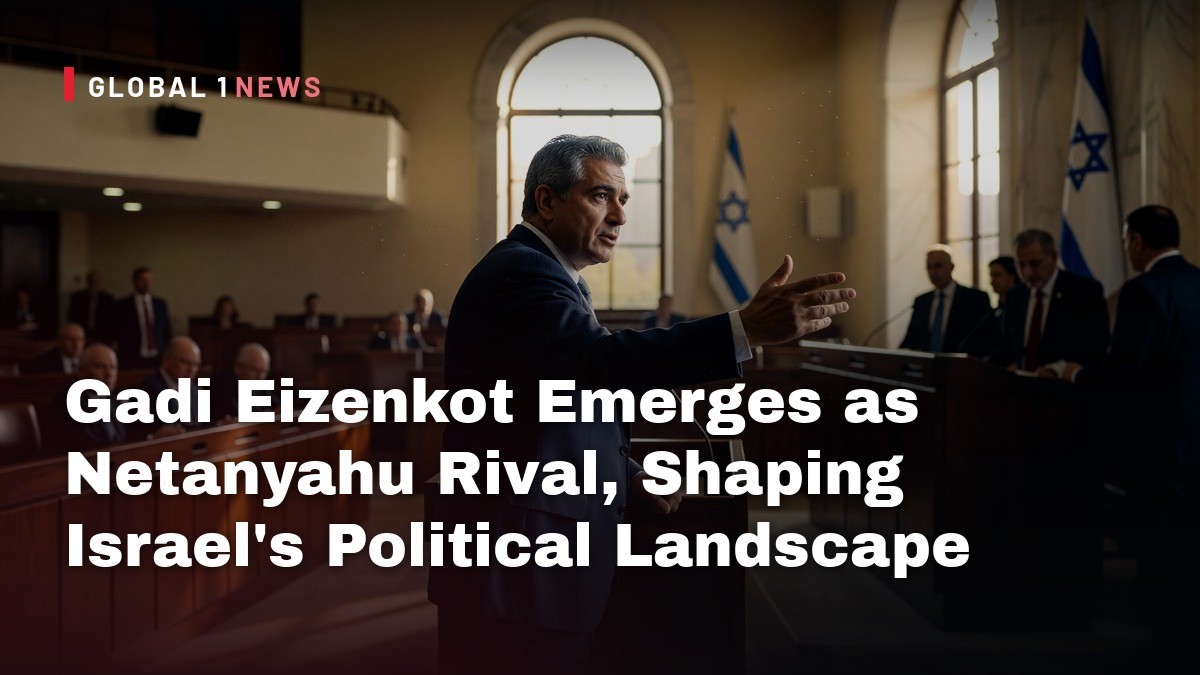
In a decisive moment captured in the DW News report, Israeli President Isaac Herzog announced that he will grant opposition leader Gadi Eisenkot the first opportunity to assemble a governing coalition.
In a decisive moment captured in the DW News report, Israeli President Isaac Herzog announced that he will grant opposition leader Gadi Eisenkot the first opportunity to assemble a governing coalition. The decision, reported on 8 November 2026, moves the country a step closer to potentially replacing Prime Minister Benjamin Netanyahu, whose bloc fell short of a majority in the recent election. The political landscape in Israel remains fragmented, with neither major camp securing enough seats, and Arab-led parties now holding a pivotal position that could tip the balance of power.
President Herzog’s invitation and its constitutional weight
The President’s role in Israel’s parliamentary system includes the delicate task of assigning the mandate to form a government to the candidate most likely to succeed. By extending the first invitation to Gadi Eisenkot, Herzog signals his assessment that the opposition leader may have a viable path to gather enough allies, despite the tight arithmetic of the Knesset. This procedural move follows the customary practice of consulting party leaders and reviewing election results before making a recommendation.
Eisenkot, a seasoned politician known for his tenure as a former chief of staff to former Prime Minister Ehud Barak, now faces the arduous challenge of negotiating with a spectrum of parties whose interests range from right‑wing nationalism to left‑leaning social democracy and Arab representation. The President’s decision, while procedural, carries symbolic weight, suggesting a desire to see a new coalition emerge that could address the nation’s pressing concerns, from security to the cost of living.
In the DW footage, President Herzog’s statement was brief but clear: Eisenkot will receive the first chance to form a government. The President’s language avoided any hint of favoritism, emphasizing the constitutional nature of the task. This approach mirrors past instances where the President has had to balance competing claims, such as after the 2022 elections when the mandate shifted between Netanyahu and opposition figures.
The electoral deadlock and the role of Arab‑led parties
The November 2025 election left Israel’s 120‑seat Knesset without a clear majority for either the Netanyahu bloc or the opposition coalition led by Eisenkot. Both camps fell short, creating a scenario where smaller parties, including those representing Arab citizens, hold the balance of power. Arab‑led parties, which have historically been excluded from governing coalitions, now find themselves in a position to influence the formation of the next government.
DW’s correspondent Emily Gordine highlighted that any coalition Eisenkot attempts to build will likely need to negotiate with these Arab parties. Their participation could bring issues such as minority rights, economic development in the Negev, and the status of the West Bank into the coalition’s agenda. However, aligning with Arab parties also risks alienating right‑wing voters who view such partnerships with suspicion.
The political calculus is further complicated by the fact that Arab parties have, in recent years, shown a willingness to engage in broader coalitions when their policy demands are taken seriously. This dynamic adds a layer of strategic negotiation for Eisenkot, who must balance the expectations of his own base with the demands of potential Arab allies.
Eisenkot’s coalition options and the compromises required
In the DW interview, host Jared Reed asked Eisenkot about the possible paths forward. Eisenkot’s options include seeking a partnership with centrist parties that share a moderate stance on security and social policy, or attempting a broader alliance that brings together left‑leaning factions and Arab parties. Each route demands concessions that could provoke backlash from different voter blocs.
If Eisenkot leans toward centrist parties, he may need to adopt a tougher security line to appease right‑wing elements, while also promising economic reforms to satisfy centrist voters. Conversely, a coalition that includes Arab parties would likely require stronger commitments to minority rights, investment in under‑served regions, and a more dovish approach to the Israeli‑Palestinian conflict.
The DW report underscores that any compromise could anger voters on all sides. Right‑wing supporters might view concessions to Arab parties as a betrayal, while left‑leaning voters could see a tilt toward security hardliners as a sell‑out. Eisenkot’s challenge, therefore, is to craft a coalition platform that can hold together a fragile alliance while maintaining enough popular support to survive a confidence vote in the Knesset.
Potential impact on Prime Minister Netanyahu’s political future
Netanyahu, who has served as prime minister for a cumulative 15 years, now faces a renewed test of his political resilience. The loss of a clear majority in the last election already weakened his grip on power, and the President’s decision to give Eisenkot the first shot adds pressure to his bloc. Netanyahu’s supporters will be watching closely how Eisenkot navigates the coalition talks, as a successful alliance could sideline Netanyahu for the next four years.
DW’s coverage notes that Netanyahu’s bloc still holds a substantial number of seats, giving him leverage in any coalition negotiations. He could still be invited to form a government if Eisenkot fails to secure a majority within a prescribed timeframe. Historically, Israeli presidents have allowed a second round of invitations when the first candidate cannot assemble a coalition, which could reopen the door for Netanyahu.
The political stakes are high for Netanyahu’s party, which must decide whether to compromise with smaller right‑wing parties or risk a prolonged stalemate that could lead to new elections. The outcome will shape not only the domestic agenda but also Israel’s foreign policy posture, especially regarding its relationships with the United States, the European Union, and neighboring Arab states.
Broader implications for Israel’s democratic institutions
The current impasse highlights the robustness of Israel’s parliamentary democracy, where power transitions depend on coalition building rather than single‑party dominance. The President’s role as a neutral arbiter, as demonstrated by Herzog’s recent decision, underscores the institutional checks that prevent any one party from unilaterally dictating the government’s composition.
DW’s reporting emphasizes that the process, while complex, reflects a democratic tradition of negotiation and compromise. However, the protracted negotiations also risk public fatigue and could erode confidence in political institutions if a stable government does not emerge promptly. Citizens in Israel, like many in Latin America, watch these developments with concern for how political instability may affect everyday life, from the price of bread to the security of neighborhoods.
For observers in Mexico and the broader Latin American region, Israel’s situation offers a parallel to coalition challenges faced in countries with fragmented legislatures, where minority parties can become kingmakers. The need for inclusive dialogue and respect for minority rights resonates with ongoing debates in Mexico about electoral reform and representation of indigenous and rural communities.
What to watch for as Eisenkot begins his mandate
As Eisenkot receives the first chance to form a government, several key developments will shape the next weeks. First, his outreach to potential coalition partners will be closely monitored, especially any overtures to Arab‑led parties. Second, the reaction of Netanyahu’s bloc will signal whether a second invitation might be forthcoming if Eisenkot’s talks stall.
DW’s coverage suggests that Eisenkot’s success will hinge on his ability to balance security concerns with socio‑economic reforms, a tightrope that reflects Israel’s broader societal divides. Observers will also watch how the media frames the negotiations, as public opinion can sway party leaders during delicate bargaining.
Finally, the international community, including the United States and European partners, will be attentive to the composition of any new Israeli government, given its impact on regional stability and diplomatic initiatives. The outcome of Eisenkot’s coalition talks will not only determine Israel’s domestic policy direction but also influence its role in Middle Eastern peace efforts and its strategic alliances.
By Rosa Martinez, Staff Writer
This article was produced with AI-assisted research and editorial support. Reporting is based on the source material cited below. Sources: DW News video report (08 November 2026); DW News; Global1.News
What's Your Reaction?
 Like
0
 Dislike
0
 Love
0
 Funny
0
 Wow
0
 Sad
0
 Angry
0

Latin America/Andes Correspondent at Global1.News. Based in Bogota, covering politics, environment, energy, and social movements across the Andean region. Passionate about environmental journalism and communities protecting their land.










Comments (0)