
Woman allegedly poisons co-wife's children in Niger
In the early hours of 6 November 2026, tragedy struck the quiet Takuti community of Lapai Local Government Area in Niger State when two children fell ill after drinking a liquid that police suspect was poison.
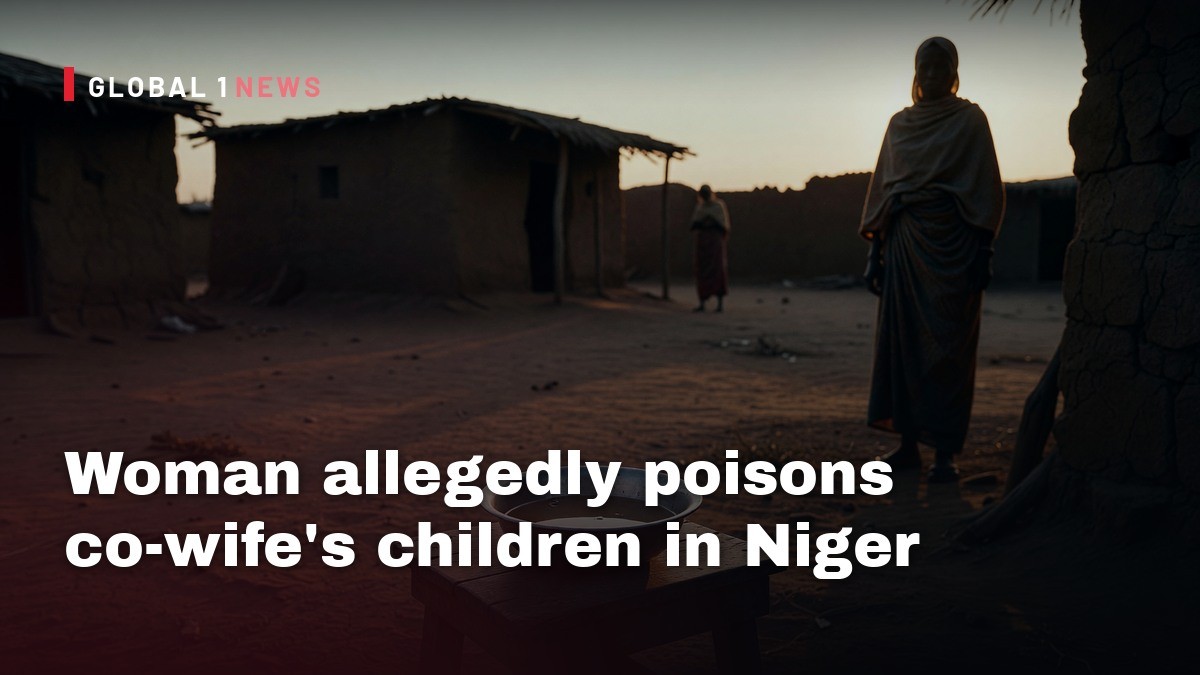
In the early hours of 6 November 2026, tragedy struck the quiet Takuti community of Lapai Local Government Area in Niger State when two children fell ill after drinking a liquid that police suspect was poison. The children, aged four and nine, were reported to have been given the drink by a woman known as Mariya Abdullahi, who, according to her own statements to police, acted out of desperation after being unable to bear a child for her husband. One child died shortly after being rushed to a nearby clinic, while the surviving sibling was transferred to the general hospital for treatment. The incident, confirmed by Niger State Police Command spokesman Wasiu Abiodun, has ignited a conversation about the pressures of childbearing, the dynamics of co‑wife relationships, and the challenges of law enforcement in rural northern Nigeria.
Chronology of the incident
According to the police report, the alarm was raised at about 6 a.m. on 6 November 2026 when officers from the Lapai Division received a call that a woman had administered a suspicious substance to two children. Upon arriving at the scene in Takuti, police operatives found the two youngsters unconscious after drinking from a cup that had been handed to them by Mariya Abdullahi. The children were immediately taken to the nearest clinic. At the clinic, one of the children succumbed to the effects of the poison, while the other was stabilized enough to be referred to the general hospital for further care.
Abiodun confirmed that the suspect was arrested on the spot and is now undergoing interrogation. He added that she will be transferred to the State Criminal Investigation Department (SCID) in Minna for further investigation and prosecution. The police spokesperson emphasized that the investigation is ongoing and that the suspect’s claim of being influenced by a friend will be examined as part of the case.
Motivation behind the alleged act
During questioning, Mariya Abdullahi reportedly told investigators that she felt compelled to poison her co‑wife’s children because she had not been able to give her husband a child. She also alleged that a friend had encouraged her to take the drastic step. This admission, as relayed by the police spokesman, underscores the intense personal and social pressures many women face in societies where fertility is closely tied to a woman’s status and security within a marriage.
The claim of external influence raises questions about the role of peer dynamics in perpetuating harmful actions. While the police have not disclosed the identity of the friend or the nature of the encouragement, the statement points to a possible network of desperation and misinformation that can circulate in tightly knit rural communities.
Polygamous family structures and child‑bearing pressure
Polygamy remains a legally recognized and culturally entrenched practice in many parts of northern Nigeria, including Niger State. In such arrangements, a husband may have multiple wives, each of whom is often expected to bear children to secure her position within the household. The failure to produce offspring can lead to marginalisation, reduced access to resources, and, in extreme cases, coercive pressure from spouses and extended family members.
Human‑rights advocates have long warned that the emphasis on fertility can create a climate where women feel compelled to take desperate measures. The Takuti case illustrates how the intersection of personal infertility and the competition inherent in co‑wife relationships can culminate in tragedy, especially when combined with limited access to reproductive health services and counseling.
Legal response and the role of SCID Minna
The suspect’s transfer to the State Criminal Investigation Department in Minna signals the seriousness with which the Niger State Police Command is treating the case. SCID is the specialised unit tasked with handling complex criminal investigations, including homicide, serious assault, and cases involving toxic substances. By moving the investigation to this unit, authorities aim to ensure a thorough forensic examination of the alleged poison, trace its source, and establish the full chain of command behind the act.
While the police have not disclosed whether any forensic testing has been completed, the standard procedure would involve collecting samples from the cup, the children’s biological fluids, and any leftover substances. These samples would be examined in a laboratory to confirm the presence of a toxic agent and to identify its composition, which could inform both the prosecution and future preventive measures.
Community reaction and the impact on trust in law enforcement
In rural communities such as Takuti, incidents of violent crime can quickly erode trust in local authorities, especially when the alleged perpetrator is a member of the community. Residents expressed shock and grief at the loss of a child, and there is a palpable fear that similar incidents could recur if underlying social pressures remain unaddressed.
Local leaders and religious figures have called for calm and urged the community to cooperate fully with the investigation. They have also appealed for greater support for families dealing with infertility, highlighting the need for counselling services and medical assistance to mitigate the desperation that can lead to such extreme actions.
Broader implications for child protection policies
This case underscores the urgent need for stronger child‑protection frameworks in northern Nigeria. While the nation has ratified international conventions on the rights of the child, implementation at the grassroots level often lags due to limited resources and cultural practices that prioritize adult concerns over child welfare.
Policy experts suggest that integrating child‑protection training into the duties of local health workers and community policing could help identify at‑risk children earlier. Additionally, establishing clear reporting mechanisms for suspected abuse, coupled with swift investigative response, can deter potential perpetrators and reassure families that the state will act decisively to safeguard its youngest citizens.
Looking ahead: prevention and support mechanisms
Addressing the root causes that led to this tragic incident requires a multi‑pronged approach. First, expanding access to reproductive health services, including infertility counselling and treatment, can alleviate the pressure on women who feel unable to fulfil traditional expectations. Second, community outreach programmes that educate families about the legal repercussions of harming children and the moral imperatives of protecting them are essential.
Finally, the ongoing investigation by SCID Minna will set a legal precedent for how cases involving poison and intra‑family violence are prosecuted in Niger State. A transparent judicial process, coupled with community engagement, can help restore confidence in the rule of law and signal that acts of violence against children will not be tolerated, regardless of the personal grievances that may motivate them.
This article was produced with AI-assisted research and editorial support. Reporting is based on the source material cited below. Sources: Daily Post Nigeria; dailypost.ng; Global1.News (08 November 2026).
By Sarah Okafor, Staff Writer
What's Your Reaction?
 Like
0
 Dislike
0
 Love
0
 Funny
0
 Wow
0
 Sad
0
 Angry
0

Africa Correspondent at Global1.News. Based in Lagos, covering politics, business, technology, and culture across the continent. Focused on telling African stories beyond the headlines — the innovation, entrepreneurs, and communities shaping the region's future.















Comments (0)