
A Projectile Reaches Riyadh's Financial District. Saudi Arabia Calls the Damage Minor.
An Aramco building in Riyadh's King Abdullah Financial District was damaged on Sunday morning. Saudi Arabia's energy ministry blamed falling shrapnel and reported no injuries. Witnesses described damage across several floors of the tower.
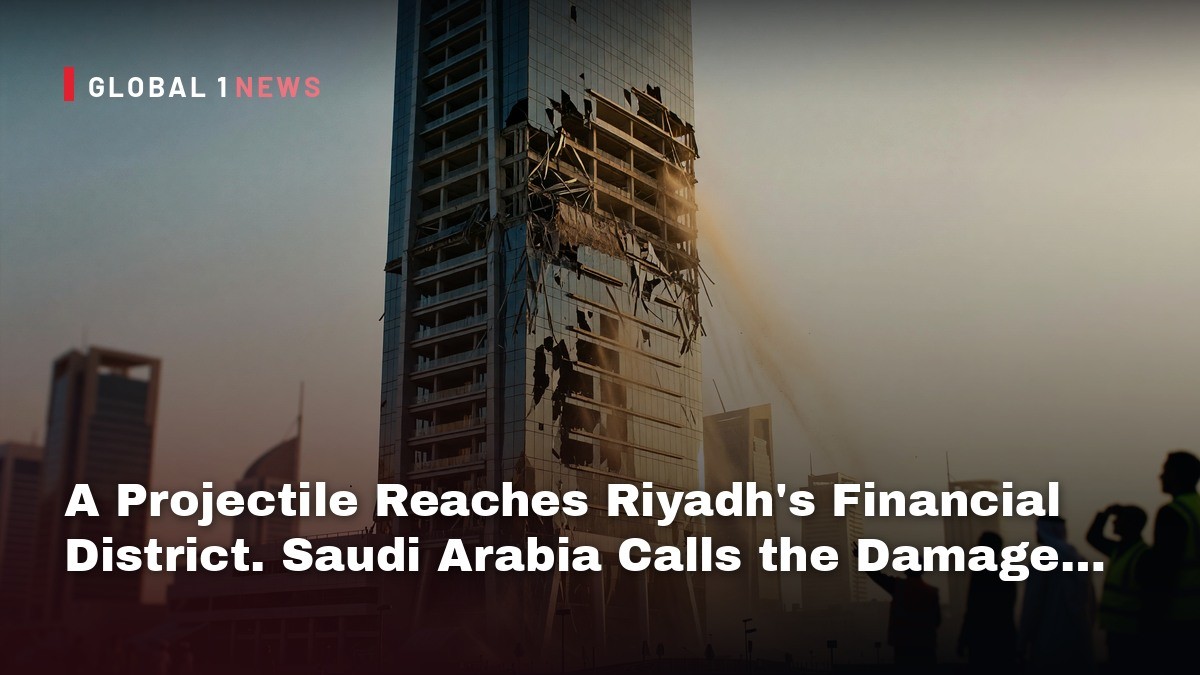
Some time on Sunday morning, a projectile reached the financial core of Saudi Arabia's capital, and a tower belonging to the state oil giant Aramco came back damaged. The kingdom's answer was careful, brief, and smaller than what the videos show.
A Projectile Reaches Riyadh's Financial District. Saudi Arabia Calls the Damage Minor.
RIYADH, Saudi Arabia — The explosion was heard across the capital. Within hours, the Ministry of Energy had called the damage limited, the coalition had called the sky defended, and the witnesses had described something else entirely.
What Saudi Arabia Says Happened
The Ministry of Energy posted a statement on X through its official account. An official source, it said, reported "an attempted targeting of a Saudi Aramco building in Riyadh, which resulted in shrapnel falling on the building and causing limited damage to it without any injuries."
A second English-language rendering of the same statement, carried by the Saudi Press Agency, put it this way: an administrative building belonging to Saudi Aramco in Riyadh was subjected to an attempted attack, and the incident "resulted in falling shrapnel that caused minor damage to the building, with no injuries or fatalities reported."
The ministry added that the competent authorities had begun dealing with the incident and taking the necessary measures. That is the entire official account of the damage: shrapnel, limited, nobody hurt. Everything else published on Sunday came from somewhere other than the ministry.
What Witnesses Say They Saw
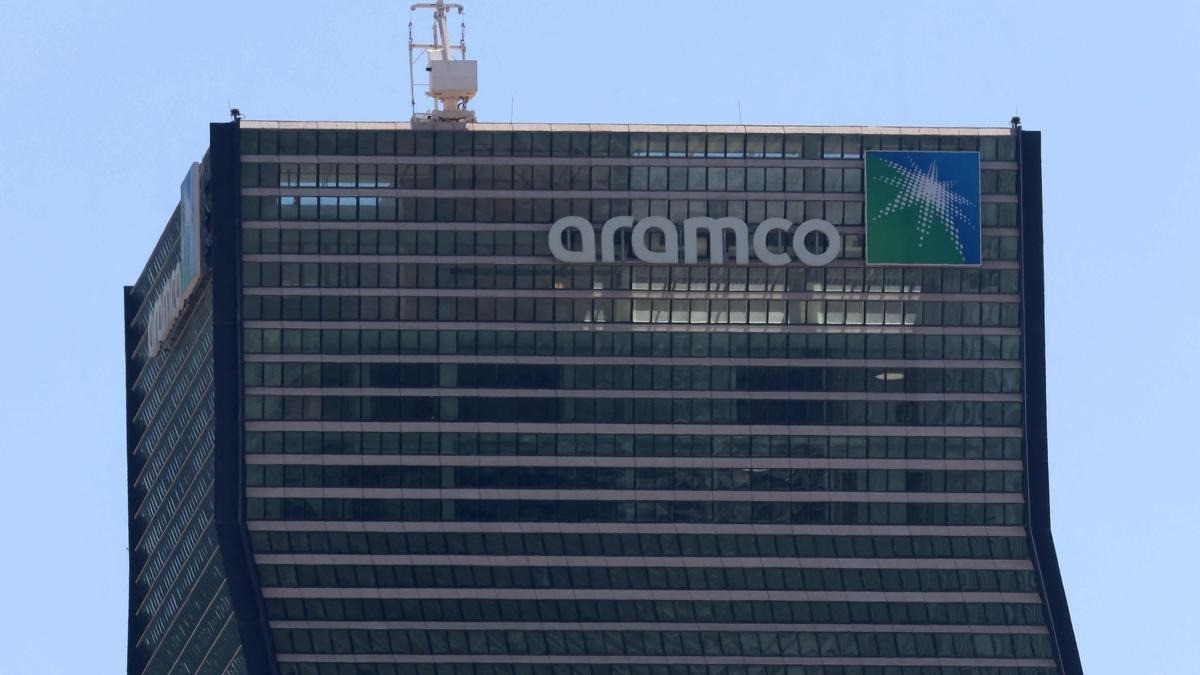
The witnesses were unanimous about the fact and divided about the cause. "Aramco tower in KAFD has been targeted, that's the sure thing," one witness told AFP, using the initials of the King Abdullah Financial District. Two others confirmed seeing damage to the building.
Another witness described multiple floors of the tower as damaged, with glass shattered and part of the facade visibly torn. A separate witness said they saw a projectile strike the building, but could not say whether it was a missile or a drone.
A Reuters witness reported hearing multiple loud booms across the capital before seeing blown-out windows across several floors of what they called one of the tallest buildings in the district. CNN said it had verified video showing damage to several floors, with windows blown out. One witness told CNN that ambulances were heading toward the area.
Witnesses spoke on condition of anonymity, citing security concerns.
Minor Shrapnel, or a Direct Hit
There is a gap between those two accounts, and nobody has closed it. The ministry describes debris falling on a building. The witnesses describe upper floors opened to the sky. Shrapnel from an intercepted ballistic missile can do real damage when it comes down over a city, and a warhead that gets through, or partly gets through, can do the same. Both are consistent with what is on the video.
L'Orient Today put the problem plainly, reporting that it was not immediately clear whether the damage was caused by falling debris from an intercepted missile or by a direct hit. No agency has established which.
What is clear is the geography. According to AFP, this was the first time material from an attack had visibly damaged a building in the district since the current escalation began.
Four Missiles, or Five
The coalition's own spokesman, Major General Turki al-Maliki, gave the first account on X: "Air defences intercepted and destroyed two ballistic missiles launched by the Houthi terrorist militia towards Riyadh."
Then the tally started moving. Al Arabiya, tracking al-Maliki's separate posts through the morning, counted a ballistic missile aimed at the Eastern Region announced about three hours earlier, then the two toward Riyadh, then two cruise missiles over the Riyadh and southern regions, then a drone toward the south. Its headline total was five missiles. Al Jazeera's reading of the same statements arrived at the same five.
AP, CNN and Xinhua, working from the coalition's later summaries, reported four: two ballistic and two cruise. The difference is that earlier Eastern Region launch. The coalition has not published a single consolidated figure, and its spokesman did not mention the damaged building at all.
The Alerts Across the Oil Heartland
Riyadh was not the only place told to take cover. Saudi civil defence lifted alerts in several areas of the Eastern Province — Dhahran, Dammam, Abqaiq and Al-Ahsa governorate — shortly after warning of potential danger, Reuters reported. Shortly after the all-clear, the coalition said it had intercepted a ballistic missile launched toward the Eastern region.
That province is not a peripheral address. It holds the majority of the kingdom's oil and gas reserves and Aramco's headquarters in Dhahran, which suffered extensive damage in an attack in October.
Gulf News reported that civil defence also announced the danger had passed in Riyadh city and in Najran Province, in the south. On any other weekend, an alert covering the headquarters of Saudi Aramco would be the story. On this one, it was a paragraph.
What the Houthis Say They Hit
The Houthi military spokesman, Yahya Saree, claimed six operations against the kingdom using ballistic missiles, cruise missiles and drones, aimed at Aramco facilities, Riyadh airport and Saudi military positions on both sides of the border.
His description of the first operation was specific. "The first operation targeted Khalid International Airport, oil storage tanks, and a distillation tower belonging to Aramco in the Saudi enemy's capital, Riyadh, and, by Allah's grace, successfully achieved its objective," Saree said. He described the attacks as a response to Saudi aggression against Yemen.
Read that list carefully. Saree named an airport, oil storage tanks and a distillation tower. He did not name a financial district, and he did not claim a tower full of offices. At the time AP and CNN filed their reports, neither carried a claim of responsibility for the building itself.
The Village Near Sanaa, and Two Death Tolls
The strikes that set this in motion landed a day earlier, and the numbers do not agree. Houthi-run health ministry spokesman Anees al-Asbahi said coalition air strikes on the village of al-Shariyah, in the Bani Hushaish district east of Sanaa, killed 33 people including eight women and 13 children, and wounded at least 39 others. He said the strikes hit homes, roads, paramedics and civil defence teams. Al Jazeera could not independently verify the reports.
AP, citing Houthi officials, reported at least 27 killed.
The coalition has not commented on the village strikes. The Houthis have. On Saturday, Mahdi al-Mashat, a senior Houthi official, promised that the group would "punish the Saudi regime for its crimes against the Yemeni people." The barrage followed within hours.
Why KAFD Matters More Than the Damage
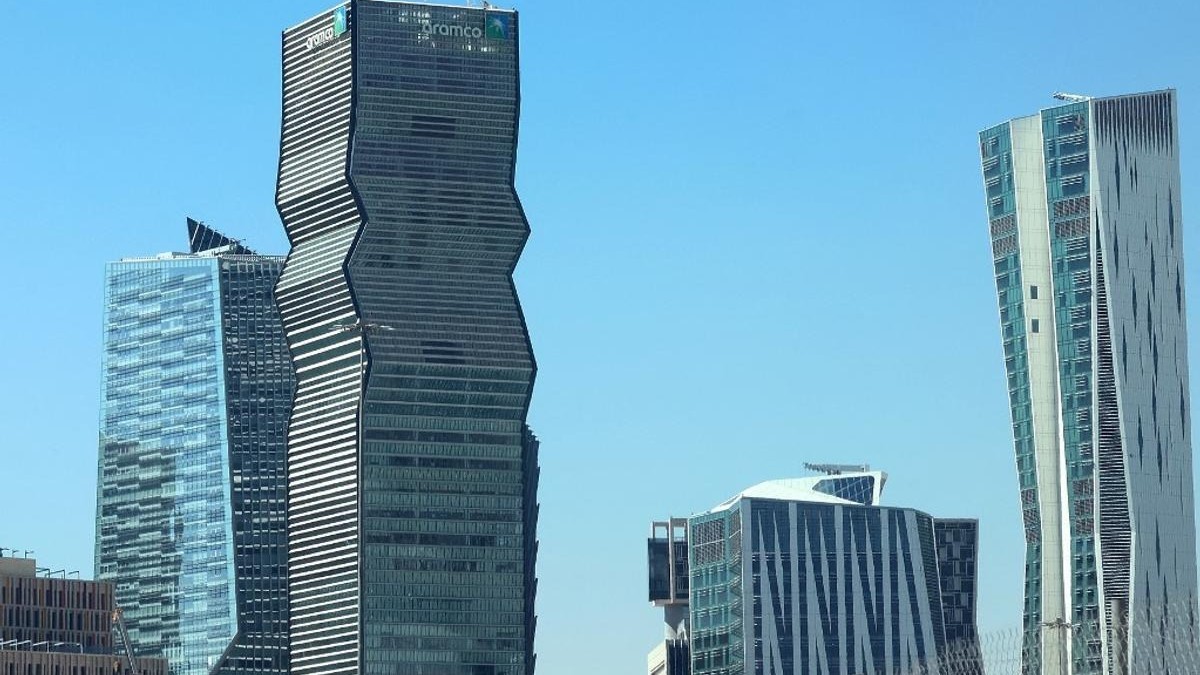
The King Abdullah Financial District is the most visible piece of the kingdom's economic reinvention: glass towers, high-end retail, green space, and the headquarters of the Public Investment Fund, the Saudi stock exchange and international banks including Goldman Sachs. It is what Saudi Arabia shows investors when it argues that the oil era is a phase, not a fate.
It is also a neighbourhood, not a compound. AFP notes that the district holds residential housing and a large metro station carrying heavy commuter traffic through the morning rush hour. The damage came on a morning when that station fills with people, in a capital that had spent the previous evening telling parents their children could go back to school.
The education ministry made that announcement late on Saturday, ending weeks of remote learning in Riyadh imposed after an earlier wave of strikes. The classrooms reopened on the same morning the financial district was hit.
A Defence Budget That Keeps Losing Pieces
Saudi Arabia spent 83 billion dollars on defence last year, according to the Stockholm International Peace Research Institute, which places it among the top ten military spenders on earth. That money buys interceptors, and the interceptors are working, in the narrow sense that most of what is fired at the kingdom does not arrive intact.
The record still has holes in it. Al Jazeera reports that at least 13 people were killed and more than 300 wounded in a Houthi strike on Riyadh airport on 10 October, 29 days before Sunday's attack. The Houthis have also hit King Fahd International Airport in Dammam, the Ras Tanura and Rabigh refineries, and other Aramco sites.
Al-Maliki's own announcements trace a staircase. A cruise missile toward the Riyadh region on Saturday. Two ballistic missiles toward Najran and two drones over the Riyadh and Mecca regions on Friday. A ballistic missile toward Medina and a drone in the Eastern Region on Thursday. On Sunday, a building in the capital's financial district took damage regardless.
What Is Not Established
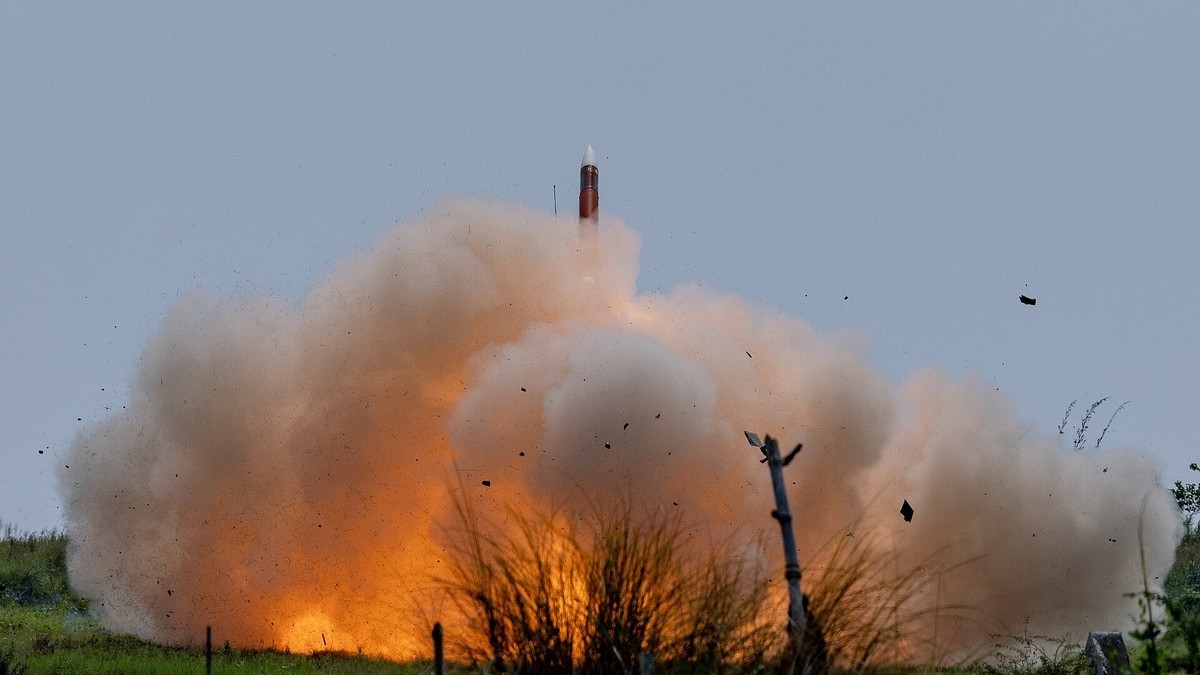
Nobody has told the public exactly what came through the sky over KAFD, or how much of it. The projectile's type is unknown. Its origin has not been established by any reporting agency. The ministry says no one was hurt; no independent casualty assessment has been published, and the ambulance report stands unaddressed.
The wider war is not waiting for answers. AFP reports that thousands of Syrian troops are set to deploy to Saudi Arabia and Yemen, with some already on the ground, according to multiple Yemeni officials. The United Nations says more than 1,600 people have been killed and more than 300,000 displaced since fighting resumed.
And a tower in the most photographed business district in the Gulf is standing there with its windows out, in a country that has spent a decade selling the idea that this could not happen here.
By Jessica Ali, Staff Writer
This article was produced with AI-assisted research and editorial support. Photographs: the Aramco tower image is an AFP file photograph and does not show Sunday's damage; the King Abdullah Financial District file image is by Fayez Nureldine/AFP; the Patriot launch frame is by Cpl. Tyler Andrews/US Marine Corps (public domain). Cover: Global 1 News editorial image. Sources: Saudi Ministry of Energy statement via the Saudi Press Agency; Arab News; Al Arabiya English; Al Jazeera; the Associated Press; CNN; AFP via The Hindu and Nouvel Obs; Reuters via Al-Monitor and the Straits Times; Middle East Eye; Gulf News; L'Orient Today; Xinhua; TASS; Kursiv; the Stockholm International Peace Research Institute.
What's Your Reaction?
 Like
0
 Dislike
0
 Love
0
 Funny
0
 Wow
0
 Sad
0
 Angry
0

Editor-in-Chief at Global1.News. Atlanta-based journalist who cuts through the BS and tells it like it is. Lead anchor, host, and the voice you hear when the spin stops and the truth starts.











Comments (0)