
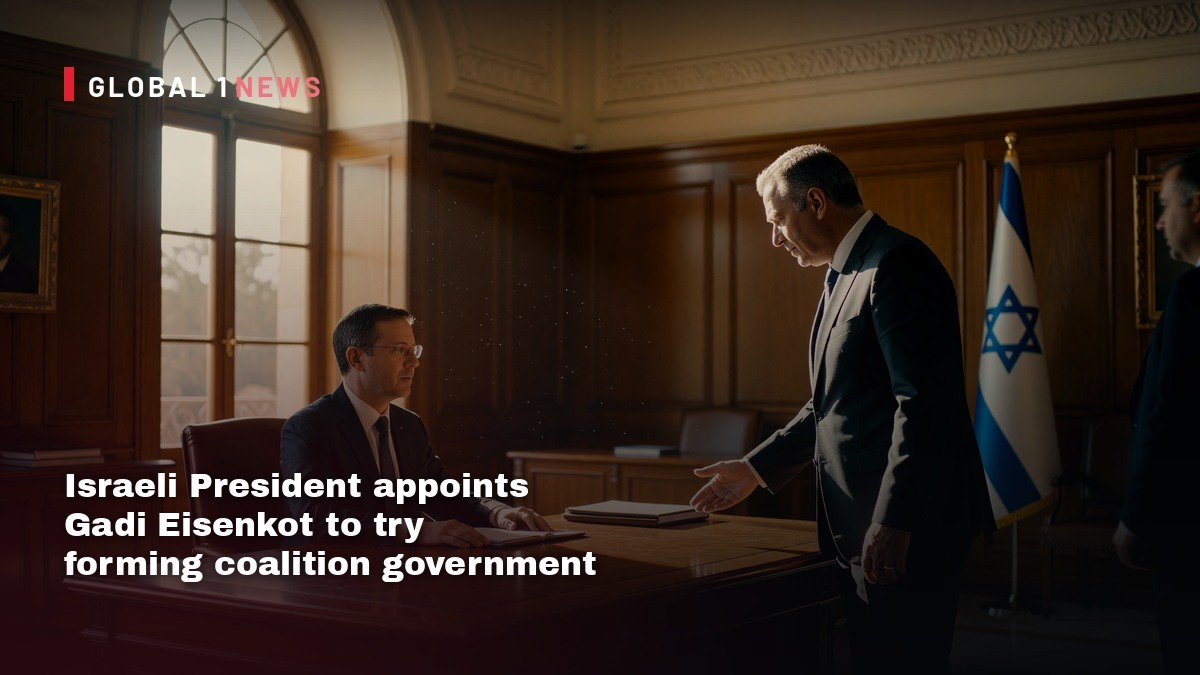
Israeli President Appoints Gadi Eisenkot to Seek New Coalition After Election Upset
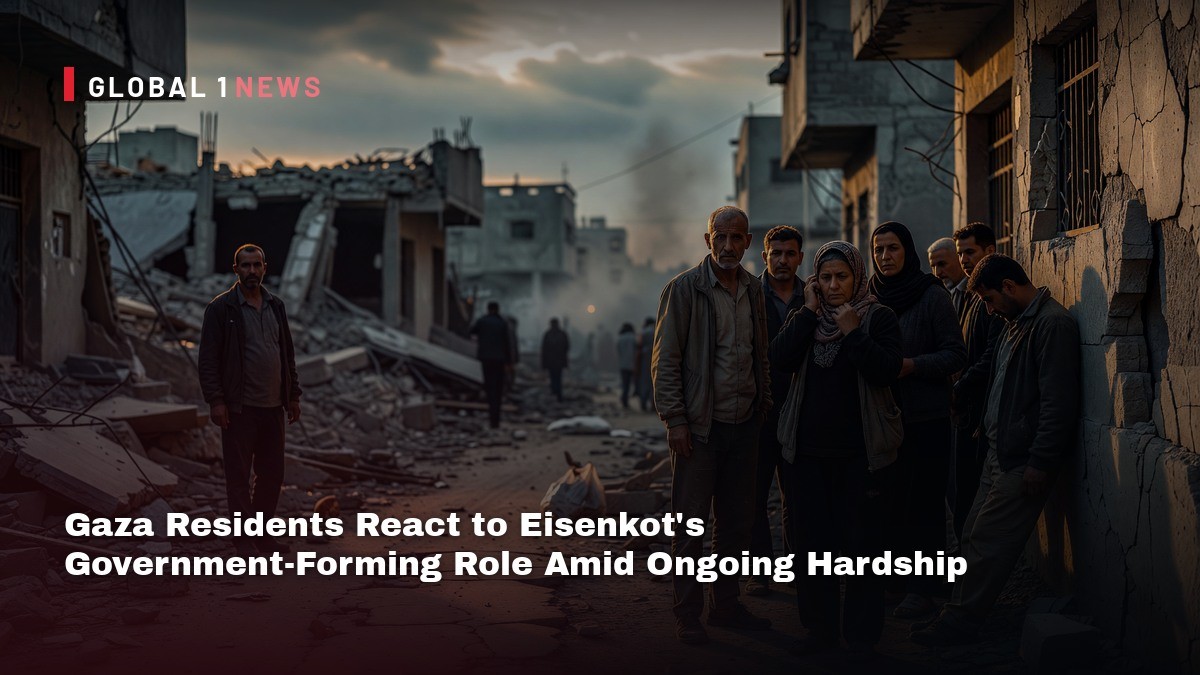
In a development that will reverberate through the corridors of power in Ottawa as well as Jerusalem, Israeli President Isaac Herzog has tasked Gadi Eisenkot, a noted rival of Prime Minister Benjamin Netanyahu, with the task of forming the next government.
In a development that will reverberate through the corridors of power in Ottawa as well as Jerusalem, Israeli President Isaac Herzog has tasked Gadi Eisenkot, a noted rival of Prime Minister Benjamin Netanyahu, with the task of forming the next government. The decision follows the loss of a parliamentary majority by Netanyahu’s coalition in the elections held on 27 October 2026. The move, reported by CBC News, has prompted analysis from former Canadian ambassador to Israel John Allen, who highlighted the potential implications for Israel’s political stability and for Canada’s diplomatic engagement with the region.
President Herzog’s Choice and Its Immediate Context
The president’s selection of Eisenkot comes at a critical juncture. Israel’s parliamentary system requires the president to assign the mandate to the individual most likely to command a majority in the Knesset. By turning to Eisenkot, Herzog signalled a departure from the expectation that the incumbent prime minister would automatically receive the first opportunity to rebuild a coalition. This shift reflects the reality that Netanyahu’s bloc failed to secure enough seats to sustain a governing majority after the 27 October vote.
Eisenkot, known for his rivalry with Netanyahu, now faces the complex task of negotiating with a fragmented legislature. The CBC report notes that the president’s decision is intended to “try to form the next government,” underscoring the provisional nature of the mandate. As the process unfolds, Eisenkot will need to engage with a range of parties, some of which may have campaigned on platforms that differ markedly from his own policy outlook.
John Allen, who served as Canada’s ambassador to Israel, offered perspective on the significance of the president’s move. He suggested that the appointment could reshape the political landscape by opening space for alternative coalitions, potentially altering the balance of power that has been dominated by Netanyahu’s right‑leaning alliances for many years. Allen’s comments, delivered in the CBC footage, emphasized the strategic importance of this moment for both Israeli domestic politics and Canada’s foreign policy considerations.
Implications for Israeli Domestic Politics
The selection of Eisenkot introduces a new dynamic into Israel’s post‑election negotiations. Historically, the formation of a coalition in Israel involves extensive bargaining over ministerial portfolios, policy priorities and budgetary allocations. Eisenkot’s position as a rival to Netanyahu suggests that his approach to coalition‑building may differ from the incumbent’s, potentially leading to a re‑configuration of policy agendas, particularly in areas such as security, settlement policy and economic reform.
While the CBC video does not provide specific details about Eisenkot’s platform, the fact that he is described as a “rival” indicates that his political stance may challenge some of the core tenets of Netanyahu’s coalition. This could translate into a more centrist or even left‑leaning coalition, depending on which parties agree to join his effort. The president’s choice therefore opens the possibility for a government that may pursue a different set of priorities, which could affect Israel’s domestic agenda on issues ranging from housing affordability to social welfare.
From a procedural standpoint, Eisenkot will need to secure the confidence of the Knesset within a limited timeframe. The president’s mandate typically allows a designated individual a set period to demonstrate that they can assemble a stable coalition. Failure to do so would trigger a second round of negotiations, potentially involving other political figures. The CBC coverage underscores the urgency of this task, noting that the coalition lost its majority and that the president’s decision is aimed at “trying to form the next government” promptly.
Canadian Diplomatic Interests and Historical Ties
Canada’s relationship with Israel has long been characterised by diplomatic engagement, trade, and shared democratic values. The appointment of Eisenkot, a figure positioned against Netanyahu, may present both opportunities and challenges for Canadian diplomats in Jerusalem. As John Allen highlighted, the shift could influence the tone of bilateral discussions, particularly in areas where Canada has expressed interest, such as technology cooperation, defence procurement and joint research initiatives.
Ottawa’s foreign ministry will likely monitor the coalition‑building process closely, assessing how policy shifts could impact Canadian interests. For instance, any change in Israel’s approach to regional security could affect Canada’s contributions to peace‑keeping and humanitarian efforts in the Middle East. Moreover, Canadian businesses with investments in Israeli technology sectors may need to adapt to a new policy environment, especially if Eisenkot’s prospective coalition proposes reforms to the regulatory framework governing innovation and start‑ups.
Beyond the immediate diplomatic calculus, the development also resonates with Canadian parliamentary practice. The president’s role in assigning the mandate mirrors the function of the Governor General in Canada, who, on the advice of the prime minister, may dissolve Parliament or call an election. Observers in Ottawa may draw parallels between Herzog’s decision and the constitutional conventions that guide Canada’s own political transitions, reinforcing the relevance of Israel’s internal processes to Canadian audiences.
Potential Impact on Canadian Communities and Public Opinion
Canadian public opinion on Israel often reflects a spectrum of views, ranging from strong support for Israel’s right to security to concerns about the humanitarian situation in the occupied territories. The emergence of a new coalition under Eisenkot could influence public discourse, particularly if the government adopts policies that differ from Netanyahu’s hard‑line stance. Media coverage in Canada, including outlets such as Global1.News, will likely scrutinise any shifts in Israel’s approach to the peace process, settlement activity and relations with the Palestinian Authority.
For Canadian Jewish communities, the political change may prompt renewed dialogue about representation and advocacy. Organizations that traditionally lobby the federal government on Israel‑related issues will be attentive to the evolving policy environment in Jerusalem, seeking to understand how Eisenkot’s leadership could affect Canada’s stance in international forums such as the United Nations.
Indigenous groups and other advocacy organisations may also view the development through the lens of Canada’s own reconciliation journey. Comparative analyses often emerge when Canadian media examine how other democracies address Indigenous rights and land claims, and Israel’s internal politics can serve as a point of reference. While the CBC report does not delve into these dimensions, the broader Canadian context suggests that the political shift in Israel will be examined for its resonance with domestic debates on governance, minority rights and conflict resolution.
Economic and Energy Considerations
Israel’s economy, noted for its robust technology sector and growing energy exports, could experience adjustments under a new coalition. If Eisenkot’s prospective government pursues a different fiscal policy, this may affect trade relations with Canada, particularly in sectors where Canadian firms have established partnerships. Canadian investors monitoring the Israeli market will be keen to understand any regulatory changes that could impact joint ventures in fields such as renewable energy, water technology and cybersecurity.
Energy policy is another area of potential impact. Israel’s recent developments in offshore natural gas extraction have positioned it as an emerging energy exporter. A coalition led by Eisenkot might reassess export strategies, pricing arrangements or regional energy cooperation agreements. Such shifts could intersect with Canada’s own energy transition agenda, especially if collaborative projects are contemplated between the two nations.
While the CBC video does not specify Eisenkot’s economic platform, the broader implication is that any new government will need to balance domestic fiscal pressures with external trade opportunities. Canadian policymakers, particularly those in the Department of International Trade, will likely engage with Israeli counterparts to ensure continuity in bilateral economic relations, regardless of the internal political re‑configuration.
Looking Ahead: Scenarios and Canadian Response
As the mandate proceeds, several scenarios could unfold. Eisenkot may successfully negotiate a coalition that commands a clear majority, leading to the formation of a new cabinet and the implementation of a revised policy agenda. Alternatively, he could encounter insurmountable obstacles, prompting the president to assign the mandate to another political figure, potentially reopening negotiations with Netanyahu or other party leaders. The CBC report frames the president’s decision as an attempt to “form the next government,” leaving the outcome open.
For Canada, the immediate response will involve diplomatic briefings to senior officials, including the prime minister and the minister of foreign affairs. Monitoring the coalition talks will be essential to anticipate any changes that could affect bilateral cooperation, especially in areas of mutual security interest. Canadian intelligence and defence establishments may also assess how a new Israeli leadership could influence regional security dynamics, which have downstream effects on Canada’s own defence procurement and strategic planning.
In the broader public sphere, Canadian media will continue to analyse the development, offering context on how Israel’s parliamentary mechanisms compare with Canada’s own Westminster‑style system. The narrative will likely explore themes of democratic resilience, the challenges of coalition politics and the ways in which leadership transitions can shape foreign policy trajectories. As the story evolves, Global1.News will provide ongoing coverage, drawing connections between the unfolding Israeli political scene and the Canadian values of fairness, inclusion and civic responsibility that underpin our own democratic institutions.
By Alex Thompson, Staff Writer
This article was produced with AI-assisted research and editorial support. Reporting is based on the source material cited below. Sources: CBC News video report (07 November 2026); CBC News; Global1.News
What's Your Reaction?
 Like
0
 Dislike
0
 Love
0
 Funny
0
 Wow
0
 Sad
0
 Angry
0
Canada Correspondent at Global1.News. Based in Toronto, covering Canadian politics, energy, trade, and US-Canada relations. Provides the Canadian perspective on North American and global affairs.









Comments (0)