
Parents want safer phones for kids. These companies are answering the call.
Parents are finally demanding phones that don’t turn their kids into walking data mines, and a clutch of startups are stepping in with stripped‑down hardware and heavy‑handed software controls.
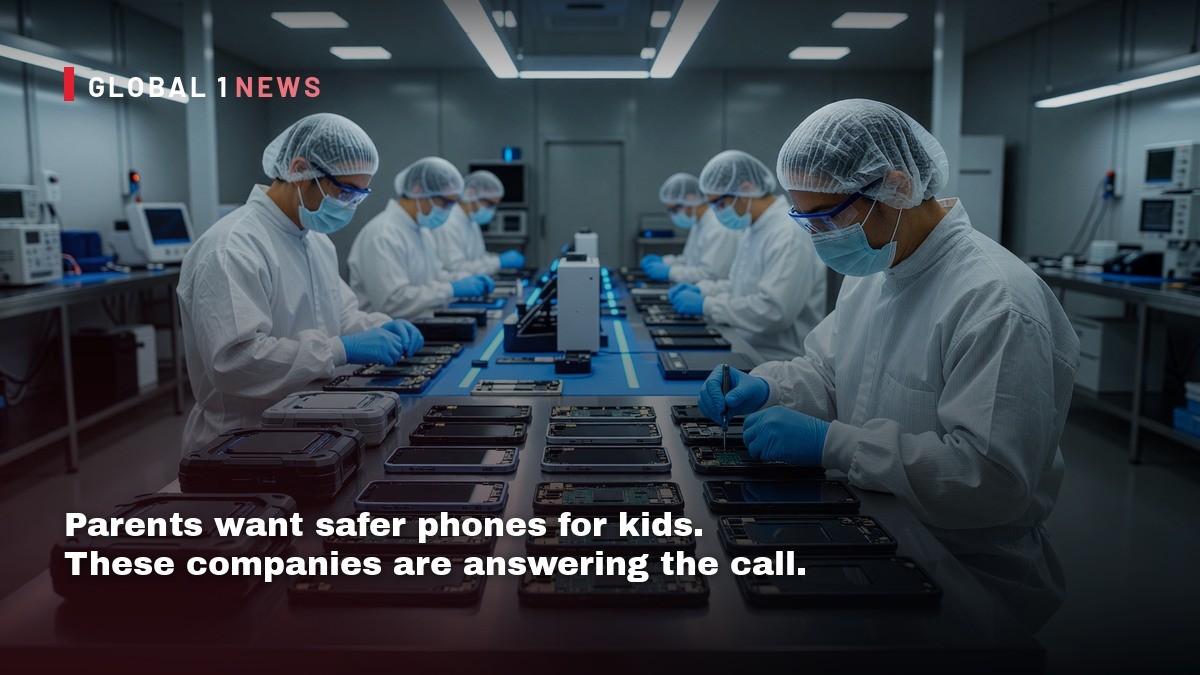
Parents are finally demanding phones that don’t turn their kids into walking data mines, and a clutch of startups are stepping in with stripped‑down hardware and heavy‑handed software controls. From Samsung‑based bark‑monitoring rigs to Wi‑Fi‑only tin‑can landlines, the market is splintering into three clear camps: monitoring‑centric smartphones, minimalist “call‑only” devices, and home‑based landlines that replace the traditional cordless set. As a founder who has spent the last decade wrestling with the same “feature creep” that these kids’ phones are trying to curb, I see a lot of familiar pain points – pricing pressure from hyperscalers, the illusion of “best practice” SDKs that crumble under real‑world traffic, and the endless churn of VC‑fueled hype that never translates into sustainable margins.
Why the kid‑phone market matters to independent hosting providers
At first glance, a $119 handset or a $99.99 landline service might look like a niche hobbyist corner, but the underlying infrastructure is anything but. Every device that offers GPS tracking, screen‑time analytics, or real‑time content scanning relies on cloud back‑ends that must ingest, process, and store data at scale. Companies like Bark, which builds its kid‑phone on Samsung hardware, are running continuous text, email, photo, and app analysis to flag cyberbullying, grooming, and other red‑flag content. That kind of workload is a data‑intensive, latency‑sensitive pipeline – exactly the kind of traffic that can swamp a small provider if you’re not prepared.
For us running our own data centers, the lesson is simple: the rise of kid‑focused devices will drive a parallel surge in demand for low‑latency, privacy‑first edge services. If you’re still relying on generic public‑cloud instances to host a monitoring API, you’ll soon see your margins evaporate under the $29‑plus per‑month carrier fees that these firms bundle with their plans. The smarter play is to own the stack – from the LTE/5G gateway to the edge analytics node – and charge carriers or OEMs a wholesale rate that beats the hyperscaler pricing model.
Monitoring‑centric smartphones: the Bark model
Bark’s approach is to take a mainstream Samsung Galaxy platform and slap on a proprietary monitoring suite that scans every incoming text, email, photo, and supported app. The phone only permits calls and texts with approved contacts out of the box, but parents can gradually unlock web browsing and apps as the child matures. The device also bundles GPS tracking and screen‑time management, and it pushes alerts to parents when it detects anything from cyberbullying to suicidal ideation.
The pricing structure – $240 upfront plus a $29‑plus monthly wireless plan that can be upgraded for internet access and unlimited texting – is a clear signal that Bark is targeting families willing to pay a premium for peace of mind. From an infrastructure standpoint, the real cost driver is the continuous content‑analysis engine. That engine needs to run machine‑learning models at scale, store logs for compliance, and deliver push notifications in near‑real time. If you’re a small hosting outfit, you can undercut Bark by offering a leaner, open‑source pipeline that runs on commodity CPUs and leverages your own PoPs for low‑latency delivery, rather than paying the big cloud providers for the same capability.
Pure minimalism: Gabb and the “no‑internet” philosophy
Gabb takes the opposite tack. Its phones strip out browsers, app stores, and social media entirely, offering only calling, texting, and a handful of preloaded utilities like a camera, calendar, and calculator. The company also touts a “worry‑free” music library with millions of songs, and an optional “Gabb Guard” service to block spam calls and unwanted texts. Pricing sits around $159.99 upfront with a $24.99 monthly cellular plan.
From a hosting perspective, Gabb’s model is far less demanding on the back end. Without a need for real‑time content scanning, the bulk of their infrastructure is likely a simple provisioning system and a basic SMS gateway. This is the sweet spot for boutique carriers who can offer a wholesale voice/SMS backbone at a fraction of the cost of a full‑blown monitoring stack. The trade‑off is revenue – you lose the high‑margin subscription services that Bark monetises, but you gain a lower‑cost, lower‑complexity product that can be sold at volume.
Hybrid control platforms: Pinwheel’s “modes” and subscription model
Pinwheel sits somewhere in the middle. Its phones start at $119, with a Caregiver Portal subscription at $14.99 per month (cellular service is separate). The standout feature is the ability to create daily “modes” that lock the device down to calling and navigation during school hours, then unlock additional features after homework. Pinwheel also offers landline phones at $68 and $79, plus a smartwatch for $160.
The subscription model is where the money lives. By charging a recurring fee for the caregiver portal, Pinwheel can fund a more sophisticated back‑end that handles location history, routine scheduling, and app‑approval workflows. For independent hosting providers, this is a clear playbook: bundle a lightweight SaaS layer on top of your edge infrastructure and sell it as a value‑added service to OEMs. The key is to keep the API surface small – a few well‑documented endpoints for contact approval, location ping, and mode switching – and let the carrier handle the heavy lifting of voice and data transport.
Home‑based landlines: Ooma MyPhone, Tin Can, and Waffle
Not every kid‑phone needs to be a handheld. Ooma MyPhone, Tin Can, and the newer Waffle Home all target the home landline market. Ooma’s device costs $99.99 with service at $7.99 per month and limits calls to an approved “Trusted Circle,” adds quiet hours, and provides 911 address‑based service. Tin Can, at $100, connects via Wi‑Fi, offers a free plan for intra‑network calls and a $9.99 monthly plan for broader outreach, and also restricts contacts to a whitelist. Waffle’s Home unit retails for $119 and its portable Go version for $169, both using a simple three‑button interface for voice calls and voice notes.
These products sidestep the cellular network entirely, which means they rely on VoIP back ends. For a small hosting outfit, this is a golden opportunity. You can host a SIP‑based PBX cluster in a regional data centre, offer a flat‑rate per‑device licence, and keep the recurring revenue stream flowing. The challenge is ensuring high‑availability and low‑latency for emergency calls – a non‑negotiable requirement that will push you to build redundant SIP trunks and robust DDoS mitigation. But the upside is a clear, predictable cost structure that doesn’t get tangled up in the carrier‑grade pricing wars that dominate the smartphone arena.
The pricing paradox and the VC hype trap
All the products listed come with a hefty upfront cost – $119 to $240 – plus a monthly service fee that ranges from $7.99 to $29+. Those numbers may look steep to a parent, but they reflect the reality of bundling hardware, carrier access, and a SaaS layer that does the heavy lifting. The problem is that many VC‑backed entrants try to undercut these prices to win market share, only to discover that the underlying infrastructure costs are non‑negotiable. Without a deep‑pocketed carrier partner or a proprietary edge network, you’ll end up bleeding cash on bandwidth, storage, and compute for the monitoring services that drive the higher subscription tiers.
My own experience tells me that the “best practice” playbooks that tech blogs push – containerise everything, run on public cloud, rely on third‑party AI APIs – crumble when you hit the real‑world scale of millions of daily scans or location pings. The smarter route for founders is to own the data path: negotiate wholesale carrier rates, build a lean edge compute layer, and keep the SaaS component simple enough to run on modest hardware. That way you can price competitively without sacrificing margins, and you avoid the classic VC trap of chasing growth at the expense of cash flow.
Actionable takeaways for independent hosting founders
First, map the device ecosystem to your infrastructure capabilities. If you’re comfortable running a content‑analysis pipeline, target the Bark‑style monitoring market and sell your edge analytics as a white‑label service. If you prefer a low‑touch model, focus on Gabb‑type voice/SMS provisioning or the landline‑only solutions from Ooma, Tin Can, and Waffle.
Second, lock in wholesale carrier agreements early. The $29‑plus monthly wireless plan that Bark bundles is a benchmark – you need a similar or better rate to stay competitive. Look for regional carriers willing to off‑load traffic onto your PoPs in exchange for a revenue share.
Third, keep your SaaS layer lean. A handful of REST endpoints for contact approval, location ping, and mode scheduling are enough to generate recurring revenue without over‑engineering. Pair that with a transparent pricing model that separates hardware cost from service fees – parents appreciate the clarity, and it protects you from the “all‑in‑one” pricing pressure that hyperscalers love to impose.
Finally, invest in compliance and data security from day one. Kid‑focused devices sit under a microscope of privacy regulations, and a single breach can wipe out trust faster than any price war. Build audit logs, encrypt data at rest, and give parents granular control over data retention – that’s not just good practice, it’s a market differentiator.
In short, the kid‑phone boom is a micro‑cosm of the broader consumer‑tech battle: hardware versus software, carrier‑grade pricing versus wholesale economics, and hype‑driven growth versus sustainable margins. Independent hosting founders who can navigate those trade‑offs will not only survive the influx of new devices but also carve out a profitable niche in a market that’s only going to get louder as parents demand safer, simpler tech for the next generation.
— Allan Ali, Founder
This article was produced with AI-assisted research and editorial support. Reporting is based on the source material cited below. Sources: TechCrunch; techcrunch.com; Global1.News (08 November 2026).
By Allan Ali, Global1.News
What's Your Reaction?
 Like
0
 Dislike
0
 Love
0
 Funny
0
 Wow
0
 Sad
0
 Angry
0

Publisher of Global1.News. Automation architect, systems builder, and the guy making sure the truth gets published.












Comments (0)