
The Appellate Court Cleared Yoon Suk Yeol. He Is Still Serving Life.
South Korea's Seoul High Court acquitted former President Yoon Suk Yeol of taking 58 free opinion polls before the 2022 election, overturning a two-year sentence. Broker Myung Tae-kyun was cleared too, and the special counsel says it will appeal to the Supreme Court.

A Seoul appellate court on Wednesday acquitted former President Yoon Suk Yeol of accepting free opinion polls during his 2022 campaign, overturning a conviction that had sent him to prison for two years. The same bench cleared the political broker tried alongside him. Yoon stays behind bars on heavier convictions.
The Appellate Court Cleared Yoon Suk Yeol. He Is Still Serving Life.
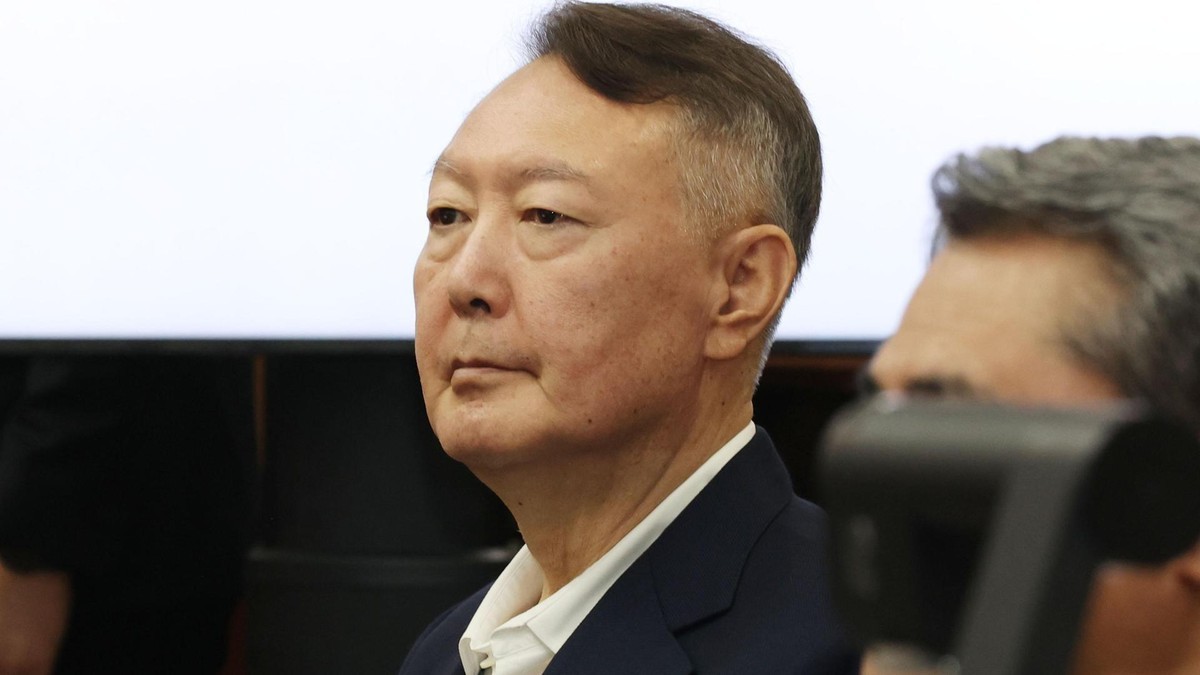
SEOUL — The Seoul High Court's Criminal Division 7, presided over by Judge Gu Hoe-keun, acquits former President Yoon Suk Yeol and political broker Myung Tae-kyun of Political Funds Act violations on Wednesday 7 October 2026.
The Verdict
The Seoul High Court found Yoon not guilty of violating the Political Funds Act by receiving free opinion polls ahead of the 2022 presidential election. Myung Tae-kyun, the self-proclaimed political broker tried alongside him, was acquitted by the same bench.
The ruling reversed the Seoul Central District Court's July conviction and wiped out the two-year prison term that came with it. Myung's 18-month sentence fell too.
The charge was serious on paper. Yoon was accused of colluding with his wife, Kim Keon Hee, to take 58 opinion polls worth about 270 million won, or roughly US$202,000, free of charge from Myung between 2021 and March 2022. The special counsel team led by Min Joong-ki had asked for four years for Yoon and three for Myung. On Wednesday the court rejected the heart of that case.
A Two-Year Sentence, Overturned
The July verdict did not convict Yoon on all 58 polls. It convicted him on 14 — the ones Myung delivered directly to Yoon and his wife — and ordered the forfeiture of about 13.96 million won. Myung got 18 months.
That judgment rested on what the lower court called an implicit consensus between the Yoon couple and Myung on the commissioning and provision of the polls. The first trial also held that Yoon used his influence to secure the nomination of former People Power Party lawmaker Kim Young-sun as a reward.
The Political Funds Act governs money and goods flowing into politics, and a violation can bring prison time. On Wednesday the appellate court found the facts did not fit the charge. Both prison sentences were set aside.
What the Appellate Court Actually Ruled
The reasoning turned on what a free poll is worth, and whether it is a donation at all. The court said the political advice Myung provided could be seen as carrying political benefits, but it cannot be quantified as a benefit in terms of property, so it is difficult to view it as a donation of political funds.
The court then looked at how the surveys were produced. It said all the polls were conducted as a decision of the Future Korea Institute connected to Myung, and only some results reached the Yoon couple. The same results went to other politicians, including former People Power Party leader Lee Jun-seok.
That distinction decided the case. The couple may have gained a political advantage, the court said, but that did not establish a financial benefit equal to the cost of running the polls. And it said it could not establish that Yoon intended to receive an illegal political contribution.
The Broker at the Centre of It
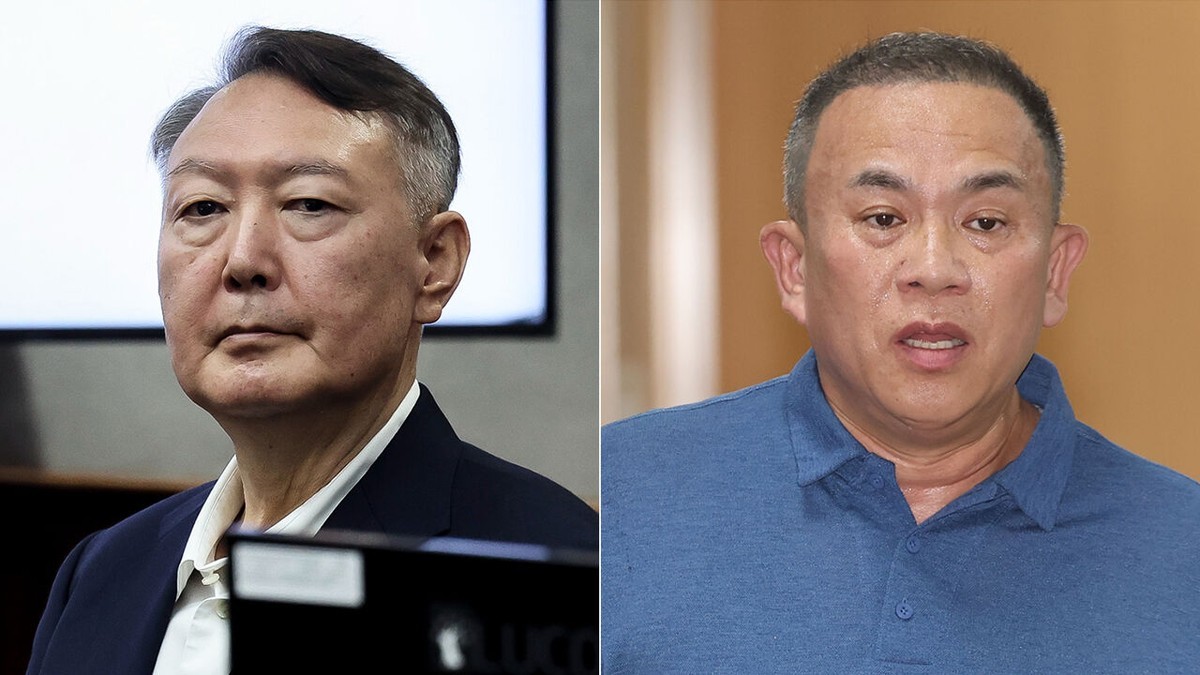
Myung Tae-kyun described himself as a political broker before the courts did. Prosecutors said he supplied the polls free, in exchange for influence. The appellate court saw something simpler: a man promoting his own usefulness.
It found Myung provided the results on his own initiative, to demonstrate his value and influence, rather than under an agreement with Yoon and former first lady Kim Keon Hee.
That finding did real work. If the broker acted on his own account, the theory of a coordinated arrangement between broker and candidate loses its first link. The lower court had inferred an implicit consensus on commissioning and providing the polls. The appellate court found none, and Myung's acquittal stands alongside Yoon's unless an appeal changes it.
Why the First Trial Saw an Agreement
The lower court built a chain: free polls in, a political favour out. It held that the implicit consensus covered both the commissioning and the provision of the surveys, and treated that arrangement as criminal under the Political Funds Act.
The appellate court rejected the chain at its first link. It said there was no evidence whatsoever that there was a meeting of minds among Yoon, his wife and Myung regarding a request or agreement to conduct or provide the opinion polls free of charge. Without a meeting of minds, the agreement the first trial inferred did not exist.
Intent was the second break. Culpability under the act requires an intention to receive an illegal political contribution. The first trial found it. The second did not. That gap between two readings of the same facts is what the special counsel now wants the country's top court to examine.
The Parallel Case Against Kim Keon Hee
Kim Keon Hee was acquitted of the same polling-related charge in both her separate first- and second-instance trials, on the same factual basis. She is waiting on a final ruling from the Supreme Court over it. Wednesday's decision on her husband aligned with those two acquittals.
She faces a heavier and separate legal reality. In a different case she was sentenced to four years in prison on appeal over Deutsch Motors stock manipulation and over receiving money and valuables from the Unification Church. That matter is also before the Supreme Court.
The two must not be merged. One is a Political Funds Act question about free survey results. The other concerns stock manipulation and gifts. Wednesday's ruling touches only the polling charge, and it settles nothing about Kim's pending Supreme Court outcome.
What Yoon Is Still Serving For
The acquittal does not free Yoon Suk Yeol. Reuters reported that a Seoul court found him guilty on 19 February 2026 of leading an insurrection over his short-lived December 2024 martial law declaration. Xinhua and China Daily Hong Kong reported he was sentenced to life in prison in February for that insurrection, and to 30 years in prison in June on a general treason charge tied to the infiltration of drones into the DPRK.
The Korea Herald reported on 29 April 2026 that the Seoul High Court raised to seven years his sentence in a case tied to the martial law decree, two years above the lower court's five. Chosunbiz reported on 25 June 2026 that in the insurrection appeal the special counsel asked the same court to sentence Yoon to death, calling the life term too light.
Two acquittals also landed this year. On 11 September 2026 the Seoul Central District Court cleared Yoon of abusing presidential power to help a suspect evade investigation — the appointment of former defence minister Lee Jong-sup as ambassador to Australia in November 2023. Five other former officials were acquitted with him. On 16 September 2026 the Seoul High Court acquitted him in a perjury retrial, dismissing the special prosecutor's appeal. Yoon was indicted while in detention in January 2025, the first sitting president to be arrested and indicted.
The Appeal That Comes Next
After the ruling the special counsel team said it would file an appeal to the Supreme Court. That is the next procedural step, and the only one confirmed.
The Supreme Court has not agreed to hear anything. The special counsel has said it will appeal. Those are different things, and the difference matters: an appeal is a request, and whether the top court takes the case, and how it rules, is established by nothing decided on Wednesday.
Yoon's legal team welcomed the acquittal, and Myung saw his 18-month sentence set aside. For now the appellate ruling is the final word on the polling charge at second instance. The wider legal fallout began with a martial law decree on the night of 3 December 2024, revoked hours later by the National Assembly, and it has not stopped since.
The Pattern in South Korea's Courtrooms
Wednesday's ruling is not isolated. It is the latest in a run of decisions in which South Korean courts have split on the same facts or reversed one another outright.
The polling case travelled from conviction and a two-year sentence in July to acquittal in October. The perjury case produced an acquittal at first instance and another on appeal. The abuse-of-power case ended in acquittal for Yoon and five other former officials. The obstruction case went the other way, with the appellate court raising five years to seven. The insurrection case produced a life sentence at first instance, and the special counsel has asked the appellate bench for death.
Kim Keon Hee's polling charge was acquitted at both levels while her separate stock and gifts case drew a four-year appellate sentence. Different benches, different charges, different outcomes, sometimes on facts that overlap. Yonhap reported that Yoon is standing multiple criminal trials following his failed 2024 martial law bid and his removal from office.
What to Watch Next
The immediate question is the appeal. The team led by Min Joong-ki has said it will take the polling acquittal to the Supreme Court. Whether that court accepts the case, and when, is not yet known. Kim Keon Hee's Supreme Court outcome on the same polling charge is pending as well.
Beyond that, Yoon's other matters continue. The insurrection appeal is live, with the special counsel seeking death after the first-instance life sentence. The 30-year treason sentence from June and the seven-year obstruction sentence from April are both working through the system. The September acquittals on the abuse-of-power and perjury charges stand unless appealed further.
Wednesday's ruling changes the ledger on one charge. It does not change Yoon's custody, and it does not close the wider legal account opened by the martial law declaration of 3 December 2024.
By Jessica Ali, Staff Writer
This article was produced with AI-assisted research and editorial support. Sources: Yonhap News Agency, The Korea Times, The Korea Herald, Xinhua, SBS News, Asia Business Daily, Maeil Business Newspaper, KBS World, Chosunbiz, Reuters and China Daily Hong Kong.
What's Your Reaction?
 Like
0
Like
0
 Dislike
0
Dislike
0
 Love
0
Love
0
 Funny
0
Funny
0
 Wow
0
Wow
0
 Sad
0
Sad
0
 Angry
0
Angry
0

Editor-in-Chief at Global1.News. Atlanta-based journalist who cuts through the BS and tells it like it is. Lead anchor, host, and the voice you hear when the spin stops and the truth starts.










Comments (0)