
Delhi Marks Diwali Under Heavy Smog as AQI Hits 383, With Worse Forecast
Delhi's air quality averaged 376 on Diwali, with 383 recorded at 8 a.m. and the government's forecaster warning of severe conditions from Monday, as Stage III emergency rules stayed in force and the Supreme Court's firecracker relaxation ended.
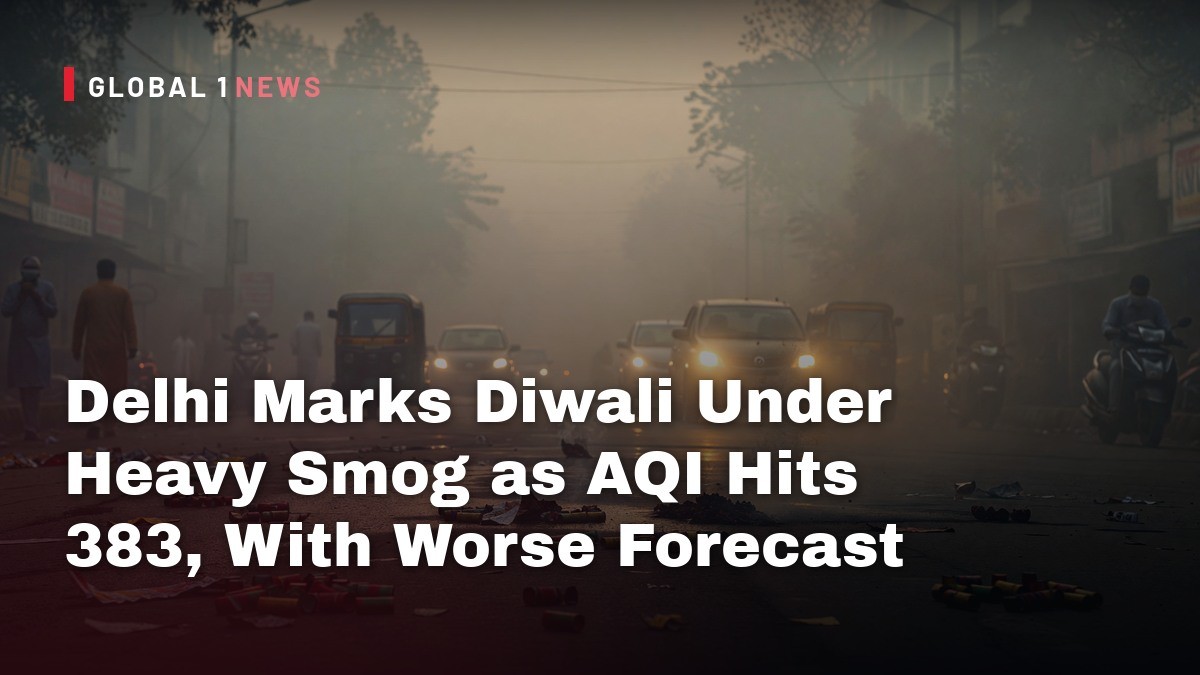
Delhi opened the festival of lights on Sunday under a blanket of grey smog, with the city's air still short of the "severe" threshold on the national index but moving toward it, and the government's own forecast pointing at worse to come. The capital had spent the previous two days under Stage III of its graded emergency plan, and the Supreme Court had allowed its residents a narrow, timed window in which to set off fireworks. What follows is what the monitors recorded, what the rules actually forbade, and what the court has ordered to be measured before it decides what to do next.
Delhi Marks Diwali Under Heavy Smog as AQI Hits 383, With Worse Forecast
New Delhi, India — The air quality index averaged 376 across the day, a reading the Central Pollution Control Board classifies as "very poor", up from 369 on Saturday. The morning was worse than the average. Forecasters expect the city to slip into the "severe" band on Monday and to stay there for several days.
A Grey Morning on the Festival Day
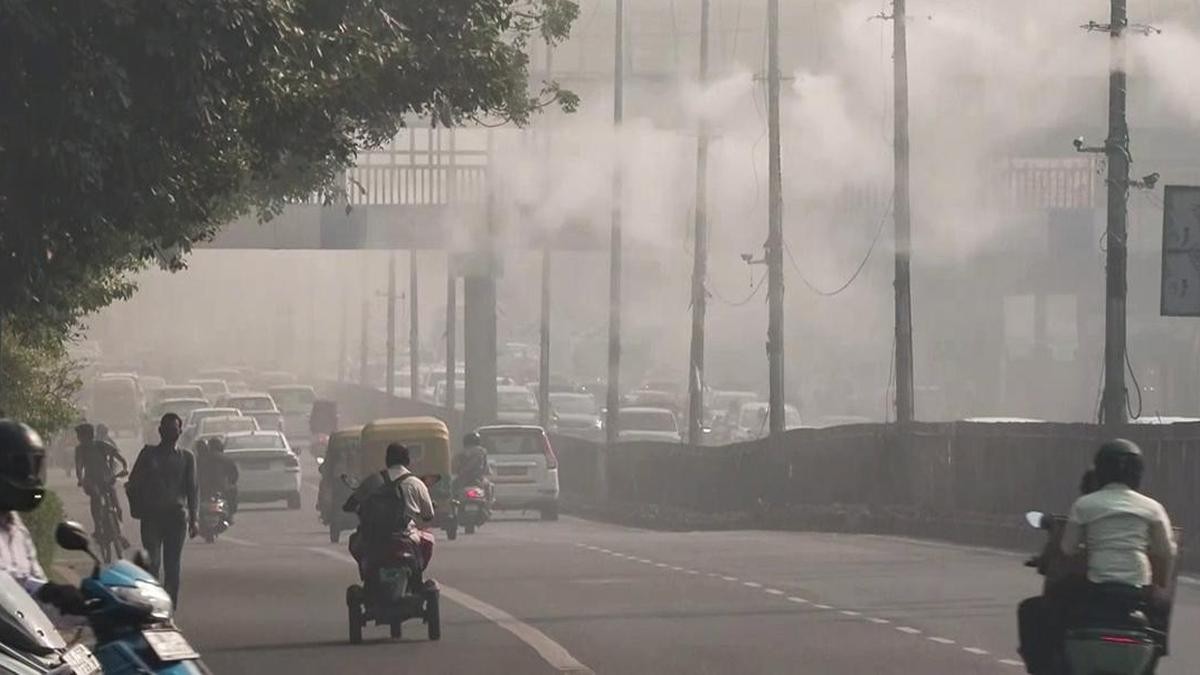
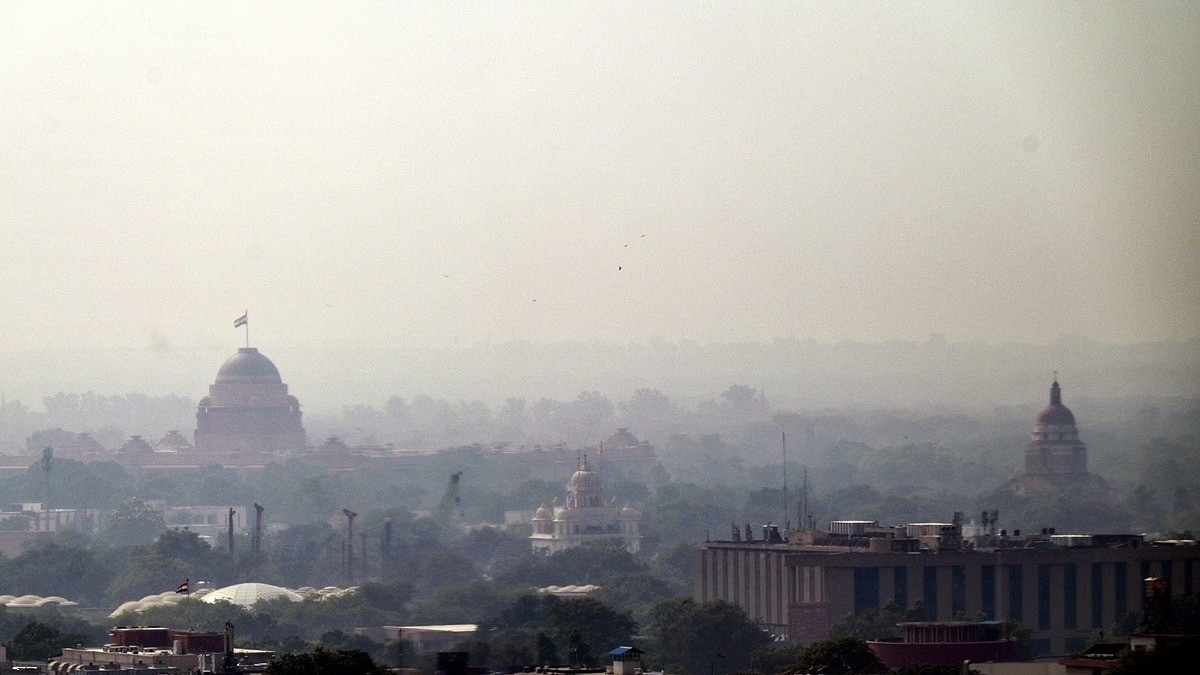
Smog hung over India Gate as the city woke, and the readings at dawn were already grim. NDTV Profit recorded Delhi's overall AQI at 383 by 8 a.m., with 24 of the 54 stations then reporting data above 400 — the threshold at which Indian authorities classify air as "severe". India Today, citing the pollution board, put the city at 384 at 9 a.m., with 11 of the 23 stations in its 6 a.m. update above that line and the remaining 12 between 301 and 400. Punjabi Bagh was the worst of them at 450, followed by RK Puram on 449, IIT Delhi on 446 and Dwarka on 444. Anand Vihar, in the east of the city, stood at 328 at 6 a.m. Particulate matter of 2.5 microns or less was the dominant pollutant, and firecracker smoke was adding to it as the day went on.
What the Monitors Reported, and When
The numbers moved through the day, and they did not move in one direction. By 7 p.m., the index had eased to 371, with 19 of the 59 stations reporting in the "severe" category, seven "poor" and 33 "very poor", according to The Indian Express. The worst station reading by then was Jahangirpuri at 460. The Hindu, compiling the whole day, recorded 12 stations in "severe" and 22 in "very poor" across the same 59-station set, and put the worst reading of the day at Jahangirpuri on 463. Those differences are not contradictions. They are different clocks and, in some cases, different sets of reporting stations, and treating any single hour's reading as the day's verdict misreads the record. What the record does show is a city sitting a few points below the 400 line for most of the festival, with a large minority of its monitors already over it.
A City Already Under Emergency Rules
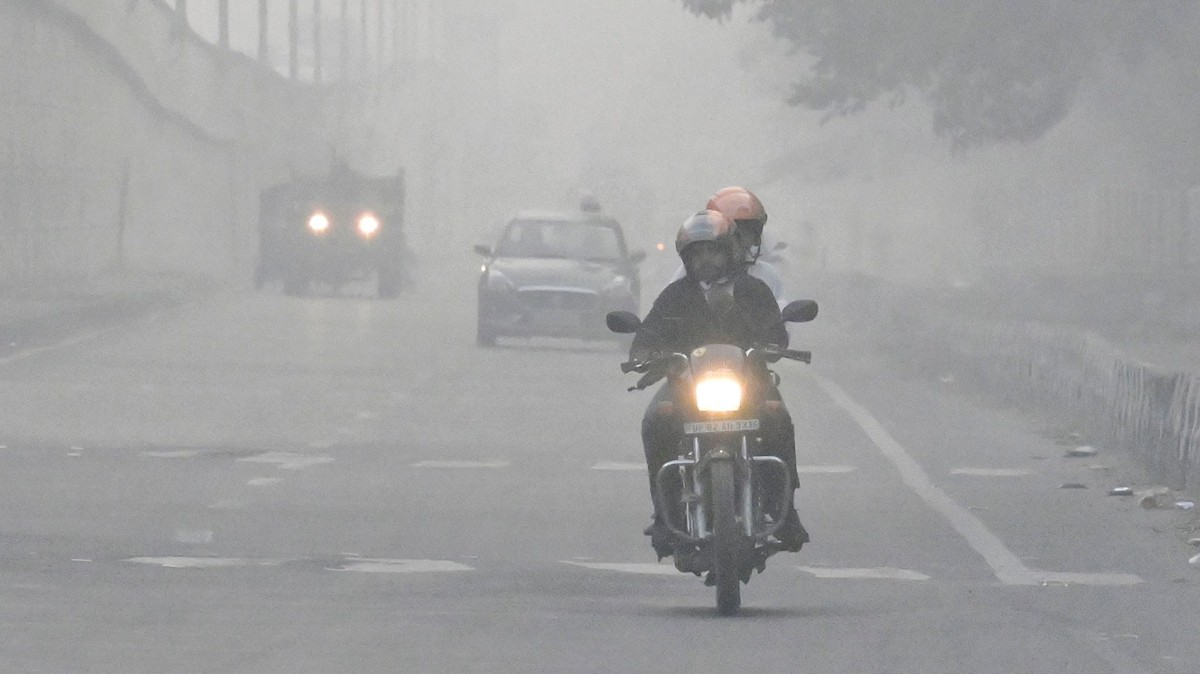
None of this arrived without warning. The Commission for Air Quality Management invoked Stage III of the Graded Response Action Plan across Delhi and the National Capital Region on Friday 6 November, two days before the festival. Under it, non-essential construction and demolition that generate dust are prohibited, stone crushers and mining-related activity are restricted, and BS-III petrol and BS-IV diesel light vehicles are barred from Delhi and the adjoining districts of Gurugram, Faridabad, Ghaziabad and Gautam Buddh Nagar. Schools up to Class V can run hybrid classes. A separate order caps in-person attendance at 50 per cent in state government and private offices in Delhi and five NCR districts through 20 November, with exceptions for essential services. Residents were asked to use public transport, to share vehicles, and to walk or cycle short distances; burning coal or wood for heat was discouraged. Delhi's broader Winter Action Plan has been in force since 1 November and runs to 28 February.
The Two-Hour Window the Court Handed Back
The one thing Stage III could not touch was the firecracker rule, because that belongs to the Supreme Court. In an order dated 29 October and made public on 2 November, a bench of Justices M.M. Sundresh and Prasanna B. Varale permitted the manufacture, sale and bursting of certified "green" crackers for a fixed slice of the festival. Direction A of that order is explicit: "the authorities shall ensure that bursting of firecrackers is allowed only between 6:00 A.M. - 7:00 A.M. and 8:00 P.M. - 10:00 P.M. on 7th and 8th November, 2026." Bursting within 300 metres of hospitals, health centres, old-age homes, schools and notified silence zones is banned outright, in areas the order designates "No-Cracker Zones". Boxes must be sealed and carry product- and batch-specific QR codes, and the sale of crackers joined in series is prohibited. And then it ends. "The complete ban on the firecrackers, as imposed earlier, shall be restored with effect from 09.11.2026," the order says.
The Court Said It Lacked the Data
What makes this Diwali different from the last several is that the court wrote down why it was relaxing anything at all — and the reason was an absence of evidence. "This Court, at this point in time, is short of adequate data to decide whether or not a complete ban would be the best solution," the bench recorded, adding that it had not been furnished with adequate data on whether the complete ban imposed in 2024 had served its purpose, "particularly, since there has been no significant improvement in the AQI readings." It was blunter about the administration. "Unfortunately, we find that the State has utterly failed in complying with the directions thereunder." It also noted that despite the ban being back in force, there had been a significant spike in AQI on Dussehra and the following day this year, and that conventional firecrackers "were sold and continue to be sold under the guise of Green Crackers."
The Audit Tied to the Smoke
Attached to the relaxation is a reporting regime that outlives it. Direction O requires the pollution board, in consultation with the state pollution boards, to produce a pre-Diwali report covering each day from 2 to 6 November, a Diwali report covering 7 and 8 November, and a post-Diwali report covering each day from 9 to 30 November — plus sand and water samples for comparison. Direction P orders a re-inspection of monitoring stations "alleged to be non-functional". Direction V goes further: the NCR authorities must file affidavits, by 14 December, including "the exact extent of the increase of admission of patients till 30.11.2026, in all Hospitals and Health Centres across Delhi-NCR, following the festival." Failure carries an explicit warning of contempt action against responsible officials. The applications are listed for further compliance on 16 December. In plain terms, the court has ordered the capital to produce the hospital ledger for this week by mid-December.
Where the Smog Actually Comes From
The popular explanation is stubble burning, and the numbers do not support it as the main driver on Sunday. Delhi's own Decision Support System put transport at 19 per cent of the city's estimated pollution load for the day, and stubble burning at 3.5 per cent, falling to about 2.99 per cent on Monday, according to The Hindu. India Today, citing Press Trust of India, carried a projected stubble share for Sunday of 5.4 per cent — against the 3.5 per cent that The Hindu and The Indian Express published for the same day. That gap matters, because anti-stubble enforcement absorbs a great deal of the political energy on this issue. The two sets are not directly comparable in any case: the transport share India Today reported from the same system, 21.4 per cent, was for Saturday, while The Hindu's 19 per cent was for Sunday. The fires themselves are real — satellite data from the CREAMS laboratory detected 589 crop-residue burning incidents across six states on Friday, 357 of them in Punjab, and 6,226 between 15 September and 6 November.
The Health Ledger Behind the Readings
Behind the index sits a mortality record that no single day's reading captures. An analysis of Global Burden of Disease data by the Observer Research Foundation found that in 2023 air pollution contributed to 15 per cent of all deaths in Delhi — 17,188 deaths, an 8.9 per cent increase since 2018 — making it the leading cause of mortality in the city. National Centre for Disease Control surveillance across six central government hospitals recorded 204,758 acute respiratory infection cases in emergency departments between 2022 and 2024, of which 30,424 required admission. The World Health Organization recommends that 24-hour average PM2.5 levels not exceed 15 micrograms per cubic metre; in Delhi during pollution season they are often more than 25 times that, the BBC has reported. Dr Manoj Goel, who heads pulmonology at Fortis Memorial Research Institute near Delhi, says the particles "can penetrate deep into the lungs and enter the bloodstream, triggering inflammation and affecting multiple organs".
Why Every November Looks the Same
The Supreme Court's own order sets out the mechanics in a single paragraph: the region "has a peculiar geographical setting, as there is no free passage of air, due to the low wind speed which makes the pollution persist", and winter temperature inversion makes it worse. The Air Quality Early Warning System uses the same logic — a ventilation index below 6,000 square metres per second with average winds under 10 kilometres an hour is unfavourable for dispersion, and that is the condition forecast for the coming days. What makes this year jarring is what preceded it. Delhi recorded its lowest average AQI for October in eight years, the BBC reported, before the air turned within days. Research published in npj Clean Air in April concluded that Delhi cannot clean its air alone, because the pollution moves across state lines on a scale local controls cannot reach. Indian national standards for annual PM2.5 remain eight times the WHO guideline.
What Happens After Monday
Three clocks are now running at once. The first is the weather, which under the graded plan would invite stricter measures than the ones now in force if the forecast holds. The second is the law: the firecracker ban snaps back on 9 November, and the city returns to a rule that, on the court's own finding, has not measurably improved the air. The third is the paperwork: the pollution board's post-Diwali report runs to 30 November, the affidavits are due on 14 December, and the hearing follows two days later. What none of those clocks will settle this week is the human cost of the festival itself. No official count of deaths or hospital admissions attributable to this Diwali exists, and nobody has yet established whether the windows the court granted were kept or broken. Those answers are what the December affidavits are for.
By Jessica Ali, Staff Writer
This article was produced with AI-assisted research and editorial support. Sources: the Supreme Court of India order in Arjun Gopal & Ors. v Union of India & Ors. (2026 INSC 1181, 29 October 2026); The Hindu; The Indian Express; India Today; NDTV Profit; BBC News; the Observer Research Foundation; npj Clean Air; and the Central Pollution Control Board's AQI classifications. Cover: Global 1 News editorial image. Photographs: Getty Images via India Today; BBC News; ANI via The Hindu.
What's Your Reaction?
 Like
0
 Dislike
0
 Love
0
 Funny
0
 Wow
0
 Sad
0
 Angry
0

Editor-in-Chief at Global1.News. Atlanta-based journalist who cuts through the BS and tells it like it is. Lead anchor, host, and the voice you hear when the spin stops and the truth starts.












Comments (0)