
Warming UK seas could ‘fundamentally reshape marine ecosystems’ – report
The seas that lap the British and Irish coasts are warming at a pace that could reshape the very foundations of marine life, a new four‑year study warns.
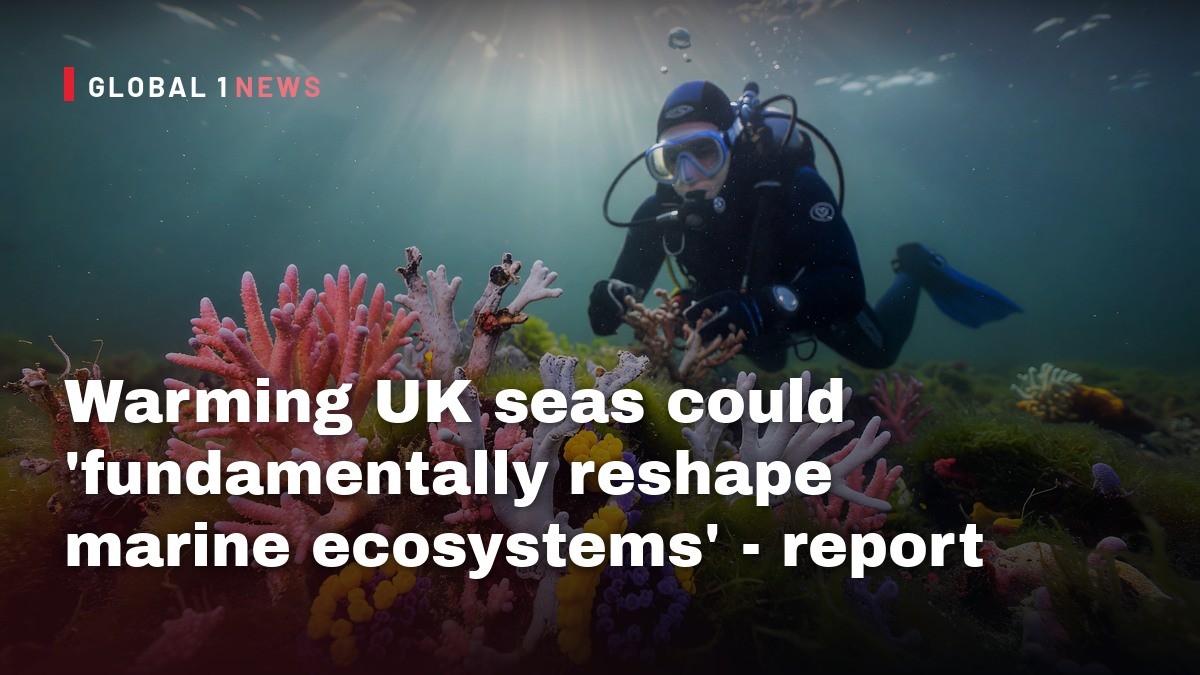
The seas that lap the British and Irish coasts are warming at a pace that could reshape the very foundations of marine life, a new four‑year study warns. By 2050, the researchers say, an imbalance between predators and their prey could undermine ocean health and even threaten the nation’s food security. The findings, published in Science Advances and led by the Centre for Environment, Fisheries and Aquaculture Science (Cefas), challenge the long‑held belief that middle‑latitude waters will simply become richer in species as the climate heats.
Hotspots and the paradox of middle‑latitude warming
The study identifies the waters around the British and Irish Isles – particularly the southern North Sea – as one of twenty global “marine climate hotspots”. These areas have warmed faster than any other region over the past half‑century, making them a bellwether for climate‑driven change in the north‑east Atlantic.
Researchers expected that, as species from warmer southern waters migrate northwards, overall biodiversity would rise. “The UK is in the middle latitudes. So we expected diversity to go up, because you get species from the south that are more diverse than the species you lose to the north,” explains one of the co‑authors. Yet the data reveal a more nuanced picture: while higher‑trophic groups such as fish may indeed gain new entrants, the foundational plankton that sustain the food web are set to lose ground.
Uneven shifts across the food web
Under a scenario of three degrees Celsius of warming by the end of the century, the study projects a modest rise in fish and seabed invertebrate diversity – roughly a dozen per cent by mid‑century. In stark contrast, phytoplankton diversity is expected to dip by about three per cent, and zooplankton by around seven per cent.
These figures matter because plankton sit at the base of marine ecosystems. A decline in their variety could ripple upwards, destabilising the entire food chain. “If predator diversity rises while prey diversity falls, that has the potential to disrupt the food chain,” warns Lily Greig, a Cefas marine ecologist and co‑lead of the research.
Implications for fisheries and food security
The projected reshuffling of species has direct consequences for the UK’s fishing industry and, by extension, national food security. Earlier Cefas work flagged “climate winners” such as anchovies, seabass and sardines – species that thrive in warmer waters. Conversely, traditional staples like Atlantic cod, haddock and coley are deemed “climate losers”, facing less suitable conditions.
Should plankton declines curtail the productivity of lower trophic levels, the gains enjoyed by these “winner” species could be offset by reduced overall biomass. The study’s authors caution that such an imbalance could jeopardise the stability of fish stocks that communities and markets rely upon, potentially tightening the supply of seafood by 2050.
Methodology: data, machine learning and long‑term trends
The research team – comprising experts from the University of East Anglia, the Marine Biological Association, UiT the Arctic University of Norway, the Royal Netherlands Institute for Sea Research and the Technical University of Denmark – combined multiple long‑term datasets with advanced machine‑learning techniques. This approach allowed them to model the relationship between biodiversity and environmental change, extending predictions out to 2100.
By mapping where biodiversity shifts are occurring most rapidly, the scientists aim to provide an “early warning system” for policymakers. The model’s strength lies in its ability to tease out subtle, non‑linear responses that traditional analyses might miss, highlighting the complex interplay between warming, species migration and ecosystem resilience.
Policy relevance and the marine protected area review
The timing of the study coincides with the UK government’s ongoing review of marine protected areas (MPAs). Researchers have already submitted their findings to the review, urging decision‑makers to factor climate‑driven biodiversity change into management plans.
“Policymakers have a mandate to try to preserve or even increase biodiversity,” says Elena Couce, co‑lead author and marine ecologist at Cefas. “What we are trying to tell them is climate change is already changing biodiversity, and you need to take that into account before you can make other management plans.” The implication is clear: protecting static habitats may be insufficient if the species that depend on them are shifting northwards or disappearing altogether.
Broader ecological consequences
Beyond fisheries, the projected decline in plankton diversity could affect carbon sequestration, oxygen production and the overall health of the marine environment. Plankton are pivotal in drawing down atmospheric carbon, and any reduction in their abundance or variety may diminish this natural climate‑mitigation service.
The study also hints at potential knock‑on effects for higher trophic levels, including seabirds and marine mammals that rely on fish populations sustained by robust plankton blooms. An uneven reshaping of the food web could therefore reverberate through the entire marine ecosystem, altering predator‑prey dynamics in ways that are difficult to predict.
Looking ahead: uncertainty and the need for adaptive management
While the projections are grounded in rigorous data, the authors acknowledge the inherent uncertainties of long‑term climate modelling. Nevertheless, the trend – a rise in predator diversity coupled with a fall in prey diversity – presents a clear warning sign.
Adaptive management, informed by continuous monitoring and the integration of climate forecasts, will be essential to safeguard both marine biodiversity and the economic activities that depend on it. As the study underscores, the era of assuming a uniformly positive biodiversity response to warming is over; the reality is far more complex, and the stakes – from ecosystem health to national food security – are high.
This article was produced with AI-assisted research and editorial support. Reporting is based on the source material cited below. Sources: The Guardian UK; theguardian.com; Global1.News (06 November 2026).
By Erica Thornton, Staff Writer
What's Your Reaction?
 Like
0
 Dislike
0
 Love
0
 Funny
0
 Wow
0
 Sad
0
 Angry
0

US Politics and Policy Correspondent at Global1.News. Based in Washington DC, covering American politics, policy, elections, and the courts. Knows how the system works and tells you what it actually means.














Comments (0)