
How video game remakes tap the power of nostalgia
Doran, now an esports instructor at Rowan University in New Jersey, summed it up best: the original 1998 title held a “magical” quality she hopes to pass on to her sister’s kids.
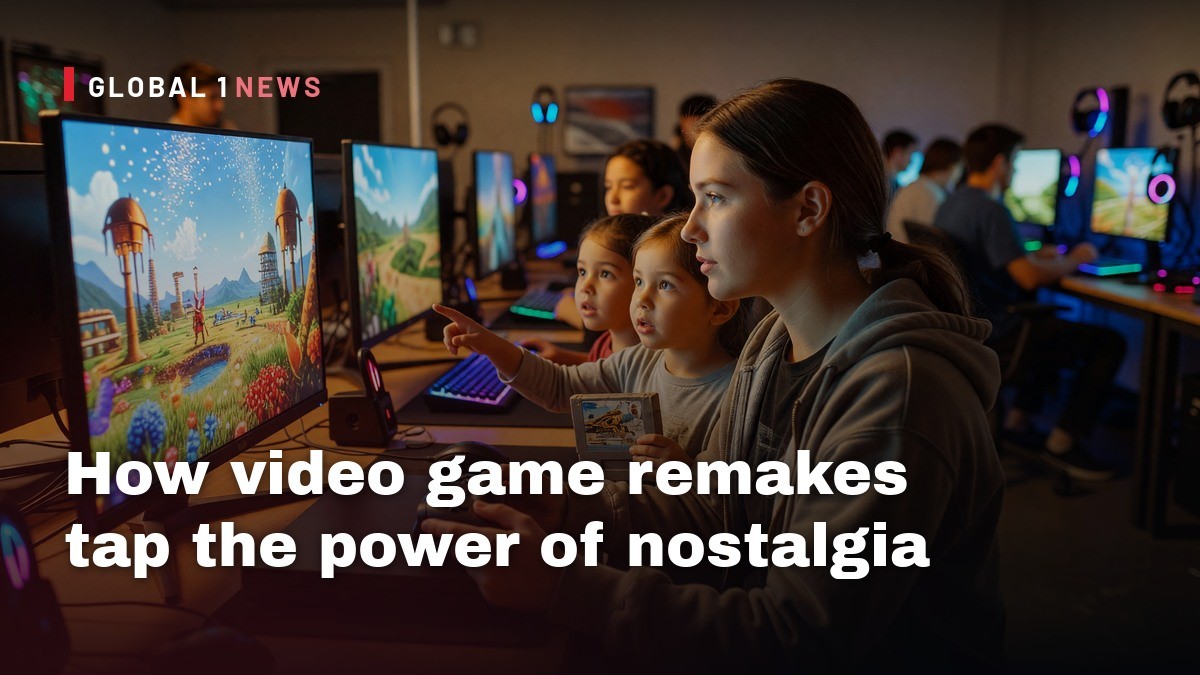
When the trailer for the upcoming Switch 2 version of The Legend of Zelda: Ocarina of Time hit the internet, Kacey Doran’s phone lit up with a flood of emojis and a single, raw reaction: “I’m not tearing up… YOU’RE tearing up.” The moment captured a familiar scene that has become a hallmark of the modern games market—players reliving a piece of their childhood through a glossy, re‑engineered classic. Doran, now an esports instructor at Rowan University in New Jersey, summed it up best: the original 1998 title held a “magical” quality she hopes to pass on to her sister’s kids. Her story is a micro‑cosm of a broader industry strategy that leans heavily on nostalgia to drive sales, sustain brand relevance, and stitch together generations of gamers.
The nostalgia engine behind remakes
Video games are uniquely positioned to act as emotional time machines. Tim Wulf of the Centre for Advanced Internet Studies in Bochum notes that nostalgia is a “social emotion” because the memories it summons are tied to other people. In Doran’s case, the shared experience of reading dialogue aloud with her younger sister on a Nintendo 64 console cemented a bond that resurfaces every time she revisits the world of Hyrule. That personal link, multiplied across millions of players, translates into a market‑ready hook: a familiar world that feels both comforting and fresh.
Industry analysts see the same pull. Piers Harding‑Rolls, head of games research at Ampere Analysis, calls the remake strategy “really successful,” emphasizing that leveraging an established audience is a safer bet than launching a brand‑new IP. The logic is simple—updating an existing title costs less than building a game from scratch, while the built‑in fan base guarantees a baseline of interest. Recent examples like the Resident Evil 4 and Assassin’s Creed Black Flag remakes confirm that the model works across genres, from survival horror to open‑world piracy.
Balancing reverence and innovation
Remakes walk a tightrope between honoring the original and delivering a product that meets today’s standards. Wulf warns that nostalgia alone isn’t enough; players also crave fresh experiences. He admits his own preference leans toward new titles, saying, “I want a new game – I don’t want to play an old game.” That sentiment reflects a growing split in the community: while some fans cherish faithful reproductions, others demand enough innovation to justify the purchase.
Developers must therefore find a “right balance,” according to Stephanie Ijoma, CEO of consultancy NNESAGA. She points to the 2020 remake of Final Fantasy VII as a case where the updated version succeeded in sharing a beloved story with a younger cohort while still satisfying long‑time fans. The key, Ijoma argues, is to avoid creating art “in fear.” When studios are too cautious, the result can feel like a hollow cash grab; when they stray too far, they risk alienating the very audience they aim to court.
Economic calculus of remastering
From a financial perspective, remakes are a low‑risk, high‑reward proposition. Harding‑Rolls notes that “tying in with established audiences and building on existing content is quite a safe route for a lot of companies.” The development cycle is shorter because core assets—story, level design, characters—already exist. Updating graphics, polishing controls, and adding quality‑of‑life features can be achieved without the massive budgets required for a brand‑new AAA title.
The upside is evident in sales spikes for high‑profile remakes. While the source material doesn’t provide exact figures, the repeated mention of “big audiences” for titles like Resident Evil 4 and Assassin’s Creed Black Flag suggests that the model continues to generate strong revenue streams. For smaller studios, the economics are even more compelling: indie developer Niklas Hallin of Neckbolt explains that a remake offers “smooth, it just works” accessibility on modern hardware, bypassing the need for players to hunt down obsolete consoles.
Indie perspectives on retro aesthetics
Indie developers have a distinct relationship with nostalgia. Hallin, who admits he didn’t grow up with many classic games, says nostalgia isn’t a personal driver for him. Yet he deliberately weaves subtle nods to older titles into his own games because he knows they resonate with players. “You can’t compete with billion‑dollar budgets, super high‑fidelity, Triple A graphics,” he observes, highlighting how retro‑style visuals can be a pragmatic choice for limited teams.
This aesthetic shortcut serves a dual purpose: it satisfies a segment of the market that loves the pixel‑art charm of the past, and it reduces development costs. By embracing a retro look, indie studios can allocate resources toward innovative gameplay mechanics or narrative depth, differentiating themselves without the pressure to match AAA visual fidelity.
Fan expectations and the risk of backlash
Remaking a beloved classic is a high‑stakes gamble. Fans often hold the original in near‑sacred regard, and any perceived deviation can spark fierce criticism. The source material cites the 2021 release of Nier Replicant ver.1.22474487139… as an example where reviewers highlighted the confusing coexistence of two nearly identical versions, prompting debates over which should be considered the definitive edition.
Stephanie Ijoma warns that “there’s always going to be that fan base or group of people that are going to nit‑pick.” This reality forces studios to navigate a minefield of expectations, balancing fidelity to the source with the need to innovate. When a remake fails to meet these standards, the backlash can be “serious,” affecting brand reputation and future sales.
The future of remakes in a rapidly evolving tech landscape
Looking ahead, the question remains: how long will the remake model stay viable as graphics and hardware continue to advance? The source material ends on a speculative note, asking whether a game released in 2026 will still be worth remaking in 2038, when visual differences may be “negligible.” Harding‑Rolls predicts that companies will keep using updates to connect new audiences with classic titles, suggesting that the emotional pull of nostalgia may outlast pure graphical upgrades.
Even if visual fidelity becomes less of a differentiator, the social and cultural capital embedded in classic IPs—shared memories, iconic storylines, and recognizable characters—will likely keep the remake engine humming. As long as developers can blend the comforting familiarity of the past with enough fresh content to satisfy modern gamers, the business case for revisiting old favorites remains strong.
Why the Ocarina remake matters to everyday gamers
For the average player, the upcoming Switch 2 version of Ocarina of Time isn’t just a nostalgic cash grab; it’s a bridge between generations. Doran’s experience—tearing up over a trailer, then planning to introduce the game to her sister’s children—illustrates how remakes can revitalize family gaming rituals that might otherwise be lost to obsolete hardware. By delivering a polished, accessible version on current consoles, Nintendo ensures that iconic titles remain part of the cultural conversation, not relics locked away in dusty cartridge collections.
In the end, the power of a remake lies in its ability to let players “jump into the same environment,” as Wulf puts it, and feel both the comfort of the familiar and the excitement of the new. Whether it’s a blockbuster franchise or an indie gem, the nostalgia engine continues to shape the industry’s roadmap, turning memories into marketable experiences that keep gamers coming back for more.
This article was produced with AI-assisted research and editorial support. Reporting is based on the source material cited below. Sources: BBC Technology; bbc.co.uk; Global1.News (30 October 2026).
By Nova Chen, Staff Writer
What's Your Reaction?
 Like
0
 Dislike
0
 Love
0
 Funny
0
 Wow
0
 Sad
0
 Angry
0

Trend Reporter at Global1.News. Based in San Francisco, tracking the stories crossing from social platforms, forums, and community discussions into mainstream news — tech breakthroughs, cultural shifts, and world events that real people are engaging with right now.














Comments (0)