
Keralam Child Development Centre gets ₹35-lakh grant to study autism-related parental grief
The initiative, led by CDC director Dr Deepa Bhaskaran, arrives at a time when Indian health policy is increasingly recognising the psychosocial dimensions of neurodevelopmental disorders, and it promises to bridge a critical gap in both clinical practice and public health planning.
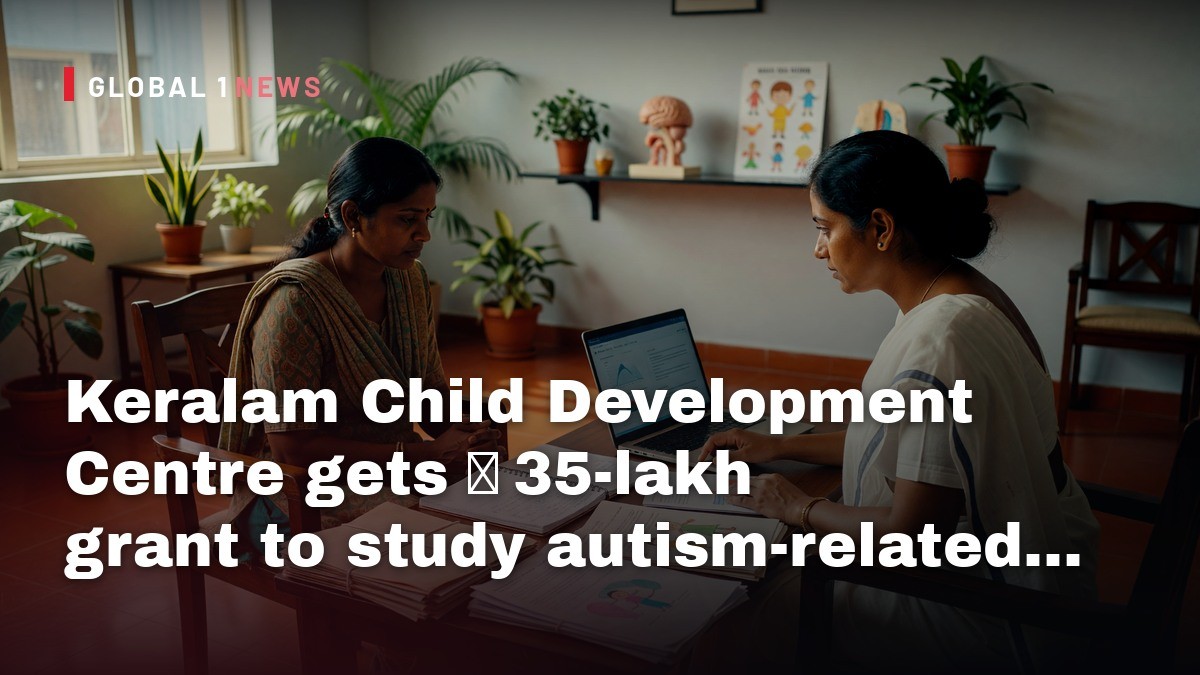
The Child Development Centre (CDC) in Thiruvananthapuram has secured a three‑year research grant of ₹35 lakh from the Indian Council of Medical Research (ICMR) to develop a culturally attuned instrument for measuring parental grief in families of children with Autism Spectrum Disorders (ASD). The initiative, led by CDC director Dr Deepa Bhaskaran, arrives at a time when Indian health policy is increasingly recognising the psychosocial dimensions of neurodevelopmental disorders, and it promises to bridge a critical gap in both clinical practice and public health planning.
Contextualising the Grant within India’s Autism Landscape
Autism prevalence in India has risen steadily over the past decade, prompting the Ministry of Health and Family Welfare to expand early‑diagnosis programmes and integrate special‑education provisions into the National Education Policy. Yet, while diagnostic pathways have improved, the emotional toll on parents remains under‑documented. Dr Bhaskaran notes that parents often experience a cascade of emotions—shock, denial, fear, guilt, anger, sadness and helplessness—immediately after diagnosis, and that this grief can re‑emerge at later developmental milestones.
These observations align with emerging research that frames parental grief in ASD as a form of chronic sorrow or “non‑finite grief,” distinct from the acute bereavement typically addressed in mental‑health services. By targeting this specific grief trajectory, the CDC project seeks to inform policy makers about the need for systematic emotional‑support mechanisms alongside existing therapeutic interventions.
Design of the Research: Methodology and Stakeholder Involvement
The three‑year study will employ focus‑group discussions and in‑depth interviews with a broad cross‑section of stakeholders: parents of children with ASD, bereaved parents, professionals working with autistic children, and members of the general population. This inclusive approach is intended to capture the cultural expressions of grief that are unique to Indian families, where collectivist norms and extended‑family dynamics shape coping strategies.
By triangulating perspectives from both affected families and the wider community, the researchers aim to map the dimensions of grief that are most salient in the Indian context. Such a methodology not only enriches the validity of the resulting assessment tool but also creates a repository of qualitative data that can guide training modules for healthcare workers across the country.
Anticipated Outcomes: A Tool for Assessment and Intervention
The primary deliverable of the project is a validated instrument that can reliably assess grief among parents of children with ASD. Dr Bhaskaran emphasises that the tool will be “culturally relevant,” meaning it will incorporate local idioms of distress, religious coping mechanisms, and social stigma factors that influence how grief is expressed and managed.
Beyond measurement, the findings are expected to inform the development of grief‑counselling protocols and support‑group interventions. By translating research insights into practical guidelines, the CDC aims to enhance the psychosocial well‑being of families, thereby complementing the rehabilitation services already mandated under the National Health Mission’s disability‑care initiatives.
Implications for Healthcare Professionals and Training
One of the study’s key messages is the need for healthcare professionals to recognise parental emotional health as integral to the child’s rehabilitation journey. Dr Bhaskaran stresses that early diagnosis must be paired with psychological support and that clinicians require training to identify grief and facilitate coping strategies.
This recommendation dovetails with recent revisions to the Medical Council of India’s competency framework, which now includes mental‑health assessment as a core skill for paediatricians and allied health workers. The CDC’s tool could become a standard screening component in autism clinics, enabling timely referrals to counsellors and community support networks.
Policy Alignment: Linking Research to National Initiatives
The grant aligns with the ICMR’s broader agenda to fund research that addresses mental‑health challenges in vulnerable populations. By focusing on parental grief, the CDC project contributes to the National Mental Health Programme’s objective of integrating mental‑health services into primary care, especially for families navigating chronic health conditions.
Furthermore, the data generated could inform the Ministry of Social Justice and Empowerment’s disability‑benefit schemes, ensuring that eligibility assessments consider the psychosocial strain on caregivers. Such evidence‑based policy adjustments would strengthen the safety net for families who often face financial and emotional hardship.
Potential Impact on the Tech and Innovation Ecosystem
Kerala’s burgeoning health‑tech sector stands to benefit from the CDC’s research outputs. A validated grief‑assessment tool could be digitised into mobile applications, enabling remote monitoring of parental well‑being—a critical feature in a state where many families reside in rural districts with limited access to specialised care.
Collaboration with local start‑ups could accelerate the development of tele‑counselling platforms that embed the assessment scores into personalised intervention pathways. This synergy between academic research and technology aligns with Kerala’s Digital Health Initiative, which seeks to harness data‑driven solutions for comprehensive health service delivery.
Looking Ahead: Scaling the Findings Beyond Kerala
While the study is anchored in Thiruvananthapuram, its implications extend nationally. The cultural nuances captured through the focus groups will likely resonate with families across diverse Indian states, given shared societal attitudes toward disability and caregiving.
Should the tool prove robust, the CDC plans to disseminate it through workshops and training modules for clinicians nationwide, potentially under the aegis of the ICMR and the National Institute of Mental Health and Neurosciences. Such scaling would ensure that the psychosocial dimensions of autism care receive the systematic attention they merit, reinforcing India’s commitment to holistic, family‑centred health policy.
This article was produced with AI-assisted research and editorial support. Reporting is based on the source material cited below. Sources: The Hindu; thehindu.com; Global1.News (07 November 2026).
By Dr. Raj Patel, Staff Writer
What's Your Reaction?
 Like
0
 Dislike
0
 Love
0
 Funny
0
 Wow
0
 Sad
0
 Angry
0

India/South Asia Correspondent at Global1.News. Analytical voice with a background in science and health journalism. Based in New Delhi, covering Indian politics, education, healthcare, technology, and policy. Breaks down complex data into clear, actionable reporting.















Comments (0)