
My family always travels during Día de Muertos. Here’s what we’ve enjoyed most
Every November, when the scent of marigold—cempasúchil—fills the air, my family and I set off on a pilgrimage that has become as much a rite of passage as the holiday itself.
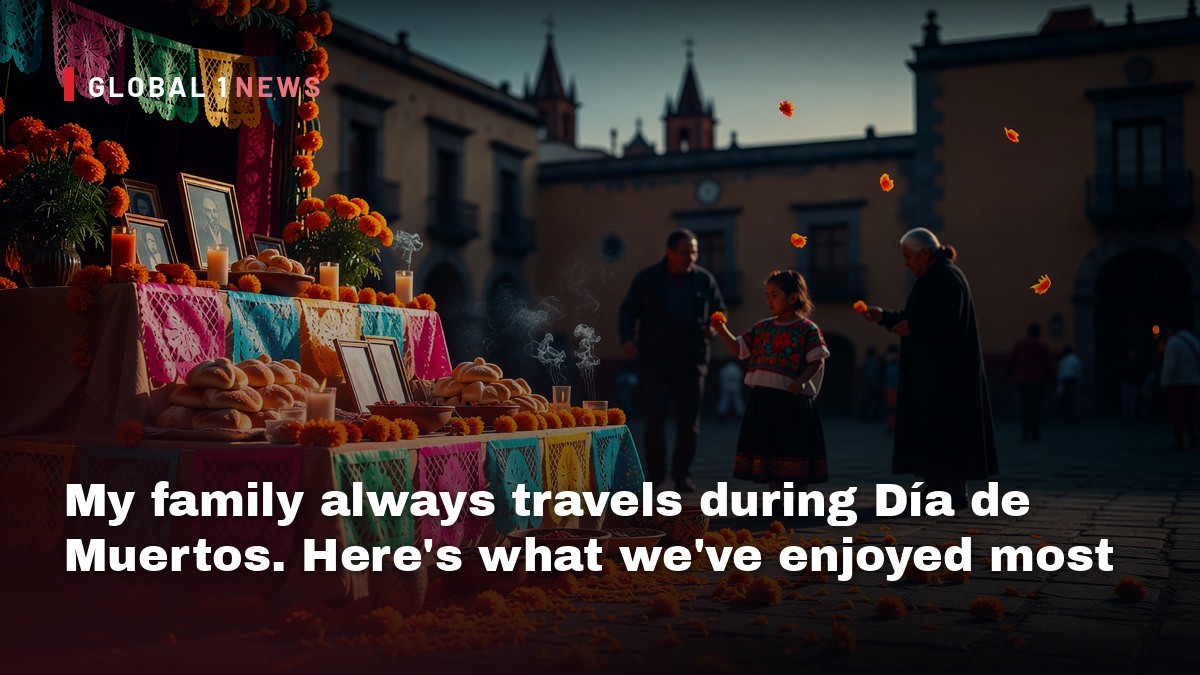
Every November, when the scent of marigold—cempasúchil—fills the air, my family and I set off on a pilgrimage that has become as much a rite of passage as the holiday itself. Día de Muertos is more than a calendar date; it is a season that stitches together the colors, flavors, and stories of Mexico’s many regions. For us, the journey began as a personal anniversary of the day we crossed the border with dual citizenship, but it quickly grew into a map of memories that stretches from the bustling plazas of Oaxaca City to the quiet mountain towns of Veracruz, the misty jungles of the Huasteca, and the ancient Maya coast of Campeche. Each stop offers a distinct way of honoring the dead, and together they illustrate how the holiday threads through the everyday lives of ordinary families, workers, and migrants across the country.
Oaxaca: The Birthplace of a Modern Celebration
Our first deep dive into Día de Muertos took place in 2019, when we spent a month traveling Oaxaca with my mother, who was staying on my abuelo’s ranch. The highlight was a full week in Oaxaca City, where the streets transform into a living tapestry of color and sound. The city’s celebrations are massive, drawing countless international and domestic visitors who mingle with local families in a shared act of remembrance. The crowds are dense, the prices higher, and the atmosphere louder, but the scale also makes Oaxaca an accessible entry point for newcomers to the holiday.
What struck us most was the generosity of strangers. A man in a Spider‑Man mask poured us a shot of mezcal right on the sidewalk, a gesture that has since become a personal symbol of the hospitality we encounter each year. In Oaxaca, the ritual of offering mezcal, the scent of incense, and the sight of elaborate altars on every corner blend into a communal chorus that welcomes outsiders as if they were long‑lost relatives returning home.
Mexico City: A Megapolis Mosaic
Mexico City mirrors Oaxaca’s grandeur but on a far larger canvas. The capital’s Día de Muertos celebrations are a magnet for tourists, and the sheer volume of participants means navigating crowded avenues and paying a premium for food and souvenirs. Yet the city’s diverse neighborhoods each bring their own flavor. From the historic center’s towering altars to the bohemian streets of Coyoacán, the holiday is woven into the urban fabric, allowing visitors to experience a spectrum of traditions within a single day.
The city’s scale also makes it a practical starting point for families who may be traveling from abroad. Public transportation, a wide range of accommodations, and a concentration of cultural venues mean that even first‑time travelers can find a comfortable foothold before venturing into smaller towns where the celebrations feel more intimate.
Veracruz’s Naolinco: The Flower Fields and La Cantada
Moving northward, the town of Naolinco in Veracruz offers a different rhythm. Here, the holiday revolves around the cempasúchil, the bright orange marigold that defines Día de Muertos imagery. This year, the nearby community of San Pablo Coapan hosted its fifth annual Festival del Cempasúchil, opening local flower farms to the public and adding a carnival‑like atmosphere with food stalls and photo‑ready installations. The fields are dotted with playful calaveras—skeleton figures—ranging from a 25‑foot‑tall Jarocho skeleton to a life‑size football player dressed in a historic Tiburones Rojos uniform, a nod to Veracruz’s beloved soccer heritage.
Beyond the visual spectacle, Naolinco’s tradition of “La Cantada” adds a musical layer to the celebration. As night falls, locals move from cemetery to street, singing solemn verses that echo through the mountains. This townwide serenade creates a sense of collective mourning and joy, reminding us that Día de Muertos is as much about shared song as it is about visual display.
Huasteca Jungle: Xantolo and La Viejada
Further east, the dense jungles of the Huasteca region present a ritual that feels almost otherworldly. The “Xantolo” celebration brings the holiday to life through “La Viejada,” a masked dance where participants dress as elders. This performance, reminiscent of Veracruz’s “El Viejo del Año Nuevo” custom, serves as a living memory of ancestors, allowing townspeople to embody the wisdom and presence of those who have passed.
The dance is not merely theatrical; it is a communal act of remembrance that ties the present generation to its roots. The masks, the rhythmic steps, and the communal chants transform the jungle villages into a living altar, where the boundary between the living and the dead blurs in the flicker of torchlight.
Michoacán’s Lakeside Vigil
In Michoacán, the Día de Muertos observance takes place on water. Purépecha fishermen launch a lake procession, lighting their boats with torches and drifting across the surface in a solemn vigil that lasts through the night. The glow of the torches reflects off the water, creating a luminous pathway that guides both the living and the spirits of their ancestors.
This lakeside ritual underscores how geography shapes tradition. While mountain towns may sing, and jungle villages may dance, the fishermen of Michoacán honor the dead by navigating the very element that sustains their livelihood. The procession is a quiet, contemplative counterpoint to the bustling streets of Oaxaca and Mexico City, offering a moment of stillness amid the holiday’s exuberance.
Campeche’s Pomuch: Choo Ba’ak Bone‑Washing
On the Yucatán Peninsula, the Maya community of Pomuch in Campeche practices “Choo Ba’ak,” a bone‑washing ceremony that forms part of the regional Hanal Pixán, the Maya version of Día de Muertos. Families gather to clean the bones of their deceased relatives, then leave the ossuaries open to sun and air, as described by National Geographic. The ritual continues with the arrangement, painting, and adorning of the bones, often covered with an embroidered white tablecloth that bears the name of the departed.
This intimate, hands‑on practice contrasts sharply with the large‑scale festivals of Oaxaca and Mexico City. It is a deeply personal act that connects participants directly to their ancestors, emphasizing the continuity of Maya traditions that have survived centuries of change. The ceremony’s focus on cleaning and exposing the bones to natural elements highlights a belief in the physical return of the body to the earth, a theme that resonates throughout Mexico’s diverse Día de Muertos customs.
Puebla’s Huaquechula: Multi‑Level Altars
In the town of Huaquechula, Puebla, families construct towering altars that rise three to four stories high, resembling pyramids. Each level symbolizes a different realm—earth, heavens, and a celestial summit—creating a visual narrative of life’s journey. The altars are draped in white cloth and adorned with marigolds, blending the purity of the fabric with the vibrant orange of cempasúchil.
These elaborate structures turn private homes into public galleries of remembrance, inviting neighbors and visitors to walk among the layers and contemplate the interconnectedness of existence. The pyramidal design reflects Mexico’s pre‑Hispanic heritage, linking contemporary Día de Muertos practices to ancient architectural forms and reinforcing the holiday’s role as a bridge between past and present.
This article was produced with AI-assisted research and editorial support. Reporting is based on the source material cited below. Sources: Mexico News Daily; mexiconewsdaily.com; Global1.News (08 November 2026).
By Rosa Martinez, Staff Writer
What's Your Reaction?
 Like
0
 Dislike
0
 Love
0
 Funny
0
 Wow
0
 Sad
0
 Angry
0

Latin America/Andes Correspondent at Global1.News. Based in Bogota, covering politics, environment, energy, and social movements across the Andean region. Passionate about environmental journalism and communities protecting their land.














Comments (0)