
Britain's Second Military Satellite Revealed Two Days After a Russian 'Attack Rehearsal'
The Ministry of Defence has disclosed that Britain's second military satellite, Titania, has been in orbit since its 1 October launch, alongside a trial of three ground sensors built to watch the space around UK spacecraft.
Britain's second military satellite is in orbit, and the Ministry of Defence chose Saturday morning to say so. Titania went up on a SpaceX rideshare flight on 1 October and has been circling the planet ever since, roughly the size of a washing machine and travelling at twenty-seven thousand kilometres an hour. The announcement, though, was not really about the satellite. It was about what the satellite is meant to be looking at, and about what is now looking back at it.
Britain's Second Military Satellite Revealed Two Days After a Russian 'Attack Rehearsal'
London, United Kingdom — The Ministry of Defence disclosed the launch more than five weeks after the fact, in the same statement that stood up a network of sensors designed to watch the satellites themselves.
A Washing Machine at Twenty-Seven Thousand Kilometres an Hour
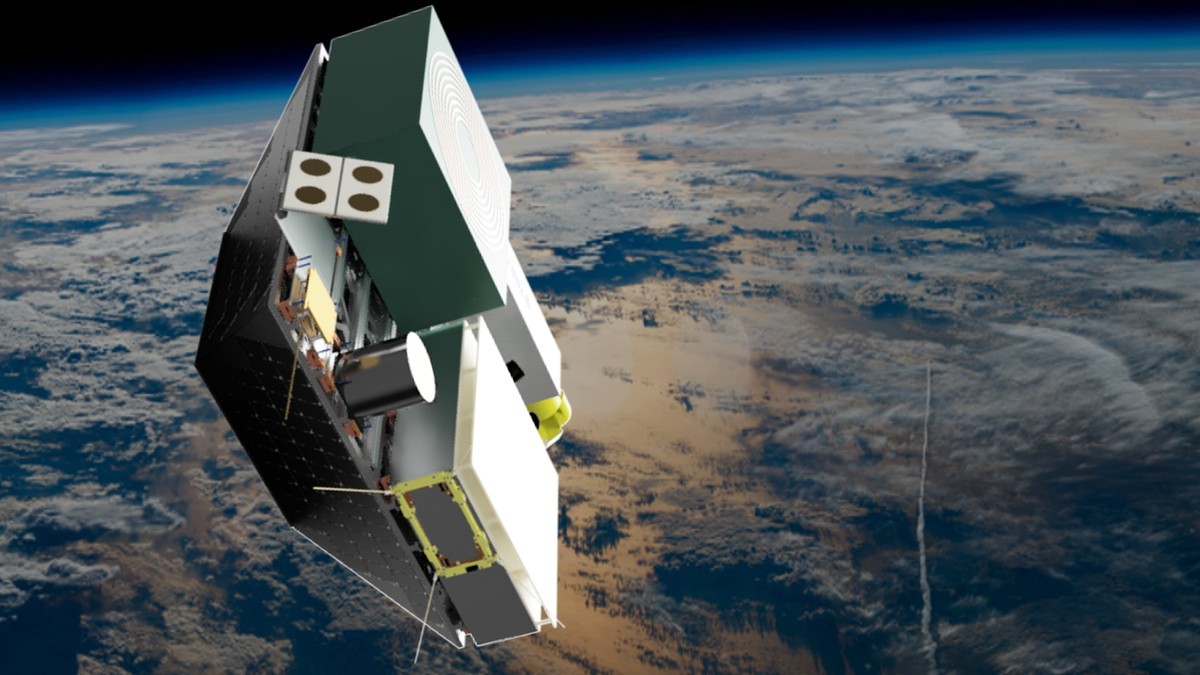
Titania weighs around 100 kilograms and completes an orbit every ninety minutes, according to the ministry's own release. It is the second satellite in what the MoD calls a growing constellation, and it will be operated by UK Space Command from its headquarters at RAF High Wycombe. Defence Secretary Wes Streeting framed it in the language of daily dependence rather than warfare: "Space underpins everything from weather forecasts and financial transactions to sat-navs and mobile phone connections, and it is critical for our national security and military operations." The practical purpose is narrower than the rhetoric. The release says Titania will improve the armed forces' "ability to observe military activity on Earth from space" — imagery and video of the ground, gathered by a British-owned spacecraft and handed to British commanders. What the ministry has not published is the part that matters most to anyone trying to assess the capability: the orbit altitude, the resolution of the sensor, the first-light date, or a single frame of imagery.
What ISTARI Is Actually For
Titania sits inside ISTARI — the Intelligence, Surveillance, Target Acquisition and Reconnaissance Information programme — which the MoD describes as satellites plus the ground systems needed to expand space-based intelligence, surveillance and reconnaissance for troops deployed anywhere in the world. It is a constellation programme, not a one-off. Tyche was the demonstrator, Titania is the second of them, and two more are contracted: Juno, with Surrey Satellite Technology, and Oberon, with Airbus Defence and Space. The ministry's stated ambition is a working constellation with supporting ground segments by 2031. That timeline is the honest measure of where Britain is. A single 100-kilogram satellite passing overhead every ninety minutes cannot hold a persistent watch on anything; a constellation can. Everything announced on Saturday is a step toward the second thing, described as though it were already the first.
Two Years Between Tyche and Titania
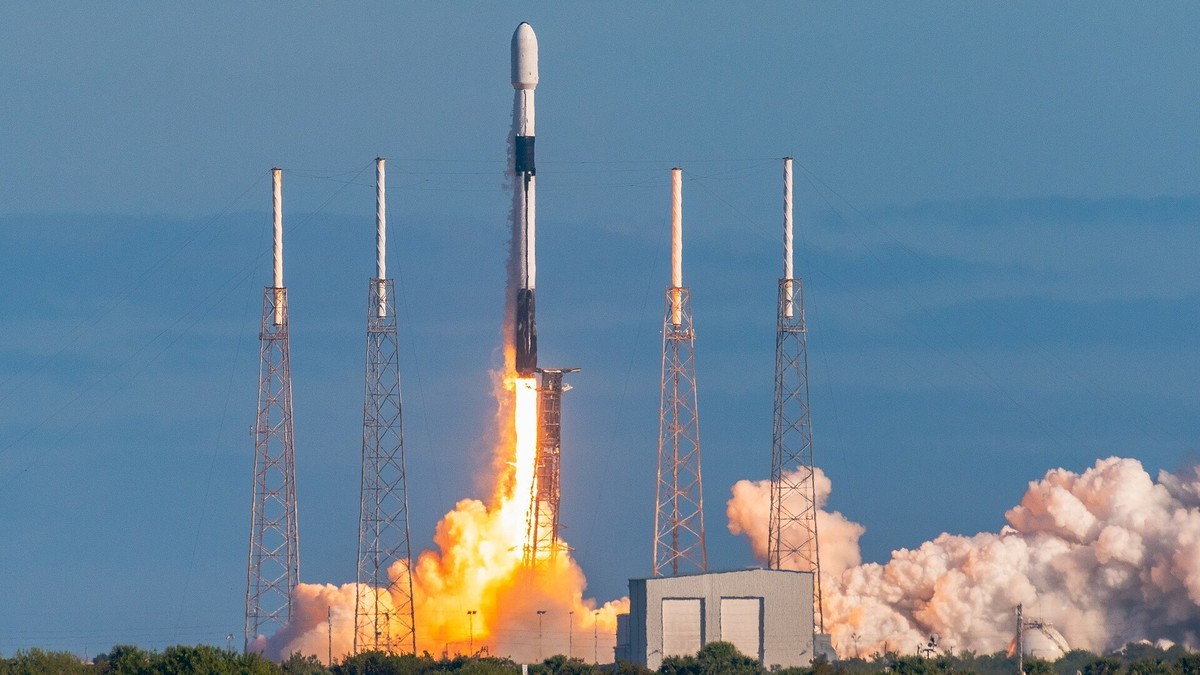
The first satellite, Tyche, was launched on 16 August 2024 aboard a Falcon 9 flying SpaceX's Transporter-11 rideshare mission from Vandenberg Space Force Base in California. It weighed about 150 kilograms, cost £22 million through a contract with SSTL, and was the first satellite fully owned by the Ministry of Defence. Titania is smaller and cheaper: a £9.5 million contract, designed and built in Hampshire by the Defence Science and Technology Laboratory working with BAE Systems. One detail in the ministry's own release does not match the record. It describes Titania as following "the successful launch of Tyche in October" without giving a year; the contemporaneous 2024 announcement from the MoD and Defence Equipment & Support dates Tyche's lift-off to 16 August. The gap between the two satellites is therefore more than two years, not a few weeks.
The Sensors That Watch the Watchers
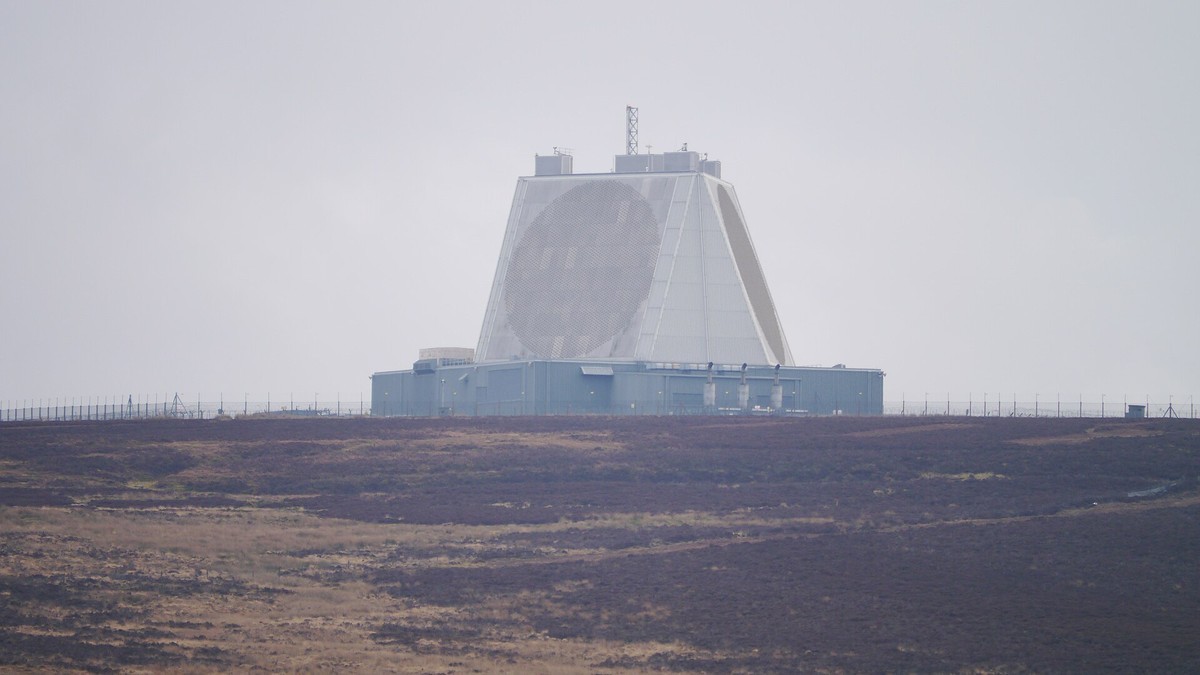
The second half of Saturday's announcement is the more unusual one. Project Inaros will trial three ground-based neuromorphic sensors — hardware that mimics biological processes by detecting changes in light — at sites in the United Kingdom, Australia and British facilities on Cyprus. They were developed by Optera, a British-Australian company, in partnership with the National Security Strategic Investment Fund. The ministry's ambition is explicit: the technology "could be developed to be an early warning system to spot unusual or threatening activity near UK satellites." Data from the trial feeds UK Space Command's units, including No. 1 Space Operations Squadron, No. 2 Space Warning Squadron and the new No. 3 Space Effects Squadron. That is a different job from looking down at Earth. It is looking sideways, at the traffic around your own spacecraft, and trying to work out which of it is closing in.
Two Days After the Reuters Story
The sequence is hard to miss, and Sky News drew the line itself: it reported that the risk "was illustrated last month when a Russian military satellite came dangerously close to a commercial satellite in what some experts believe was a rehearsal for an attack." The ministry's own statement draws no such link. On 5 November, Reuters reported that a Russian military satellite designated Cosmos 2612 had closed to within roughly a kilometre of a Western commercial satellite called X36 around mid-October, with some analysts putting the distance at a few hundred metres or less. X36 is operated by the Finnish company ICEYE and supplies radar imagery to Western governments and militaries, including Ukraine. US Under Secretary of State Thomas DiNanno wrote on X that the Russian craft had been "intentionally maneuvering dangerously close to a commercial satellite" in conduct "consistent with on-orbit weapons operations." Greg Gillinger, a senior space analyst at Integrity ISR, told Reuters the encounter "looks like an attack rehearsal."
The German General's Caveat
Not everyone is willing to call it a rehearsal. Germany's space commander, Major General Michael Traut, told Reuters that close approaches like Cosmos 2612's could serve inspection, observation or interference depending on what a spacecraft can actually do, and that planners must consider "the entire spectrum of possible effects, ranging from temporarily disrupting a satellite's operations to permanently disabling it." Reuters records his caution in the same breath: the ability to fly that close is not in itself evidence that Russia was preparing or rehearsing an attack, and the purpose cannot be determined from publicly available orbital data alone. Two sibling Russian satellites are now drifting toward the orbital path of another ICEYE spacecraft, X37, according to Gillinger and the US tracking firm COMSPOC. Both X36 and X37 are US-registered in public catalogues. Orbital mechanics is not intent — but it is a pattern, and patterns are what analysts argue about.
September's Squadron
Inaros is not the first piece of this. On 23 September, at the UK Space Power Conference in London, the Chief of the Air Staff, Air Chief Marshal Sir Harv Smyth, announced the formation of No. III Space Effects Squadron — the first British unit dedicated to countering hostile threats in orbit, part of the capabilities for orbital warfare he described, including electronic warfare and countermeasures against anti-satellite weapons. Its mission is to "disrupt, degrade and deny hostile activity." He was blunt about the change in status: space has "become a warfighting domain whether we like that or not," and RAF High Wycombe has been redesignated Air and Space Command. The BBC subsequently reported that the British military had already been using a ground-based system for a year to jam or block other countries' satellites, with a defence source saying it had been used "to deter our adversaries." Britain is not only watching. It is, quietly, doing.
The £3 Billion Question
The money attached to Saturday's statement is £3 billion over four years for space-based capabilities, carved out of a Defence Investment Plan that commits £298 billion over the same period. Forces News puts the space-based intelligence, surveillance and reconnaissance and space control line at £880 million through 2030. Streeting leaned hard on the domestic argument, saying both programmes were British-built and British-designed and "backed by more than £3 billion of investment in space capabilities", adding that this meant "highly skilled jobs across the UK, a stronger industrial base, and a more secure United Kingdom." BAE Systems' Andrea Thompson called the programme a demonstration of "the strength of the UK's sovereign space capability," and Dstl chief executive Paul Hollinshead said his laboratory had been "at the heart of Titania, from the original concept" through to launch. The framing is deliberate. Sovereign capability is the phrase a government uses when it wants the spending read as industrial policy as much as defence.
What the Ministry Has Not Said
Strip out the adjectives and the disclosure is thin. No altitude. No ground sample distance. No date for the first image. No sample imagery of any kind, which is normal for an intelligence satellite and also means the capability cannot be assessed from outside. Janes reported in August 2024 that Tyche was a research and development concept demonstrator; whether Titania is a sharper version of the same, or a genuinely operational sensor, is not stated anywhere in the release. Space trackers list the spacecraft and its launch, so the fact of orbit is verifiable. The quality of what it sees is not. That gap between a confirmed object and an unconfirmed capability is where most of the public argument about military space actually happens.
What to Watch Now
Three things will tell you whether Saturday mattered. The first is whether Juno and Oberon arrive on schedule, because a constellation that keeps slipping is a constellation that does not exist. The second is whether Inaros produces anything usable — three light-detecting sensors on three sites is a long way from an operational warning system. The third is what happens to X37. If a Russian spacecraft closes on that satellite the way Cosmos 2612 closed on X36, the argument about whether this is rehearsal or inspection will stop being academic. Britain has now put a second set of eyes in orbit and a first set of sensors on the ground to guard them. Whether that deters anything, or merely documents it, is not a question the launch answered.
By Jessica Ali, Staff Writer
This article was produced with AI-assisted research and editorial support. Cover: Global 1 News editorial image. Photographs: BAE Systems via the Ministry of Defence (artist's impression of Titania in orbit); James T M Towill via Geograph and Wikimedia Commons, CC BY-SA 2.0 (the phased-array radar at RAF Fylingdales); Joshua Conti/US Space Force, public domain (a Falcon 9 rideshare launch, file photo). Sources: UK Ministry of Defence and GOV.UK, Sky News, Reuters, Aviation Week, Forces News, BBC News, the RAF, SpaceX and Janes.
What's Your Reaction?
 Like
0
 Dislike
0
 Love
0
 Funny
0
 Wow
0
 Sad
0
 Angry
0

Editor-in-Chief at Global1.News. Atlanta-based journalist who cuts through the BS and tells it like it is. Lead anchor, host, and the voice you hear when the spin stops and the truth starts.















Comments (0)