
Healey Proposes HMRC Bank-Account Deductions, With No Minimum Balance Promised
John Healey's Budget gives HMRC powers to deduct unpaid tax straight from bank accounts by instalments from July 2029, with no minimum balance promised and no legislation published yet.

Start with the part nobody is arguing about. From July 2029, HM Revenue & Customs intends to be able to take unpaid tax directly out of a current or savings account, month after month, without going to court. The tax authority calls that fairness for the people who pay on time. The argument is over what is left in the account afterwards — and over who gets to decide the debt is real.
Healey Proposes HMRC Bank-Account Deductions, With No Minimum Balance Promised
London, United Kingdom — The Chancellor confirmed the measure in his Budget on 28 October, nine days ago, and the tax profession has been picking it apart ever since. What follows is what the government has actually published, what it has declined to guarantee, and what has to happen before a single pound moves.
What Healey Actually Announced
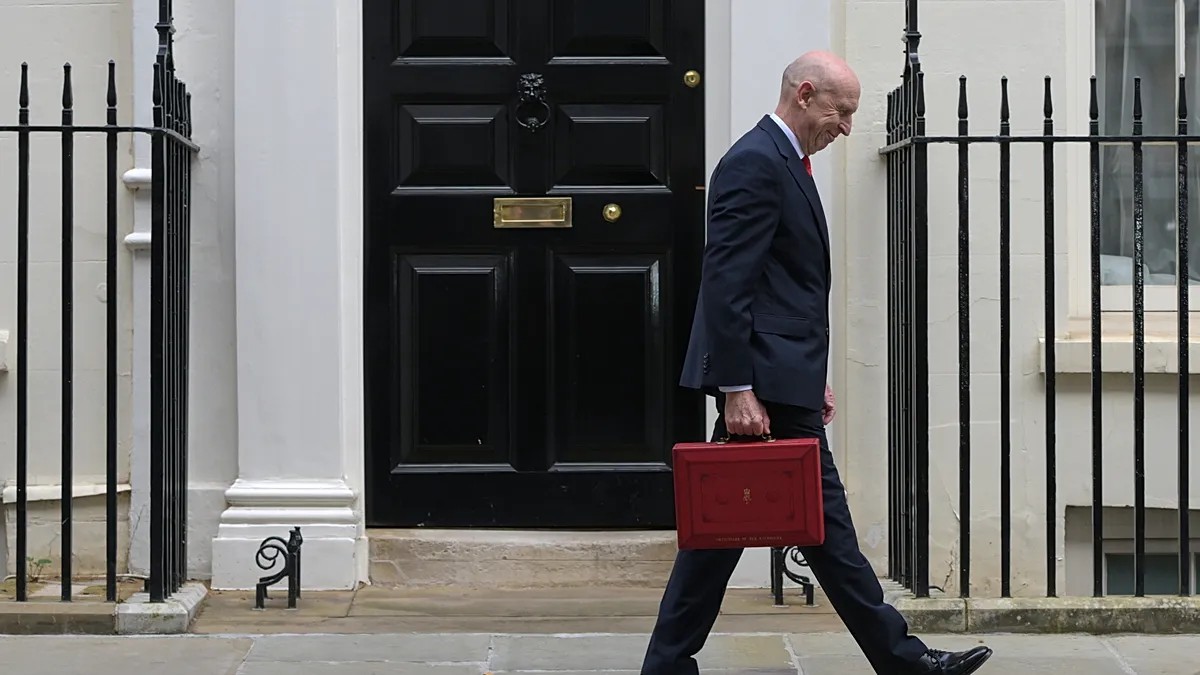
The Chancellor, John Healey, put the policy in his own words in the Budget speech: he is giving HMRC "stronger powers to collect overdue tax from those who can clearly afford to pay, but ignore repeated contact". The Budget red book carries it at paragraph 6.149. The mechanism is an extension of an existing tool called Direct Recovery of Debts, which under current rules can be pointed only at debts over £1,000 and must leave £5,000 across the debtor's accounts. The new version adds automated instalment deductions for lower-value debts, capped at £5,000 for an individual and £10,000 for a company. It would apply only where the customer has repeatedly failed to engage with the tax authority, and it would be paid straight out of a bank or building society account by the institution holding it. The start date, on the government's own timetable, is July 2029.
A Power With No Law Behind It
Nothing has been legislated. The consultation that produced this policy opened on 23 June and closed on 28 August, and the government published its summary of responses on Budget day. That document sets out the next step plainly: a Code of Practice to refine "customer safeguards, affordability considerations and operational design" before draft legislation is published "for technical consultation next year". LITRG, the Low Incomes Tax Reform Group, says the first draft of that code and the draft legislation are both expected in summer 2027. So the power has been announced, costed and defended, and the statute that would create it does not exist. Several outlets have reported that HMRC "now has" these powers. It does not, and cannot use them for another two and a half years.
The Safeguard the Treasury Says Is Unnecessary
Here is the detail that matters most to anyone with a small debt and a small balance. The existing scheme has a floor: HMRC can act only on debts over £1,000, and at least £5,000 must be left across the debtor's accounts. The Independent worked the arithmetic — £7,000 in savings means £2,000 is the most that can be taken — and reported that the floor exists so the department does not "put a hold on money needed to pay wages, mortgages or essential business or household expenses". The expanded scheme carries no such promise. The i Paper reported that, unlike previous recovery schemes, there is currently no plan to leave a minimum amount in the account. Asked about it, the government said it did not "think that a minimum account balance is a necessary safeguard".
How the Deduction Would Work
In practice the department would order the bank to pay it, in instalments, out of the account. The design has been tightened since the summer. LITRG records four changes the government accepted: the notice period before deductions start was doubled from 14 days to 28; authorised overdrafts are excluded for individuals; protections for joint account holders were strengthened; and a "refund first" approach was adopted where the deduction is disputed. The i Paper adds that a "tailored affordability assessment" would come before any money is taken, and that people would have a right of appeal. The Independent, describing the safeguards that exist under the current scheme, notes a face-to-face visit before any action, to confirm the department is dealing with the right person, and a window to object before anything is recovered. Those are real protections. They are also, on the government's own account, still being written.
Your Partner's Money, Your Debt
Then there is the joint account. HMRC would be able to recover one partner's tax debt from a couple's joint account where no sole account is viable, without recognising how much the other partner contributed to it. The government's answer is that it will "only consider joint accounts if there was no viable sole account", and that "where HMRC holds the necessary information" it will notify the non-debtor before any deduction and give them a chance to object. Read that qualifier again. Notification is promised where the department holds the information — not in every case. The i Paper's own reading is blunt: it could mean "that debts are recovered partially from somebody who does not owe them".
The Burden-of-Proof Problem
James Kipping, head of private client at the accountancy firm MHA, says there should be "genuine concern" about how HMRC concludes that a debt is correct and final, and about how it will "distinguish refusal to engage from inability to engage". He also asks what data the department uses to judge income and affordability, and how quickly someone can stop the process and get their money back if it is wrong. His reading of the policy's significance is worth quoting in full: "The significant development is the proposed creation of something approaching an HMRC-imposed payment plan, with the department determining affordability and then causing recurring payments to be extracted from the taxpayer's account." Rachel Nutt, a tax partner at the same firm, makes a narrower point that is harder to argue with: "Most compliant taxpayers are unlikely to be affected, but the success of the measure will depend on robust safeguards and ensuring it is used proportionately where debts are undisputed, and other recovery options have been exhausted." She then adds the practical version of the same worry — that HMRC often believes a notice was sent when neither the agent nor the client ever received one.
Half a Per Cent of the Tax Gap
Set the power against the money. The tax gap — what is owed and never collected — stood at £59.2bn in 2024/25. The government expects the new powers to bring in £50m in the first year, £255m in 2030/31 and £320m in 2031/32. That final figure is about half a per cent of one year's gap. For scale, HMRC collected £858.9bn in 2024-25, roughly nine in ten people pay on time, and only about a tenth of what was owed turned into debt. The precedent is thinner still: the existing Direct Recovery of Debts power was used 19 times in two years before it was paused during the pandemic. A tool used 19 times in 24 months is now being rebuilt to raise hundreds of millions a year. And the debts in scope are small. The government's own consultation document records that where customers owe less than £5,000, the average individual debt is around £950. That is the sum at the centre of this: not a fraudster's offshore account, but a few hundred pounds a tax office says is unpaid, deducted in instalments from a current account.
The Other Bank-Data Power
This is not happening in isolation, which is why the objections have hardened. The Department for Work and Pensions already has authority to ask banks to check the accounts of benefit claimants, and the first "eligibility verification measures" went out last month. Banks are being asked to flag Universal Credit, Pension Credit and Employment and Support Allowance claimants who may have undeclared savings or who have stayed abroad longer than the rules allow. The legislation behind it was passed last year and is meant to save £1.2bn by the end of the decade. Big Brother Watch calls the policy a "snooper's charter". Disability Rights UK says it fears the department could "undertake fishing exercises with absolutely no evidence of fraud", leaving claimants at risk of payments being stopped "without any good reason". Lilian Greenwood, the DWP minister for fraud and debt, has defended the checks on the record. The government is "not interested in where people do their weekly shop or how much they're spending on new clothes", she said, and banks are being asked only "to identify if somebody may no longer meet the rules for the benefits they receive, allowing us to investigate further where necessary". Two departments, two bank-data programmes, one shared answer: trust the safeguards.
What the Tax Profession Wants in Writing
The people who deal with HMRC for a living are not asking for the policy to be abandoned. They are asking for three things to be nailed down before the code is drafted. Sarah Weston, technical officer at LITRG, puts them in order: HMRC must explain how it will identify people who need extra support and ensure those cases are "removed from the automated process for human review"; it must check that debts are correct before making deductions; and the safeguards must ensure deductions "do not leave people struggling to meet day-to-day living costs". Her warning about the data is the sharpest line in the whole file. Additional data and third-party evidence "might help HMRC assess taxpayer vulnerability and affordability", she says, "but they may not tell the whole story". Nimesh Shah of Blick Rothenberg told the i Paper the powers risk becoming a "sledgehammer".
What Happens Next
The sequence is fixed and slow, and that is the window for changing it. A Code of Practice is drafted with stakeholders. Draft legislation follows in summer 2027 for technical consultation. Only then does a bill reach Parliament, and only if the Treasury still wants it. The live power starts in July 2029. In the meantime the pressure point is the missing floor. The National Audit Office said on 23 October that the tax debt balance remains significantly higher than before the pandemic and that older debts are getting harder to collect, which is the government's case for acting. The counter-case is that a £950 average debt, taken automatically from an account with no guaranteed minimum, is not a collection problem. It is a household going under. Watch the code, not the soundbites.
By Jessica Ali, Staff Writer
This article was produced with AI-assisted research and editorial support. Sources: HM Revenue & Customs and GOV.UK (Budget 2026 speech; consultation on tackling lower value tax debts, and the summary of responses), the Low Incomes Tax Reform Group (LITRG) of the Chartered Institute of Taxation, City A.M., The i Paper and The Independent. Photographs: AP Photo via Euronews (Chancellor John Healey leaving 11 Downing Street with the Budget box); City A.M.; The Independent Cover: Global 1 News editorial image.
What's Your Reaction?
 Like
0
 Dislike
0
 Love
0
 Funny
0
 Wow
0
 Sad
0
 Angry
0

Editor-in-Chief at Global1.News. Atlanta-based journalist who cuts through the BS and tells it like it is. Lead anchor, host, and the voice you hear when the spin stops and the truth starts.














Comments (0)