
4.3 Million Tubes of Toothpaste Recalled as the FDA Cites Manufacturing Deviations
The FDA's enforcement report lists a voluntary recall of about 4.3 million tubes of adult and children's toothpaste made by Pritam International and distributed by Ashtel Studios, citing manufacturing practice deviations the agency has not described.

The U.S. Food and Drug Administration's enforcement report now lists a voluntary recall of about 4.3 million tubes of adult and children's toothpaste made by Pritam International Private Limited and distributed by Ashtel Studios of Ontario, California. The stated reason is deviations from current good manufacturing practice, and the FDA has not described the specific problem.
4.3 Million Tubes of Toothpaste Recalled as the FDA Cites Manufacturing Deviations
Washington, D.C. - The recall covers 17 toothpaste varieties, including Barbie, Hot Wheels, Crayola and ice-cream-flavored lines, and was initiated on 10 September 2026. It was added to the FDA's Enforcement Report on 19 October 2026 under event ID 99849 and classified Class II.
What the Record Actually Says
The enforcement report identifies Pritam International Private Limited, based in India, as the recalling firm. The action is described as voluntary. The reason given is "current good manufacturing practice deviations," or CGMP deviations.
The report lists 17 toothpaste varieties under one enforcement event, event ID 99849. Hearst Television's syndicated coverage describes "17 recalls," while NTD describes "17 varieties." Both describe the same set of products inside a single FDA enforcement event, not 17 separate actions.
What is missing from the enforcement report is any description of the specific deviation. Hearst Television reported that federal officials did not describe exactly what the issue was. Hearst also said it reached out to the FDA for further comment on why the products were recalled and had not heard back.
No published account states that anyone was harmed or sickened. None states that the fluoride content of the tubes was incorrect. The documented facts are the firm, the volume, the products, the stated reason and the classification.
Thirty-Nine Days Between the Recall and the Notice
The company began the recall on 10 September 2026, federal records show. The FDA added it to the Enforcement Report and classified it on 19 October 2026, according to a structured summary of the agency's notice published by Recall Canary.
That is 39 days between the company's action and the public listing. The gap matters because the enforcement report is the document most consumers, clinicians and retailers can search. Before 19 October, the recall existed as a company action without that public entry.
Hearst Television's syndicated reporting carried the story to local stations including WCVB, KCRA, WTAE, KETV and WBAL. NTD reported the FDA announced the recall of "dessert-flavored and toy-themed toothpaste sold on eBay and Amazon."
The public record does not explain why the listing came on 19 October. What the firms told distributors in the intervening weeks is not documented in any of the accounts reviewed here.
What a CGMP Deviation Means
The FDA describes CGMP as a system that "provides for systems that assure proper design, monitoring, and control of manufacturing processes and facilities." Adherence, the agency says, "assures the identity, strength, quality, and purity of drug products" and includes "detecting and investigating product quality deviations."
The FDA says the system of controls "helps to prevent instances of contamination, mix-ups, deviations, failures, and errors." It also states that "a consumer usually cannot detect (through smell, touch, or sight) that a drug product is safe or if it will work."
Darin Detwiler, a professor at Northeastern University and adviser to the Alliance for Recall Ready Communities, told NTD that "deviations from cGMPs can compromise the integrity of the entire production process." Detwiler also told NTD that "when a recall of this size happens, it means the FDA and the company found enough of a potential risk—such as contamination or quality failure—that it wasn't worth gambling with public safety."
Detwiler is an independent academic quoted by NTD, not an FDA official. NTD reports that deviations can lead to microbial contamination, instability, or the inclusion of harmful ingredients, per Detwiler.
Why a Fluoride Product Is a Different Kind of Recall
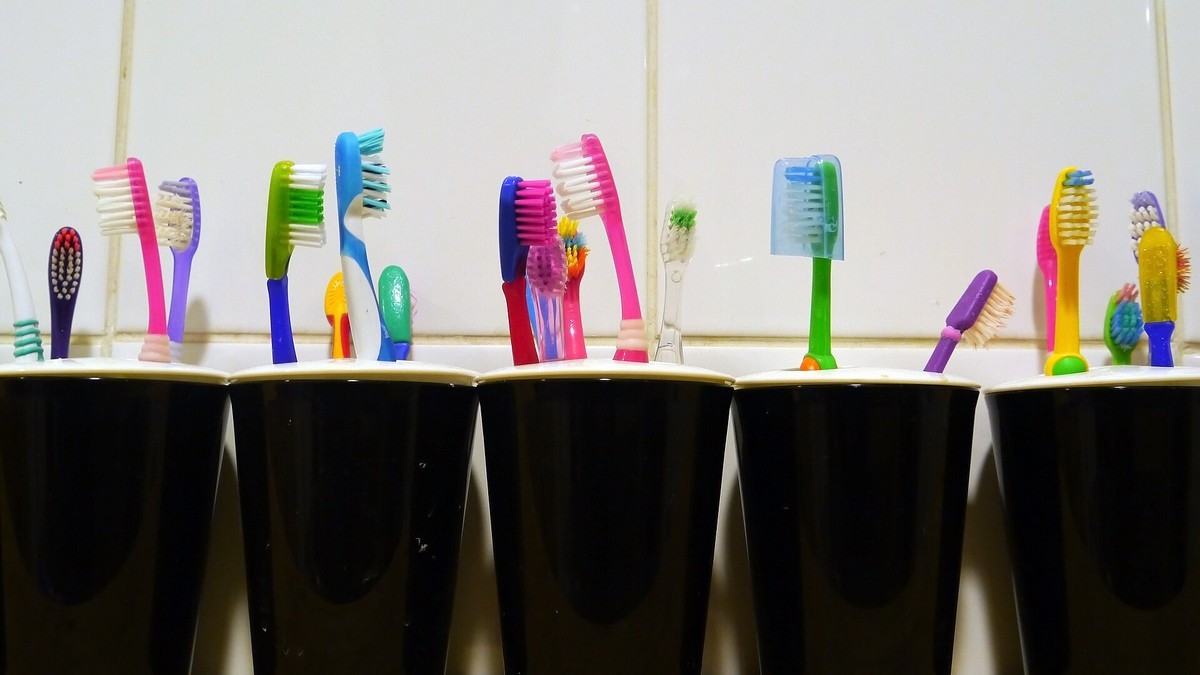
These toothpastes are marketed as over-the-counter monograph drugs. DailyMed labels list sodium fluoride 0.243%, with a fluoride ion content of 1100 ppm, and the purpose as anticavity. The labels carry a warning: "Keep out of reach of children under 6 years of age. If you accidentally swallow more than used for brushing, seek professional help or contact a Poison Control Center immediately."
The ATSDR Public Health Statement for Fluorides notes that swallowing toothpaste can account for a large percentage of the fluoride to which a child under 8 years of age might be exposed. The ATSDR Toxicological Profile adds that other studies indicated an average of 25% (range 10-100%) of the toothpaste introduced into the mouth was swallowed.
A CDC Stacks children's health document puts the figure higher: for children, toothpaste accounts for 57% of fluoride intake where water is fluoridated, and 63% where it is not.
Those are federal publications about fluoride exposure in general. They describe the background against which a manufacturing deviation in a fluoride toothpaste would be judged, not a finding about these tubes.
The Products: Barbie, Hot Wheels, Crayola and Ice Cream
The 17 varieties named in the recall include Brush Buddies Barbie Anticavity Fluoride Toothpaste in bubble gum, 4.0 oz, with sodium fluoride 0.243%. The list includes Brush Buddies Hot Wheels Anticavity Fluoride Toothpaste in strawberry, 4.0 oz.
It includes Brush Buddies Crayola Silly Scents Anticavity Fluoride Toothpaste in bubble gum, watermelon and strawberry, and Brush Buddies My Little Pony Scents Anticavity Fluoride Toothpaste in bubble gum.
The ice-cream flavors are Vanilla, Mint Chocolate Chip, Cookies 'n Cream and Chocolate. The list also covers Brush Buddies Whitening Anti-cavity Fluoride Toothpaste with Baking Soda, BB Cavity Protection, BB Advanced Whitening, evo Advanced Whitening, evo Sensitive, ARU Toothpaste Gum Health in Soothing Mint, and ARU Toothpaste Cavity Protection, 9 Ingredients, Cool Mint.
Recall Canary's structured summary lists these products under NDC numbers beginning 84140, with lots beginning LWP, for example LWP250031810502A and LWP260055421803. Hearst reported that listed expiration dates run from November 2026 through June 2028.
Made in India, Distributed From Ontario, California
The recalling firm is Pritam International Private Limited, based in India. The products were distributed by Ashtel Studios Inc. of Ontario, California.
DailyMed labels, labeled by Ashtel Studios under NDC 70108, carry package text reading "DESIGNED IN U.S.A. • MADE IN INDIA" and "DISTRIBUTED BY ASHTEL STUDIOS INC. ONTARIO, CALIFORNIA 91761."
The labels are filed as "HUMAN OTC DRUG LABEL" under marketing category OTC monograph final. Brush Buddies Mint Chocolate Chip and Vanilla ice-cream-flavored toothpastes list sodium fluoride 0.243%, fluoride ion content 1100 ppm, purpose anticavity. Brush Buddies Total Care Anti-Cavity Protection lists sodium monofluorophosphate 0.76%, or 0.13% w/v fluoride ion.
The label directions state: "children 2 to 6 years: to minimize swallowing use a pea-sized amount and supervise children's brushing and rinsing until good habits are established." They add: "Children under 2 years of age: Consult a dentist or doctor" and "Do not swallow."
Two Totals for One Recall
Two figures for the volume of this recall are on the record, and they differ.
NTD, citing the 19 October FDA enforcement report, gives 4,298,900 tubes. Hearst Television's syndicated story gives 4,301,700 tubes. Hearst framed the headline as "more than 4.3 million tubes."
The difference between the two totals is 2,800 tubes. Neither figure has been described as preliminary or superseded, and both are tied to the same enforcement event, ID 99849.
For a recall of this size the discrepancy is small in percentage terms. It is still a discrepancy in the public record of a children's drug product, and it is worth stating rather than smoothing over.
Class II: What the Rating Does and Does Not Say
The FDA classified this recall as Class II. Hearst Television, restating the FDA's classification language, reports that Class II means use of or exposure to the product "may cause temporary or medically reversible adverse health consequences," and that the probability of serious adverse health consequences is considered remote.
NTD quotes the same FDA phrasing: exposure "may cause temporary or medically reversible adverse health consequences."
The rating does not say the products were safe. It does not say the risk was zero. It is a middle-tier classification, not the most serious one the agency uses.
What the rating also does not do is describe the deviation. A classification states the expected health consequence of exposure. It does not identify the manufacturing failure that prompted the action, and none of the published accounts supplies that identification.
The Same Failure Mode, a Different Company
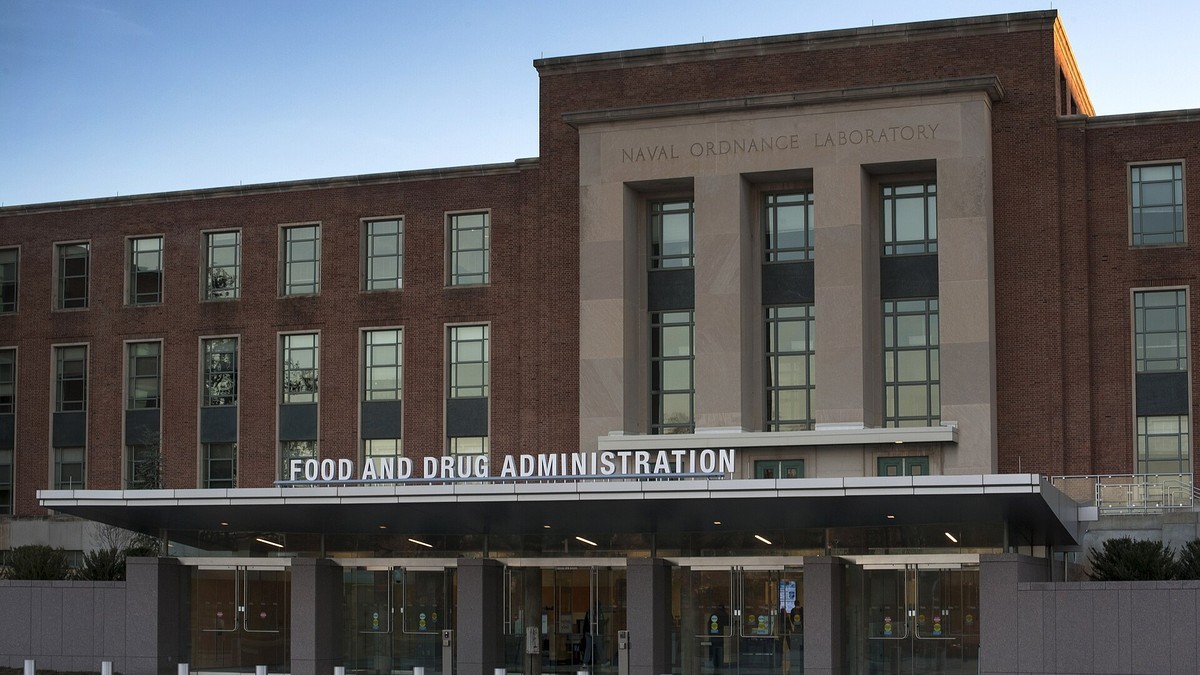
A separate case in children's oral care shows how the FDA documents CGMP problems. FDA warning letter 320-26-38, dated 21 January 2026, went to Signature Formulations, LLC, of Phoenix, Arizona, from CDER's Office of Manufacturing Quality. The FDA inspected the facility from 21 to 29 July 2025.
The letter says shared equipment and inadequate cleaning created a cross-contamination risk, and it cites inadequate finished-product testing before release. It records that on 8 December 2025 the firm issued a voluntary recall of ORL kids bubblegum toothpaste, lot 250520P4-05/27, and ORL kids bubblegum mouthwash, lot 250505P9-05/27, over potential contamination with exogenous hormones.
The letter says a previous warning letter, CMS 545017 of 31 July 2018, cited similar CGMP violations at the facility. The FDA said that in children "exposure to even low levels of" the potent ingredient "can lead to developmental and reproductive harm."
This is a different company and a different product line. There is no evidence connecting it to the Pritam recall, and none is implied here.
What a Parent Can Do Tonight
Check the tube in hand against the recall list. The 17 varieties sit under the Brush Buddies, BB, evo and ARU names, including the character lines and the ice-cream flavors listed above.
Check the label. DailyMed labels for these products carry "MADE IN INDIA" and the Ashtel Studios distribution line; the recall summary lists lots beginning LWP under NDC numbers beginning 84140.
Follow the label directions that remain in force regardless of the recall: a pea-sized amount for children 2 to 6, supervision of brushing and rinsing, and a dentist or doctor consulted for children under 2. The label keeps its poison-control instruction for any child who swallows more than the amount used for brushing.
No notice reviewed for this article sets out a refund, replacement or returns process as of 20 October.
By Jessica Ali, Staff Writer
This article was produced with AI-assisted research and editorial support. Sources: the FDA enforcement report, Hearst Television, NTD, DailyMed, the ATSDR Public Health Statement for Fluorides, the CDC, and FDA warning letter 320-26-38. Photographs: Poulpy and James Moore200 via Wikimedia Commons (CC BY-SA), and the U.S. Food and Drug Administration.
What's Your Reaction?
 Like
0
 Dislike
0
 Love
0
 Funny
0
 Wow
0
 Sad
0
 Angry
0

Editor-in-Chief at Global1.News. Atlanta-based journalist who cuts through the BS and tells it like it is. Lead anchor, host, and the voice you hear when the spin stops and the truth starts.










Comments (0)