
2 Palestinians wounded as rain causes collapse of wall in Israeli-damaged building in Gaza
Heavy rain fell across the Gaza Strip on Saturday, turning the already fragile shelters of displaced families into flooded, collapsing structures. When the wall fell, it struck two individuals, leaving them wounded and in need of urgent medical attention.
Heavy rain fell across the Gaza Strip on Saturday, turning the already fragile shelters of displaced families into flooded, collapsing structures. In northern Gaza, a wall that had already been weakened by Israeli shelling gave way under the weight of the downpour, injuring two Palestinians. The incident, reported by a medical source to Anadolu, underscores how the climate‑driven elements of this conflict compound the human suffering already inflicted by years of war.
Rain‑Triggered Collapse Highlights Ongoing Vulnerability
The collapse of the wall in a building already scarred by Israeli artillery illustrates the precarious state of civilian shelters in Gaza. The structure, which had been damaged in earlier shelling, could not withstand the pressure of the rain‑laden clouds that swept across the strip on November 7, 2026. When the wall fell, it struck two individuals, leaving them wounded and in need of urgent medical attention. Their injuries, while not detailed, add to the tally of more than 175,000 Palestinians already wounded since the conflict began in October 2023.
Eyewitnesses described the scene as chaotic, with water pouring into makeshift homes and tents that already lack basic protection from the elements. The incident is a stark reminder that the war’s physical devastation extends beyond the immediate blast zones, rendering even the most rudimentary shelters unsafe under ordinary weather conditions.
Flooded Tents Across the Strip
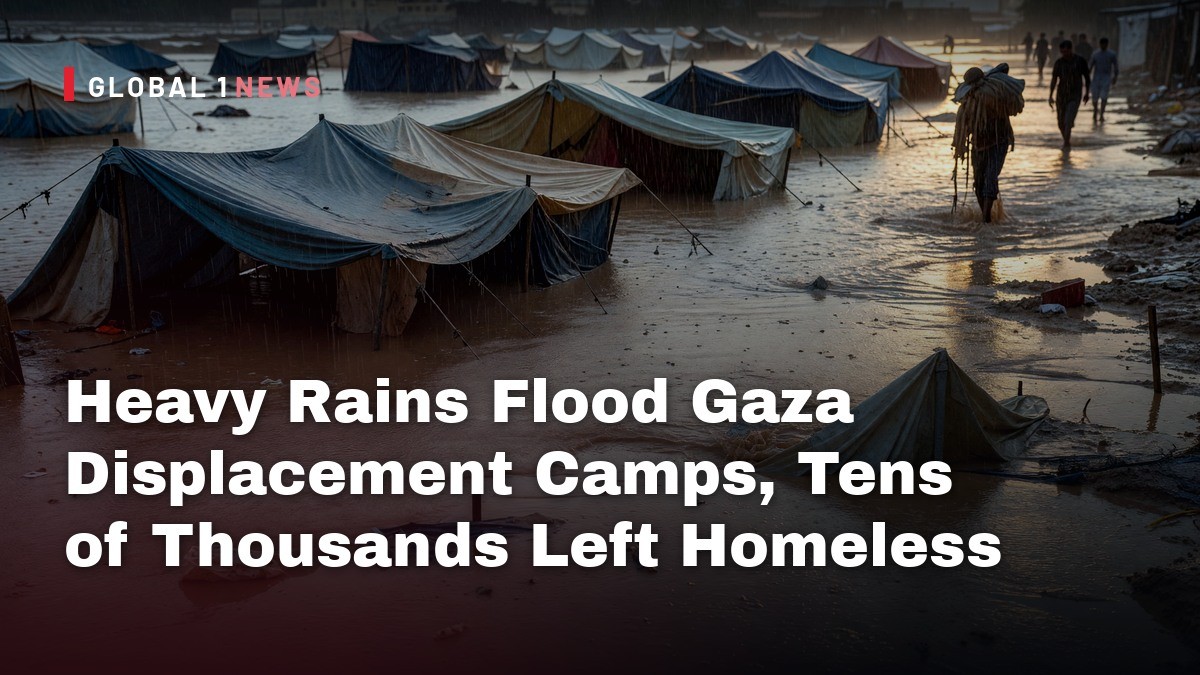
Across Gaza City’s port, west of Deir al‑Balah, north of the Nuseirat refugee camp, and in the densely populated areas of Jabalia and Beit Lahia, thousands of displacement tents were inundated by the sudden deluge. Residents who had fled their homes after their neighborhoods were reduced to rubble now find themselves wading through water that has seeped into the canvas walls of their temporary abodes.
The tents, described by witnesses as “worn‑out” and lacking any form of heating or waterproofing, were quickly overwhelmed. Families huddled together, trying to keep dry as the water rose around them, while others scrambled to salvage whatever belongings they could carry. The flooding has intensified the already dire humanitarian situation, pushing an already vulnerable population toward a new crisis of exposure to cold and damp conditions.
Humanitarian Impact of the Weather Crisis
Humanitarian agencies have long warned that the combination of cold air masses and heavy rain poses a severe risk to displaced populations living in inadequate shelters. The recent low‑pressure system, which brought the heavy rainfall, has compounded the hardship of thousands of Palestinians who already lack heating and adequate protection from the elements. The water not only damages personal belongings but also creates breeding grounds for disease, heightening the risk of outbreaks in a region already strained by limited medical supplies.
Medical sources on the ground have reported an uptick in cases of respiratory infections and skin conditions linked to prolonged exposure to wet, cold environments. The two individuals injured by the wall collapse now join a growing number of patients seeking care for injuries and illnesses exacerbated by the weather. Their treatment adds further pressure on a health system already overwhelmed by the sheer volume of casualties from the ongoing conflict.
War‑Induced Destruction Sets the Stage
Since the onset of Israel’s war on Gaza in October 2023, the Strip has endured systematic destruction of civilian infrastructure. The United Nations and human‑rights observers have documented that more than 74,000 Palestinians have been killed and over 175,000 wounded. This staggering loss of life and the widespread demolition of homes, schools, and medical facilities have forced millions into displacement, relying on makeshift shelters that are ill‑equipped to handle severe weather.
The damaged building whose wall collapsed is a microcosm of the broader devastation. Structures that once provided shelter have been reduced to skeletal frames, their integrity compromised by repeated shelling. When rain falls on these weakened edifices, the risk of collapse and injury rises dramatically, turning ordinary weather events into life‑threatening hazards for the civilian population.
International Law and the Right to Protection
International humanitarian law obligates parties to a conflict to protect civilians from the effects of hostilities, including ensuring that basic shelter and protection from the elements are maintained. The ongoing bombardment that has rendered many homes unsafe, combined with the failure to provide adequate humanitarian assistance, raises serious concerns about compliance with these legal obligations.
The recent rain‑induced injuries highlight the intersecting responsibilities of both the occupying power and the international community. While the immediate cause of the wall’s collapse was natural, the underlying vulnerability is a direct result of the war’s destruction. This nexus between environmental hazards and conflict‑driven fragility underscores the need for urgent measures to safeguard civilian shelter, as mandated by the Geneva Conventions and related protocols.
Human Stories Behind the Statistics
Beyond the numbers, each flooded tent and each injured individual tells a story of loss and resilience. Families who have watched their homes reduced to rubble now watch water seep into the very spaces they cling to for safety. Mothers hold trembling children, trying to shield them from the cold while fearing that the next storm could bring another collapse.
The two Palestinians injured by the wall’s failure are part of a broader narrative of everyday survival. Their injuries, while not fatal, disrupt daily life, forcing them to seek medical care, miss work, and endure the anxiety of living in a space that could fail at any moment. Their experience reflects the compounded trauma of war and weather, a dual burden that few international observers fully appreciate.
Calls for Immediate Action and Long‑Term Solutions
Humanitarian actors and local leaders are urging the international community to respond swiftly to the weather‑related crisis. Immediate actions include the distribution of waterproof tarps, emergency heating solutions, and medical supplies to treat injuries and prevent disease outbreaks. In the longer term, there is a pressing need to rebuild durable, weather‑resilient housing that can withstand both the harsh climate and the lingering threats of conflict.
The recent rainstorm serves as a stark reminder that without addressing the root causes of displacement and shelter insecurity, any temporary relief measures will remain insufficient. The international community must confront the intertwined realities of war‑induced destruction and climate vulnerability, ensuring that aid efforts prioritize both immediate protection and sustainable reconstruction. Only then can the cycle of injury and hardship be broken for the people of Gaza.
This article was produced with AI-assisted research and editorial support. Reporting is based on the source material cited below. Sources: Middle East Monitor; middleeastmonitor.com; Global1.News (08 November 2026).
By Fatima Al-Rashid, Staff Writer
What's Your Reaction?
 Like
0
 Dislike
0
 Love
0
 Funny
0
 Wow
0
 Sad
0
 Angry
0
Gulf/MENA Correspondent at Global1.News. Based in Doha, covering Gulf politics, energy markets, diplomacy, and development across the Middle East and North Africa. Tracks the economic transformation of the Gulf states.












Comments (0)