
China Is Learning to Sell Japanese Culture Better Than Japan
Japanese consumers are increasingly encountering Chinese‑origin products that are deliberately styled with a Japanese aesthetic. Yet the most conspicuous cultural crossover today is not food but digital entertainment.
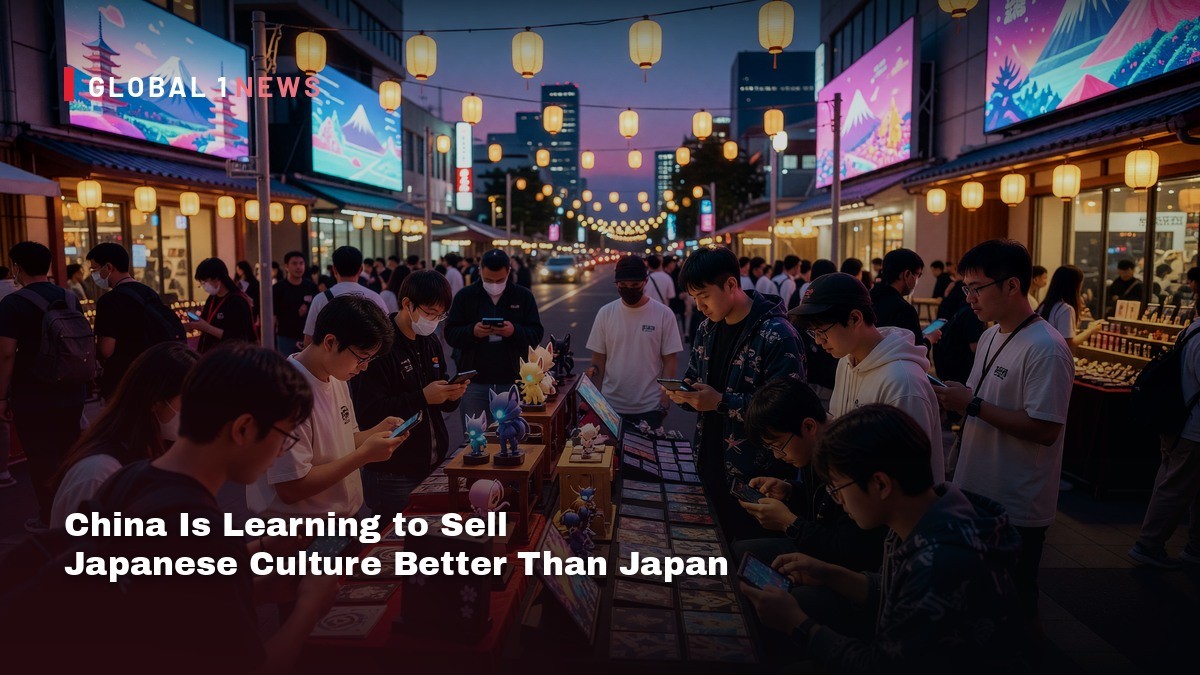
Japanese consumers are increasingly encountering Chinese‑origin products that are deliberately styled with a Japanese aesthetic. This trend, highlighted by the continued popularity of the Chinese‑developed game Genshin Impact and the rapid expansion of Chinese retailers such as Miniso, signals a shift in how Japanese culture is packaged, marketed, and consumed both abroad and at home. The phenomenon raises strategic questions for Japanese firms that have long regarded certain cultural symbols—anime‑style graphics, gacha mechanics, and the ultra‑compact kei car—as uniquely domestic assets.
From Chinatown to Genshin: The Chinese Lens on Japanese Aesthetics
For many Japanese youths, the first image of Chinese culture is the neon‑lit enclave of Yokohama’s Chinatown, a culinary scene that introduced gyoza and mapo tofu, and the presence of a sizable Chinese diaspora estimated at around nine hundred thousand people. Yet the most conspicuous cultural crossover today is not food but digital entertainment. Genshin Impact, a role‑playing game launched by Shanghai‑based miHoYo in 2020, has become a cultural touchstone. By the end of 2025 the title had generated ten billion dollars in revenue, a milestone that made it the fastest mobile game ever to reach that figure.
In Japan, the game topped popularity charts as late as 2024 and continues to rank within the top twenty for new downloads more than six years after its debut. Although only five percent of total downloads originate from Japan, the game’s visual language—bright, two‑dimensional (“nijigen”) art reminiscent of Japanese anime and manga—combined with gacha mechanics rooted in Japan’s capsule‑toy vending tradition, demonstrates how Chinese creators are appropriating and repackaging Japanese pop‑culture motifs for a global audience.
Chinese Firms as Global Curators of Japanese Pop Culture
MiHoYo’s early focus on China’s otaku community, dating back to its 2011 founding, was driven by a personal admiration for Japanese anime and technology, according to the company’s co‑founders. Over time, the firm broadened its creative palette, blending Japanese, Chinese, and Western elements across titles such as the Honkai series. This hybrid approach has proven commercially effective, suggesting that the appeal of Japanese aesthetics can be amplified when combined with broader, transnational narratives.
Other Chinese enterprises have followed suit. Toymaker PopMart turned its blind‑box “Labubu” dolls into a global fad by embedding gacha‑style randomness, while retailer Miniso—often dismissed in Japan as a hybrid of Daiso and Muji—has secured licensing agreements for iconic Japanese characters like Chiikawa and Hello Kitty. With more than eight thousand stores spanning 110 countries, Miniso serves as a conduit through which Japanese visual culture reaches markets where Japanese firms have limited presence, especially across Africa and South America.
The Return Journey: Chinese Products Targeting the Japanese Home Market
The next phase of this cultural exchange is Chinese firms turning their Japan‑styled offerings back toward Japanese consumers. PopMart entered Japan in 2022, introducing its Labubu line to domestic shoppers. In 2025, Miniso‑owned toymaker TopToy followed with a similar formula, while Mellojoy capitalised on the Japanese affection for “punipuni” (soft, squishy textures) to launch a craze among young women for handcrafted squishies. Even Miniso itself has staged a pop‑up shop in collaboration with the idol Lisa, signalling a concerted effort to embed Chinese‑produced, Japan‑flavoured products within the Japanese retail landscape.
These moves place Japanese firms in an unusual competitive environment: they must now vie with foreign companies that have deliberately adopted Japanese design cues that were once considered culturally proprietary. The case of the BYD Racco, a Chinese electric vehicle introduced as the first foreign‑made kei car—a vehicle class traditionally protected by technological, cultural, and regulatory barriers—illustrates the depth of this incursion.
Kei Cars and the Erosion of Domestic Moats
The kei car segment has long been a bastion of Japanese automotive ingenuity, characterised by ultra‑compact dimensions and strict regulatory limits on engine displacement. BYD’s entry into this niche disrupted long‑standing assumptions about the market’s insularity. Within two weeks of its launch, the Racco sold more than one thousand units, prompting domestic manufacturers to reassess their complacency.
Suzuki’s response—a newly launched electric kei model, the e SKY, powered by batteries supplied by BYD—underscores how Chinese firms are not only entering the market but also becoming integral supply‑chain partners. This dynamic suggests a future where Japanese automotive firms may need to collaborate with, rather than merely compete against, Chinese manufacturers to retain relevance in the kei segment.
Consumer Priorities: Affordability and Accessibility Over National Origin
Japanese consumers appear increasingly indifferent to the national provenance of products that embody familiar cultural aesthetics. A coordinated effort by the Cool Japan Fund to promote Japanese culture abroad through media and retail initiatives has been described as a costly failure, indicating that top‑down cultural diplomacy may not translate into domestic purchasing power. Conversely, Miniso’s aggressive expansion plan—targeting nine hundred to one thousand new stores annually—demonstrates that a scalable, affordable model resonates with consumers.
Genshin Impact’s success illustrates this point vividly: the game’s Japanese‑styled visuals are accessible at a low price point, and its gacha system encourages repeated micro‑transactions. The appeal lies not in the product’s origin but in its ability to deliver a familiar aesthetic experience at scale and affordability. This trend suggests that Japanese firms may need to rethink the premium attached to “Made in Japan” when competing against cost‑effective, culturally resonant alternatives.
Strategic Implications for Japanese Businesses
Japanese companies facing Chinese competition in culturally‑laden product categories must adapt on several fronts. First, they need to accelerate innovation cycles to stay ahead of foreign entrants that can rapidly iterate on design trends. Second, partnerships with Chinese firms—such as Suzuki’s battery collaboration with BYD—may become essential for accessing advanced technologies while preserving domestic brand identity. Third, Japanese firms should consider expanding their own global footprint in regions where Chinese retailers currently dominate the introduction of Japanese aesthetics, thereby reclaiming the role of cultural ambassador.
Finally, the broader lesson is that cultural capital alone no longer guarantees market protection. The Japanese market’s openness to foreign‑produced, Japan‑styled goods indicates that consumer loyalty is increasingly tied to experience, price, and convenience rather than to the provenance of a product. Companies that can blend authentic Japanese design with competitive pricing and agile distribution will be best positioned to thrive in this evolving landscape.
Looking Ahead: The Future of Japan‑China Cultural Commerce
As Chinese firms continue to refine their formula of “Japanified” products, the competitive pressure on Japanese industries is likely to intensify. The success of the BYD Racco and the sustained popularity of Genshin Impact suggest that the next wave of offerings will be even more sophisticated, blending cultural motifs with cutting‑edge technology and global marketing strategies.
For Japanese policymakers and industry leaders, the challenge will be to balance the protection of cultural heritage with the realities of a globalised market where cultural symbols are fluid and commodified. Initiatives that simply promote Japanese culture abroad without addressing domestic market dynamics may fall short, as evidenced by the Cool Japan Fund’s limited impact. Instead, a nuanced approach that encourages domestic firms to innovate, collaborate, and compete on price and accessibility will be essential to maintain Japan’s cultural influence both at home and abroad.
This article was produced with AI-assisted research and editorial support. Reporting is based on the source material cited below. Sources: The Diplomat; thediplomat.com; Global1.News (30 October 2026).
By Kenji Tanaka, Staff Writer
What's Your Reaction?
 Like
0
 Dislike
0
 Love
0
 Funny
0
 Wow
0
 Sad
0
 Angry
0

Japan Correspondent at Global1.News. Tokyo-based voice covering Japanese politics, technology, economy, and culture. Tracks the intersection of tradition and innovation in one of the world's most dynamic societies.















Comments (0)