
Maharlika's First Chief Leaves a Fund P10 Billion Short of Target
Rafael Consing's three-year term as Maharlika Investment Corporation chief executive ends on 23 November with P24.689 billion deployed against a P35 billion target, most nine-month revenue earned on undeployed funds, and the P19.7 billion Synergy Grid deal shelved.
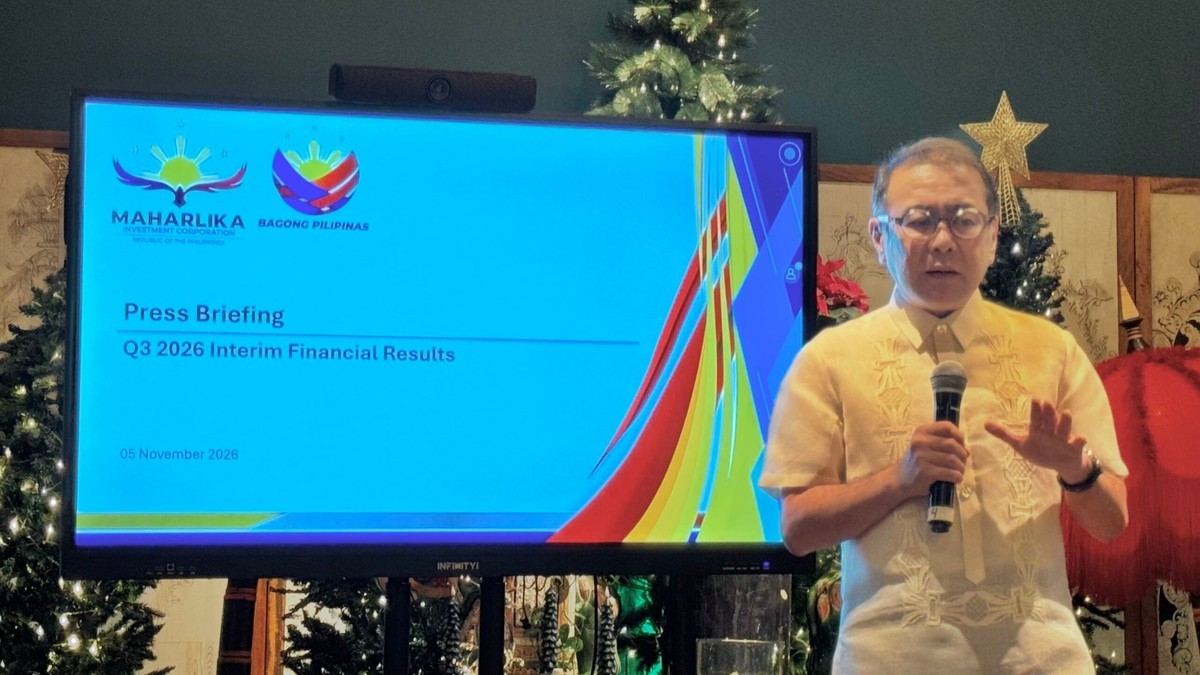
Rafael "Joel" Consing Jr. will stop being president and chief executive of the Maharlika Investment Corporation at five o'clock on the afternoon of 23 November. He was the first person to hold the job, hired to build the Philippines' first sovereign wealth fund from a blank page. Eighteen days before he goes, the briefing he gave reporters in Taguig City read less like a farewell than an audit he was delivering on himself.
Maharlika's First Chief Leaves a Fund P10 Billion Short of Target
Manila, Philippines - Malacañang has not said whether it will extend him, replace him, or name anyone at all before his term expires.
The Date, and the Silence From the Palace
Consing confirmed the exit at a news briefing on Thursday, 5 November. "It's been reported my term as PCO ends at the end of this month. Any announcement on the transition will come from the Palace," he said. The next day, Palace press officer and Presidential Communications Office Undersecretary Claire Castro offered no answer at all. "There is no information or details regarding that. Anyway, it's only 6 November, and if the deadline nears, we will announce something about that," she said. She added one line that will be read as a verdict on his tenure: "We haven't received any complaint from the President regarding the performance of Consing, as we have seen investments in the MIC." Under Republic Act No. 11954, the Maharlika Investment Fund Act of 2023, the chief executive is appointed to a fixed three-year term. Because the fund is a government-owned corporation, an advisory body may recommend an extension. Leaving with him is chief investment and operating officer Kheed Nielsen Ng, who is co-terminus.
What the Fund Earned in Nine Months
The numbers Consing brought to the briefing were, on their face, good. Net income for January to September reached P2.18 billion, up 24 percent from P1.76 billion a year earlier. Total comprehensive income rose 32 percent to P2.85 billion. Revenue climbed 17 percent to P2.41 billion. The third quarter alone produced net income of P941 million, a 49 percent jump, on revenue of P1.026 billion. Returns from money already deployed came to P1.53 billion through the third quarter, made up of P663 million in unrealised fair value changes, P439 million in dividends, P373 million in interest from loans and P57 million in realised gains and other income. "What matters here, apart from the numbers, equally important, is where it's coming from," Consing told reporters.
Two Thirds of the Revenue Came From Money Not Yet Invested
Where it came from is the part of the story the headline profit hides. Of that P2.41 billion in revenue, P757 million came from the fund's actual investments. The remaining P1.654 billion, close to 69 percent of the total, was interest earned on money still waiting to be deployed, parked with government financial institutions. The fund describes those balances as remaining accessible as it evaluates opportunities, which is a fair description of a treasury function and an uncomfortable one for a vehicle whose purpose is to invest. Consing framed 2026 as the year the machine finally started moving. "Capital deployment is now beginning to accelerate. Now, 2026 is really about execution," he said. On income he expects to clear the full-year target of P3.3 billion in comprehensive income. "I think we will outperform," he said.
The Ten-Billion-Peso Gap
On deployment, the execution he described has not arrived. The fund put P18.773 billion to work in the first nine months of 2026, lifting cumulative deployment to P24.689 billion since its build-out in 2024. Its year-end goal was P35 billion. Even if all three deals in the current pipeline close at the top of their range, adding P4 billion, the fund lands near P28.7 billion, roughly P6.3 billion short. If they close at the bottom, the gap is nearer P8 billion. Consing did not pretend otherwise. "I'm just being realistic. I don't think it's going to reach P35 billion," he said. He asked to be judged on a different measure: "What I recommend, encourage observers, is considering judging it for quality of investments and return rather than by speed of deployment." The fund says it has reviewed 247 potential transactions and committed to four.
The Grid Deal That Died at 647 Days
The largest deal it announced was never signed. On 30 October, Synergy Grid and Development Philippines Inc. disclosed to the Philippine Stock Exchange that the Maharlika Investment Corporation "has decided not to proceed with the transaction for the time being due to their current strategic direction." The transaction was to have been a P19.7-billion subscription for a 20 percent stake in Synergy Grid through newly issued convertible preferred shares, carrying an annual dividend of 6.5 percent for the first three years. That rate, applied to the full amount, comes to about P1.28 billion a year. The agreement traced back to 27 January 2025, when tycoons Henry Sy Jr. and Robert Coyiuto Jr. agreed to the sale and President Ferdinand Marcos Jr. witnessed the signing at Malacañang. Negotiations overran an initial 90-day target, then a June 2026 completion target. From that signing to Consing's briefing was 647 days. "As the terms developed over the course of detailed negotiations, also within the context of what's happening currently in geopolitics, we've decided to reassess," he said.
What Was Actually at Stake in the National Grid
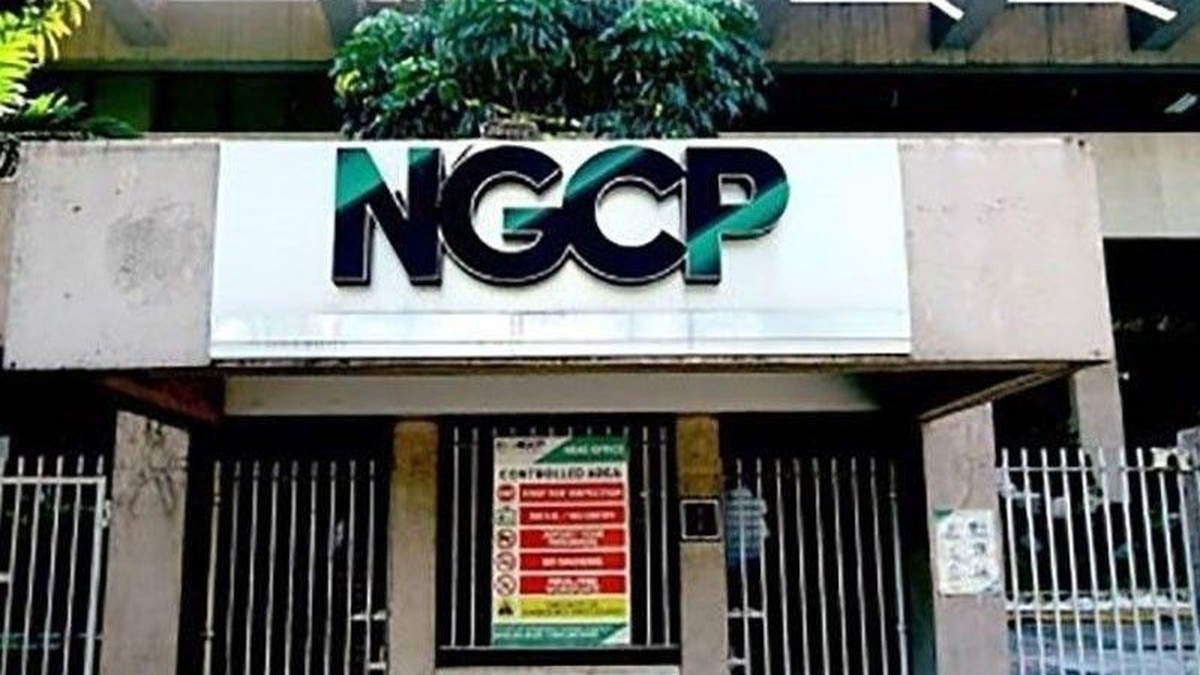
The stake was not really about the dividend. Synergy Grid is a listed holding company that indirectly controls 60 percent of the voting shares of the National Grid Corporation of the Philippines, with an effective equity interest of 40.2 percent. Those two figures measure different things, and both matter: the first is control, the second is money. The grid corporation operates the country's electricity transmission network; China's State Grid Corporation holds the remaining 40 percent. The subscription would have given the sovereign fund two board seats at Synergy Grid and two more at the grid operator, which is why the government's own access to information about the transmission system was the real prize. "The Government's interest in a secure and reliable transmission network remains unchanged, and continues to be served through the regulatory framework that governs the grid," the fund said. It also said the deferral affects neither the grid operator's operations nor transmission delivery. Its separately purchased Synergy Grid shares stay in the portfolio, having paid P70.7 million in dividends and carried a closing fair value of P2.22 billion at the end of September.
The Money That Is Working
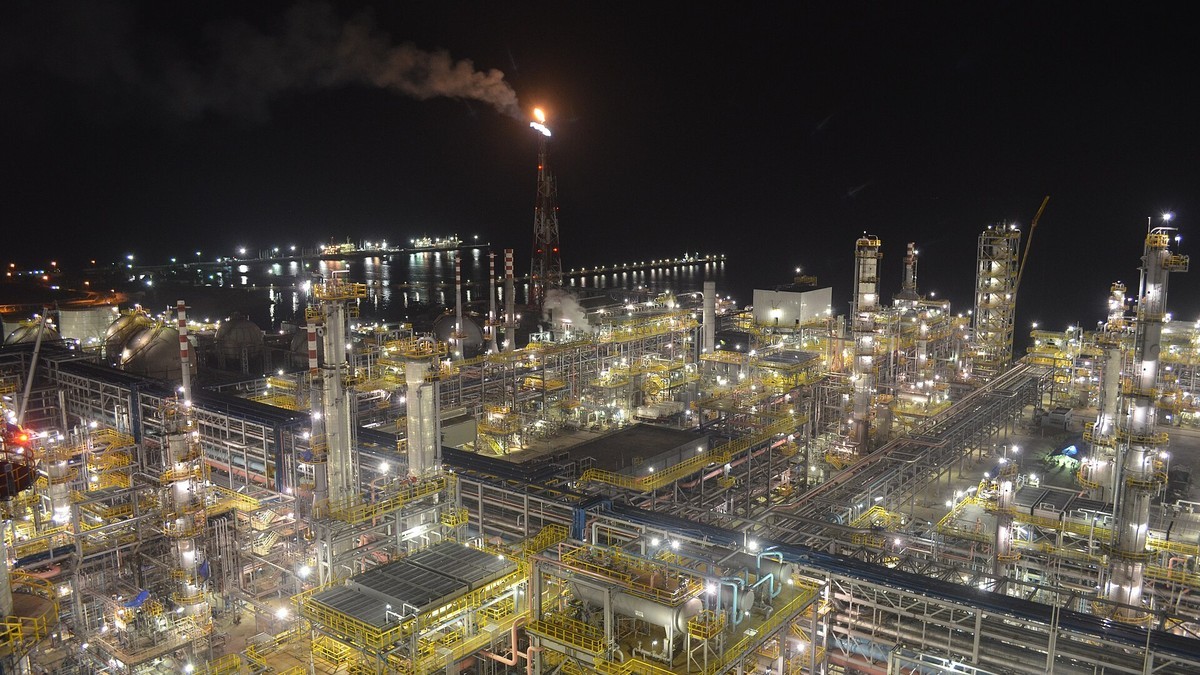
What is working is a short list of positions. The largest is a P15-billion short-term revolving credit facility to Petron Corp., announced in May and restricted to the purchase and importation of crude oil, refined petroleum products and related working capital. It was fully drawn on 14 May and matures on 10 November, and it contributed P343.4 million in interest income over the nine months. Then there is Asian Terminals Inc., where the fund became a shareholder in March with an 11.94 percent stake. It has deployed P2.68 billion for 177,612,478 common shares, bought from Seawood Resources Inc., Kayak Holdings Inc. and Asiasec Equities Inc. as well as through the tender offer, and it has taken a board seat. That position produced P292.7 million as the fund's share of the port operator's net income and P368 million in cash dividends. The third, a loan to Makilala Mining Co. Inc. for a copper-gold project in the Cordillera, was assigned in June for a P19.7 million gain and P37 million in realised foreign exchange gains.
Who Comes Next, and Who Has Not Said
The name circulating in Manila is Finance Undersecretary Ma. Angela "Angel" Ignacio, who oversees the Department of Finance's Government Corporations and Investments Group. She joined the department in February 2026 and already sits on the fund's board as an alternate representative of its chair, Finance Secretary Frederick Go. Her history overlaps with both men: she was an undersecretary at the Office of the Special Assistant to the President for Investment and Economic Affairs when Go headed it and Consing was its executive director. Asked directly, Consing declined to confirm. The appointment, he said, is the President's call. He was equally careful about his own departure. "I don't give instructions to my successors. No instructions, just a suggested path forward," he said. What he is handing over is paperwork: a compendium of his research papers for whoever follows and for the Land Bank of the Philippines. "It is an institution now with a team, a board, a set of policies, a portfolio, a process that has proven and that will carry on," he said.
A Sovereign Fund Still Waiting for Its Own Capital
The fund is also still waiting on the government that created it. The P50 billion in initial capital due from the national government has not yet been received. Consing raised the point without pressing it, and spent more of his briefing arguing that the money already in hand should stay home. "We felt that we owed it to the country that we, still as a national development fund, invest all the capital onshore," he said. The pipeline he described for the remaining weeks runs across utilities and infrastructure, industrials, and agriculture, two or three transactions worth between P2.5 billion and P4 billion combined. None has board approval. "They've not been approved yet by the board, so we're currently doing due diligence," he said, adding that he would not name targets until they are signed. He also said the fund staggers its payments rather than committing the full amount at once.
What to Watch Between Now and Year-End
Four things matter before the year closes. The Petron facility matures on 10 November. The term ends on 23 November at five o'clock in the afternoon. The board must clear or refuse the remaining transactions before December closes. And the advisory body must decide whether to recommend an extension at all, which is the only mechanism by which the Palace could keep Consing past his own deadline without a new appointment. None of this is settled. What is settled is the shape of the handover: a fund that has turned a profit in every period it has reported, that earns most of its revenue from cash it has not yet invested, that is about P10 billion behind the only deployment target it set for itself, and that will enter 2027 without the executive who built it or the grid stake that was supposed to define it.
By Jessica Ali, Staff Writer
This article was produced with AI-assisted research and editorial support. Cover: Global 1 News editorial image. Photographs: Rappler (Rafael Consing at the 5 November briefing); Philstar.com (a National Grid Corporation of the Philippines facility); Makubex1985 via Wikimedia Commons, CC BY-SA 4.0 (the Petron Bataan refinery). Sources: ABS-CBN News, Rappler, GMA News Online, BusinessMirror, Daily Tribune, InsiderPH, Philstar.com and Reuters.
What's Your Reaction?
 Like
0
 Dislike
0
 Love
0
 Funny
0
 Wow
0
 Sad
0
 Angry
0

Editor-in-Chief at Global1.News. Atlanta-based journalist who cuts through the BS and tells it like it is. Lead anchor, host, and the voice you hear when the spin stops and the truth starts.












Comments (0)