
Yoreme Activists Resist Topolobampo Ammonia Plant in Sinaloa
Round-the-Clock Camp Defends Ohuira Bay Access In the quiet hours near one of the Topolobampo Port gates, members of the twelve-year-old Aquí No movement keep watch. They have set up a permanent encampment to stop further industrial equipment from reaching the construction site of the ammonia plant on Ohuira Bay. Yoreme fisherman Carlos Valenzuela described how protesters recen
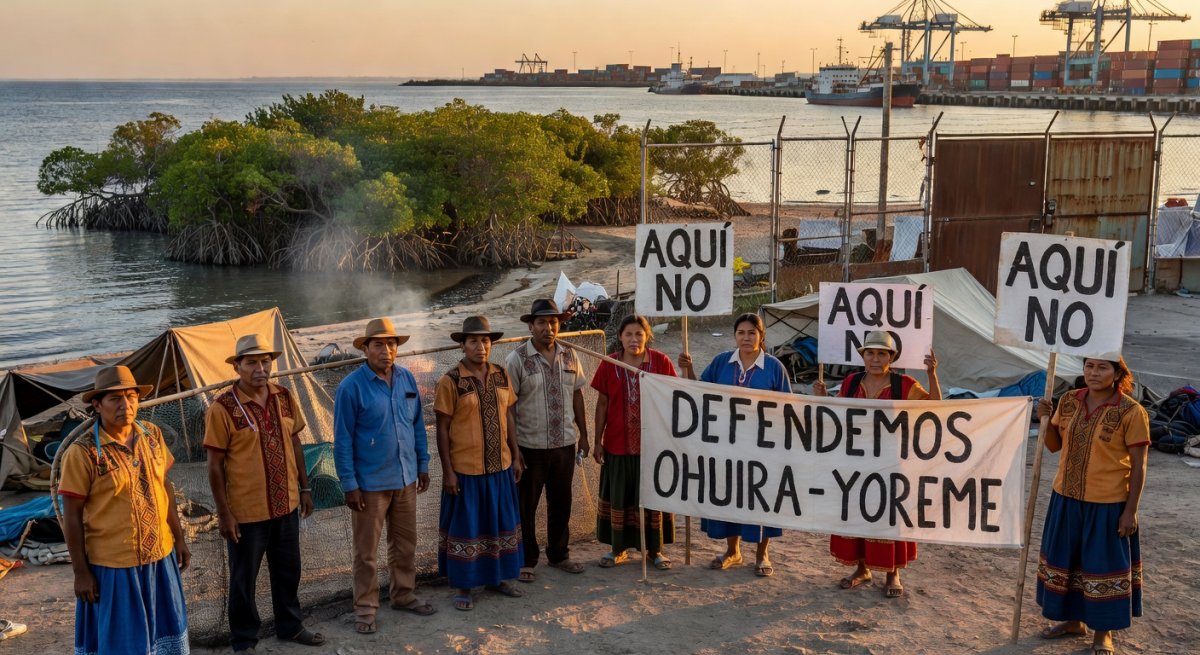
Round-the-Clock Camp Defends Ohuira Bay Access
In the quiet hours near one of the Topolobampo Port gates, members of the twelve-year-old Aquí No movement keep watch. They have set up a permanent encampment to stop further industrial equipment from reaching the construction site of the ammonia plant on Ohuira Bay.
Yoreme fisherman Carlos Valenzuela described how protesters recently blocked a crane from entering through one gate. Although the crane later used another entrance, the camp remains in place and will continue indefinitely as construction moves closer to operation.
Scale of the GPO Ammonia Facility in Sinaloa
The project belongs to Gas y Petroquímica de Occidente, part of the Switzerland-based Proman Group. It is designed to produce 2,200 tonnes of anhydrous ammonia each day and store up to 75,000 tonnes on site, making it one of the largest such facilities in Latin America.
Industry sources noted construction stood at roughly 88 percent complete in May, yet the company has stated that production is not expected until 2027. The arrival of massive reactor components has made the scale of the project visible to nearby communities for the first time.
Environmental Risks Highlighted by Activists
The company’s own environmental risk study warned that a pipeline rupture could create a toxic cloud reaching 45 kilometers in diameter. Such an event would threaten more than 400,000 people living around the Santa María-Topolobampo-Ohuira lagoon system.
Ohuira Bay forms part of a Ramsar wetland of international importance, home to mangroves, migratory birds, sea turtles, and the shrimp fishery that supports roughly 4,000 families. Yoreme residents note that the bay also serves as a nursery for marine life and holds deep spiritual meaning for their communities.
Flotilla Protest and Unexpected Support on Día de la Marina
On the Sunday of the annual Día de la Marina celebration, fishermen and residents took to the water in a flotilla protest. Boats carried Yoreme flags and banners reading “Aquí No.”
In a gesture that moved many, the queen of the maritime celebration, Zaira Dávalos, left the official vessel and joined a fishing skiff displaying an Aquí No banner. As the daughter of a fourth-generation fishing family, her action carried special weight in a community whose identity is tied to the bay.
Melina Maldonado’s Warning in Berlin and Local Resolve
Yoreme leader Melina Maldonado recently traveled to Berlin to speak with German parliamentarians and representatives of KfW, the state-owned bank providing financing for the project. She told them plainly that the community would not allow a single liter of ammonia to be produced and that their investment would be at risk.
Maldonado, who sleeps at the encampment, said the sight of the huge reactors arriving has created fear throughout the colonia and strengthened her commitment. She noted that children should not have to live with such uncertainty about their future and the health of the waters that have sustained their families for generations.
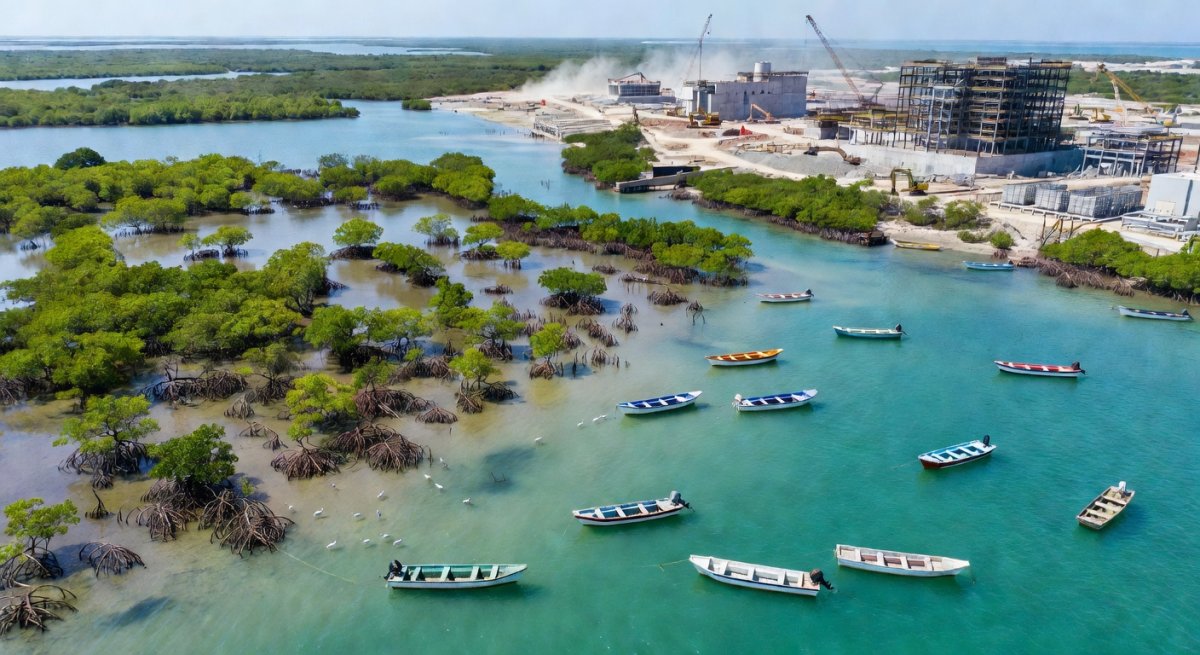
Whales or Gas Coalition Links Local Fight to Regional Struggle
The current action forms part of the broader Whales or Gas campaign, which unites more than 40 organizations concerned about the rapid industrialization of the Gulf of California. The coalition points to the growing network of LNG terminals, pipelines, and petrochemical facilities that affect whales, dolphins, sea turtles, and the fishing communities who depend on these waters.
For ordinary Mexican families in the colonias around Topolobampo, the stakes are immediate. The bay provides not only income from shrimp and fish but also a way of life passed from grandparents to grandchildren, one that Yoreme people have defended for centuries.
The protest continues as one of the final opportunities to halt the plant before operations begin. Residents remain alert, drawing strength from their shared history and the knowledge that their voices speak for the health of the entire lagoon system.
Tags: Yoreme activists, Topolobampo ammonia plant, Ohuira Bay, Sinaloa fishing families, Aquí No movement, indigenous resistance, Gulf of California
By Rosa Martinez, Staff Writer
This article was produced with AI-assisted research and editorial support. Reporting is based on sources cited in the article.
What's Your Reaction?
 Like
0
Like
0
 Dislike
0
Dislike
0
 Love
0
Love
0
 Funny
0
Funny
0
 Wow
0
Wow
0
 Sad
0
Sad
0
 Angry
0
Angry
0

Latin America/Andes Correspondent at Global1.News. Based in Bogota, covering politics, environment, energy, and social movements across the Andean region. Passionate about environmental journalism and communities protecting their land.















Comments (0)