
Mexico Demands US Charges Over 17 ICE Deaths Amid Crisis
President Claudia Sheinbaum announced on July 14 that Mexico will seek criminal charges in US courts for 17 Mexican deaths in ICE custody, sharply escalating tensions with the Trump administration over tariffs and the July 20 USMCA review. This move comes as Sheinbaum navigates a careful balance between US demands on migration and narcotics while defending Mexican sovereignty, as highlighted in recent coverage of her approach.
President Claudia Sheinbaum announced on July 14 that Mexico will seek criminal charges in US courts for 17 Mexican deaths in ICE custody, sharply escalating tensions with the Trump administration over tariffs and the July 20 USMCA review. This move comes as Sheinbaum navigates a careful balance between US demands on migration and narcotics while defending Mexican sovereignty, as highlighted in recent coverage of her approach. The announcement marks the most serious bilateral crisis since the first Trump tariffs on Mexican goods.
Mexico Demands US Charges Over 17 ICE Deaths Amid Trade Crisis
Mexico City, Mexico — Article continues...

Mexico Demands Justice: 17 Deaths in ICE Custody
President Claudia Sheinbaum stated on July 14 that her administration will file formal complaints with the US Department of Justice and with prosecutors in the specific states where the 17 Mexicans died. The complaints will seek criminal charges against those responsible for the deaths that occurred while individuals were in ICE custody or during enforcement operations. Sheinbaum described the pain as shared by the entire country during her morning briefing at Palacio Nacional.
The Sheinbaum administration, building on the AMLO legacy of prioritizing migrant rights, directed the SRE and SEGOB to coordinate the legal filings. These agencies will compile evidence from each case involving Mexican nationals who perished under US immigration enforcement. The announcement came after weeks of mounting pressure from families in border communities such as Tijuana and Ciudad Juarez who have lost relatives in similar incidents.
In the bustling plazas of Mexico City, where families gather to share tamales and stories under the watchful gaze of the Angel de la Independencia, the call for justice echoes loudly through the corridors of power. The Secretaria de Relaciones Exteriores, or SRE, has taken the lead in coordinating with the Fiscalia General de la Republica, known as FGR, to build airtight cases against those responsible for the 17 deaths in ICE custody. Mexican consulates in Houston, Los Angeles, Phoenix, and other US cities with large Mexican populations have been instructed to gather witness affidavits and medical records that could support criminal proceedings in American courts.
State governments in Sonora, Chihuahua, and Baja California have pledged full cooperation with the federal effort, recognizing that many of the deceased came from communities along the border where families have long relied on cross-border movement for work and education. Legal experts note that Mexico seeking charges in US courts is historically significant, reflecting a shift toward holding foreign authorities accountable for harms to Mexican citizens abroad. The FGR has assigned specialized prosecutors to each case, drawing on precedents from international human rights law to strengthen the complaints.
The Shootings That Changed Everything
The decision followed a week of deadly ICE shootings that included a Mexican national shot and killed in Houston, Texas, and a Colombian man shot and killed in Biddeford, Maine. These two incidents occurred within little over a week and prompted the Trump administration to order ICE to suspend most vehicle stops nationwide. The suspension aimed to reduce further confrontations during enforcement actions.
Sheinbaum condemned the deaths at her mananera, noting that the Houston shooting involved a Mexican citizen whose family still resides in Nogales, Sonora. The Biddeford case, though involving a Colombian, added to the regional outrage because it occurred during the same enforcement surge that targeted many Mexican migrants. Mexican consular officials in both Texas and Maine have already begun gathering witness statements for the upcoming complaints.
Sheinbaum's Balancing Act: Sovereignty vs. Cooperation
Sheinbaum has received praise from Morena party leaders for maintaining composure amid President Trump's unpredictability on migration and drug policy. At the same time, domestic critics argue she must adopt a tougher stance to protect Mexican citizens abroad. The DW News video outlines how she must cooperate with US requests on narcotics while asserting sovereignty when enforcement crosses into lethal force.
Her administration has continued joint operations against cartels even as it prepares the criminal complaints. This dual approach reflects the reality faced by communities in Tijuana, where many families depend on cross-border trade that could suffer if relations deteriorate further. Sheinbaum emphasized during the mananera that cooperation on security does not mean accepting deaths in custody without accountability.

Tariffs, Trade and the USMCA Review
The push for charges arrives as Trump has threatened 30 percent tariffs on Mexican goods and as the USMCA review scheduled for July 20, 2026, approaches. Mexican exporters in Ciudad Juarez and Nogales worry that any escalation could trigger immediate economic pain for workers in maquiladoras. The review will examine labor and migration provisions that directly affect daily life along the border.
Sheinbaum's team has prepared contingency plans that include strengthening domestic markets if tariffs take effect. The 30 percent threat has already prompted some factories in Tijuana to delay new hiring. The combination of the legal complaints and the upcoming trade review creates the most serious bilateral crisis since the original Trump tariffs on Mexico began.
Mexican business chambers, including CONCANACO and the Consejo Coordinador Empresarial, have voiced concerns about the economic fallout if the tariff threat materializes. The auto industry, which depends heavily on integrated supply chains between Mexican plants and US markets, faces the most immediate risk. Avocado exporters in Michoacan and electronics manufacturers in Guadalajara have also warned that a 30 percent tariff would devastate their sectors and lead to widespread layoffs.
Mexican economists have warned that such tariffs could weaken the peso and fuel inflation, raising the cost of basic goods for working-class families across the country. The USMCA review scheduled for July 20 now carries extraordinary weight, as it will examine labor and migration provisions that directly affect daily life along the border. Sheinbaum's administration has signaled it will use the review to press for greater protections for Mexican workers in the United States, linking trade access to human rights standards in immigration enforcement.
What This Means for Mexican Families
Families in Nogales have organized weekly gatherings at the border fence to remember the 17 individuals who died in ICE custody. One mother from Ciudad Juarez whose son perished last year now travels monthly to the US consulate to press for answers. These personal stories illustrate how the deaths ripple through entire communities that rely on remittances from relatives working in the United States.
In Tijuana, local churches have collected donations to support legal efforts for affected families. The human cost extends beyond the 17 cases because many households fear additional enforcement actions following the recent shootings in Houston and Biddeford. Sheinbaum referenced these family impacts directly during her Palacio Nacional briefing.
In the colonias of eastern Tijuana, where modest homes cling to hillsides overlooking the border fence, families like the Garcias gather each evening to pray for relatives who crossed into the United States. The fear of ICE operations has reduced cross-border visits, impacting the remittances that sustain many households. Local comunitario organizations have stepped in to provide food and legal aid, filling gaps left by stretched government services. As Dia de Muertos approaches, communities across Baja California plan altars honoring the 17 deceased, placing their photos alongside marigolds and pan de muerto to ensure the fallen are not forgotten.
Protests and Political Fallout
The deaths have sparked protests in multiple US cities and reignited calls to abolish ICE. Demonstrations in Los Angeles and Chicago drew hundreds of Mexican-American participants who carried photos of the 17 deceased nationals. In Mexico, Morena supporters organized parallel rallies outside the US embassy in Mexico City to back Sheinbaum's legal push.
Critics within Mexico argue the response should include stronger diplomatic measures beyond court filings. Supporters counter that the formal complaints represent a measured yet firm defense of Mexican citizens. The protests have kept the issue prominent in both countries ahead of the July 20 USMCA review.
What to Watch For
Observers will monitor whether the US Department of Justice accepts the complaints and whether state prosecutors in Texas and other affected states open parallel investigations. The suspension of most ICE vehicle stops remains in place, but its duration will depend on political developments in Washington. Sheinbaum is expected to address the topic again at future mananeras as the USMCA review date nears.
Border communities in Tijuana, Ciudad Juarez, and Nogales continue to track any changes in enforcement patterns that could affect daily crossings. Families of the 17 deceased nationals await updates on the criminal complaints while maintaining pressure on Mexican officials to deliver results. The coming weeks will test how effectively Sheinbaum can protect Mexican lives while managing the broader trade relationship with the United States.
By Rosa Martinez, Staff WriterThis article was produced with AI-assisted research and editorial support. Reporting is based on sources cited in the article.
What's Your Reaction?
 Like
0
Like
0
 Dislike
0
Dislike
0
 Love
0
Love
0
 Funny
0
Funny
0
 Wow
0
Wow
0
 Sad
0
Sad
0
 Angry
0
Angry
0
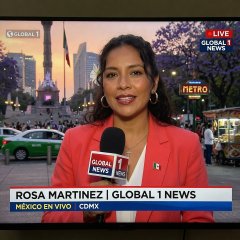
Latin America/Andes Correspondent at Global1.News. Based in Bogota, covering politics, environment, energy, and social movements across the Andean region. Passionate about environmental journalism and communities protecting their land.













Comments (0)