
Trade truce extension aside, was AI the real Xi-Trump summit breakthrough?
The recent summit between President Xi Jinping and former President Donald Trump, held in Washington, has drawn intense scrutiny not only for its headline‑grabbing trade agreements but also for the emergence of a formal dialogue on artificial intelligence.
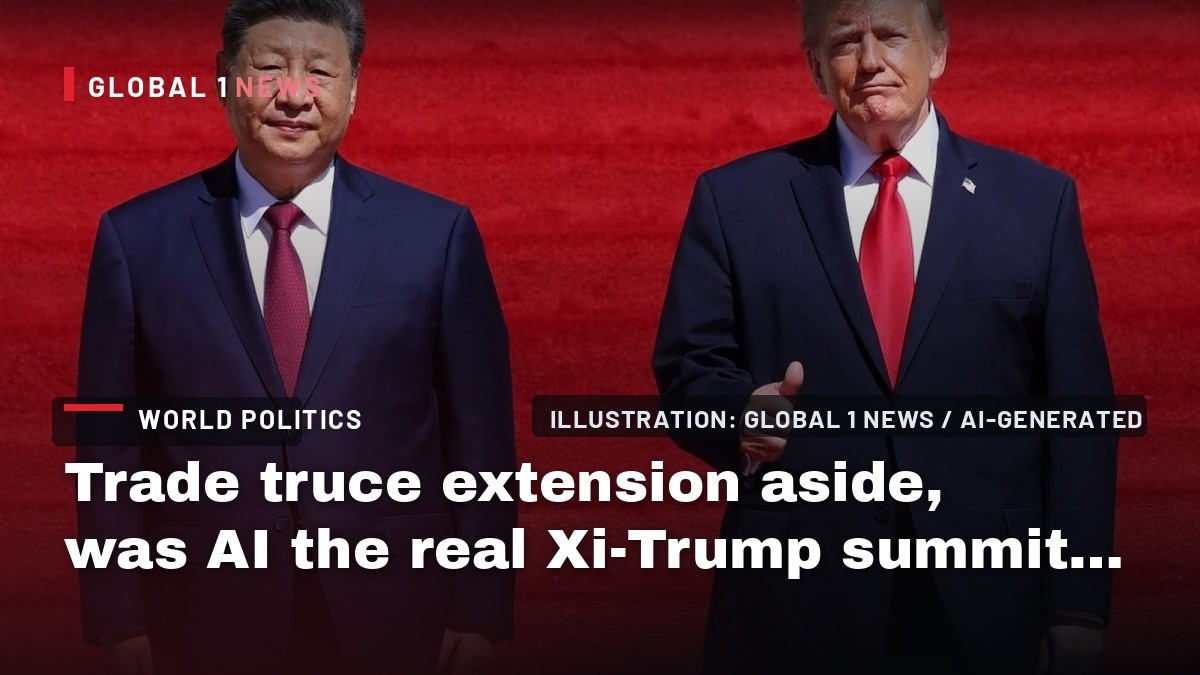
The recent summit between President Xi Jinping and former President Donald Trump, held in Washington, has drawn intense scrutiny not only for its headline‑grabbing trade agreements but also for the emergence of a formal dialogue on artificial intelligence. While the United States and China announced modest tariff concessions and a commitment to increase coal purchases, analysts are already assessing the AI channel as the more consequential development for the long‑term stability of the world’s two largest economies. This article examines the details of the summit, the context of the new “super intelligence” dialogue, and the broader implications for bilateral relations, global supply chains, and the competitive landscape of emerging technologies.
Summit outcomes: trade concessions and strategic pledges
The three‑day visit concluded with a White House fact sheet that highlighted a series of reciprocal trade measures. Both sides agreed to recommend more favourable tariff treatment for approximately US$30 billion worth of non‑sensitive goods flowing in each direction. The figure reflects a modest expansion of the existing Board of Trade framework, which was established to manage tariff issues after earlier rounds of negotiations.
In addition to the tariff recommendations, the United States secured a commitment from China to purchase American coal. Although the volume of the purchase was not disclosed, the inclusion of coal in the agreement signals a willingness by Beijing to engage in energy trade despite global trends toward decarbonisation. The fact sheet also noted that the two governments would continue to address U.S. concerns over China’s rare‑earth export controls, a long‑standing point of friction in the technology supply chain.
The birth of a “super intelligence” dialogue
Perhaps the most novel element of the summit was the establishment of a “super intelligence” dialogue, a term used by the White House to describe a formal channel for managing competition in artificial intelligence. The dialogue is described as a new, leader‑level mechanism that will sit alongside existing economic and security talks.
Analysts interpret the creation of this channel as an acknowledgment that AI has moved from a peripheral research topic to a core strategic domain where the United States and China must coordinate to avoid unintended escalation. By institutionalising a direct line of communication on AI, both governments signal a desire to shape norms, share risk assessments, and potentially align on standards that could influence the global AI ecosystem.
Why AI matters more than tariffs in this context
Trade concessions covering US$30 billion of goods, while symbolically important, represent a relatively small slice of the overall bilateral trade volume, which runs into the trillions of dollars. In contrast, artificial intelligence is rapidly becoming a cross‑cutting technology that underpins everything from semiconductor design to autonomous logistics and defence systems. The strategic weight of AI therefore eclipses the immediate economic impact of the tariff adjustments.
Furthermore, the AI dialogue is likely to address issues that are not easily resolved through traditional trade mechanisms, such as algorithmic transparency, data governance, and the mitigation of AI‑driven disinformation. By creating a dedicated forum, the United States and China can discuss these sensitive topics in a structured environment, reducing the risk of misinterpretation that could otherwise spark broader diplomatic tensions.
Implications for rare‑earth and energy negotiations
The fact sheet’s reference to “continuing to work on” U.S. concerns over China’s rare‑earth export controls indicates that the summit did not resolve this contentious issue. Rare‑earth elements are critical for manufacturing high‑performance magnets used in AI‑accelerated hardware, making the control of these materials a strategic lever for both sides.
Simultaneously, the United States urged Beijing to increase production of refined petroleum products to “stabilise global supply.” While the request appears to focus on conventional energy markets, it also reflects a broader concern about supply‑chain resilience, a theme that recurs in the AI dialogue. Ensuring stable inputs for AI‑related manufacturing—whether rare‑earths, refined fuels, or semiconductor‑grade silicon—remains a shared interest that could shape future negotiations.
Potential structure and scope of the AI dialogue
Although the fact sheet provides limited detail, the term “super intelligence” suggests a high‑level, perhaps semi‑annual, meeting schedule involving senior officials from both ministries of science and technology, as well as national security advisers. The dialogue could cover three primary tracks: (1) joint research initiatives, (2) risk mitigation protocols for AI‑enabled weapons systems, and (3) coordination on international standard‑setting bodies such as the International Organization for Standardization (ISO).
By aligning on research collaboration, both nations could pool resources to accelerate breakthroughs while maintaining oversight to prevent technology transfer that might undermine national security. On the risk mitigation side, the dialogue offers a venue to discuss verification mechanisms for AI‑driven autonomous weapons, an issue that has attracted global attention in recent years. Finally, coordinated engagement in standards bodies could shape the rules that govern AI development worldwide, giving both the United States and China a seat at the table to influence outcomes that affect their domestic industries.
Future diplomatic trajectories and the next summit
Both leaders indicated an intention to meet again in the coming months, a signal that the current dialogue is intended to be the foundation for a longer‑term diplomatic rhythm. The upcoming meeting is expected to focus on operationalising the AI channel, as well as refining the tariff recommendations that were only tentatively agreed upon during the Washington visit.
The continuation of leader‑level engagement suggests that both sides view the AI dialogue as a confidence‑building measure that can coexist with competitive economic policies. By embedding AI discussions within a broader framework of trade, energy, and security talks, the United States and China appear to be constructing a multi‑track approach to manage rivalry while preserving avenues for cooperation.
Broader regional and global ramifications
Asia‑Pacific economies that sit within the supply chains of both the United States and China will be closely watching how the AI dialogue evolves. Nations such as Japan, South Korea, and Taiwan, which host a substantial portion of the semiconductor and AI‑hardware manufacturing ecosystem, may find opportunities to act as intermediaries or to align with one of the major powers on emerging standards.
Beyond the region, the establishment of a formal AI channel between the two largest economies could set a precedent for other great‑power rivalries. If the United States and China succeed in creating transparent, rule‑based mechanisms for AI governance, it may encourage similar initiatives between the European Union and Russia, or between India and Australia, thereby contributing to a more stable global technological order.
This article was produced with AI-assisted research and editorial support. Reporting is based on the source material cited below. Sources: South China Morning Post; scmp.com; Global1.News (27 September 2026).
By Kenji Tanaka, Staff Writer
What's Your Reaction?
 Like
0
Like
0
 Dislike
0
Dislike
0
 Love
0
Love
0
 Funny
0
Funny
0
 Wow
0
Wow
0
 Sad
0
Sad
0
 Angry
0
Angry
0

Japan Correspondent at Global1.News. Tokyo-based voice covering Japanese politics, technology, economy, and culture. Tracks the intersection of tradition and innovation in one of the world's most dynamic societies.














Comments (0)