
Congress accuses CEC of law violation over Form 6 changes, urges Supreme Court to hold him accountable
The Congress party has launched a fresh legal challenge against Chief Election Commissioner Gyanesh Kumar, accusing him of violating both statutory law and constitutional conventions by unilaterally altering Form 6, the online voter‑registration document.
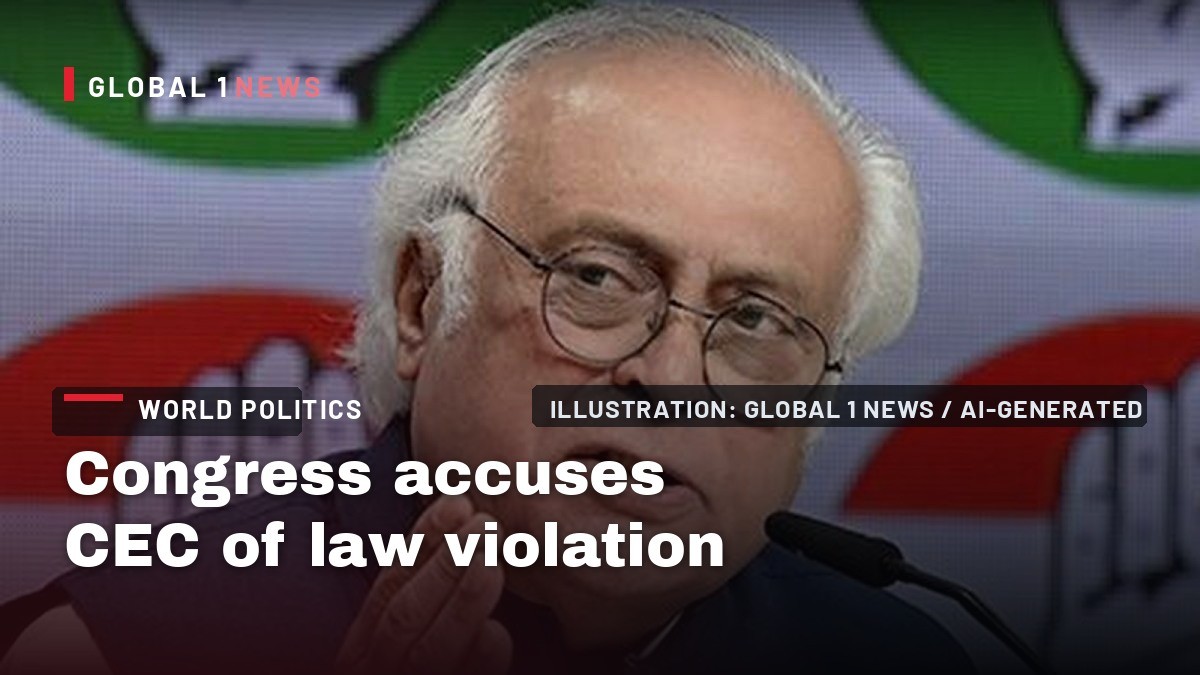
The Congress party has launched a fresh legal challenge against Chief Election Commissioner Gyanesh Kumar, accusing him of violating both statutory law and constitutional conventions by unilaterally altering Form 6, the online voter‑registration document. In a post on the social‑media platform X on 26 September 2026, Congress general secretary Jairam Ramesh demanded that the Supreme Court take suo motu cognisance of the matter and compel the CEC to resign, echoing a suggestion from opposition leader Rahul Gandhi that the commissioner could atone by stepping down and becoming an approver.
Background to the Form 6 controversy
Form 6 is the statutory application used by Indian citizens to enrol on electoral rolls. Under the Representation of the People Act, 1950, and the Registration of Electors Rules, 1960, the form is defined by law and any amendment to its content must be authorised by the Union Government, not the Election Commission. Jairam Ramesh highlighted that in early July 2026 the online version of Form 6 was altered without any official notification, introducing a new mandatory field that asks applicants to disclose whether their parents or grandparents were listed in the previous Special Intensive Revision (SIR) of electoral rolls.
The addition of this parental‑SIR declaration creates a procedural hurdle for first‑time voters, particularly members of Generation Z who are registering for the first time. According to a poll‑panel functionary, the change was implemented through internal instructions rather than a formal amendment to the Rules, meaning the form itself has not been legally altered even though the new declaration is now required for any online submission.
Congress’s three‑fold legal argument
Ramesh framed the commission’s actions as three distinct violations. First, he argued that the stealthy July change breached the requirement for public notification, rendering the amendment “illegal”. Second, he asserted that the Election Commission lacks the statutory power to modify Form 6, a competence reserved exclusively for the Union Government under the Representation of the People Act, 1950. Finally, he pointed out that any amendment to the Registration of Electors Rules, 1960, must be enacted by Parliament, a step the CEC bypassed by issuing internal instructions.
By characterising the change as an “overreach”, the Congress narrative positions the CEC’s conduct as not merely procedural misstep but a deliberate circumvention of legislative authority. The party’s demand that the Supreme Court intervene suo motu reflects a broader strategy to frame the issue as a constitutional crisis, suggesting that the continued tenure of a commissioner who has “knowingly broken the law” undermines democratic legitimacy.
Impact on young voters and the Special Intensive Revision
The timing of the amendment coincides with a concerted push by the Election Commission to accelerate enrolment of young voters. On 25 September 2026, the commission directed officers to organise “special enrolment camps” for the 18‑28 age group and to publicise the drive widely on social media. However, the newly imposed parental‑SIR disclosure means that both existing voters and prospective registrants must furnish details of their parents’ participation in the SIR exercise to remain on or be added to the rolls.
Data released by poll‑panel officials indicated that since the SIR exercise began in Bihar in June 2026, approximately 2.37 crore electors in the 18‑28 bracket have been added to the rolls. The requirement to attach parental SIR details therefore affects a substantial cohort of newly eligible voters, potentially discouraging registration and raising questions about the proportionality of the measure.
Administrative and procedural implications
The Election Commission’s claim that Form 6 has not been formally amended, despite the functional addition of a mandatory declaration, underscores a gray area in administrative law. While the form’s digital interface now blocks progression until the new field is completed, the statutory text remains unchanged. This creates a de‑facto amendment without de‑jure authority, a distinction that could be pivotal in any judicial review.
From a governance perspective, the episode highlights the tension between the Election Commission’s operational autonomy and the legislative framework governing electoral processes. The commission’s reliance on internal instructions to effect substantive changes to a statutory form may set a precedent for future administrative overreach, prompting calls for clearer statutory boundaries and perhaps a review of the commission’s rule‑making powers.
Political reactions and the road ahead
Beyond the legal arguments, the controversy has become a flashpoint in the broader contest between the ruling coalition and the opposition. Rahul Gandhi’s suggestion that the CEC resign and become an approver signals an attempt to frame the issue as a moral failing rather than a purely procedural dispute. By urging the Supreme Court to act suo motu, the Congress seeks to bypass the usual legislative route and force an immediate judicial intervention.
The opposition’s stance also taps into wider concerns about youth disenfranchisement. By portraying the parental‑SIR requirement as a barrier to first‑time voters, the Congress aims to rally young voters around a narrative of administrative injustice, potentially influencing voter sentiment ahead of upcoming electoral cycles.
Implications for electoral reform and policy
If the Supreme Court were to take up the case, the outcome could reshape the balance of power between the Election Commission and Parliament. A ruling that the commission exceeded its statutory remit would reinforce the primacy of legislative authority over electoral administration, possibly prompting amendments to the Representation of the People Act to clarify the commission’s rule‑making scope.
Conversely, a decision that upholds the commission’s internal instructions as permissible could embolden the Election Commission to adopt more flexible, technology‑driven approaches to voter enrolment, albeit with the risk of further disputes over procedural legitimacy. In either scenario, the episode underscores the need for a systematic review of the electoral registration framework, including clearer guidelines on how digital forms can be updated without breaching statutory processes.
Conclusion: A test of democratic resilience
The Form 6 saga encapsulates a clash between administrative expediency and constitutional fidelity. As the Congress presses the Supreme Court to intervene, the judiciary will be called upon to adjudicate not only the legality of a specific form change but also the broader principle of how much leeway an independent constitutional body may enjoy in interpreting and implementing electoral law. The resolution of this dispute will have lasting repercussions for India’s democratic infrastructure, the credibility of its electoral machinery, and the confidence of a generation of first‑time voters who are being asked to navigate an increasingly complex registration landscape.
This article was produced with AI-assisted research and editorial support. Reporting is based on the source material cited below. Sources: The Hindu; thehindu.com; Global1.News (27 September 2026).
By Dr. Raj Patel, Staff Writer
What's Your Reaction?
 Like
0
Like
0
 Dislike
0
Dislike
0
 Love
0
Love
0
 Funny
0
Funny
0
 Wow
0
Wow
0
 Sad
0
Sad
0
 Angry
0
Angry
0

India/South Asia Correspondent at Global1.News. Analytical voice with a background in science and health journalism. Based in New Delhi, covering Indian politics, education, healthcare, technology, and policy. Breaks down complex data into clear, actionable reporting.













Comments (0)