
Key U.S. Midterm Races That Matter to Canadians
In a recent CBC News video released on 14 October 2026, the network’s Washington correspondents highlighted three American states – Ohio, Maine and Texas – as the most consequential battlegrounds in this year’s midterm elections for Canadians.
In a recent CBC News video released on 14 October 2026, the network’s Washington correspondents highlighted three American states – Ohio, Maine and Texas – as the most consequential battlegrounds in this year’s midterm elections for Canadians. The segment, presented by Katie Simpson, Willy Lowry and Paul Hunter, examined how local issues in each state intersect with Canadian interests, from data‑centre development and cross‑border trade to the political dynamics of a tightly contested Senate race. While the video itself is brief, the implications of these races ripple across Parliament Hill, provincial ministries and the everyday concerns of Canadians who watch U.S. politics for clues about their own economic and security environment.
Ohio: Data‑centre Development and Cross‑Border Technology Policy
The report notes that Ohio has become a focal point for tension over data‑centre development. American legislators in the state are debating incentives and regulatory frameworks that could affect the location of large‑scale data facilities, many of which are owned by multinational firms with significant Canadian investment. For Canadians, the outcome matters because data‑centre siting decisions influence the flow of digital traffic across the Canada‑U.S. border, potentially shaping the cost and reliability of cloud services used by businesses and government agencies.
Canadian technology firms have historically looked to the Midwest as a favourable environment for expanding infrastructure, thanks to relatively low electricity rates and proximity to major network hubs. If Ohio adopts stricter zoning or environmental standards, Canadian companies may need to reassess capital allocation, which could in turn affect employment in Ontario’s tech sector. Conversely, a more permissive stance could encourage further Canadian participation, reinforcing the trend of cross‑border digital integration that has been a hallmark of recent trade discussions.
From a policy perspective, the Ohio debate also dovetails with ongoing conversations in Ottawa about data sovereignty and the protection of personal information. Canadian privacy regulators have signalled interest in ensuring that data stored abroad complies with domestic standards. The outcome of Ohio’s legislative process will therefore be watched closely by the Office of the Privacy Commissioner and by provincial ministries responsible for digital transformation, as they seek to align Canadian data‑handling practices with evolving U.S. regulations.
Maine: Tariffs, Trade Ties and the Border Economy
In Maine, the CBC correspondents highlighted debates over tariffs and trade ties with Canada. The state’s economy is heavily linked to cross‑border commerce, particularly in sectors such as seafood, forestry and tourism. Any shift in tariff policy or trade enforcement can have immediate repercussions for Canadian exporters and for the livelihoods of workers in Atlantic provinces who depend on access to U.S. markets.
The video points to ongoing discussions in the Maine legislature about the impact of U.S. trade policy on Canadian goods. While the segment does not provide specific numbers, it underscores the sensitivity of the border economy to policy changes. For Canadian policymakers, the Maine situation serves as a barometer for how broader U.S. trade strategies might affect the Canada‑U.S. trade relationship, which remains a cornerstone of the Canadian economy.
Provincial ministries of trade and agriculture are likely to monitor Maine’s legislative outcomes closely, as they shape the context for negotiations on issues such as softwood lumber and dairy market access. Moreover, the Canadian government’s own trade agenda, including recent efforts to modernise the Canada‑U.S. Trade Agreement, will be informed by on‑the‑ground developments in states like Maine where the practical effects of policy are felt daily.
Texas: A Tight Race That Drew National Attention
The report draws particular attention to Texas, describing a race so close that former President Donald Trump visited the state three times within a single month. While the video does not specify the office at stake, the intensity of the campaign suggests a high‑profile contest, likely a Senate seat or a gubernatorial race, both of which carry national significance and can influence federal policy directions that affect Canada.
Texas’s political climate often shapes broader national debates on energy, immigration and trade – areas that are directly relevant to Canadian interests. For example, Texas is a major producer of oil and natural gas, and its stance on energy policy can affect global oil prices, which in turn impact Canada’s own energy sector and fiscal planning in provinces such as Alberta and Saskatchewan. A shift in Texas’s representation could alter the balance of power in the U.S. Senate, potentially affecting legislation on cross‑border pipelines and carbon pricing mechanisms.
The presence of a former U.S. president campaigning in the state underscores the symbolic weight of the race. Canadians watching the midterms will be keen to interpret any signals about future U.S. trade policy, especially as the Trump administration’s legacy continues to influence the Republican Party’s platform. The outcome may also affect immigration policy, given Texas’s role as a key entry point for migrants, a topic that remains central to Canada’s own immigration system and its commitments to humanitarian resettlement.
Why Canadians Should Track These Races
Although the CBC video focuses on three states, the underlying message is clear: U.S. midterm outcomes have tangible consequences for Canada. From the cost of digital infrastructure to the stability of cross‑border trade and the direction of energy policy, the decisions made in Ohio, Maine and Texas will reverberate through Canadian ministries, provincial budgets and the daily lives of citizens.
For Parliament Hill, the relevance is twofold. First, the federal government must anticipate how changes in U.S. legislative composition could affect bilateral negotiations on trade, climate action and security cooperation. Second, Canadian MPs representing ridings near the border – such as those in Ontario’s Niagara region or Quebec’s Montérégie – will need to respond to constituent concerns that arise from any abrupt shifts in U.S. policy.
Provincial premiers and territorial leaders will also be watching closely. In provinces where data‑centre projects are being considered, such as Ontario and British Columbia, the regulatory climate in Ohio could inform provincial decisions on incentives and environmental assessments. Meanwhile, Atlantic provinces will gauge Maine’s trade debates for clues about future market access, especially as they seek to diversify export destinations beyond traditional European partners.
Potential Scenarios and Their Implications
If Ohio adopts a more permissive stance on data‑centre development, Canadian tech firms could accelerate expansion plans, potentially creating new jobs and stimulating local economies. However, this scenario may also raise environmental concerns, prompting provincial ministries of the environment to scrutinise the carbon footprint of additional data‑centre capacity.
Conversely, a restrictive regulatory shift in Ohio could force Canadian companies to seek alternative locations, possibly in other Midwestern states or even within Canada itself. Such a move might spur investment in Canadian data‑centre projects, aligning with national objectives to keep critical digital infrastructure on Canadian soil and under Canadian jurisdiction.
In Maine, a decision to maintain low tariffs and open trade channels would preserve the status quo, benefitting Canadian exporters of seafood, timber and other commodities. Should Maine’s legislature move toward higher tariffs or more protectionist measures, Canadian businesses could face higher costs, prompting provincial ministries of trade to negotiate compensatory measures or to explore new market opportunities.
In Texas, the outcome of the tight race could tip the balance of power in the U.S. Senate. A shift toward a more progressive Senate majority might lead to stricter climate legislation, affecting cross‑border pipeline projects that have been a point of contention between the two countries. A more conservative Senate could, in contrast, support deregulation of the energy sector, potentially easing the path for Canadian oil and gas exports but also raising concerns about climate commitments.
Looking Ahead: How Canadians Can Stay Informed
The CBC video serves as a concise briefing, but Canadians seeking deeper insight should follow ongoing coverage from both Canadian and U.S. media outlets. The Global1.News platform will continue to track these races, providing updates on legislative developments, candidate positions and the broader geopolitical context.
For those directly affected – such as tech entrepreneurs, exporters, or residents of border communities – staying engaged with local representatives and industry associations will be crucial. Provincial ministries often host stakeholder consultations on trade and digital infrastructure, offering opportunities to voice concerns and influence policy responses to U.S. developments.
Ultimately, the 2026 U.S. midterms underscore the interconnectedness of North American politics. While the three highlighted states each present distinct issues, together they illustrate how decisions made south of the border can shape Canadian economic prospects, regulatory environments and even the daily cost of living for Canadians. By monitoring Ohio, Maine and Texas, Canadians can better anticipate changes, adapt strategies and contribute to a dialogue that ensures Canada’s interests are represented in the evolving North American landscape.
By Alex Thompson, Staff Writer
This article was produced with AI-assisted research and editorial support. Reporting is based on the source material cited below. Sources: CBC News video report (14 October 2026); CBC News; Global1.News
What's Your Reaction?
 Like
0
Like
0
 Dislike
0
Dislike
0
 Love
0
Love
0
 Funny
0
Funny
0
 Wow
0
Wow
0
 Sad
0
Sad
0
 Angry
0
Angry
0
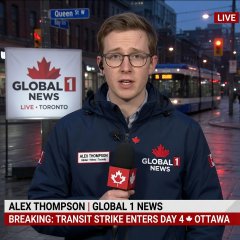
Canada Correspondent at Global1.News. Based in Toronto, covering Canadian politics, energy, trade, and US-Canada relations. Provides the Canadian perspective on North American and global affairs.















Comments (0)