
Global Anti-Israel Protests Linked to Overseas Funding, Video Claims
In a recent JNS TV investigation released on 14 October 2026, correspondent Emily Schrader presented a dossier of leaked documents that she says reveal a coordinated international campaign against Israel.
In a recent JNS TV investigation released on 14 October 2026, correspondent Emily Schrader presented a dossier of leaked documents that she says reveal a coordinated international campaign against Israel. The report, titled “We Investigated Anti-Israel Protests, What We Found is DISTURBING…”, alleges that a Shanghai‑based millionaire is financing protests that have erupted in cities from London to New York, Amsterdam and beyond. While the video does not provide independent verification of every claim, it offers a detailed snapshot of the protest movement as it appears on the ground, the slogans being used, and the alleged financial channels that, according to the report, link the demonstrations to foreign interests. Below we break down the key findings presented in the footage, examine the on‑the‑ground scenes captured, and place the allegations within the broader context of Israel’s diplomatic and security challenges in 2026.
Leaked Organising Documents and Financial Trail
The core of Schrader’s investigation rests on a set of documents described as “organising paperwork” that outline protest logistics, pre‑written slogans and instructions for demonstrators. According to the video, these files also contain references to a “Shanghai‑based millionaire” who is purportedly providing the financial backing. The report does not name the individual, but the description suggests a private donor with sufficient resources to support a global network of activists.
Schrader points to the presence of bank transfer details and donation receipts that, in her view, trace the flow of money from a Chinese account to various NGOs and activist groups operating in Europe and North America. The video frames these documents alongside images of protest banners, implying a direct line from funding to on‑the‑ground action. While the exact amounts are not disclosed, the implication is that the financial support is substantial enough to sustain “hundreds of anti‑Israel demonstrations across the globe.”
From an Israeli perspective, the alleged foreign financing of anti‑Israel protests raises concerns about external influence on public opinion. The Ministry of Foreign Affairs has historically warned that coordinated campaigns can be used to delegitimize Israel’s right to self‑defence, especially when they are amplified through social media. The JNS TV report does not provide a response from Chinese officials, but the claim adds another layer to the ongoing diplomatic friction between Israel and Beijing over technology, trade and regional security issues.
On‑the‑Ground Scenes: London, New York, Amsterdam
The video footage includes several street‑level recordings from major cities. In London, protesters are shown holding signs that read “Free Gaza” and chanting slogans that explicitly defend Hamas and Iran. The report highlights that some demonstrators were heard shouting “Hamas is a liberation movement,” a phrase that aligns with the messaging found in the leaked documents.
In New York, the footage captures a rally held on the anniversary of the October 7 attacks. The video notes that New York Mayor Zohran Mamdani faced “unexpected backlash” from anti‑Israel protesters during a memorial ceremony. Protesters in the crowd shouted “No justice for Israel” and displayed placards condemning Israel’s military operations in Gaza. The report suggests that the same playbook of slogans and protest tactics appears in both the London and New York demonstrations.
Amsterdam’s segment shows a similar scene, with participants holding banners that read “End the occupation” and “Support Palestinian resistance.” The video includes a brief interview with a local activist who claims to have received “organising material” from an international network, echoing the claim that the protests are not spontaneous but rather coordinated.
Political Reactions and Institutional Controversy
Schrader’s investigation also touches on the controversy surrounding the Nobel Committee’s decision to honour Navi Pillay, a former United Nations High Commissioner for Human Rights, for her work on “human rights advocacy.” The video argues that the award has become a flashpoint for anti‑Israel sentiment, noting that several protestors have used Pillay’s name to legitimize their demonstrations. The report suggests that the Nobel Committee’s choice is being leveraged by activists to portray Israel as a violator of human rights, despite Israel’s own claims of compliance with international law.
The footage also references the broader geopolitical stakes, noting that recent Houthi attacks on Saudi Arabian airports have heightened tensions in the Gulf region. According to the video, these attacks are raising “the stakes for Washington,” implying that the United States may feel increased pressure to support its Gulf allies, including Israel, amid a volatile security environment.
From the Israeli side, the Ministry of Defense has consistently warned that regional instability, such as the Houthi strikes, can be exploited by hostile actors to further delegitimize Israel’s security measures. The JNS TV report does not include a direct statement from the IDF, but the context underscores how external conflicts intersect with the global protest narrative.
Media and Human‑Rights Organizations Under Scrutiny
The video raises questions about the role of human‑rights NGOs and media outlets in the anti‑Israel narrative. By linking the protest slogans to a financial backer, the report insinuates that some organisations may be unwitting conduits for foreign influence. The footage cites images from Getty and AFP that were used in the coverage, suggesting that mainstream visual sources are being repurposed to amplify the protest message.
Schrader also critiques the Nobel Committee’s decision, implying that the award to Pillay signals a shift in how “human‑rights institutions” are perceived in relation to Israel. The video frames this as part of a broader pattern where institutions that claim to defend universal rights are increasingly aligning with anti‑Israel sentiment, whether intentionally or through the influence of external funding.
Israeli officials have previously warned that the politicisation of human‑rights discourse can undermine legitimate concerns about civilian casualties and humanitarian law. While the JNS TV piece does not feature a direct rebuttal from the Nobel Committee or the NGOs mentioned, it adds to the ongoing debate within Israel about how to respond to what is portrayed as a coordinated smear campaign.
Implications for Israeli Diplomacy and Security
If the allegations in the JNS TV report prove accurate, the financial link to a Shanghai‑based benefactor could have significant diplomatic ramifications. Israel’s foreign ministry has long cautioned that foreign actors may seek to manipulate public opinion to weaken Israel’s strategic alliances, especially with the United States and European partners. The report’s suggestion that a Chinese millionaire is funding anti‑Israel protests may prompt Israeli diplomats to raise the issue in bilateral talks with Beijing, adding another layer to an already complex relationship.
From a security standpoint, the coordination of protests across multiple continents indicates a capacity for rapid mobilisation, which could be leveraged to influence policy debates in key capitals. The video’s emphasis on pre‑written slogans and instructions points to an organised effort that could be mobilised quickly in response to developments on the ground, such as Israeli military actions or diplomatic announcements.
Within Israel’s own political arena, the report may fuel calls for tighter regulation of foreign funding for NGOs and activist groups. The Knesset’s Committee on Foreign Workers and Foreign Funding has previously examined similar issues, and the JNS TV findings could provide fresh impetus for legislative proposals aimed at increasing transparency of overseas donations.
Conclusion: A Call for Verification and Continued Monitoring
Emily Schrader’s JNS TV investigation presents a compelling narrative that ties together protest footage, leaked documents and alleged foreign financing. While the video offers vivid on‑the‑ground images from London, New York and Amsterdam, the core claims about a Shanghai‑based millionaire’s involvement remain unverified within the report itself. Israeli officials, including spokespeople from the Ministry of Foreign Affairs and the IDF, have yet to comment directly on the specific allegations, leaving a gap that will likely be filled by further diplomatic inquiries and investigative journalism.
What is clear from the footage is that anti‑Israel sentiment continues to manifest in large‑scale public demonstrations across the Western world, often employing slogans that align with the messaging found in the leaked documents. The convergence of these protests with broader regional security concerns—such as the Houthi attacks on Saudi airports—underscores the complex environment in which Israel operates in 2026.
For Global1.News readers, the key takeaway is the need for rigorous verification of the financial links alleged by the JNS TV report, as well as an awareness of how coordinated protest movements can shape international opinion and policy. As the situation evolves, Israeli authorities are likely to monitor both the on‑the‑ground activism and the financial channels that may be supporting it, while continuing to engage diplomatic partners to counter what they describe as a coordinated effort to undermine Israel’s legitimacy on the world stage.
By Hannah Berg, Staff Writer
This article was produced with AI-assisted research and editorial support. Reporting is based on the source material cited below. Sources: JNS TV video report (14 October 2026); JNS TV; Global1.News
What's Your Reaction?
 Like
0
Like
0
 Dislike
0
Dislike
0
 Love
0
Love
0
 Funny
0
Funny
0
 Wow
0
Wow
0
 Sad
0
Sad
0
 Angry
0
Angry
0
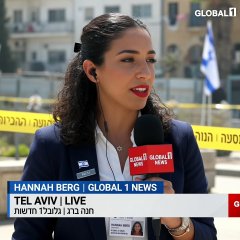
Israel Correspondent at Global1.News. Based in Tel Aviv, covering Israeli politics, security, technology, and society. Provides balanced, deeply-sourced reporting on one of the most closely-watched regions in the world.












Comments (0)