
Lebanese president, top Iranian diplomat stress diplomatic solutions to regional conflicts
The recent telephone conversation between Lebanese President Joseph Aoun and Iranian Foreign Minister Abbas Araghchi, confirmed by the Lebanese presidency and Iran’s Foreign Ministry, underscores a growing appeal for diplomatic pathways amid a volatile regional landscape.
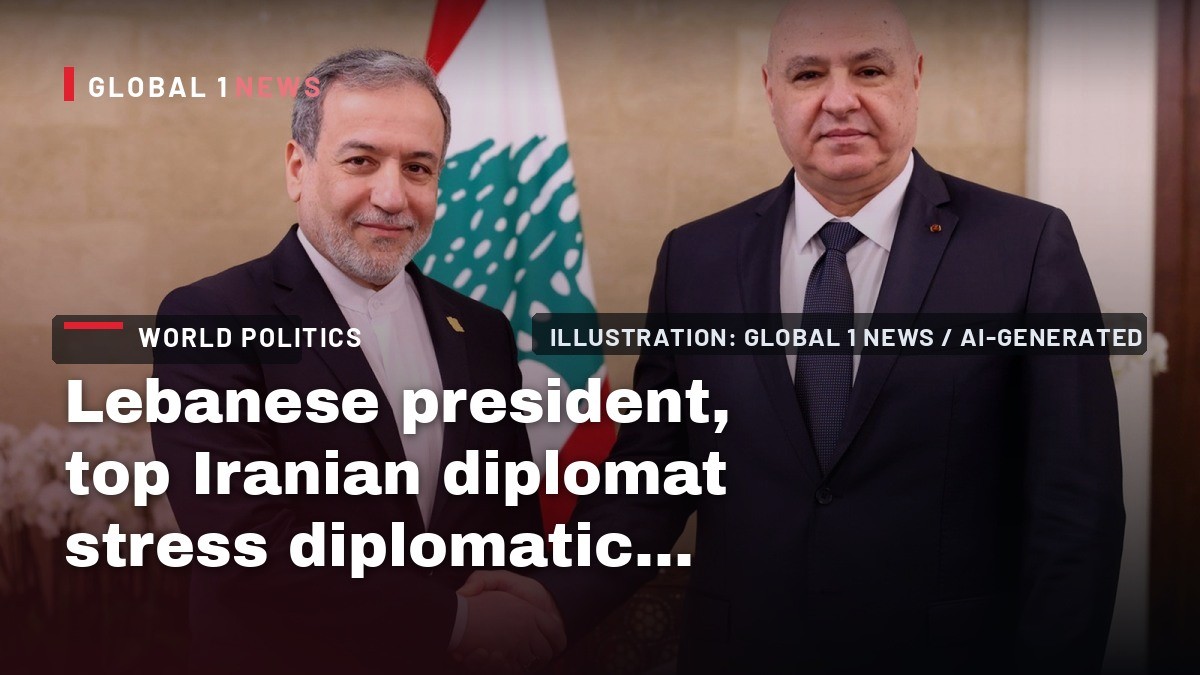
The recent telephone conversation between Lebanese President Joseph Aoun and Iranian Foreign Minister Abbas Araghchi, confirmed by the Lebanese presidency and Iran’s Foreign Ministry, underscores a growing appeal for diplomatic pathways amid a volatile regional landscape. While the call itself was brief, the statements issued by both sides reveal a shared conviction that political dialogue, rather than military escalation, must become the cornerstone of any effort to halt the suffering of civilians caught in the cross‑fire of entrenched conflicts.
Diplomacy as a Preferred Pathway
In the official communiqué released by the Lebanese presidency, President Aoun and Minister Araghchi affirmed a mutual commitment to “support diplomatic solutions as the best means of ending conflicts in the region.” This phrasing, though succinct, carries significant weight. It signals a deliberate pivot away from the default reliance on force that has long characterized the Middle East’s security calculus. By foregrounding diplomacy, both leaders are invoking a framework that aligns with international legal principles, notably the United Nations Charter’s emphasis on the peaceful settlement of disputes.
The emphasis on diplomacy also reflects a pragmatic recognition of the human toll exacted by ongoing hostilities. In Lebanon’s southern districts, where Israeli strikes have repeatedly disrupted daily life, families have endured loss of homes, livelihoods, and, tragically, lives. The call’s focus on diplomatic avenues therefore resonates not merely as a political statement but as an appeal to protect civilians whose suffering has become a tragic constant in the region’s recent history.
Iran’s Call to Halt Israeli Attacks
Iran’s Foreign Ministry reported that Minister Araghchi specifically urged an end to “Israeli attacks on Lebanon and the occupation of areas in the country’s south.” This demand directly references the contested border zones where Israeli artillery and aerial operations have persisted despite intermittent cease‑fire agreements. The language of “occupation” invokes a legal dimension, recalling United Nations Security Council resolutions that call for respect of Lebanon’s sovereignty and territorial integrity.
For the people living in the affected southern towns, the call to halt attacks translates into a potential reprieve from the constant threat of bombardment. Schools have been forced to close, agricultural fields lie fallow under the shadow of artillery fire, and medical facilities operate under the strain of treating trauma victims. By highlighting the need to stop these attacks, Iran is aligning itself with a humanitarian narrative that foregrounds the protection of civilians under international humanitarian law.
Context of Ongoing Regional Tensions
The phone call occurred against a backdrop of heightened tensions across the Levant and the Persian Gulf. The source notes that Israel continues its attacks on Lebanon despite a “US‑sponsored framework agreement” that envisages a gradual withdrawal from Lebanese territory. While the framework signals an attempt at conflict de‑escalation, the persistence of Israeli strikes suggests a disconnect between diplomatic initiatives and on‑the‑ground realities.
Simultaneously, Iran and the United States remain at odds over navigation through the Strait of Hormuz, a critical maritime chokepoint. Heightened maritime tensions have raised the specter of broader confrontation, which could further destabilize the region and exacerbate the humanitarian crisis in Lebanon. The call between Aoun and Araghchi, therefore, can be seen as an effort to reinforce diplomatic channels before the situation spirals into a wider conflagration.
Expanding Bilateral Relations
Beyond the immediate issue of halting Israeli attacks, the ministries’ statements reveal that the two leaders discussed “expanding bilateral relations and continuing contacts and consultations between officials of the two countries.” While the source does not detail specific initiatives, the language suggests a desire to deepen political and possibly economic ties. For Lebanon, a country grappling with a severe economic crisis, enhanced cooperation with Iran could open avenues for trade, investment, or technical assistance, potentially alleviating some of the material hardships faced by its citizens.
From a human‑rights perspective, any expansion of relations must be scrutinized to ensure that it does not inadvertently fuel further militarisation or entrench sectarian divides. The emphasis on “continuing contacts and consultations” implies a sustained dialogue that could be leveraged to address cross‑border humanitarian concerns, such as the safe passage of aid and the protection of displaced families fleeing conflict zones.
International‑Law Implications
The call’s reference to “halting Israeli attacks” and “ending occupation” touches directly upon principles of international law. The United Nations Charter, the Geneva Conventions, and numerous UN resolutions affirm the right of states to territorial integrity and the protection of civilian populations. Persistent attacks on Lebanese soil, especially in civilian‑populated areas, risk contravening these norms, potentially constituting violations of the laws of armed conflict.
By foregrounding diplomatic solutions, both Lebanon and Iran are implicitly invoking the mechanisms of international law to hold parties accountable. Their joint stance may encourage the United Nations and other multilateral bodies to intensify monitoring and reporting on violations, thereby amplifying the voice of affected communities on the global stage.
Human Cost Behind the Diplomatic Rhetoric
While diplomatic statements often occupy headlines, the lived reality for ordinary Lebanese remains one of uncertainty and loss. The southern governorates, repeatedly targeted by Israeli fire, have seen schools repurposed as shelters, markets shuttered, and families displaced to makeshift camps. Each shell that lands not only destroys infrastructure but also shatters the fragile sense of normalcy that civilians cling to.
The call between Aoun and Araghchi, by emphasizing the need to stop attacks, directly addresses this human suffering. It offers a glimmer of hope that political will can translate into tangible safety for those whose daily existence is punctuated by the sound of artillery. Yet, the translation of diplomatic language into concrete cease‑fire measures remains contingent on the willingness of all parties to honor their commitments.
Looking Ahead: Prospects for a Diplomatic Breakthrough
The conversation between Lebanon’s president and Iran’s foreign minister represents a modest yet meaningful step toward a broader diplomatic effort to defuse regional hostilities. By aligning their rhetoric around the cessation of Israeli attacks and the reinforcement of bilateral consultations, the two leaders have signaled a readiness to pursue a coordinated approach that could involve other regional actors and international mediators.
For the international community, the call serves as a reminder that diplomatic engagement, even at the level of a phone conversation, can set the stage for larger peace initiatives. It also underscores the importance of supporting mechanisms that protect civilians, enforce international law, and hold violators accountable. As the region navigates a precarious balance between conflict and negotiation, the human cost will remain the ultimate measure of any diplomatic success or failure.
This article was produced with AI-assisted research and editorial support. Reporting is based on the source material cited below. Sources: Middle East Monitor; middleeastmonitor.com; Global1.News (15 October 2026).
By Fatima Al-Rashid, Staff Writer
What's Your Reaction?
 Like
0
Like
0
 Dislike
0
Dislike
0
 Love
0
Love
0
 Funny
0
Funny
0
 Wow
0
Wow
0
 Sad
0
Sad
0
 Angry
0
Angry
0
Gulf/MENA Correspondent at Global1.News. Based in Doha, covering Gulf politics, energy markets, diplomacy, and development across the Middle East and North Africa. Tracks the economic transformation of the Gulf states.













Comments (0)