
Unitree's Record STAR Market Debut Signals a New Era in the US-China Robotics Race
Unitree Robotics, the world's largest humanoid robot maker, surged more than 600% in its Shanghai STAR Market debut on August 19, 2026, reaching a US$66 billion valuation amid record retail demand - a landmark for China's robotics ambitions and the escalating US-China technology race.
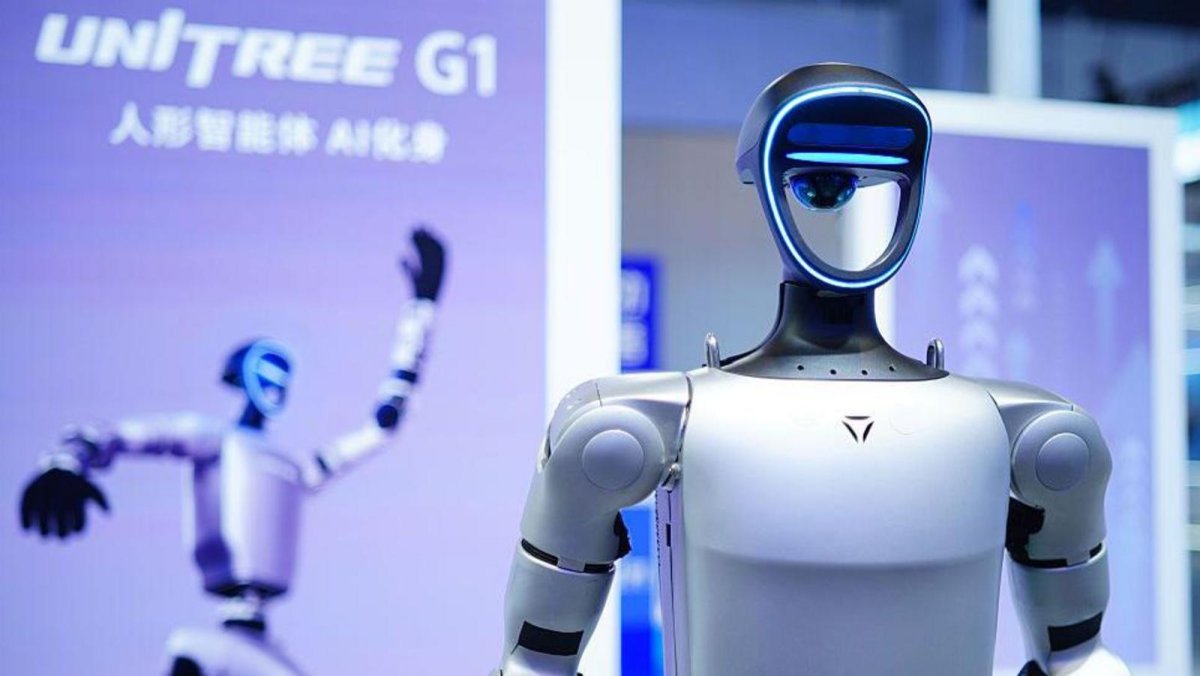
Hangzhou-based Unitree Robotics (Yushu Technology Co), the world’s largest humanoid robot manufacturer, began trading on the Shanghai Stock Exchange’s STAR Market on Wednesday, August 19, 2026, under stock code 688836. The debut was nothing short of spectacular: shares opened at 1,100 yuan (approximately US$163) and surged more than 600% in early trading, with reports citing gains of up to 629%. At its peak, the listing valued the company at roughly US$66 billion, cementing Unitree’s status as a bellwether for China’s ambitions in embodied artificial intelligence.
A Debut That Rewrites the Record Books
The scale of investor enthusiasm is difficult to overstate. Unitree raised approximately 6.1 billion yuan (roughly US$850 million) by selling 40.45 million shares, representing about 10% of its enlarged share capital. Earlier approval reports had cited a US$619 million IPO, but the final raise exceeded those projections. The retail tranche was oversubscribed approximately 5,526 times—a record for the STAR Market—while book-building drew bids implying a valuation of up to 55 billion yuan before trading even commenced.
These figures reflect a broader phenomenon: Chinese retail investors are betting heavily on the country’s robotics champions as Beijing pushes for technological self-sufficiency. The STAR Market, launched in 2019 under the registration-based IPO reform championed by the central government, was designed precisely to channel domestic capital into cutting-edge technology firms. Unitree’s debut nonetheless marks a milestone for a sector that has largely relied on overseas listings or private funding, bringing China’s most prominent humanoid robot champion onto a domestic exchange during a period of heightened US-China technology friction.
Unitree’s Financial Trajectory: From Niche Player to Global Leader
Unitree’s financials reveal a company in hyper-growth mode. Revenue expanded to 1.70 billion yuan in 2025, up from 392.77 million yuan in 2024 and 159.13 million yuan in 2023—a compound annual growth rate that would be the envy of most technology firms. Humanoid robot shipments exceeded 5,500 units in 2025, excluding wheeled dual-arm robots. Cumulative sales from 2023 to 2025 reached 5,632 humanoid robots and 33,294 quadruped robots, underscoring the company’s dominance in both form factors.
According to industry estimates, Unitree holds approximately 32.4% of the global humanoid robot market share in 2025, making it the undisputed leader in a field that includes Boston Dynamics, Tesla’s Optimus program, and a host of Chinese challengers. The company is known for viral demonstrations of agile quadruped and humanoid robots, showcasing capabilities that range from backflips to complex manipulation tasks. These demonstrations have made Unitree a household name in China and a symbol of the country’s robotics prowess abroad.
The Geopolitical Backdrop: US Import Bans and Escalating Tensions
Unitree’s listing arrives at a moment of acute geopolitical friction. In July 2026, the Trump administration enacted import bans on new Chinese humanoid robots and power inverters, citing the need to protect the American AI industry and nascent robot supply chains. US Commerce Secretary Howard Lutnick has signalled a possible further crackdown on Chinese humanoid robots, suggesting that Washington views this sector as strategically critical.
The timing is not coincidental. The US bans are designed to slow China’s momentum in embodied AI, a field where Beijing has made rapid strides. For Washington, the concern is twofold: first, that Chinese robots could flood global markets and undercut American competitors; second, that the data and operational insights gleaned from deployed robots could accelerate China’s AI development. The Unitree IPO, by providing fresh capital for R&D and global expansion, directly challenges the logic of those restrictions.
What Each Side Wants: Strategic Calculus in the Robotics Race
From Beijing’s perspective, the Unitree listing is a validation of its industrial policy. The STAR Market was created to funnel domestic savings into strategic technologies, reducing reliance on foreign capital markets and insulating Chinese firms from US sanctions. By listing at home, Unitree gains access to a deep pool of retail and institutional capital while avoiding the regulatory and political risks of a New York or Hong Kong listing. The 5,526-times oversubscription of the retail tranche demonstrates that Chinese investors are willing to fund the robotics revolution at valuations that would be unthinkable in most markets.
For Washington, the calculus is more defensive. The import bans are intended to give American firms—many of which are still in pilot testing—time to scale up before Chinese products achieve cost and performance parity. Analysts note that in most factories, humanoid robots are still being tested in pilot projects rather than deployed at scale. This gives the US a window of opportunity, but it is closing rapidly. Unitree’s ability to raise US$850 million at a US$66 billion valuation provides the company with the war chest needed to drive down costs and accelerate deployment.
Capital Market Reform and Technological Self-Sufficiency
The Unitree debut is also a test case for China’s capital market reforms. The STAR Market, launched in 2019, was the centerpiece of the registration-based IPO regime that replaced the old approval system. The goal was to make it easier for innovative companies to list, while improving price discovery and corporate governance. Unitree’s record-breaking oversubscription suggests that the market is functioning as intended, at least in terms of mobilizing capital.
However, the 629% surge in early trading raises questions about speculative excess. A valuation of US$66 billion for a company with 1.70 billion yuan in annual revenue implies a price-to-sales ratio that would make even the most optimistic growth investor pause. Chinese regulators, including the China Securities Regulatory Commission (CSRC), have historically been wary of excessive speculation, and it remains to be seen whether they will intervene to cool trading or allow market forces to play out. The STAR Market’s price limits—typically 20% on a normal trading day—were clearly breached in the initial surge, suggesting that special mechanisms were in play.
Global Supply Chains and the Second-Order Effects
The implications of Unitree’s listing extend far beyond the Shanghai exchange. Humanoid robots are poised to transform global manufacturing, logistics, and healthcare. If Unitree can scale production and reduce costs, it could reshape supply chains across Southeast Asia, the European Union, and the Americas. Countries that align with China’s robotics ecosystem may gain preferential access to these technologies, while those that side with the US may face higher costs and slower adoption.
For ASEAN nations, the calculus is particularly delicate. Many are deeply integrated into Chinese supply chains and have benefited from Chinese investment in infrastructure and manufacturing. A Chinese robotics champion could offer these countries a cost-effective path to automation, but it would also deepen their dependence on Beijing. The EU, meanwhile, is likely to adopt a more cautious approach, balancing its desire for technological sovereignty against the practical benefits of Chinese robotics.
The Road Ahead: Pilot Projects, Scale, and the Limits of Hype
Despite the euphoria, sober analysts caution that humanoid robots are not yet ready for prime time. In most factories, they are being tested in pilot projects rather than deployed at scale. The technology remains expensive, and reliability issues persist. Unitree’s own financials, while impressive, reflect a company that is still relatively small in absolute terms. The 5,500 humanoid robots shipped in 2025 represent a fraction of the global industrial robot market, which numbers in the hundreds of thousands annually.
The key question is whether Unitree can translate its market leadership into sustained profitability and technological superiority. The company faces competition not only from Boston Dynamics but also from Chinese rivals such as UBTech and Fourier Intelligence, as well as deep-pocketed entrants like Tesla. The US import bans may actually accelerate innovation in China by forcing domestic firms to focus on the home market and friendly export destinations, while also spurring government support for robotics adoption in Chinese factories.
Conclusion: A Defining Moment for the Robotics Era
Unitree’s record-breaking debut is more than a financial event; it is a strategic statement. It signals that China is serious about leading the humanoid robotics revolution and that its capital markets are capable of funding that ambition. For the United States, the listing is a reminder that import bans alone cannot halt a competitor with deep domestic capital pools, a massive manufacturing base, and a government committed to technological self-sufficiency.
The next few years will determine whether humanoid robots become a mainstream industrial tool or remain a fascinating but niche technology. Unitree’s ability to deploy its new capital effectively, scale production, and navigate the geopolitical minefield will be critical. The US-China robotics race is just beginning, and the stakes could not be higher. As Commerce Secretary Lutnick weighs further restrictions, he would do well to note that the Shanghai exchange just sent a clear message: China is not waiting for permission.
This article was produced with AI-assisted research and editorial support. Sources: BBC News, Reuters, SCMP, CNA, Global Times.
By Prof. Marcus Chen, Staff WriterWhat's Your Reaction?
 Like
0
Like
0
 Dislike
0
Dislike
0
 Love
0
Love
0
 Funny
0
Funny
0
 Wow
0
Wow
0
 Sad
0
Sad
0
 Angry
0
Angry
0

World Politics Analyst at Global1.News. Based in Beijing, covering US-China relations, global trade, and geopolitical strategy. Brings deep analytical perspective to the power dynamics shaping international affairs.














Comments (0)