
Angélique Kidjo Makes History With Hollywood Walk of Fame Star
Angélique Kidjo, the five-time Grammy-winning Beninese icon, has written her name into Hollywood history. On Tuesday, August 18, she became the first African musician — and the first Black African — to be honoured with a star on the Hollywood Walk of Fame, a...
Angélique Kidjo, the five-time Grammy-winning Beninese icon, has written her name into Hollywood history. On Tuesday, August 18, she became the first African musician — and the first Black African — to be honoured with a star on the Hollywood Walk of Fame, a milestone the continent's music community has been celebrating ever since.
Angélique Kidjo Makes History With Hollywood Walk of Fame Star
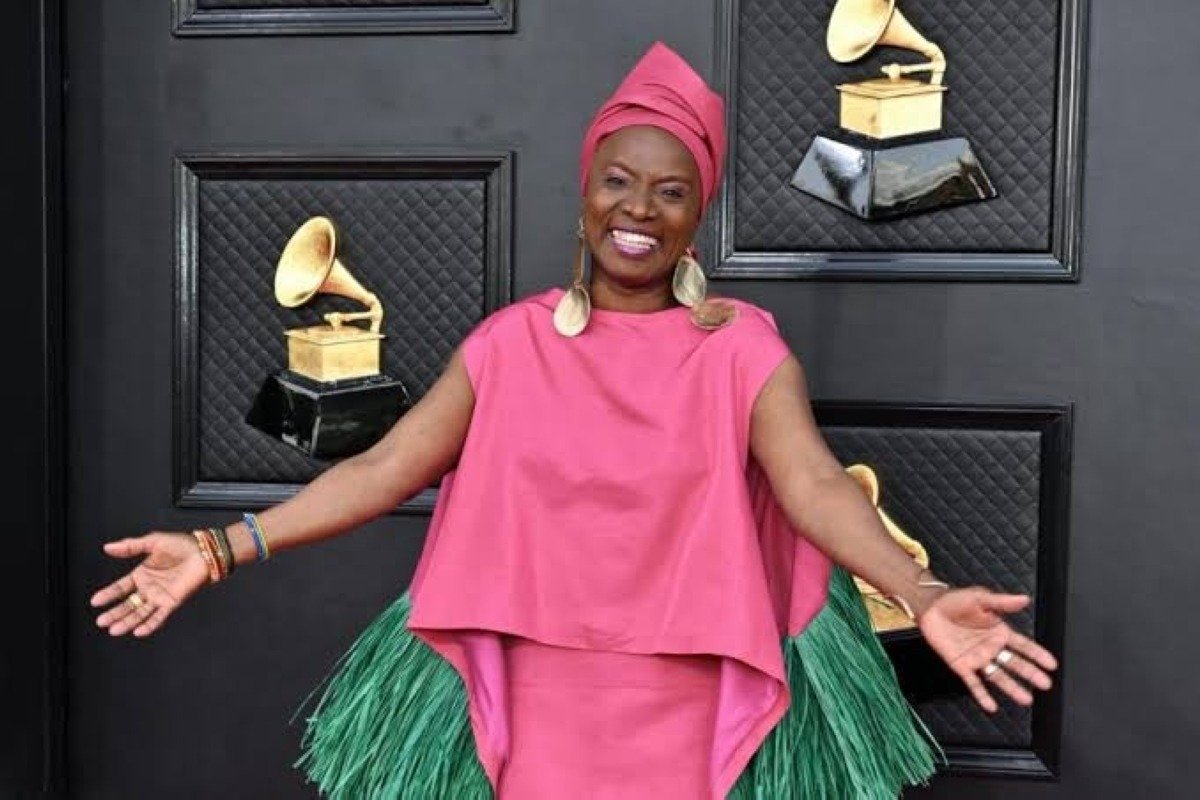
Dakar, Senegal — From the coastal streets of Ouidah, Benin, to a pink terrazzo star on the most famous boulevard in Los Angeles, Angélique Kidjo's journey has always belonged to the continent that raised her. Her Walk of Fame honour on Tuesday was not just a personal triumph; it was a declaration that African music belongs on the world's grandest stages, and that the rhythms of the continent have shaped global sound for generations. In a glitzy ceremony under palm trees and picture-perfect California skies, the 66-year-old was feted by film stars and music industry titans as she unveiled the star on the busy thoroughfare at 7011 Hollywood Boulevard, opposite the Hollywood Roosevelt Hotel.
A Historic First on Hollywood Boulevard
The ceremony on Tuesday, August 18, 2026, was a moment of pure, unscripted joy. Ron Frierson, president and CEO of the Hollywood Chamber of Commerce, set the tone early by proclaiming the date as Angélique Kidjo Day in Hollywood, a fitting tribute for an artist who has spent four decades breaking down barriers. The event, hosted by Variety's Angelique Jackson, drew a crowd of A-list admirers who came to witness a first in the Walk's 66-year history: an African musician receiving the coveted terrazzo star.
Among the dignitaries present was Benin-born, Oscar-nominated actor Djimon Hounsou, who stood beaming as his compatriot took her place among the legends. Nigerian music star Adekunle Gold was also there, a symbol of the pan-African unity that defines Kidjo's career. The presence of these two artists, from different generations and different corners of the continent, underscored the breadth of Kidjo's influence — she is not just a Beninese treasure, but a continental one.
When Kidjo stepped to the microphone, she delivered a message that resonated far beyond the Hollywood Roosevelt Hotel's iconic facade. "We Africans don't know what we've given to the world. Without us, there's no music possible on this planet," she declared, her voice carrying the conviction of a woman who has spent her life proving that point. The crowd erupted, and then she did what she does best — she broke into song, dancing over her new star with the same irrepressible energy that has defined her live performances for over 40 years.
The image of Kidjo dancing on her star, her vibrant voice filling the boulevard, was a powerful counterpoint to the often sterile nature of Hollywood ceremonies. This was not a polite, scripted event; it was a celebration, a homecoming of sorts for a woman who has always carried Africa with her. The star itself, located at 7011 Hollywood Boulevard, now sits as a permanent marker of African excellence in the heart of the global entertainment industry.
For those of us watching from Dakar, the significance was profound. The Walk of Fame has long been a symbol of mainstream acceptance, a place where the entertainment industry's most enduring figures are immortalised. For an African woman, born in a small coastal town in Benin, to claim that space is a statement that cannot be overstated. It is a victory not just for Kidjo, but for every African artist who has been told their music is "niche" or "world" — a label that too often diminishes its universal power.
From Ouidah to the World: A Career Built Across Continents
Angélique Kidjo was born on July 14, 1960, in Ouidah, a city steeped in history and spirituality on Benin's Atlantic coast. Her father was Fon, from Ouidah, and her mother was Yoruba, a heritage that gave her a foot in two of West Africa's most culturally rich traditions. She was raised in a musical family, singing with her parents' theatre troupe from a young age, learning the rhythms and stories that would later define her sound.
Her formal journey began when she moved to Paris for training, a common path for many African artists seeking broader horizons. But unlike many who assimilated, Kidjo brought her heritage with her, fusing the traditional sounds of West Africa with jazz, funk, and soul to create a sound that was entirely her own. Over a career spanning more than 40 years and 18 albums, she has never wavered from that foundational blend.
The accolades are staggering. She is a five-time Grammy winner from more than twenty nominations, a feat that places her in the upper echelon of global musicians. Fourteen of her titles have reached the top 10 of Billboard's World Albums chart, a testament to her commercial appeal and artistic consistency. Her music, rooted in West African traditions, has found audiences on every continent, proving that the language of rhythm is truly universal.
Her global reach was on full display when she performed at the 2020 Summer Olympics opening ceremony in Tokyo, a moment watched by billions. That performance, which showcased her ability to command a global stage, was a precursor to Tuesday's honour. In 2021, TIME magazine named her one of the 100 most influential people in the world, a recognition that extended beyond music to her broader cultural and humanitarian impact.
Kidjo's journey from Ouidah to Hollywood is not a story of escape, but of expansion. She has never left her roots behind; instead, she has brought them to the world, insisting that the music of her childhood is worthy of the grandest stages. That insistence has paid off, not just for her, but for the generations of African artists who follow in her footsteps.
Tributes From the Global Music Community
The tributes at Tuesday's ceremony were as heartfelt as they were numerous. Harvey Mason Jr., CEO of the Recording Academy, hailed Kidjo as a "rare artist," a phrase that captures her unique position in the industry. He spoke of how her example has elevated the global music community, noting that music "is more than entertainment; it's connection." His presence was significant, signalling that the institution behind the Grammys recognises Kidjo as a peerless figure.
Mason's words carried weight: "Your legacy lives in the people that you've touched." This was not mere ceremony rhetoric; it was an acknowledgment of Kidjo's role as a mentor and inspiration to countless artists across Africa and the diaspora. She has opened doors that were previously closed, and her success has made it easier for the next generation to walk through them.
Actor Willem Dafoe, known for his intense and varied roles, offered a more personal tribute. After first seeing her perform live, he called her "without a doubt, the hardest-working woman in show business." Dafoe's praise extended beyond her music to her humanitarian work, noting that her activism is not a side project but a core part of who she is. His words, delivered with genuine warmth, highlighted the respect Kidjo commands across different artistic disciplines.
The warmth of these tributes was a sign of how deeply Kidjo is respected beyond genre and geography. She is not just a musician's musician; she is a cultural force who has earned the admiration of actors, executives, and fellow artists alike. The fact that both the CEO of the Recording Academy and a Hollywood actor of Dafoe's stature came to honour an African artist speaks volumes about the shift in the industry's centre of gravity.
For African readers, this moment is particularly sweet. For too long, African artists have been relegated to the margins of the global music industry, their contributions undervalued or exoticised. Kidjo's star, and the tributes that accompanied it, represent a correction of that narrative. She is not being honoured as an "African artist" in a niche sense; she is being honoured as one of the greats, period.
More Than Music: The Batonga Foundation and a Life of Service
Angélique Kidjo's legacy extends far beyond her recordings. Since 2002, she has served as a UNICEF Goodwill Ambassador, using her platform to advocate for the rights of children across the continent. But she went further in 2006, founding the Batonga Foundation after a trip with UNICEF that opened her eyes to the specific barriers facing girls in education.
The name "Batonga" is deeply personal. It is a word she invented as a child in school, a defiant response to those who thought young girls should not go to school. When boys taunted her, she would shout "Batonga!" — a meaningless word that became her shield. Today, that word represents a mission: to support secondary school and higher education for girls across Africa.
The foundation's work is tangible and impactful, providing scholarships, mentoring, and resources to girls who might otherwise be left behind. Willem Dafoe's comment that her activism is "not a token celebrity involvement" rings true; Kidjo has been hands-on in this work for nearly two decades, long before it was fashionable for artists to have a "cause."
The Walk of Fame platform now amplifies her advocacy in new ways. Every tourist who walks past her star at 7011 Hollywood Boulevard will see her name, and many will be curious enough to learn about her work. The star is not just a monument to her music; it is a beacon for her mission. It ensures that the conversation about girls' education in Africa remains alive in the global consciousness.
The connection between her art and her activism is seamless. Her music has always carried messages of empowerment, resilience, and pride. Her foundation carries those same messages into concrete action. This is not a celebrity who dabbles in charity; this is an artist who understands that her voice carries responsibility, and she has embraced that responsibility with the same energy she brings to the stage.
Pan-African Pride: What This Honour Means for the Continent
Reactions across Africa have been swift and celebratory. Benin's government was quick to praise the honour, framing it as a matter of national pride. For a small West African nation, having one of its daughters recognised on the Hollywood Walk of Fame is a monumental achievement, a validation of its cultural contributions to the world.
The presence of Djimon Hounsou and Adekunle Gold at the ceremony was a powerful symbol of continental unity. Here was a Benin-born actor, a Nigerian music star, and a Beninese singer, all standing together on Hollywood Boulevard. It was a visual reminder that African success is not a zero-sum game; when one of us rises, we all rise.
Kidjo's recognition has been building for years. The BBC named her one of Africa's 50 most iconic figures, and The Guardian listed her among the 100 most inspiring people in the world. These honours, combined with the Walk of Fame star, paint a picture of an artist whose influence transcends music. She is a cultural ambassador, a role model, and a proof that African excellence knows no bounds.
Her star opens doors for other African artists. From Afrobeats stars in Lagos to emerging musicians in Dakar, Nairobi, and Accra, the message is clear: the world is watching, and the world is ready. The growing global recognition of African music — from Burna Boy's Grammy wins to the international success of Amapiano — is part of a broader movement that Kidjo helped pioneer.
Her 2023 Polar Music Prize, awarded alongside Chris Blackwell and Arvo Pärt, was another milestone in this journey. That prize, often described as the "Nobel Prize of Music," placed her in the company of the world's most distinguished composers and performers. The Walk of Fame star is the latest, and perhaps most visible, confirmation of her status.
What to Watch For
So what comes next for Angélique Kidjo after this historic honour? Her schedule shows no signs of slowing down. Her ongoing African Symphony project, which transforms beloved African classics into orchestral masterpieces, is a testament to her ambition. The project had its European premiere in June 2024 at Lyon's ancient Roman theatre, a stunning venue that matched the grandeur of the music.
The African Symphony project is particularly significant because it reimagines African music for orchestral settings, challenging the notion that these traditions belong only in informal settings. By bringing these classics to prestigious European venues, Kidjo is elevating the continent's musical heritage to the realm of classical canon. It is a bold, ambitious project that only an artist of her stature could pull off.
The Batonga Foundation continues to grow, expanding its reach and impact. With the increased visibility from the Walk of Fame, the foundation is poised to attract new supporters and expand its programmes. For Kidjo, this is not a moment to rest; it is a moment to leverage her platform for even greater impact.
Her influence on the next generation of African musicians cannot be overstated. Artists like Adekunle Gold, who attended the ceremony, are direct beneficiaries of the path Kidjo carved. She has shown that it is possible to be authentically African and globally successful, that one does not have to choose between the two. This lesson is being absorbed by young musicians across the continent.
The permanent star on Hollywood Boulevard is more than a tourist attraction; it is a site of pilgrimage for African cultural pride. Young Africans visiting Los Angeles will now have a place to go, a physical marker of their continent's contribution to global culture. It is a small piece of Africa in the heart of Hollywood, and it will remain there for generations.
As I reflect on Kidjo's journey from Ouidah to Hollywood, I am reminded of the power of persistence and pride. She never abandoned her roots; she carried them with her, insisting that they were worthy of the world's attention. Her star is not just a personal achievement; it is a declaration that the creative power of Africa is limitless. From the beaches of Dakar to the boulevards of Los Angeles, her music will continue to inspire, and her star will continue to shine.
By Amara Diop, Staff Writer
This article was produced with AI-assisted research and editorial support. Sources: Africanews/AP, Billboard, France 24, Hollywood Chamber of Commerce.
What's Your Reaction?
 Like
0
Like
0
 Dislike
0
Dislike
0
 Love
0
Love
0
 Funny
0
Funny
0
 Wow
0
Wow
0
 Sad
0
Sad
0
 Angry
0
Angry
0

West Africa/Sahel Correspondent at Global1.News. Dakar-based journalist covering politics, security, climate, and development across Francophone and Anglophone West Africa. Tells the stories of a region undergoing profound transformation.












Comments (0)