
Putin's Kuril Gambit: The Frozen Peace Treaty, Japan's Rearmament, and the New Geometry of Northeast Asian Security
In a recent CGTN report, correspondent Huang Yue examined why Russia and Japan have failed to sign a peace treaty more than 80 years after the conclusion of World War II, a question brought into sharp focus by Vladimir Putin's first reported in-person visit to the disputed Kuril chain on August 13, 2026. The visit to Iturup Island — one of the four Southern Kurils Tokyo claims as its Northern Territories — is far more than a symbolic gesture.
Putin's Kuril Gambit: The Frozen Peace Treaty, Japan's Rearmament, and the New Geometry of Northeast Asian Security
In a recent CGTN report, correspondent Huang Yue examined why Russia and Japan have failed to sign a peace treaty more than 80 years after the conclusion of World War II, a question brought into sharp focus by Vladimir Putin's first reported in-person visit to the disputed Kuril chain on August 13, 2026. The visit to Iturup Island — one of the four Southern Kurils Tokyo claims as its Northern Territories — is far more than a symbolic gesture. It is a strategic signal fired across the Sea of Okhotsk at Tokyo, Washington, and the broader Asia-Pacific security architecture. As Japan accelerates its most significant military buildup since 1945, the territorial impasse has become a live geopolitical fault line where the interests of Russia, China, Japan, and the United States converge with dangerous potential.
The Strategic Geography of the Southern Kurils
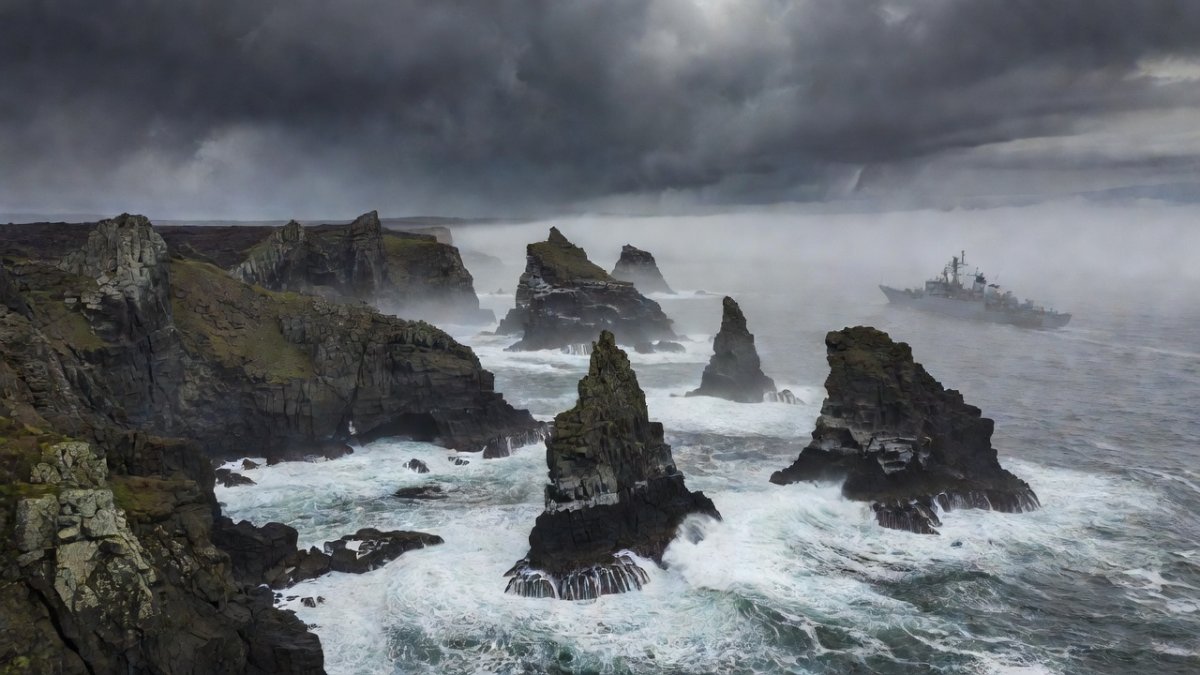
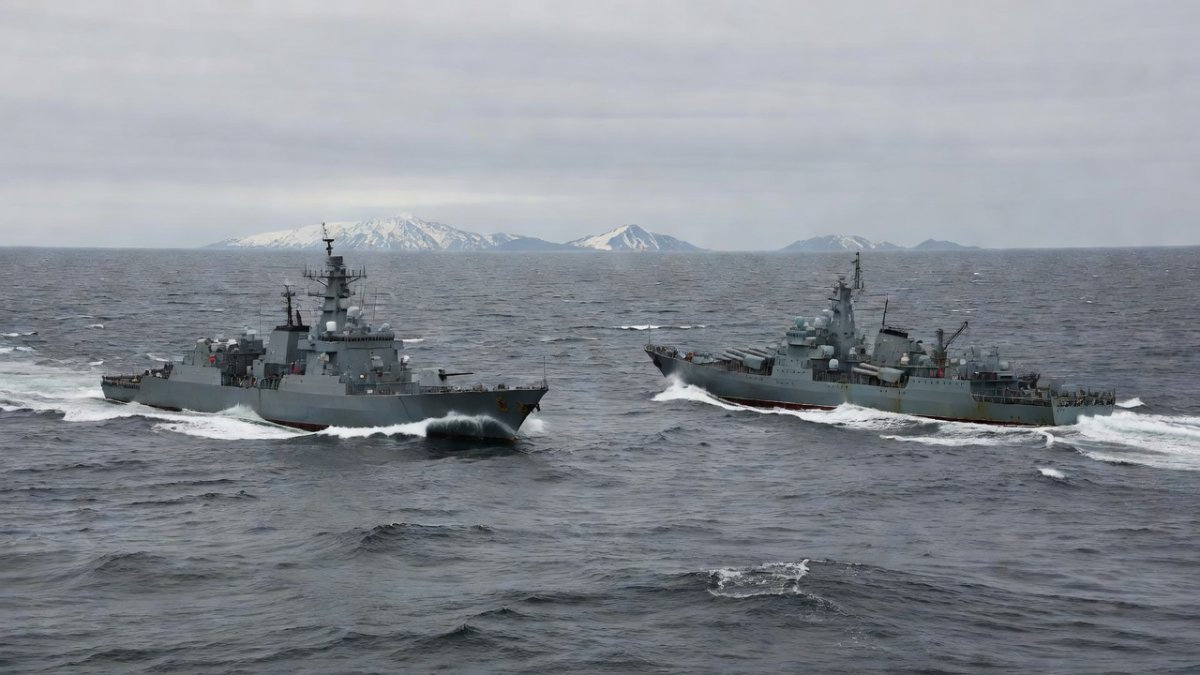
To understand the fury from Tokyo, grasp the geography. The four disputed islands — Iturup, Kunashir, Shikotan, and the Habomai rocks — are not merely a matter of pride or historical grievance. They command the southern approaches to the Sea of Okhotsk, a body of water that functions as a de facto bastion for Russia's Pacific Fleet. It is the sanctuary from which Russia's nuclear-armed ballistic missile submarines patrol, shielded by the Kuril chain from US and allied anti-submarine assets. The islands are, in effect, the keystone of Russia's second-strike nuclear capability in the Pacific. President Putin's journey to Iturup, following a visit to the nearby island of Sakhalin where the Russian navy was conducting drills, underscores the military dimension. By physically standing on the island, Putin is demonstrating that Russian operational control over the Sea of Okhotsk is non-negotiable. For the Russian General Staff, ceding the islands would open the back door to their strategic submarine fleet. This is why the dispute has stayed frozen for eight decades. For Russia, the Kurils are not a territorial dispute; they are a strategic asset of the highest order.Tokyo's Protest and the Takaichi Doctrine
The reaction from Tokyo was swift and unequivocal. Japanese Prime Minister Sanae Takaichi described the visit as "absolutely unacceptable," while Foreign Minister Toshimitsu Motegi issued a formal "strong protest." Russia then summoned the Japanese envoy, a tit-for-tat that signals the breakdown of the negotiation channel. The language is notably more confrontational than that of her predecessors, reflecting a broader shift in Japan's foreign policy posture. This is not merely about the Kurils. The Takaichi government has overseen a dramatic acceleration of Japan's defense policy, moving away from post-war pacifist constraints toward a more assertive military stance. This reshaping — including higher defense spending and the acquisition of counter-strike capabilities — has drawn growing attention across the Asia-Pacific, particularly in Beijing. For China, the calculus is complex. While Beijing and Moscow coordinate closely globally, the sight of a rearming Japan backed by the US-Japan alliance is a long-term concern. The Kuril dispute provides convenient friction between Tokyo and Moscow, but China is acutely aware that the same military modernization driving Japan's claims is also directed, in part, at the East China Sea and the Taiwan Strait.The Frozen Treaty: A Historical Impasse
The legal context is a labyrinth of competing treaties. The Soviet Union seized the four southernmost islands from Japan in the final days of World War II in August 1945. In the 1951 San Francisco Peace Treaty, Japan formally renounced its claims to the Kuril chain, but the Soviet Union refused to sign, leaving the sovereignty of the four islands ambiguous. Compounding the complexity, an earlier 1875 treaty had granted Japan the entire Kuril chain in exchange for Russian control of Sakhalin. Both sides possess legal arguments that are defensible, yet irreconcilable. The result: Russia and Japan have never signed a peace treaty formally ending World War II hostilities — technically, a state of war still exists between them. Negotiations have been effectively frozen amid the Ukraine conflict, with Japan joining Western sanctions against Moscow and Russia responding by walking away from the table. Putin's visit is a clear signal that Moscow sees no urgency in resuming talks. From the Kremlin's perspective, the status quo is preferable: Russia maintains control of the strategic islands, while Japan is left in a state of perpetual diplomatic frustration. The visit is a calculated move to solidify the territorial status quo and remind Tokyo that its alignment with the West on Ukraine has consequences.The China Factor and the Russia-China Entente
For Beijing, the Kuril dispute is a double-edged sword. On one hand, friction between Russia and Japan serves to distract Tokyo and Washington, complicating the US-Japan alliance's focus on the Indo-Pacific. A Russia bogged down in a territorial dispute with Japan is one more dependent on Chinese diplomatic support. This dynamic reinforces the "no-limits" partnership Beijing and Moscow have cultivated in the face of Western sanctions and containment strategies. Their coordination on everything from the UN Security Council to economic de-dollarization is strengthened by shared opposition to the US-led order. Yet China must also be wary of the precedent. Japan's increasingly assertive posture and military buildup directly challenge the regional order Beijing seeks to shape. While China does not officially endorse Japan's claims to the Northern Territories, it also does not want territorial disputes resolved through military intimidation or unilateral visits. The stability of Northeast Asia is predicated on a certain predictability, and Putin's visit injects a degree of volatility. For China, the ideal outcome is a continued, low-level stalemate — enough friction to keep Japan and Russia at odds, but not enough to trigger a broader conflict that could draw in the United States. Beijing's strategic interest lies in managing the temperature of the dispute, not in seeing it boil over.
The US-Japan Alliance and the Okhotsk Calculus
The United States watches these developments with a mixture of concern and opportunity. The US-Japan alliance is the cornerstone of American strategy in the Pacific, and Japan's buildup is partly a response to American pressure for Tokyo to do more in its own defense. The Kuril dispute provides a useful lever for Washington to keep Japan aligned with its broader containment strategy against both Russia and China. By supporting Japan's claims — at least rhetorically — the US can ensure that Tokyo remains reliant on American security guarantees, preventing any potential Japan-Russia rapprochement that might weaken the alliance structure. Yet Washington also has a vested interest in the Sea of Okhotsk. The US Navy's ability to project power into the region is directly constrained by the Russian military presence on the Kurils. The islands are a denial zone that limits American freedom of navigation. The EU's call for peaceful resolution, while diplomatically correct, carries little weight here. The reality is that the Kurils are a chokepoint for Russian strategic forces, and neither Moscow nor Washington will compromise on military realities. Tokyo is caught in a vice: it cannot force Russia to negotiate, and it cannot rely on the US to fight for the islands. The protest lodged by Motegi is, in essence, an expression of strategic impotence.Implications for Asia-Pacific Stability
The broader implications extend far beyond the bilateral relationship. Japan's defense transformation, accelerated by perceived threats from both Russia and China, is reshaping regional security architecture — a development Beijing does not welcome, despite the temporary advantage of Russia-Japan friction. A rearmed Japan, with or without the Northern Territories, is a long-term strategic challenge for China. Moreover, the dispute highlights the fragility of the post-war international order. That two major powers have failed to sign a peace treaty 80 years after the conflict ended testifies to the enduring power of territorial nationalism: grievances do not fade; they are weaponized for domestic and strategic advantage. Putin's visit is a classic example, bolstering domestic standing by projecting strength abroad while punishing Japan for its alignment with the West. The result is a more volatile Northeast Asia, where the risk of miscalculation is ever-present. Looking forward, prospects for resolution are virtually nil. The Ukraine conflict has poisoned the well of Russia-Japan relations, and Putin's visit has effectively closed the door on near-term diplomatic initiatives. The islands will remain under Russian control, Japan will continue to protest, and the underlying strategic realities will not change. For China, the situation demands careful navigation: Beijing must balance support for Moscow against concerns about a rearming Japan. The ideal scenario is a continuation of the status quo — a frozen conflict that keeps Russia and Japan at odds without escalating into a crisis that forces Beijing to choose sides. The CGTN report on Putin's visit serves as a reminder that the ghosts of World War II still haunt the Asia-Pacific. The peace treaty may remain elusive, but the strategic competition it embodies is very much alive, and its consequences will shape the region for decades to come. By Prof. Marcus Chen, Staff WriterThis article was produced with AI-assisted research and editorial support. Reporting is based on sources cited in the article.
What's Your Reaction?
 Like
0
Like
0
 Dislike
0
Dislike
0
 Love
0
Love
0
 Funny
0
Funny
0
 Wow
0
Wow
0
 Sad
0
Sad
0
 Angry
0
Angry
0

Marcus Chen
World Politics Analyst at Global1.News. Based in Beijing, covering US-China relations, global trade, and geopolitical strategy. Brings deep analytical perspective to the power dynamics shaping international affairs.













Comments (0)