
UAE Imposes Indefinite Trade Embargo on Iran After Missile Detection
The Persian Gulf's commercial heartland is on edge. When the United Arab Emirates detected two ballistic missiles launched from Iranian territory on Tuesday evening — one splashing down inside its territorial waters — it marked more than a security breach.
The Persian Gulf's commercial heartland is on edge. When the United Arab Emirates detected two ballistic missiles launched from Iranian territory on Tuesday evening — one splashing down inside its territorial waters — it marked more than a security breach. It signaled the collapse of a carefully calibrated strategy that had allowed Dubai to profit from both sides of a regional war. Within hours, Abu Dhabi responded with its most consequential economic weapon yet: an indefinite trade embargo on the Islamic Republic.
UAE's Indefinite Trade Embargo on Iran Threatens to Redraw Gulf Economic Map
Dubai, United Arab Emirates – August 19, 2026 — The UAE Defense Ministry said its air defenses detected two ballistic missiles launched from Iran toward the country on Tuesday evening, with the first falling outside UAE territorial waters and the second landing within them. The Interior Ministry dispatched phone alerts to residents in Dubai and other areas, urging them to "immediately seek a safe place in the closest secure building" at 6:52pm local time. The alert was lifted after approximately ten minutes.
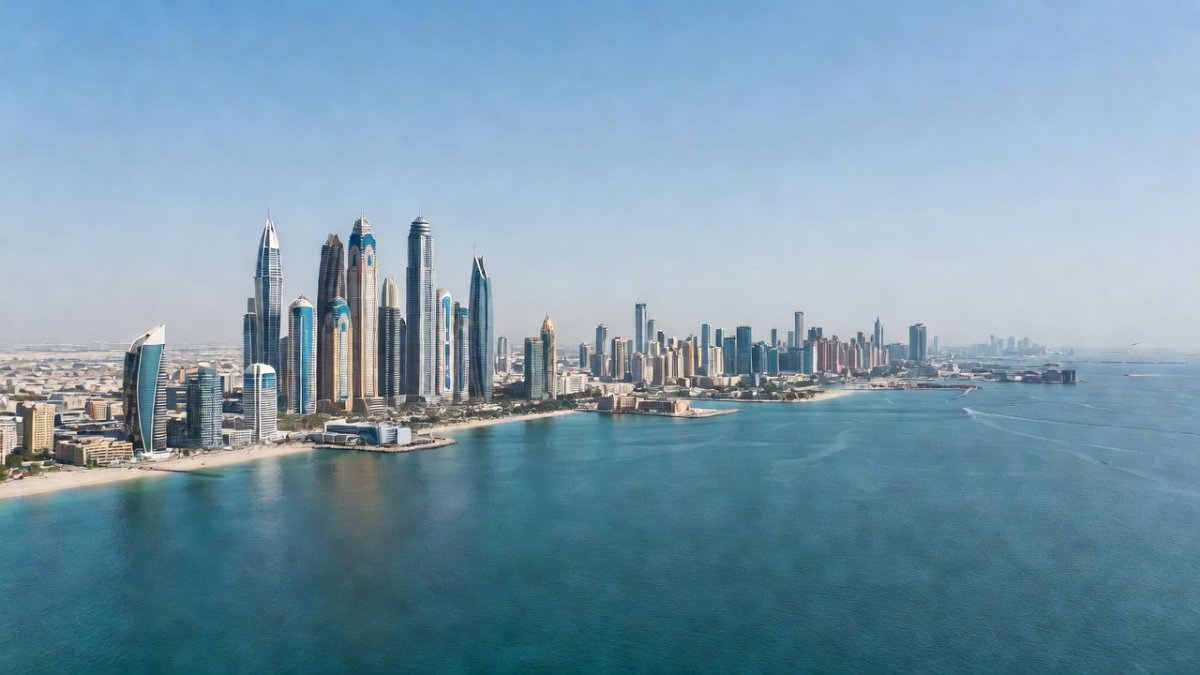
A follow-up defense ministry statement said the missiles had been "targeting maritime traffic" and promised to "resolutely confront any attempt to undermine the security of the nation or maritime navigation in the region." It was the first such missile alert since a false alarm in June and a July 12 alert for an attack that ultimately did not enter UAE territory. Before that, the last missile warning came in early May — a reminder of how dramatically the security environment has shifted since the US-Iran war began in late February.
An Embargo With Teeth: Dubai's Quiet Role as Iran's Economic Lifeline
The missile detection alone might have been absorbed as another incident in a conflict that has already seen more than 530 ballistic missiles, dozens of cruise missiles and over 2,200 drones directed at the UAE in the war's first six weeks. But Wednesday's announcement from the UAE's Ministry of Foreign Affairs changed the calculus. "All trade, commercial exchanges and financial transactions with Iran have been halted until further notice," the ministry declared, framing the decision as necessary "in light of escalations that undermine peace and security in the region."
The strategic weight of this move cannot be overstated. Retired US General Mark Kimmitt, former assistant secretary of state, told Al Jazeera that the UAE embargo could hit Iran harder than anything Washington has imposed. The reason lies in the quiet commercial architecture that has made Dubai Iran's most important trading partner — edging out even China and Turkiye — and supplying roughly a third of everything Iran imports each year. For decades, Iranian businesses have operated openly in Dubai's gold souks, textile markets and free zones, using the emirate as a financial gateway to the world. Jebel Ali Port, the region's largest container terminal, has served as the primary conduit for goods flowing into the Islamic Republic, often transshipped through third countries to evade US sanctions.
Iran's Foreign Ministry rejected the accusation as "baseless." Spokesman Esmaeil Baghaei suggested the missile launches were a "false flag operation" amid the war launched by the United States and Israel against Iran, warning that the UAE's claim "contradicts the principle of good neighbourliness." The sharp exchange underscores how quickly Gulf-Iranian relations have deteriorated from pragmatic coexistence to open confrontation.
From Neutrality to Frontline: The UAE's Precarious Position
The UAE had already suspended direct cargo shipping with Iran in early March, days after the war began, resuming trade only in late June via Jebel Ali Port. That resumption reflected a calculated bet that the Islamabad Memorandum of Understanding — the US-Iran ceasefire framework signed remotely by President Donald Trump and Iranian President Masoud Pezeshkian on June 17 — would hold. Brokered by Pakistan with Qatar, Saudi Arabia, Turkey and Egypt facilitating, the MoU formalized a ceasefire and aimed to restore shipping through the Strait of Hormuz with a 60-day settlement window.
For a time, the bet seemed to pay off. After the MoU took effect, the UAE reported no attacks, unlike other Gulf states. But the 60-day window for US-Iranian peace talks expired on August 17 without a breakthrough in the more-than-five-month-old conflict. The missiles detected the following day suggest Tehran is signaling that its patience with Gulf neutrality has run out — or that hardliners within Iran's security establishment are determined to sabotage any diplomatic track that might constrain their military options.
The UAE's post-oil economic strategy has long rested on a reputation for neutrality and commercial openness. Dubai has positioned itself as a global trade, finance and logistics hub, a safe harbor for capital fleeing instability elsewhere in the region. That strategy is now being tested as never before. The war has forced Abu Dhabi to choose between its economic relationship with Iran and its security partnership with Washington — a choice no Gulf state wanted to make.
Strait of Hormuz: The Chokepoint at the Center of the Storm
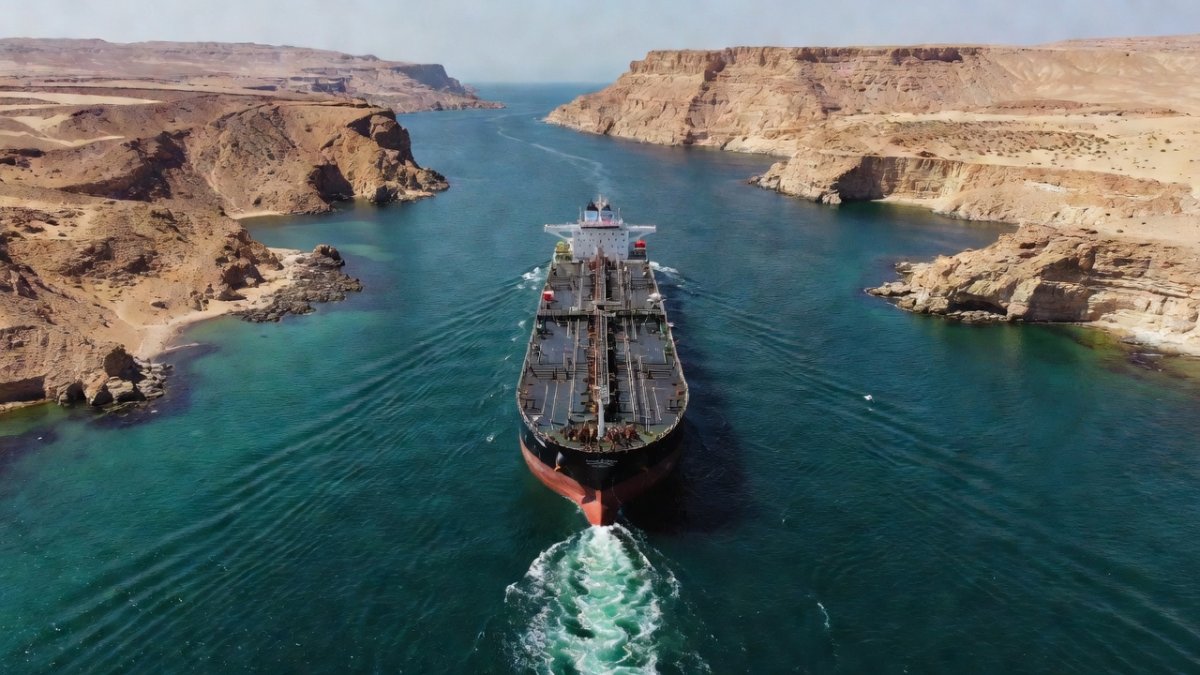
The immediate trigger for Tuesday's missile fire appears to be maritime. In the week before the missile detection, Abu Dhabi accused Tehran of attacking two state-owned ADNOC (Abu Dhabi National Oil Company) vessels in the Strait of Hormuz with drones, causing minor damage and no injuries. A third ADNOC vessel was attacked within the same week. Iran has not claimed responsibility for any of the attacks, but Saudi Arabia condemned them and held Tehran responsible. Anwar Gargash, diplomatic adviser to the UAE president, said Abu Dhabi would defend its sovereignty and navigation rights.
The stakes in the Strait of Hormuz are existential for the global energy market. The waterway normally carries about 20.9 million barrels per day of oil — roughly a fifth of global consumption in the first half of 2025. Brent crude traded around $86-90 per barrel in mid-August 2026, with prices rising after attacks on ships in both Hormuz and Bab el-Mandeb. The US maintains a naval blockade on Iranian ports, and President Trump has signaled a pivot toward economic pressure rather than military force to compel Tehran. But Iran has threatened to go on the offensive in the Strait if diplomacy fails, and Trump's provocative claim that the waterway is new "US territory" has Gulf states watching nervously.
Regional Realignment: Saudi Condemnation, Gulf Solidarity, and the Kushner Factor
The UAE's embargo does not exist in a vacuum. Saudi Arabia's condemnation of the ADNOC attacks and its decision to hold Iran responsible signals that Riyadh is aligning with Abu Dhabi in the confrontation. This is significant: Saudi-Iranian rapprochement, brokered by China in 2023, had been one of the region's most important diplomatic achievements. The war has now shattered that detente, forcing Gulf states to recalibrate their relationships with both Tehran and Washington.
Meanwhile, Trump envoy Jared Kushner is in the region pursuing a Gaza peace plan, having met with Netanyahu and Hamas representatives. The timing is not coincidental. Washington is seeking to stabilize multiple fronts simultaneously — Gaza, Lebanon, and now the Gulf — even as the US-Iran war grinds on without a clear endpoint. The collapse of the Islamabad MoU's 60-day window has left the region in a diplomatic vacuum, and Kushner's presence suggests the Trump administration is trying to fill it with a broader regional settlement that would include Gulf security guarantees.
For Iran, the UAE embargo represents a strategic defeat on a front it had long considered secure. Dubai's Iranian merchant community — estimated in the tens of thousands — has been a crucial channel for both legitimate trade and sanctions evasion. Losing access to that channel, even temporarily, will accelerate Iran's economic isolation and deepen the domestic pressures facing Pezeshkian's government. The Iranian president, who came to office on a platform of economic reform and diplomatic engagement, now finds himself presiding over a country under maximum pressure from both US sanctions and Gulf economic warfare.
What Comes Next: Scenarios and Strategic Implications
The coming weeks will test whether the UAE's embargo is a temporary punitive measure or the beginning of a permanent realignment. Several factors will determine the trajectory. First, Iran's response: Tehran could escalate militarily, targeting UAE infrastructure directly, or it could seek to split the Gulf coalition by offering economic inducements to individual emirates. Second, Washington's posture: If the Trump administration uses the UAE embargo as a template for broader Gulf economic pressure on Iran, Tehran's isolation will deepen rapidly. Third, the fate of the Gaza peace initiative: If Kushner can deliver a breakthrough, it might create conditions for a broader regional de-escalation that includes the Gulf.
The UAE's decision also carries significant second-order effects for the global economy. Dubai has served as a critical node in East-West trade, and any prolonged disruption to its commercial relationship with Iran will ripple through supply chains. The embargo could accelerate Iran's pivot toward China and Russia, which have become its primary economic partners since 2022. It could also push Tehran toward more aggressive behavior in the Strait of Hormuz, where it retains the capacity to disrupt global oil flows despite the US naval blockade.
For the UAE, the path forward is fraught with risk. The embargo aligns Abu Dhabi with Washington at a moment when the US commitment to Gulf security is being questioned. It also exposes the UAE to potential Iranian retaliation — both military and through Tehran's influence over Shia communities in the Gulf. The country's leaders are betting that economic pressure will compel Iran to moderate its behavior without triggering a wider war. That is a high-stakes gamble, and the missiles that landed in UAE waters on Tuesday are a reminder that Tehran does not always respond to pressure the way its adversaries expect.
What is clear is that the old rules of Gulf politics have been suspended. The UAE's strategy of commercial neutrality — profiting from trade with both Iran and the West while avoiding military entanglements — has been the foundation of Dubai's rise. That strategy is now in tatters. The indefinite embargo marks a definitive break with the past, and the region is entering uncharted territory where economic warfare, missile diplomacy and great power competition are increasingly indistinguishable.
By Malik Hassan, Staff Writer
This article was produced with AI-assisted research and editorial support. Reporting is based on sources cited in the article.
What's Your Reaction?
 Like
0
Like
0
 Dislike
0
Dislike
0
 Love
0
Love
0
 Funny
0
Funny
0
 Wow
0
Wow
0
 Sad
0
Sad
0
 Angry
0
Angry
0

Middle East Correspondent at Global1.News. Based in Beirut, covering politics, conflict, energy, and society across the Middle East. Brings context and depth to a region often reduced to headlines.












Comments (0)