
Dozens of Drones a Day: Weapons and Drugs Smuggled Along the Israel-Egypt Border
A recent i24NEWS English report shows dozens of GPS-guided drones crossing daily from Sinai into Israel with weapons and drugs. The IDF recorded 896 smuggling attempts in three months, and Israel has declared the border a closed military zone.
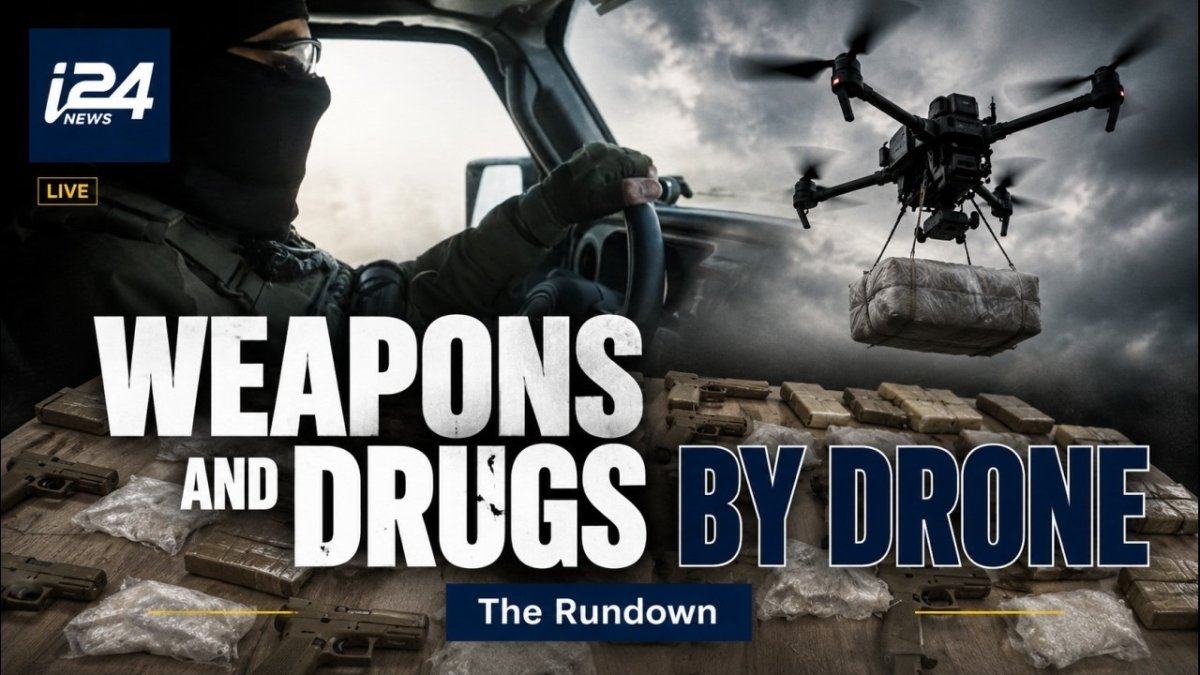
In a recent i24NEWS English report, the scale of the smuggling crisis along Israel's southern border came into sharp focus: dozens of GPS-guided drones are crossing daily from Egypt's Sinai Peninsula into Israeli territory, ferrying everything from brand-new Kalashnikov rifles to crystal meth. The footage and interviews paint a picture of a border that has become a "drone highway," a term used by local security coordinators who have watched the phenomenon transform their communities' nightly soundscape into a persistent buzz of illicit aviation.
Israel's Southern Border Becomes a Drone Highway: Weapons and Drugs Flow From Sinai
Jerusalem, Israel – August 2026 — The Israeli defense establishment is scrambling to contain a new and rapidly evolving threat along the 130-mile border with Egypt's Sinai Peninsula, where the IDF confirmed that drone-smuggling attempts have nearly doubled year-over-year. According to figures presented to the Knesset's Foreign Affairs and Defense Committee, 896 drone-smuggling attempts were recorded along the Egyptian border over a recent three-month period, compared to 464 attempts during the same period in 2024. The numbers underscore a dramatic shift in the tactics of smuggling networks that have operated in the region for decades, trading camels for quadcopters and mules for remote-controlled cargo flights.
The Drone Highway Over the Negev
For residents of the Ramat HaNegev Regional Council communities—Nitzana, Kadesh Barnea, Be'er Milka, and Ezuz—the drone traffic has become a defining feature of daily life. Idan Bismut, the security coordinator for the region, described the situation in stark terms during the i24NEWS report. "This whole area was a drone highway," Bismut said, recalling the constant activity that has only recently begun to subside. "The drones of 2025 are the camels of the past. Smuggling has always existed—and always will. But when the state treats it as a priority, it can be significantly reduced."
The change in the soundscape has been noticeable. Since the installation of new interception systems, residents of Kadesh Barnea, Be'er Milka, Nitzana, and Ezuz report that the constant buzzing of drones has largely disappeared. However, the relief is tempered by the knowledge that smugglers have adapted, shifting their operations approximately 10 kilometers north and south of the main crossing points. The cat-and-mouse game continues, with the IDF's 80th Division, responsible for Egyptian border security, and the Paran Brigade commander Col. G. informing local security coordinators that new interception systems would be deployed to close the gaps.
A Security Threat, Not Just Crime
The defense establishment has moved decisively to reclassify the drone-smuggling phenomenon, elevating it from a law-enforcement issue to a national security priority. Defense Minister Israel Katz ordered the IDF to turn the area adjacent to the border into a closed military zone and to adjust rules of engagement, warning that "anyone who penetrates into the prohibited area will pay a grave price." The directive signals a shift in posture, allowing troops greater latitude in confronting smugglers operating in the sand dune terrain.
IDF Chief of Staff Lt. Gen. Eyal Zamir has been equally unequivocal, stating that the drone threat is "not merely a criminal threat but a security threat with terror potential." Zamir's assessment reflects concerns that the same smuggling routes used for drugs and weapons could be exploited by terrorist organizations seeking to move operatives or materials into Israel. In response, the defense establishment has set up a special joint IDF, Shin Bet, and police unit with a dedicated command-and-control mechanism, intensified intelligence collection, and earmarked larger resources for new defense technologies. A new combat unit has also been formed specifically to confront smuggling operations in the nighttime sand dune terrain, where much of the activity occurs.
In a further escalation, Defense Minister Katz directed incoming Shin Bet Director David Zini to define the weapon-smuggling-via-drones threat as a terrorist threat, enabling the use of wider surveillance tools. The designation grants the Shin Bet expanded authority to track and disrupt the networks, treating them as hostile entities rather than mere criminal enterprises.
How the Smuggling Networks Operate
The modus operandi of the smuggling networks reveals a sophisticated, cross-border operation that leverages the unique geography of the Sinai border. According to the i24NEWS report and IDF assessments, Israeli-side smugglers position themselves between one and five kilometers from the border, setting up in the open desert where they can maintain line-of-sight with their drones. They then send the unmanned aircraft into Egyptian territory, where Egyptian-side smugglers load them with weapons and drugs. The Israeli-side smugglers navigate the drones back across the border, using GPS guidance and low-altitude flight paths to evade radar detection.
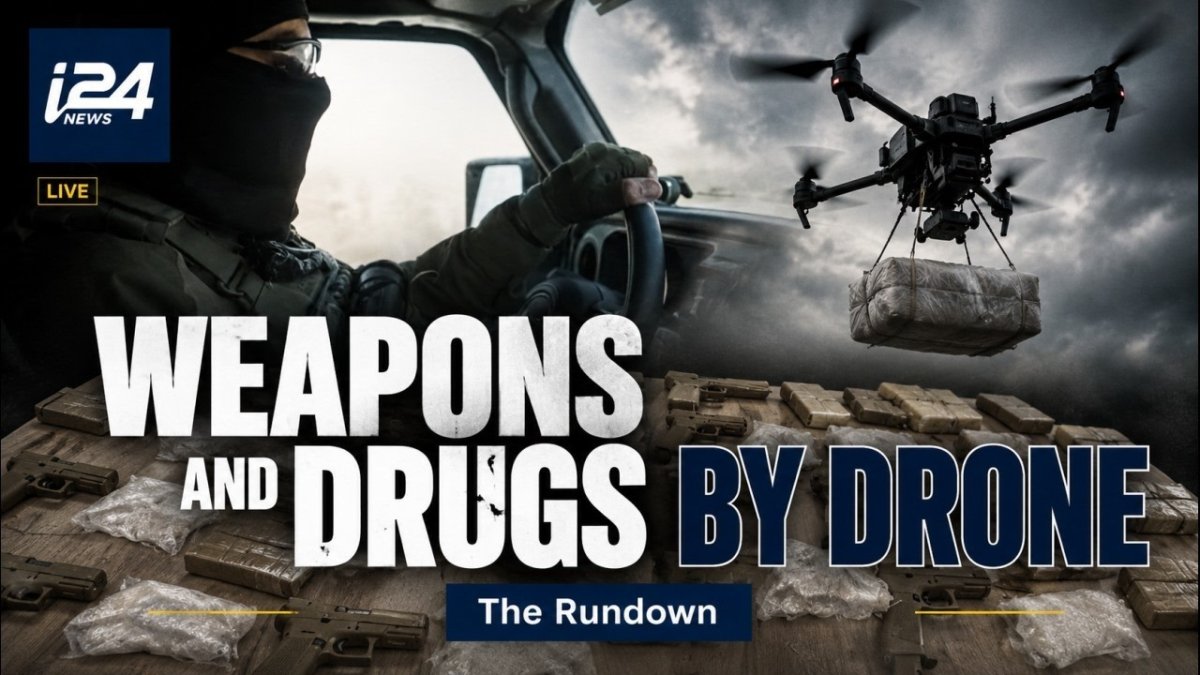
The smugglers launch up to 30 flights daily, mostly at night, taking advantage of the darkness and the remote terrain. The cargo is diverse and lucrative: cigarettes, crystal meth, marijuana, grenades, pistols, brand-new Kalashnikovs, and M-16 assault rifles. The IDF has intercepted drones carrying M-16 rifles and assault rifles at the Egyptian border in multiple incidents over the past year, confirming that the weapons are not just a theoretical concern but a tangible reality.
Once across the border, the weapons are often hidden in the Bedouin town of Bir Hadaj for a day or two before being sold. Residents of nearby communities have reported hearing test shots, a chilling indicator that the weapons are being checked and distributed. The flow of illegal arms from the border into Israeli population centers is a growing concern for local leaders. Eran Doron, head of the Ramat HaNegev Regional Council, called the phenomenon a nationwide threat. "The illegal weapons smuggled into Israel don't stop in the south. Much of it continues northward, deeper into the country," Doron said, highlighting the potential for these weapons to end up in the hands of criminals or terrorists in central Israel.
Regional Context: Sinai, Egypt, and the Border Equation
The drone-smuggling crisis must be understood within the broader context of the Israel-Egypt relationship and the security dynamics of the Sinai Peninsula. Egypt maintains that it destroyed tunnel networks leading to Gaza years ago and created a buffer zone and border fortifications that prevent smuggling. The Egyptian military has invested heavily in securing its side of the border, and Israeli officials acknowledge that the cooperation between Jerusalem and Cairo on security matters has been significant. However, the drone phenomenon represents a new challenge that bypasses traditional ground-based fortifications.
The 130-mile border between Israel and Egypt is a unique frontier, characterized by vast stretches of open desert, sparse population, and a history of smuggling that predates the establishment of the state. The Sinai Peninsula, which has been a focal point of Egyptian counterterrorism operations against ISIS-affiliated groups, remains a porous area where tribal networks and criminal organizations operate with relative impunity. The drones add a new dimension to this complex equation, allowing smugglers to circumvent physical barriers and patrol routes with a level of precision that was previously impossible.
The connection to Gaza is also a factor. While Egypt has cracked down on tunnels and smuggling routes into the Strip, the same networks that once moved goods into Gaza have adapted their methods. The weapons flowing into Israel via drones could potentially be destined for criminal organizations or, more concerningly, for terrorist cells. The IDF's assessment that the drone threat has "terror potential" reflects this concern, as does the decision to involve the Shin Bet in countering the phenomenon.
What This Means for Israel
The response to the drone-smuggling threat is already reshaping Israel's approach to border security and internal defense. The establishment of a closed military zone along the border, the formation of a new combat unit, and the deployment of advanced interception systems represent a significant investment in countering this specific threat. The fact that residents report a reduction in drone activity since the new systems were installed suggests that the measures are having an effect, at least in the short term.
However, the smugglers' ability to shift operations 10 kilometers north and south of main crossing points indicates that the challenge is far from solved. The defense establishment is likely to continue adapting, deploying additional systems and refining tactics to stay ahead of the smugglers. The political dimension is also coming into play. MK Tzvi Sukkot (Religious Zionism) initiated the Knesset committee discussion that brought the figures to light, and Otzma Yehudit is preparing legislation to limit civilian drone use. The legislative effort reflects a broader concern about the proliferation of drone technology and its potential for misuse, both by criminals and by hostile actors.
For Israeli communities along the border, the situation remains a daily reality. The reduction in drone activity has brought some relief, but the knowledge that the networks are still active and adapting is a constant reminder of the fragility of the security situation. The IDF's commitment to deploying new interception systems and the Shin Bet's expanded mandate are positive steps, but the long-term solution will require continued cooperation with Egypt and a sustained investment in technology and intelligence.
The drone-smuggling phenomenon is a stark illustration of how quickly security threats can evolve in the modern era. What began as a criminal nuisance has become a strategic challenge, forcing Israel to rethink its approach to border defense and internal security. The response, which has been swift and comprehensive, reflects a recognition that the threat is not just about contraband but about the potential for weapons to reach those who would do Israel harm. As the smugglers adapt, so too must the defense establishment, and the coming months will be critical in determining whether the new measures can hold the line.
The buzzing of drones over the Negev may have quieted for now, but the underlying dynamics that drive the smuggling—poverty, tribal networks, and the demand for weapons and drugs—remain. The challenge for Israel is not just to intercept the drones but to address the conditions that make the smuggling possible. In the meantime, the closed military zone, the new combat unit, and the expanded Shin Bet mandate represent a clear message: the state is treating this threat with the seriousness it deserves. Whether that will be enough to permanently disrupt the drone highway remains to be seen, but for the residents of Nitzana, Kadesh Barnea, Be'er Milka, and Ezuz, the quiet nights are a welcome reprieve—and a reminder of the constant vigilance required to maintain security on Israel's southern frontier.
By Hannah Berg, Staff Writer
This article was produced with AI-assisted research and editorial support. Reporting is based on sources cited in the article.
What's Your Reaction?
 Like
0
Like
0
 Dislike
0
Dislike
0
 Love
0
Love
0
 Funny
0
Funny
0
 Wow
0
Wow
0
 Sad
0
Sad
0
 Angry
0
Angry
0

Israel Correspondent at Global1.News. Based in Tel Aviv, covering Israeli politics, security, technology, and society. Provides balanced, deeply-sourced reporting on one of the most closely-watched regions in the world.














Comments (0)