
U.S. Moves to Build Israel-Türkiye-Syria Deconfliction Channel After Airbase Strike Near Turkish Border
The United States is actively working to establish a trilateral military deconfliction mechanism involving Israel, Türkiye and Syria, following Israeli airstrikes on the Abu al-Dahur airbase in northwestern Syria that brought two of NATO's most consequential regional actors to the brink of a direct
The United States is actively working to establish a trilateral military deconfliction mechanism involving Israel, Türkiye and Syria, following Israeli airstrikes on the Abu al-Dahur airbase in northwestern Syria that brought two of NATO's most consequential regional actors to the brink of a direct confrontation.
U.S. Moves to Build Israel-Türkiye-Syria Deconfliction Channel After Airbase Strike Near Turkish Border
Ankara, Türkiye – August 19, 2026 — The United States is actively working to establish the trilateral deconfliction channel after Israeli airstrikes on the Abu al-Dahur airbase brought two of NATO's most consequential regional actors to the brink of a direct confrontation.
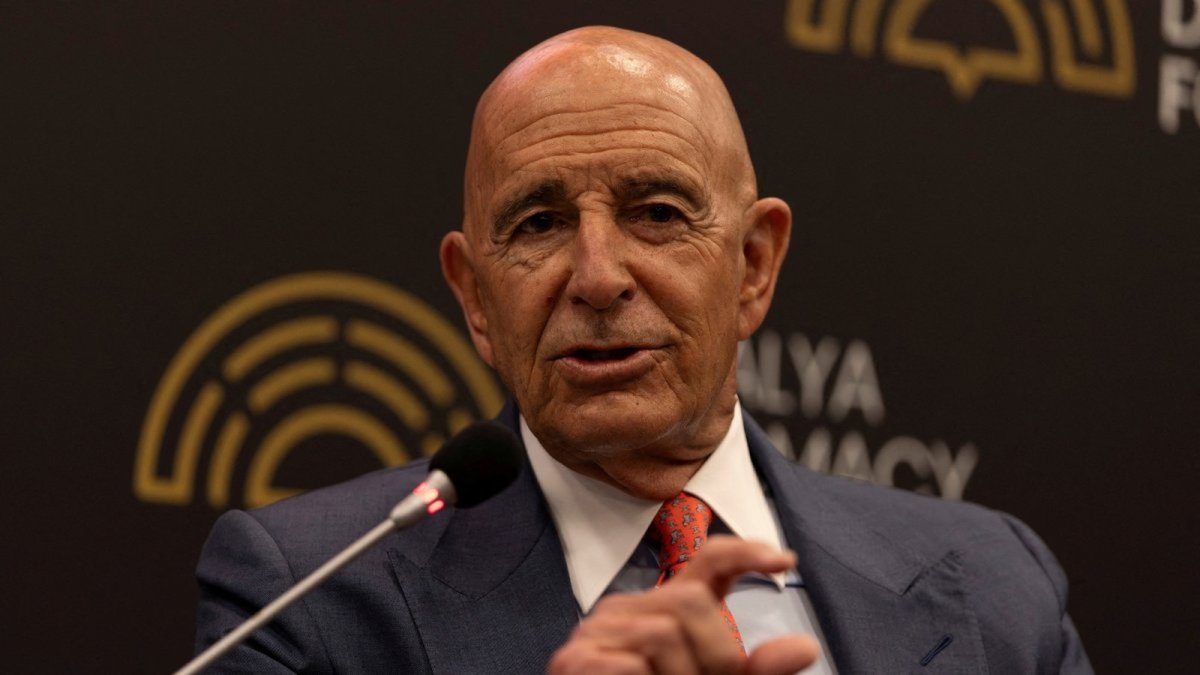
Washington's Syria envoy Tom Barrack, who also serves as U.S. ambassador to Türkiye, confirmed the initiative in a phone interview with Reuters on Tuesday, describing the strikes as a moment when "calm heads" prevented a rapid escalation. The airbase, located roughly 70 kilometers east of the Turkish border, has been out of service as a dedicated military airfield since 2013 and changed hands multiple times during Syria's 14-year civil war.
The incident underscores a volatile new phase in the Middle East, where the collapse of the Assad regime has redrawn alliances and placed Turkish and Israeli military interests in unprecedented proximity. With Ankara emerging as the principal patron of Syrian President Ahmed al-Sharaa's government and Israel viewing the new Damascus leadership with deep suspicion, the potential for miscalculation has grown exponentially.
The Anatomy of a Near-Crisis
According to Barrack, Türkiye received no advance warning of the Israeli strikes on the Abu al-Dahur base. Ankara's military observed Israeli aircraft heading north toward Turkish territory and "therefore could have reasonably prepared its own response," Barrack said, referring to the possibility of a Turkish military reaction.
"Thankfully, calm heads were able to prevent the situation from deteriorating further," he told Reuters.
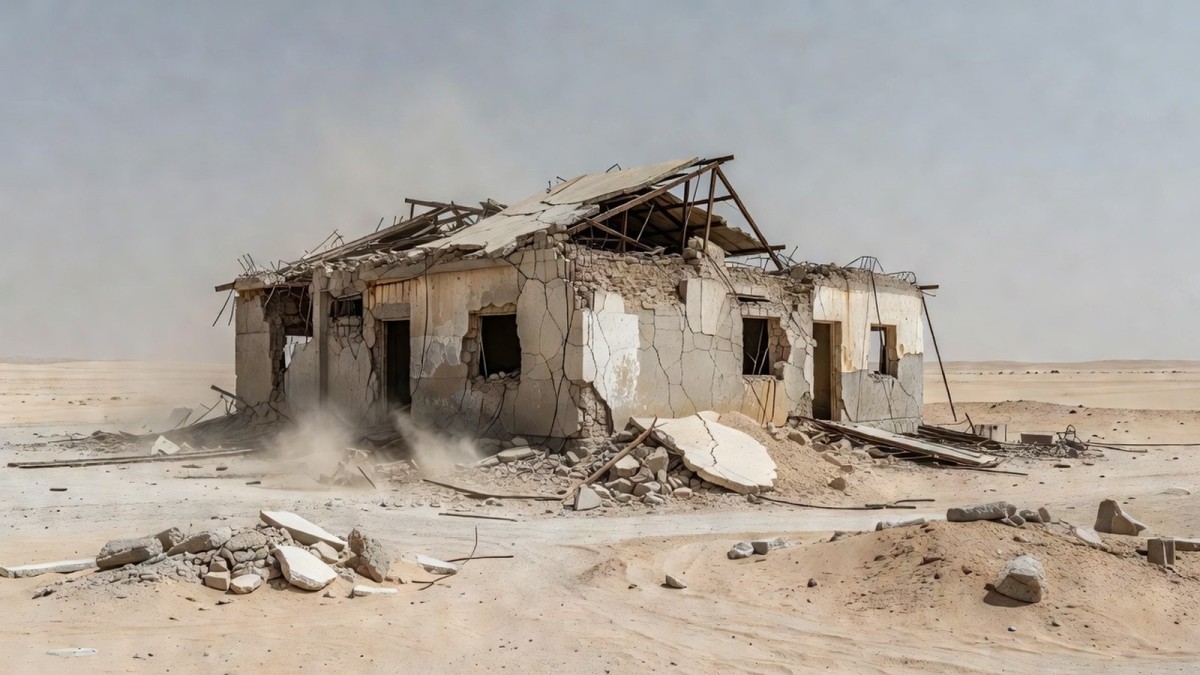
Syria's state-run Ekhbariya television, citing a military source, reported that Israel carried out eight airstrikes on the base's runway and storage facilities. A separate military source and a civilian living near the base said there were no casualties. The Israeli military declined to comment on the strikes.
The near-miss highlights a critical gap in regional communications. A deconfliction mechanism is a communications channel designed to prevent misunderstandings or accidental confrontations between military or political actors. In this case, the absence of such a channel between Ankara and Jerusalem meant that Turkish forces observed unidentified aircraft approaching their airspace without any explanation.
Israel's Strategic Calculus
Israel's Prime Minister's Office offered a stark justification for the strikes, stating on social media platform X that Israel and Syria had agreed to a security status quo that Damascus was "on the verge of breaching by permitting Turkish troops to deploy at an airbase near Aleppo." The statement said Israel had repeatedly warned Syria against such a deployment and that Syria had ignored those warnings.
"Israel will not tolerate threats to its security, and would welcome a return to the status quo," the statement read.
Barrack offered a more nuanced interpretation, suggesting the strikes "reflected a perception, whether accurate or misplaced, that Türkiye might in the near future increase its presence at that base." This framing acknowledges that Israel's action may have been preemptive, driven by intelligence assessments of Turkish intentions rather than an immediate threat.
Israel has for years struck targets in Syria to curb what it says is Iranian influence and to prevent weapons from reaching Hezbollah in Lebanon. Since Assad's overthrow in 2024, Israel has also viewed Syria's new rulers with suspicion and continued military attacks in the country, most recently striking government sites in southern and central Syria in March.
Türkiye's Growing Regional Footprint
The context of Türkiye's expanding role in Syria is essential to understanding the gravity of this incident. Ankara, which possesses NATO's second-largest army, has become one of al-Sharaa's main allies, training Syria's army, helping rebuild state institutions and infrastructure, and providing military and diplomatic support.
This month, Türkiye signed the Mecca Joint Defence Agreement with Pakistan and Saudi Arabia, a mutual defense pact that signals Ankara's deepening strategic alignment with key Sunni powers. The agreement, signed on August 7, 2026, positions Türkiye as a central node in a new regional security architecture that implicitly challenges Israeli dominance in the eastern Mediterranean and Levant.
For Israel, the prospect of Turkish troops operating at an airbase near Aleppo — within striking distance of Israeli positions and potentially capable of hosting advanced air defense systems — represents a fundamental shift in the regional balance of power. Israel has long operated with relative impunity in Syrian airspace; the introduction of a NATO-standard military with advanced capabilities would complicate that calculus significantly.
The Geopolitical Chessboard
The Abu al-Dahur incident must be understood within the broader framework of post-Assad Syria's integration into regional politics. The overthrow of Bashar Assad in 2024 created a vacuum that multiple actors are racing to fill. Türkiye has moved decisively, leveraging its historical ties with opposition factions and its military capabilities to become the new government's primary backer.
Israel, meanwhile, views the new Syrian leadership with suspicion, concerned that al-Sharaa's government may eventually align with forces hostile to Israeli interests. The continued Israeli strikes on Syrian territory reflect a strategy of maintaining military superiority and freedom of action regardless of who governs in Damascus.
The United States finds itself in a delicate position. Washington maintains strategic relationships with both Israel and Türkiye, and the administration has sought to balance these alliances while managing the complex post-Assad landscape. Barrack's dual role as Syria envoy and ambassador to Türkiye reflects Washington's recognition that these issues are inextricably linked.
The Deconfliction Challenge
Barrack acknowledged that the United States already facilitates an information-sharing and dialogue mechanism among the parties, but said a more robust architecture is required. "What is required is a more robust architecture with greater resources committed to it," he said. "Investing in such mechanisms is far less costly than relying on kinetic means of communication that can run into the hundreds of millions of dollars."
The challenge is significant. Syria and Israel have held several rounds of de-escalation and border discussions since al-Sharaa's forces toppled Assad, but no agreement has been reached. Adding Türkiye to the equation introduces a third party with its own grievances, ambitions and red lines.
Türkiye condemned Israel's strikes on the Abu al-Dahur airbase but did not comment further, including about a potential deconfliction mechanism. This silence suggests Ankara is weighing its options, potentially using the incident to extract concessions or to demonstrate its displeasure with Israeli actions without escalating to direct confrontation.
Regional Implications and Second-Order Effects
The establishment of a trilateral deconfliction mechanism would represent a significant diplomatic achievement, but its success is far from assured. Israel and Türkiye have a history of fraught relations, with tensions spiking over Palestinian issues, Turkish support for Hamas, and Israeli operations in Syria. The two countries have not maintained full diplomatic relations in recent years, and mutual distrust runs deep.
For Saudi Arabia and the broader Gulf Cooperation Council, the Türkiye-Pakistan-Saudi defense pact adds another layer of complexity. Riyadh has been navigating a careful path between its historical alignment with Washington, its growing economic ties with China, and its regional competition with Iran. The pact with Türkiye and Pakistan signals a willingness to diversify security partnerships beyond the traditional U.S. umbrella.
The incident also has implications for the Abraham Accords framework. While the UAE and Bahrain normalized relations with Israel in 2020, and Saudi Arabia has been inching toward a potential normalization agreement, the prospect of an Israel-Türkiye military confrontation in Syria could complicate these efforts. Gulf states that have invested in Israeli ties may be reluctant to see Jerusalem engage in actions that threaten regional stability.
The Path Forward
Barrack's emphasis on "lowering tensions and allowing space for a more measured approach" reflects a recognition that the current trajectory is unsustainable. The Israeli strikes on Abu al-Dahur were not an isolated incident but part of a pattern of Israeli military operations in Syria that have continued unabated since Assad's fall.
The question is whether a deconfliction mechanism can succeed where broader diplomatic efforts have failed. Such mechanisms have proven effective in other contexts — the U.S.-Russia channel in Syria, for example, helped prevent direct superpower confrontation during the civil war. But they require a baseline of trust and a shared commitment to avoiding escalation, neither of which is currently evident between Ankara and Jerusalem.
For now, the immediate priority is preventing a repeat of Tuesday's near-miss. The fact that Turkish forces observed Israeli aircraft heading toward their territory without any prior warning is a recipe for disaster. In a region where a single miscalculation can trigger a cascade of responses, the establishment of reliable communications channels is not a diplomatic nicety — it is an operational necessity.
The United States, as the one actor with credible relationships across all three parties, is uniquely positioned to facilitate such a mechanism. Whether it can overcome the deep-seated mistrust between Israel and Türkiye, and whether Syria's new government can be brought into a framework that respects its sovereignty while addressing Israeli security concerns, remains to be seen.
What is clear is that the status quo is untenable. The Israeli strikes on Abu al-Dahur demonstrated that the absence of communication channels between regional militaries is a direct threat to stability. The question now is whether the parties will invest in the "more robust architecture" Barrack described, or whether they will continue to rely on the kinetic means of communication that have brought the region to the brink before.
By Malik Hassan, Staff Writer
This article was produced with AI-assisted research and editorial support. Sources: Daily Sabah, Türkiye Today, Reuters.
What's Your Reaction?
 Like
0
Like
0
 Dislike
0
Dislike
0
 Love
0
Love
0
 Funny
0
Funny
0
 Wow
0
Wow
0
 Sad
0
Sad
0
 Angry
0
Angry
0

Middle East Correspondent at Global1.News. Based in Beirut, covering politics, conflict, energy, and society across the Middle East. Brings context and depth to a region often reduced to headlines.











Comments (0)