
The Great Korean Creator Gold Rush: A Multi-Billion Dollar Economy Built on Precarious Foundations
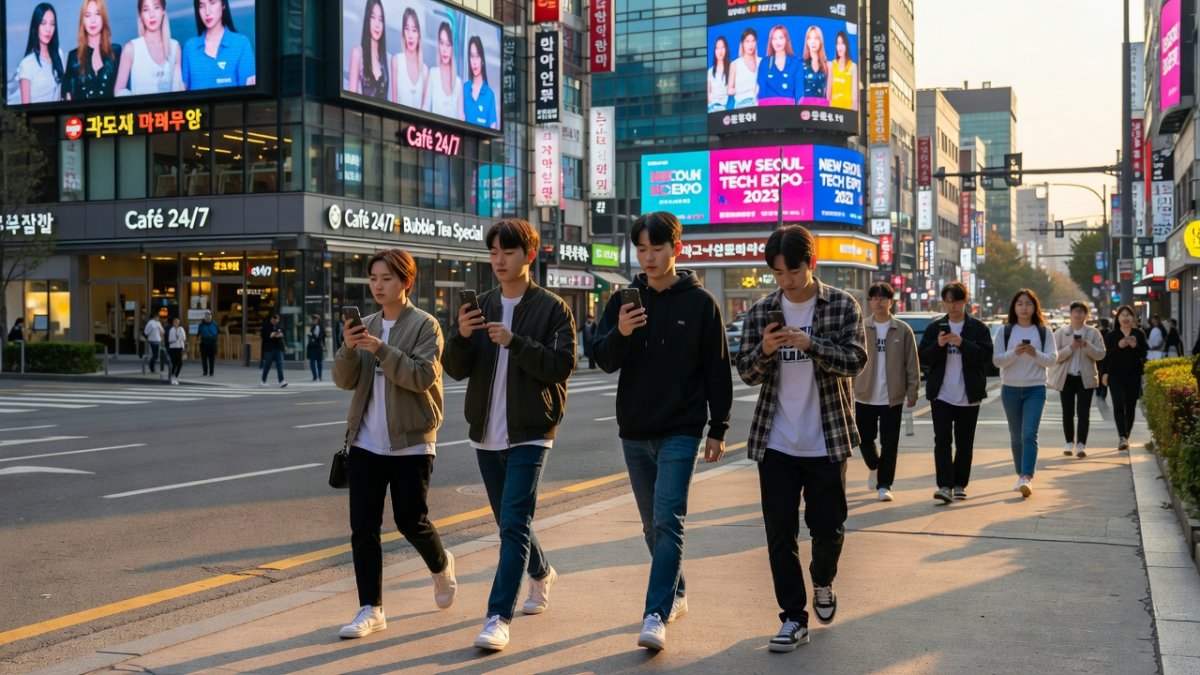
The Republic of Korea has entered what might accurately be termed its "influencer era," a period defined by a striking paradox: a creator economy projected to generate $3.2 billion in revenue this year coexists with a youth labor market in its most protracted decline on record.
The Great Korean Creator Gold Rush: A Multi-Billion Dollar Economy Built on Precarious Foundations
Seoul, South Korea – August 15, 2026 — The numbers are staggering by any measure. StateGlobe's August 2026 analysis projects South Korea's creator economy revenue will reach $3.2 billion this year, with an estimated 2.8 million influencers active across platforms. Brands are expected to allocate approximately $1.1 billion to influencer marketing, drawn by an average engagement rate of 6.5% that far exceeds Western benchmarks. Evolvance Market Research offers an even more ambitious long-term projection, valuing the sector at USD 6.23 billion in 2025 and forecasting growth to approximately USD 37.94 billion by 2035, a compound annual growth rate of 19.8%. YouTube, TikTok, and Instagram collectively account for over 85% of influencer content in the Korean market, creating an ecosystem where global platforms and domestic players like Naver, Kakao, AfreecaTV, and the newer Chzzk compete for attention and advertising won.

This explosive growth, however, unfolds against a backdrop of deteriorating youth employment prospects. Statistics Korea's July 2026 data, reported by Aju Press on August 12, paints a sobering picture: youth employment (ages 15-29) fell for a 45th consecutive month, with employed youth dropping by 191,000 year-on-year to 3.44 million. The youth employment rate fell 1.6 percentage points to 44.2%, while youth unemployment surged 1.3 percentage points to 6.8%—the steepest increase since January 2021. Employment among people in their 20s fell by 204,000, a demographic exodus from traditional labor markets that increasingly looks toward the creator economy as an alternative path.
The NTS Tax Data: A Tale of Two Creator Economies
The National Tax Service's comprehensive income tax data, submitted to Rep. Park Sung-hoon of the People Power Party and reported by the Seoul Economic Daily on February 16, 2026, offers the most detailed portrait yet of who actually profits from Korea's creator boom. The 34,806 YouTubers who filed returns for 2024 represent a dramatic expansion from just 9,449 in 2020, reflecting both the sector's growth and the NTS's increasingly sophisticated tracking of "solo media content creator" as a registered occupation.
The aggregate figures appear healthy: combined revenue of 2.47 trillion won, averaging 71 million won (approximately $49,700) per creator, with average per-capita income rising 25.6% from 56.51 million won in 2020. But these averages conceal an extraordinary concentration of wealth at the top. The top 1%—just 348 creators—generated 450.1 billion won in combined revenue in 2023, averaging 1.29 billion won each (roughly $950,000), up approximately 70% from the 780.85 million won average in 2020. The top 10% (3,480 creators) earned 1.16 trillion won collectively, averaging 333 million won. At the opposite extreme, the bottom 50%—17,404 creators—shared 428.6 billion won, averaging just 24.63 million won (approximately $17,000), barely above Korea's minimum wage threshold for full-time work.
Demographic Divides: Who Earns What in the Creator Economy
The NTS data reveals fascinating demographic patterns that challenge conventional assumptions about the creator economy as a young person's game. Creators in their 30s—15,668 individuals—generated 1.25 trillion won in revenue, roughly half the industry total, averaging 79.6 million won per creator. This cohort, which came of age alongside the platform economy's rise, appears best positioned to monetize their content. Surprisingly, creators in their 40s posted the highest per-capita average at 86.75 million won, suggesting that professional experience and industry connections translate effectively into content creation success.
Creators aged 29 and under—12,096 individuals—averaged 54.35 million won, a respectable figure but one that masks significant variation. This younger cohort faces the most intense competition, particularly following the December 2025 martial law crisis, which catalyzed a proliferation of political YouTube channels. This surge intensified competition for revenue and sparked renewed debate over the taxation of creators, as political content often generates high engagement but raises questions about platform responsibility and content moderation.
The Kimpro Phenomenon: Winner-Take-Most Dynamics in Action
No discussion of Korea's creator economy would be complete without examining the extreme tail of the distribution: Kimpro (Kim Dong-jun), a shorts-first YouTuber whose channel logged approximately 77.53 billion views in 2025. Kimpro surpassed 100 million subscribers in April 2025, just two years and eight months after launch, and now commands approximately 129 million subscribers, placing him among the world's top YouTube channels. His trajectory, detailed in a Korea Herald interview on January 21, 2026, is instructive: a former performance planner and director of live shows who describes his move online as a "translation" of stagecraft into digital form.
Kimpro's success embodies the winner-take-most dynamics that define the platform economy. His rise from traditional entertainment to digital content creation demonstrates how performance skills, production values, and algorithmic literacy combine to create outsized returns. Yet his case also highlights the extreme volatility of the profession: the same algorithmic forces that propelled him to 129 million subscribers could, in theory, diminish his reach just as quickly. For every Kimpro, thousands of creators struggle to achieve sustainable income, a reality that the NTS data makes painfully clear.
Youth Unemployment and the Creator Economy: A Structural Paradox
The juxtaposition of creator economy growth with youth labor market decline is not coincidental; it reflects deep structural shifts in Korea's political economy. The July 2026 employment data shows manufacturing shedding 68,000 jobs (a 25th consecutive monthly decline), construction losing 57,000 (27th straight month), and professional, scientific, and technical services cutting 44,000 positions (8th consecutive monthly decline). These losses occurred even as semiconductor exports surged 179% and total exports jumped 62.8% to $98.89 billion—evidence that Korea's export-led growth model increasingly generates profits without commensurate job creation.
The demographic dimension is stark: employment among those 60 and older increased by 231,000, more than twice the economy's net job gain of 108,000. Non-wage employment (self-employed and unpaid family workers) increased by 119,000, suggesting that many Koreans are turning to precarious self-employment—including content creation—as traditional wage employment contracts. For young Koreans facing a 45th consecutive month of declining employment prospects, the creator economy offers an alluring alternative: the promise of autonomy, creative expression, and the possibility—however remote—of Kimpro-scale success.
Policy Implications: Taxation, Protection, and the Future of Work
The creator economy's growth has outpaced Korea's regulatory framework, creating urgent policy questions. The NTS's active collection of income data from creators represents a significant step toward formalizing the sector, but taxation without corresponding protections creates an incomplete policy response. Platform-worker protections and social safety net provisions for gig and creator income remain live debates in Seoul, with policymakers grappling with how to extend Korea's robust social insurance system to a workforce that exists outside traditional employment relationships.
The Ministry of Employment and Labor's decision to publish additional employment indicators for ages 15-34 from its September report reflects a revision to the Special Act on the Promotion of Youth Employment that expands the statutory definition of youth. This administrative change acknowledges what the labor market data already shows: the traditional 15-29 youth cohort no longer captures the full scope of young Koreans' employment challenges, particularly as many delay entry into stable careers while pursuing creator economy opportunities.
Looking Ahead: Regulation, Credentialism, and the Chaebol Question
Korea's creator economy sits at the intersection of several converging trends: the decline of traditional chaebol employment as a guaranteed path to middle-class stability, the erosion of educational credentialism as a reliable predictor of labor market success, and the rise of platform-mediated work as an alternative—if precarious—source of income. The policy challenge is to harness the creator economy's dynamism while mitigating its inequalities and extending social protections to its participants.
The coming months will be critical. The NTS's continued refinement of creator taxation, the Ministry of Employment and Labor's expanded youth employment metrics, and ongoing debates over platform worker protections will shape whether Korea's influencer era becomes a genuine alternative to traditional employment or merely a more visible form of precarious work. The December 2025 martial law crisis and its aftermath have already demonstrated how political content can reshape the creator landscape, raising questions about platform governance and content moderation that extend far beyond economic considerations.
For Korean society, which has long prioritized chaebol employment and educational credentialism as markers of success, the creator economy represents both an opportunity and a challenge. It offers young Koreans a path to economic participation that bypasses traditional gatekeepers, but it also exposes them to the full force of global platform capitalism without the protections that Korean labor law historically provided. The 2.8 million influencers projected to operate in Korea this year are not merely content creators; they are pioneers in a new form of work that will increasingly define the country's economic future. Whether Korea can build the institutional framework to support them—through taxation, social protection, and platform regulation—will determine whether the influencer era becomes a story of broad-based opportunity or one of deepening inequality.
By Prof. David Park, Staff Writer
This article was produced with AI-assisted research and reflects the reporting of the original KOREA NOW video.
What's Your Reaction?
 Like
0
Like
0
 Dislike
0
Dislike
0
 Love
0
Love
0
 Funny
0
Funny
0
 Wow
0
Wow
0
 Sad
0
Sad
0
 Angry
0
Angry
0

East Asia/Technology Correspondent at Global1.News. Seoul-based voice covering Korean politics, technology, business, and culture. Analyzes how technology and geopolitics intersect across East Asia.












Comments (0)