
Ben Gvir Boasts Detaining Palestinian Couple on Wedding Day
Ben Gvir boasts of detaining a Palestinian couple on their wedding day in the Naqab, part of a broader pattern of targeting Palestinian celebrations and communities under discriminatory policing.
In a recent Middle East Eye report, Israel's far-right National Security Minister Itamar Ben Gvir is seen boasting about the wedding-day detention of a Palestinian couple in the Naqab, a video he posted himself on X on Friday, August 14, 2026. The footage, which has circulated widely across social media, shows the minister celebrating the arrest of a bride and groom who were pulled from their wedding celebrations and taken for interrogation while still wearing their wedding clothes. The stated justification from Ben Gvir: the couple allegedly caused "traffic jams" during their festivities.
Ben Gvir Boasts of Detaining Palestinian Couple on Wedding Day
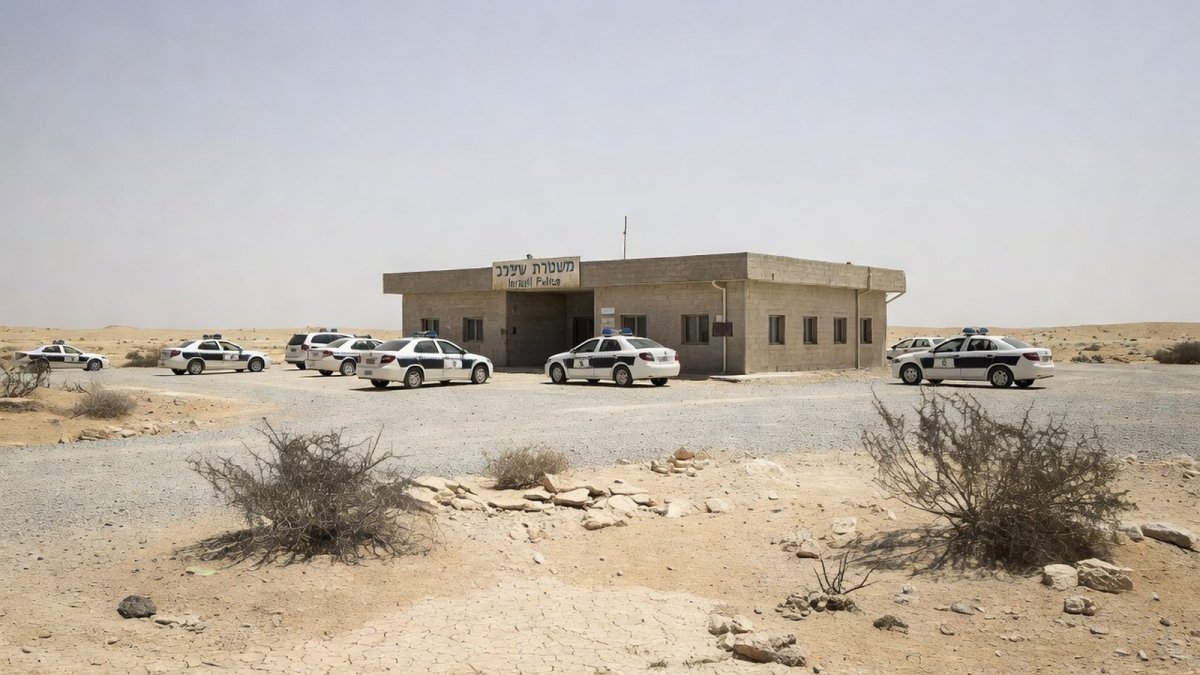
Naqab, 1948-Occupied Palestine - August 15, 2026 - The arrest of the newlywed couple in the Naqab (Negev) region, home to roughly 300,000 Palestinian Bedouin citizens of Israel, marks yet another escalation in what critics describe as a systematic campaign to humiliate and intimidate Palestinian communities through punitive policing. Ben Gvir, who leads the far-right Otzma Yehudit party and holds authority over the Israeli police, taunted the couple in his Hebrew caption, mocking wedding "crowns" who think they can drive however they want on Naqab roads. The detention came during a week of intense Israeli operations across Palestinian communities, from the West Bank to the Naqab, raising urgent questions about the politicization of law enforcement and the erosion of basic rights for Palestinian citizens of Israel.

A Cherished Tradition Turned Into a Crime Scene
Wedding convoys are a cherished Palestinian cultural tradition - large processions of decorated cars, music, and celebration that wind through villages and towns, often accompanied by honking horns and joyful ululations. For Palestinian Bedouin communities in the Naqab, these processions are not merely festive; they are expressions of identity, family honor, and communal solidarity in a region where the state has long sought to control movement and space. The decision to detain a bride and groom on their wedding day over an alleged traffic complaint is, in the words of human rights advocates, a form of collective humiliation intended to send a message far beyond the couple themselves.
The newlyweds were taken by Israeli police for interrogation while still in their wedding attire, a scene that has drawn widespread condemnation. Critics argue that using a wedding-day traffic complaint to detain and interrogate a couple is not about road safety but about asserting dominance over Palestinian communal life. The Naqab has been a focus of intensive police operations, home demolitions, and what critics call a campaign to "restore governance" by targeting Palestinian communities. For the roughly 300,000 Palestinian Bedouin citizens of Israel, many of whom live in villages the state does not recognize, such operations are a daily reality of displacement and dispossession.
A Week of Escalation Across Palestinian Communities
The wedding-day detention did not occur in isolation. It came during a week of intense Israeli operations across Palestinian communities, underscoring a coordinated approach to suppressing Palestinian life and celebration. Separately, Israeli troops raided a wedding hall in the town of al-Eizariya in the central West Bank, east of occupied Jerusalem, assaulting people inside and arresting several attendees including the groom. That raid, captured on video and circulated widely, bore a striking resemblance to the Naqab detention: a celebration of Palestinian joy turned into a scene of state violence.
In Qusra, a village near Nablus in the northern West Bank, Israeli settlers have besieged three Palestinian families in the Ras al-Ain area for six days, blocking the roads to their homes since Sunday, August 9. On Friday, Palestinian, foreign and Israeli activists reached the besieged homes, but the Israeli military barred them from entering, declaring the area a "closed military zone." The activists were able to distribute food, water and basic necessities, but the siege continues. The Israeli military has deployed hundreds of soldiers to Qusra in recent days under the pretext of dismantling a settlement outpost established by settlers near the town. Palestinian authorities have cautioned that the siege may serve as a mechanism to displace inhabitants and seize their properties.
Ben Gvir's Long Record of Anti-Palestinian Policies
Itamar Ben Gvir's celebration of the wedding-day detention is consistent with a long record of anti-Palestinian rhetoric and policies. As leader of Otzma Yehudit and Israel's National Security Minister, Ben Gvir has advocated the death penalty for Palestinian prisoners - a bill allowing this passed its first reading in the Knesset in July 2026, which Ben Gvir celebrated. He has worn a noose pendant in parliament, proposed "crocodile moat" prisons for Palestinian detainees, and described himself as "the landlord" of Palestinian areas, including during a November 2025 tour of the Bedouin village of Lakiya in the Negev amid a crime wave.
His presence in the Naqab has been met with resistance. In December 2025, Palestinian Bedouins in the Negev forced Ben Gvir to retreat under a hail of stones during a police raid. In January 2026, police operations in the Bedouin village of Tarabin al-Sana in the Negev turned violent, with +972 Magazine reporting that Israeli police shot and killed a young man during what officials described as a crackdown on crime. Israeli Prime Minister Benjamin Netanyahu declared the Negev "out of control" while touring the south, a framing that critics say justifies further repression of Palestinian communities.
Police Accountability and the Politicization of Law Enforcement
The wedding-day detention raises serious questions about police accountability under Ben Gvir's leadership. The New York Times reported on August 14, 2026, that as the army fails to protect Palestinians from settler violence, Israeli leaders sympathize with settlers. Moshe Karadi, who commanded the Israeli police from 2004 to 2007, recalled police taking aggressive action against settlers in the past but said it was unclear that certain police commanders could be counted upon now, because of Ben Gvir's influence over them. This influence has transformed the police from a law enforcement body into a political tool, used to target Palestinian communities while shielding settler violence.
Human rights organizations have long documented discriminatory policing against Palestinian citizens of Israel, particularly Bedouin communities in the Naqab, including home demolitions, forced displacement, and punitive enforcement. The wedding-day detention fits a broader pattern documented over the past year: Israeli security forces targeting Palestinian communal celebrations - weddings, funerals - as enforcement sites. This is not about traffic violations; it is about asserting control over Palestinian public life and sending a message that no space, not even a wedding, is safe from state intrusion.
Analysis and Implications: The Intertwining of Occupation and Discriminatory Policing
The episode in the Naqab cannot be separated from the broader context of Israeli occupation and the systematic denial of Palestinian rights. International legal experts have argued that such practices violate rights to freedom of movement, family life, and equal protection under the law. The detention of a bride and groom on their wedding day is a stark illustration of how Israeli policies target the most intimate and cherished moments of Palestinian life, from the Naqab to the West Bank.
The timing of the detention - during a week of raids, sieges, and settler violence - suggests a coordinated strategy to suppress Palestinian communities across all areas under Israeli control. The siege in Qusra, the raid in al-Eizariya, and the detention in the Naqab are not isolated incidents; they are manifestations of a policy that treats Palestinian life as expendable and Palestinian joy as a threat. Ben Gvir's boastful video is not merely a display of cruelty; it is a declaration of intent, signaling that the state will use any pretext to humiliate and intimidate.
For the people on the ground, the implications are profound. Palestinian Bedouin communities in the Naqab already live under the constant threat of home demolitions and displacement. The wedding-day detention adds a new layer of fear: that even the most personal celebrations can be interrupted by police, that a traffic complaint can become a pretext for interrogation, that the state sees their joy as a crime. This is not governance; it is collective punishment, designed to break the spirit of a community that has endured decades of dispossession.
As the international community watches, the question is whether there will be any accountability for such actions. The New York Times report on police accountability suggests that even former police commanders are concerned about the direction of law enforcement under Ben Gvir. But for the Palestinian couple detained on their wedding day, and for the hundreds of thousands of Palestinian citizens of Israel who live under this regime, the immediate reality is one of fear and uncertainty. Their wedding day, meant to be a celebration of love and community, became another reminder that under this government, being Palestinian is itself a crime.
By Fatima Al-Rashid, Staff Writer
This article was produced with AI-assisted research and editorial support. Reporting is based on sources cited in the article.
What's Your Reaction?
 Like
0
Like
0
 Dislike
0
Dislike
0
 Love
0
Love
0
 Funny
0
Funny
0
 Wow
0
Wow
0
 Sad
0
Sad
0
 Angry
0
Angry
0

Gulf/MENA Correspondent at Global1.News. Based in Doha, covering Gulf politics, energy markets, diplomacy, and development across the Middle East and North Africa. Tracks the economic transformation of the Gulf states.















Comments (0)