
Supreme Court Revives Trump's SAVE Voter Database Weeks Before the Midterms
The Supreme Court stayed a lower-court order that had shut down the government's expanded SAVE citizenship-verification database, a 6-3 unsigned ruling issued 39 days before the midterms. A federal judge had found the program unlawful; the Court said the claims likely lack merit.
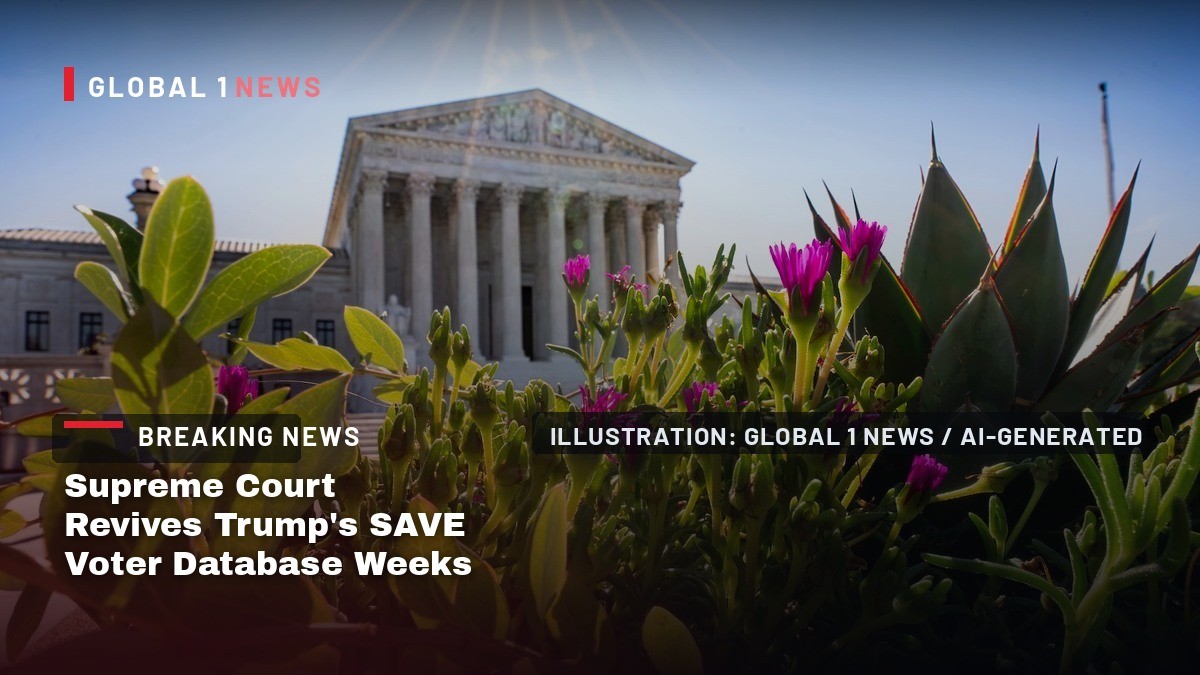
The Supreme Court on Friday handed the Trump administration a midterm-season victory, lifting a lower-court order that had shut down the government's expanded SAVE citizenship-verification database. The unsigned, seven-page decision in Department of Homeland Security v. League of Women Voters freezes the June 22 ruling out of the U.S. District Court for the District of Columbia. The vote was 6-3, with the conservative justices in the majority.
Supreme Court Revives Trump's SAVE Voter Database Weeks Before the Midterms
Washington, D.C. - 26 September 2026 — The ruling lands 39 days before the November 3 election, with control of Congress at stake.
The Ruling
The Supreme Court granted the federal government's emergency application for a stay in No. 26A308, Department of Homeland Security v. League of Women Voters, on Friday, September 25, 2026. The application was presented to the Chief Justice, who referred it to the full Court. The opinion is unsigned — a per curiam — and runs seven pages, SCOTUSblog reported, noting it arrived just 39 days before the November 3 election. The stay freezes the June 22, 2026 order of the U.S. District Court for the District of Columbia in case No. 25-cv-3501. It holds while the appeal moves to the U.S. Court of Appeals for the D.C. Circuit and while any petition for a writ of certiorari is resolved. If certiorari is denied, the stay ends automatically; if it is granted, the stay ends when the judgment is sent down. Reuters noted control of Congress is at stake in November, and that the Constitution gives individual states the primary authority to run and administer elections.
What the Majority Decided
The Court found the plaintiff organizations likely have standing. One member, J. Doe 4, is registered to vote in Louisiana, a state that used the modified SAVE program. She showed that Social Security records do not accurately reflect that she is now a naturalized citizen, and that she likely would have been required to provide additional proof of citizenship. The Court called that a cognizable injury. On the merits, though, the Court said the claims "likely lack merit." Its reasoning: Congress in 1996, in the Illegal Immigration Reform and Immigrant Responsibility Act, "separately and expressly authorized DHS to request and receive information relating to citizenship and immigration status from other agencies, including SSA." The provision, 8 U.S.C. section 1373, carries two "notwithstanding" clauses. Section 1373(c) requires DHS to answer state and local inquiries "seeking to verify or ascertain the citizenship or immigration status of any individual." The Court read that as contemplating "an information-sharing regime like the modified SAVE program."
The Dissent
Justice Ketanji Brown Jackson dissented, joined by Justices Sonia Sotomayor and Elena Kagan. "The harm caused by burdening or disenfranchising even a few lawful voters outweighs the nonexistent harm that the Government experiences when it is prevented from taking an action that it likely lacks the authority to take," she wrote. Jackson said the Court was "rendering questionable interim rulings about two statutory provisions it has never before interpreted" without full briefing or oral argument, and that it "focuses only on the harms the Government will purportedly suffer absent a stay, disregarding the harms that the modified SAVE system has caused, and will likely continue to cause, to lawful voters." Her image for the majority's balancing: "the judicial equivalent of expecting a seesaw with weight applied on only one side to work properly." She noted the District Court found damage already done in Texas, where one member "had her voter registration revoked without her knowledge" and two others "had to provide proof of citizenship to maintain registered voter status."
What SAVE Is, and What Changed
SAVE — Systematic Alien Verification for Entitlements — was created in 1986 under the Immigration Reform and Control Act to help states check eligibility for federally funded benefits such as Medicaid and food stamps. States have used it for voter verification since 2005. Until 2025 it had no access to natural-born citizens' records and reached only immigration and naturalization files inside DHS systems; users could run only individual searches, usually by alien-identification number. In March 2025, President Donald Trump signed Executive Order 14248, "Preserving and Protecting the Integrity of American Elections," directing DHS to build systems letting state and local authorities verify the citizenship of registered voters and applicants, and directing the Social Security Administration to open its records for that purpose. Two months later, DHS launched a modified SAVE. It added checks against Social Security Administration records, including numbers held in a database called NUMIDENT, and it allowed bulk searches of many people at once. If SAVE cannot confirm citizenship, the agency must ask the person for proof of citizenship to register or to stay registered.
The Errors Already on the Record
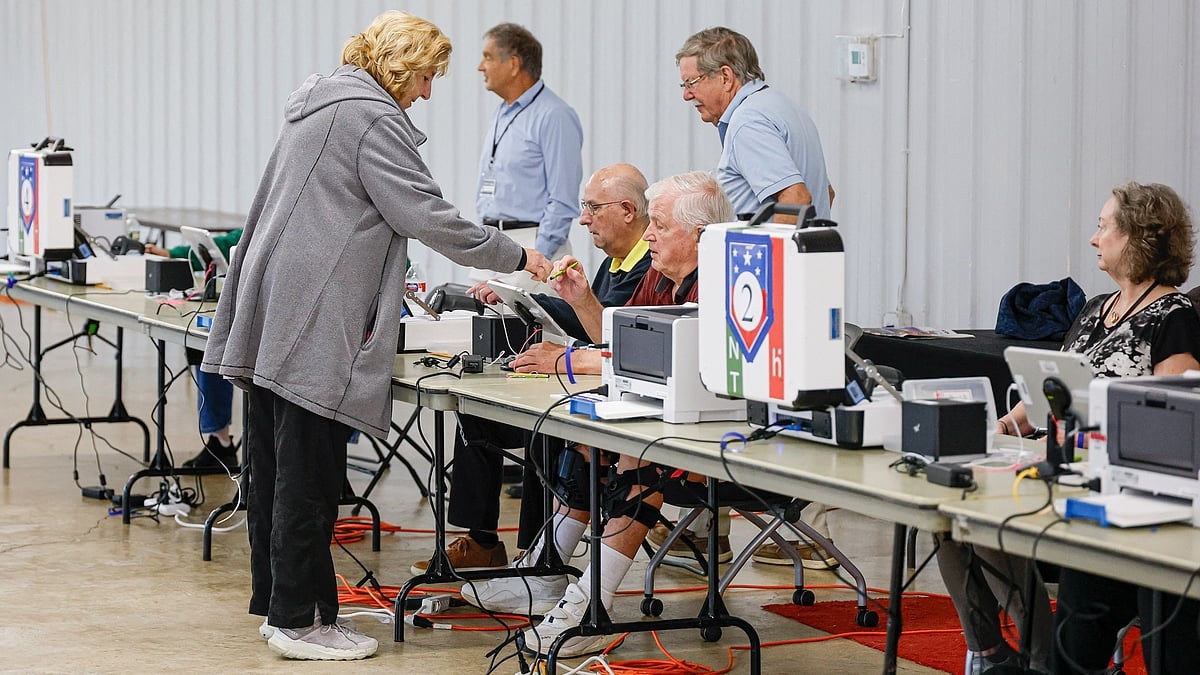
U.S. Solicitor General D. John Sauer told the Supreme Court in a September 8 filing that since May 2025 the updated SAVE has verified more than 65 million voters across 26 states and flagged 28,635 as potential noncitizens. Texas ran its entire 18 million-voter list through the system and flagged 2,724 people; county officials gave them 30 days to prove citizenship, then removed anyone who did not respond. A September 15 statement from the Texas Secretary of State said about 20 percent of those 2,724 were later found to be citizens and reinstated, and 117 cases — 4.2 percent — were referred for possible noncitizen voting. In Travis County, a local election official put the false-match rate at 25 percent; the Associated Press reports the county audited 97 flagged voters and found 10 to 21 percent were citizens. Reuters reports at least 81 percent of the system's responses in St. Louis County, Missouri, were erroneous. The overall error rate is not publicly known; DHS and the Justice Department did not supply it when asked.
Why the Midterms May Barely Notice
Federal law blocks states from systematically removing voters from the rolls inside 90 days of a federal election. The provision at issue, the National Voter Registration Act, 52 U.S.C. section 20507(c)(2)(A), requires a state to complete any program designed to systematically remove ineligible voters no later than 90 days before a primary or general election. For November 3, 2026, that date was August 5, 2026. The Court acknowledged as much: "that moratorium limits the potential impact of staying the District Court's order in this case." The Trump administration argues the rule should not cover removing noncitizens who were improperly registered, and says the system should at least remain usable for individual removal decisions before an election. David Becker of the Center for Election Innovation and Research told the Associated Press the immediate impact is likely limited. Rick Hasen, a UCLA law professor, wrote that "both the majority and dissent agree that this case is likely to have limited impact on the midterms."
The Judge's Finding
The Court is staying an order, not endorsing a program's design. U.S. District Judge Sparkle Sooknanan, a Biden appointee, found in June that the modified system violated the Social Security Act, the Privacy Act and the Administrative Procedure Act, and was haphazardly assembled with unreliable citizenship data. "All in all, the federal government has knowingly trampled on the privacy rights of American citizens in a manner that threatens the sacred right to vote," she wrote. "This court cannot stand idly by while that happens." Reuters reports she also noted that states "have partnered with the federal government to access the database and are actively removing United States citizens from voter rolls based on inaccurate information." The League of Women Voters and the Electronic Privacy Information Center told the justices Congress never authorized a "master database of U.S. Citizens." "Disregarding these laws, the government has recklessly created an error-laden master citizenship database that endangers millions of Americans' privacy and voting rights," they wrote. The groups say the government has never released the system's error rate.
The Question the Court Did Not Answer
Friday's order settles less than it appears to. The Court said it will take up the scope of that 90-day rule in Republican National Committee v. Mi Familia Vota, No. 25-1017, which asks whether the National Voter Registration Act bars states from running programs inside 90 days of a federal election to cancel the registrations of voters who are not U.S. citizens. The parties in this case did not raise or brief that question, the Court said, and it did not need to decide it here. Separately, NPR reports the administration is building state-by-state lists of adult U.S. citizens under a March executive order that also directs the attorney general to prioritize investigating and prosecuting election officials who give ballots to ineligible voters. That order said the lists were to be finished 60 days before an election — a deadline that has passed — and federal officials have indicated the work continues, though it faces its own legal challenge.
The Wider Fight Over American Elections
This ruling lands in the middle of a much wider contest. Votebeat reports federal courts have dismissed 25 Justice Department lawsuits seeking states' unredacted voter rolls, with the government yet to win one. Votebeat also reports the president has failed to move the SAVE Act or the SAVE America Act through Congress — bills that would have required proof of citizenship to register, and which, despite their names, have nothing to do with the DHS database. Earlier in September, Votebeat reports, the Supreme Court said proposed rules that would have let the Postal Service restrict mail-ballot delivery could not take effect for this election. The Associated Press reports DHS launched its own investigation in August to hunt for noncitizen voters on state rolls, according to a federal whistleblower statement that called the effort rushed, error-filled and potentially a violation of state laws; DHS says the work is being done "diligently and professionally." Ballotpedia News counts 28 states registered to use SAVE for voter list maintenance, 22 of them with Republican trifectas.
The Reaction, and What Comes Next
DHS General Counsel James Percival called the decision "a victory for election integrity." On social media, Reuters reports, he wrote: "Yes, you read that right. We had to file an emergency petition in the Supreme Court just so we could use government data to help states stop noncitizens from illegally voting." Citizens for Responsibility and Ethics in Washington, which represents the plaintiffs, called the ruling "profoundly disappointing," saying it puts Americans "at risk of being unlawfully targeted by the administration's unreliable voter purge database weeks before the midterm elections." Next comes the D.C. Circuit, which on September 4 declined 2-1 to halt Sooknanan's order, with Chief Judge Srinivasan and Judge Wilkins in the majority and Judge Katsas dissenting. Because of separate Florida litigation, the administration has kept using modified SAVE in Florida, Iowa, Indiana and Ohio while the appeal proceeds.
By Jessica Ali, Staff Writer
This article was produced with AI-assisted research and editorial support. Sources: NBC News, CBS News, Reuters, The Associated Press, NPR, Votebeat, Ballotpedia News, SCOTUSblog, the U.S. Department of Homeland Security, the Supreme Court opinion in No. 26A308, and The Texas Tribune.
What's Your Reaction?
 Like
0
Like
0
 Dislike
0
Dislike
0
 Love
0
Love
0
 Funny
0
Funny
0
 Wow
0
Wow
0
 Sad
0
Sad
0
 Angry
0
Angry
0

Editor-in-Chief at Global1.News. Atlanta-based journalist who cuts through the BS and tells it like it is. Lead anchor, host, and the voice you hear when the spin stops and the truth starts.














Comments (0)