
Cambodian Authorities Investigating Scamming Sites Linked to Sanctioned Tycoons, Senior Official Says
In September 2026, the Cambodian government’s anti‑scam campaign entered a critical phase as senior minister Chhay Sinarith publicly acknowledged that compounds linked to two sanctioned tycoons were under investigation.
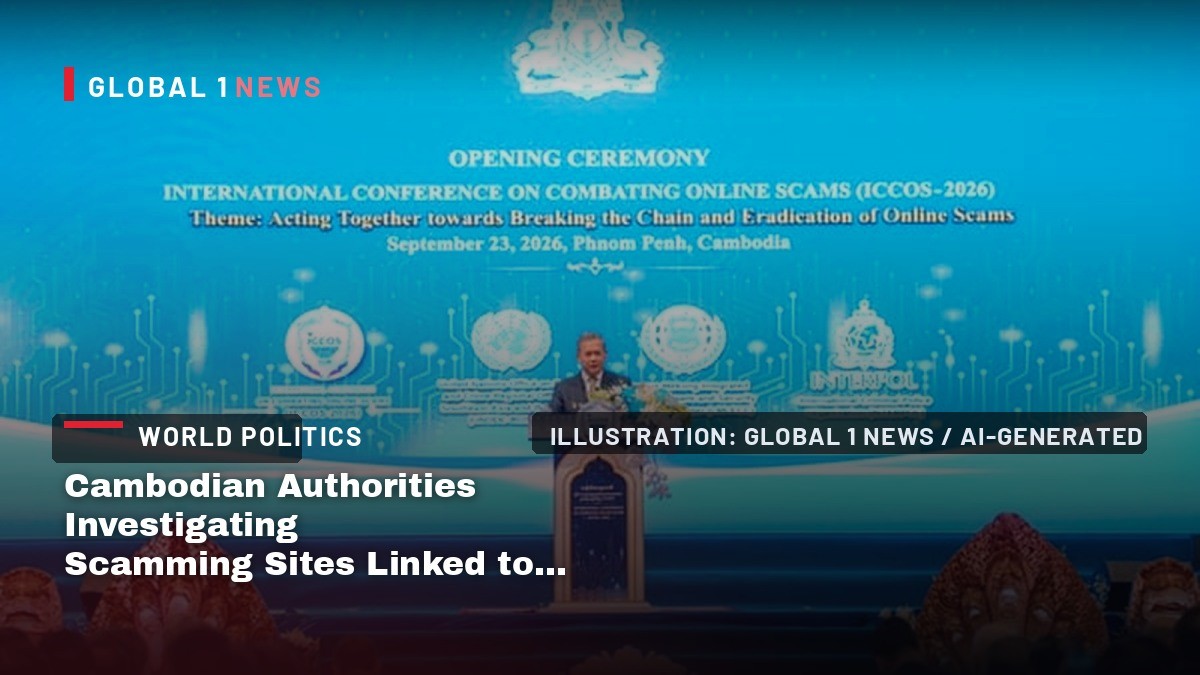
In September 2026, the Cambodian government’s anti‑scam campaign entered a critical phase as senior minister Chhay Sinarith publicly acknowledged that compounds linked to two sanctioned tycoons were under investigation. This admission, made during the concluding day of the International Conference on Combating Online Scams, marks the first official recognition that individuals with deep political and economic ties to the ruling Cambodian People’s Party are subject to scrutiny. The development must be understood against the backdrop of a policy trajectory that began with a 2025 anti‑scam initiative, itself a response to mounting pressure from the United States, China, and multilateral bodies such as Interpol and the U.N. Office on Drugs and Crime.
Context of the 2025 Anti‑Scam Initiative
The 2025 campaign was launched after a series of high‑profile reports highlighted the proliferation of industrial‑scale scam compounds across Cambodia’s western provinces. Foreign governments, notably the United States, had signaled that the lack of enforcement threatened regional stability and the integrity of digital finance markets. In response, the Cambodian Ministry of Foreign Affairs framed external criticism as “politically motivated,” a stance reiterated during diplomatic briefings in 2024 and 2025. The anti‑scam drive therefore combined genuine law‑enforcement objectives with a strategic effort to preserve national sovereignty and mitigate reputational damage.
Key to the campaign’s design was the establishment of an ad‑hoc Commission for Combating Online Scams, headed by Senior Minister Chhay Sinarith. The commission’s mandate, as outlined in internal briefing documents, includes the identification of suspect compounds, the coordination of investigations with foreign law‑enforcement partners, and the assessment of individual complicity among property owners. The recent conference, co‑sponsored by Interpol, the U.N. Office on Drugs and Crime, and China’s Lancang Mekong Cooperation mechanism, served both as a platform for technical exchange and as a diplomatic showcase of Cambodia’s commitment to curbing cyber‑crime.
Sanctioned Tycoons and Their Political Footprint
Ly Yong Phat and Kok An occupy a distinctive niche at the intersection of business, politics, and illicit finance. Both have long served as senators for the Cambodian People’s Party and were described as “important allies and financial buttresses” of former Prime Minister Hun Sen during his 38‑year tenure. After Hun Manet assumed the premiership in 2023, the two tycoons retained substantial influence, overseeing corporate empires concentrated in the western provinces of Koh Kong and Banteay Meanchey. Their prominence is not merely economic; it is also political, as they have historically provided campaign financing and logistical support to the ruling party.
In 2024, the U.S. Treasury Department sanctioned Ly Yong Phat for “serious human rights abuse” linked to forced‑labour conditions in online scam centers. Kok An was added to the Treasury’s Specially Designated Nationals list in April 2026, with the Treasury alleging that he leveraged “political connections” to shield a network of scam operations that “stolen millions of dollars from U.S. victims.” Both designations underscore the convergence of human‑rights concerns and financial crime in the Cambodian scam ecosystem.
Investigative Claims Made at the Conference
During his interview with Nikkei Asia, Senior Minister Sinarith affirmed that “investigations were ongoing at all suspect compounds” associated with the two tycoons. He emphasized that investigators were still “determining the complicity of individuals linked to locations allegedly used for online scams.” This language signals a procedural stage rather than a definitive finding, suggesting that the commission is gathering evidence before proceeding to formal charges or asset seizures.
The significance of Sinarith’s remarks lies in their departure from prior official silence on the involvement of high‑ranking individuals. As noted by Nikkei’s correspondent Ananth Baliga, this is “the first time the government has admitted such well‑connected people are associated with investigations into scam operations.” The admission may be interpreted as an attempt to address domestic and international criticism that the crackdown has been a “reputation‑management exercise” rather than a substantive effort to dismantle entrenched patronage networks.
International Reactions and Regional Dynamics
Thailand’s law‑enforcement agencies have also opened inquiries into Ly Yong Phat and Kok An, focusing on alleged money‑laundering links and cross‑border scam activities. Thai officials, however, have denied any direct connection between the tycoons and criminal syndicates, framing their investigations as part of broader regional cooperation against cyber‑crime. The Cambodian government, in turn, has accused Thai authorities of “weaponizing the investigations” amid the 2024 border conflict, suggesting that geopolitical tensions may be influencing the narrative surrounding the tycoons.
China’s involvement in the anti‑scam conference, through the Lancang Mekong Cooperation mechanism, reflects Beijing’s interest in stabilizing the Mekong corridor and curbing illicit flows that could destabilize its own border regions. While China has not publicly commented on the sanctions against Ly Yong Phat or Kok An, its participation in the conference underscores a shared regional priority: the containment of digital‑asset fraud that threatens both economic development and social order.
Domestic Perceptions of the Crackdown
Critics within Cambodia argue that the anti‑scam drive remains superficial, pointing to the continued protection of powerful figures. The Ministry of Foreign Affairs’ 2024 statement that U.S. sanctions were “politically motivated” illustrates an official narrative that frames external pressure as interference, thereby deflecting accountability. Moreover, observers note that while “dozens of scam compounds” have been shuttered and “tens of thousands of foreign nationals” deported, there has been no substantive move to hold the two tycoons accountable, reinforcing the perception of a “reputation‑management exercise.”
These concerns are amplified by the historical pattern of elite impunity in Cambodia’s political economy. Decades of precedent suggest that investigations involving well‑connected individuals often lose momentum once international attention wanes. The current investigation’s trajectory, therefore, is likely to be judged not only by its procedural rigor but also by the political will to pursue it to a conclusion that could alter the patron‑client relationships underpinning the country’s economic model.
Prospects for Policy Evolution and Regional Implications
Looking ahead, the outcome of the investigations into Ly Yong Phat and Kok An will serve as a barometer for Cambodia’s capacity to align domestic enforcement with international expectations. If the commission proceeds to substantive findings and potential prosecutions, it could signal a shift toward greater accountability, potentially easing U.S. and EU concerns and opening avenues for renewed economic cooperation. Conversely, a premature closure of the inquiries would likely reinforce the view that the anti‑scam campaign is primarily a diplomatic façade.
From a broader geopolitical perspective, the case illustrates the complex interplay between national sovereignty, regional security cooperation, and the transnational nature of digital fraud. As ASEAN states grapple with the rise of cyber‑crime, the Cambodian experience may inform future multilateral frameworks, particularly regarding the treatment of politically exposed persons linked to illicit finance. The coming months will thus be pivotal in determining whether Cambodia’s anti‑scam narrative evolves from a defensive posture to a proactive, reform‑oriented strategy that integrates human‑rights considerations, financial integrity, and regional stability.
This article was produced with AI-assisted research and editorial support. Reporting is based on the source material cited below. Sources: The Diplomat; thediplomat.com; Global1.News (26 September 2026).
By Prof. David Park, Staff Writer
What's Your Reaction?
 Like
0
Like
0
 Dislike
0
Dislike
0
 Love
0
Love
0
 Funny
0
Funny
0
 Wow
0
Wow
0
 Sad
0
Sad
0
 Angry
0
Angry
0

East Asia/Technology Correspondent at Global1.News. Seoul-based voice covering Korean politics, technology, business, and culture. Analyzes how technology and geopolitics intersect across East Asia.













Comments (0)