
Desperate to clear toxic haze, Indonesia douses its skies with dry ice
Indonesia is confronting the most severe wildfire season in a decade, with an El Niño‑driven drought turning forest and peatland fires into a persistent haze that blankets the region.
Indonesia is confronting the most severe wildfire season in a decade, with an El Niño‑driven drought turning forest and peatland fires into a persistent haze that blankets the region. In response, authorities have turned to experimental weather‑modification techniques, most recently a dry‑ice dispersal trial over South Sumatra. This article examines the scale of the crisis, the scientific rationale behind the new approach, and the broader political and economic context driving both the fires and the urgent mitigation efforts.
Scope of the current wildfire emergency
Independent monitoring by the Nusantara Atlas platform records more than one million active wildfire hotspots across Indonesia this year. These fires have already consumed almost 900,000 hectares of land, a figure that underscores the enormity of the blaze‑driven emissions and the difficulty of containment.
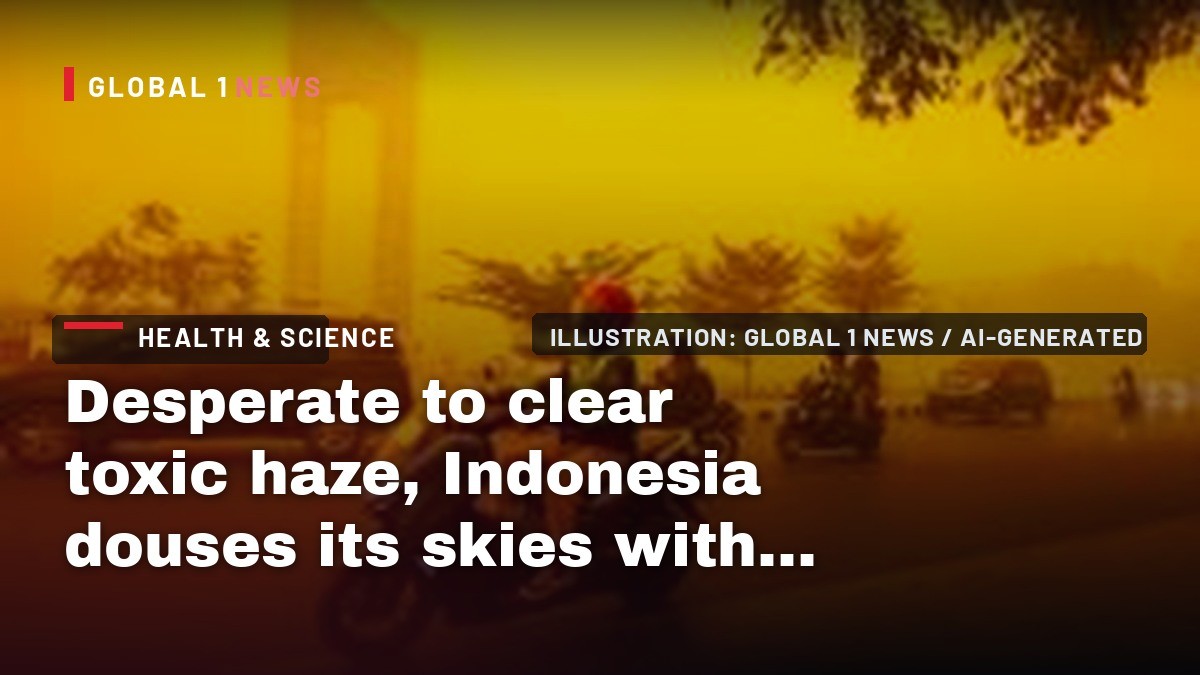
Beyond the immediate loss of forest and peat, the fires generate a toxic haze that has spread far beyond the islands. Air quality in major Indonesian cities has deteriorated to a dusty amber hue, while pollutants have drifted across borders, reaching Singapore and Malaysia and pushing air‑quality indices in those nations to unhealthy levels. The cross‑border impact has heightened diplomatic sensitivity, prompting coordinated cloud‑seeding operations between Indonesia and Malaysia.
Traditional weather‑modification efforts
For weeks, Indonesian and Malaysian agencies have employed cloud seeding, a technique that introduces substances such as silver iodide into clouds to accelerate the formation of ice crystals and induce rainfall. The goal is to generate rain that can dampen fire‑prone vegetation and improve visibility for firefighting aircraft.
These cloud‑seeding missions have been conducted not only over Indonesia’s most affected provinces but also in Malaysia’s capital Kuala Lumpur and the city of Johor Bahru, where local authorities have launched their own operations to mitigate the haze that has settled over their urban centers.
The dry‑ice trial: a new tactical layer
On Thursday, the Indonesian government launched an experimental dry‑ice dispersal over South Sumatra, targeting the city of Palembang and surrounding districts. Unlike cloud seeding, which seeks to stimulate precipitation, the dry‑ice operation aims to “break down” haze particles in the lower atmosphere so that they can rise upward, according to Dudung Abdurachman, the coordinating minister for political and security affairs.
The trial involved the release of 1.5 tons of solid carbon dioxide from aircraft. If deemed successful, authorities plan to replicate the method in other haze‑critical zones, notably Central Kalimantan and its environs, where new cloud‑seeding missions are also scheduled for Thursday and Friday.
Ground firefighting amid visibility challenges
While aerial weather‑modification efforts are underway, ground crews continue to battle the flames directly. Dozens of helicopters have been deployed to drop water and fire retardants, though their operations are frequently hampered by the dense haze that reduces visibility and complicates navigation.
These on‑the‑ground actions are complemented by a broader push from President Prabowo Subianto, who has urged all relevant agencies to intensify fire‑suppression measures and mitigate the health impacts of the smog. The president’s directive reflects both a domestic urgency to protect public health and an international imperative to maintain regional air‑quality standards.
Legal and corporate accountability
Public frustration is largely directed at agricultural enterprises that employ slash‑and‑burn techniques to clear large tracts of land cheaply. In response, Indonesian police have identified more than 200 individuals and nine companies as suspects linked to the fires. This move signals a willingness to pursue legal accountability, though the scale of the crisis suggests that enforcement alone may not suffice to curb the practice.
The identification of suspects also highlights the complex interplay between land‑use economics, regulatory enforcement, and environmental stewardship in Indonesia. Many of the affected regions are economically dependent on agriculture, yet the environmental costs of uncontrolled burning are now spilling over into neighboring nations, creating diplomatic pressure for stricter controls.
Regional cooperation and diplomatic dimensions
Air‑quality concerns have prompted Indonesia to grant Malaysian agencies permission to conduct cloud‑seeding operations within its airspace along shared borders. This cooperation reflects a pragmatic approach to a transboundary problem, acknowledging that haze mitigation requires coordinated action across national lines.
Nevertheless, the reliance on weather‑modification underscores the limited capacity of existing fire‑management infrastructure. The need for joint operations may also influence future diplomatic negotiations on broader issues such as cross‑border pollution standards and shared forest‑conservation initiatives.
Outlook and potential implications
The dry‑ice trial represents a novel, albeit experimental, addition to Indonesia’s haze‑mitigation toolkit. Its success could pave the way for larger‑scale deployments, potentially altering the strategic landscape of fire management in the archipelago. Conversely, the trial’s limited scope—targeting a single city and surrounding area—means that broader efficacy remains to be demonstrated.
In the longer term, the crisis underscores the need for integrated solutions that combine immediate firefighting, weather‑modification, stricter enforcement against illegal burning, and sustainable land‑use policies. As the El Niño pattern continues to intensify drought conditions, Indonesia’s capacity to address future fire seasons will likely hinge on how effectively it can blend these approaches while navigating the economic realities of its agricultural sector and the diplomatic expectations of its neighbours.
This article was produced with AI-assisted research and editorial support. Reporting is based on the source material cited below. Sources: BBC News Asia; bbc.co.uk; Global1.News (15 October 2026).
By Kenji Tanaka, Staff Writer
What's Your Reaction?
 Like
0
Like
0
 Dislike
0
Dislike
0
 Love
0
Love
0
 Funny
0
Funny
0
 Wow
0
Wow
0
 Sad
0
Sad
0
 Angry
0
Angry
0

Japan Correspondent at Global1.News. Tokyo-based voice covering Japanese politics, technology, economy, and culture. Tracks the intersection of tradition and innovation in one of the world's most dynamic societies.













Comments (0)