
Suspension Lifted: Ramaphosa Reinstates South Africa's Police Chief Masemola
President Cyril Ramaphosa has lifted the precautionary suspension of National Police Commissioner General Fannie Masemola, who resumes his full duties on 19 October 2026 after the NPA withdrew PFMA charges over a disputed R228 million to R360 million SAPS health-services tender.
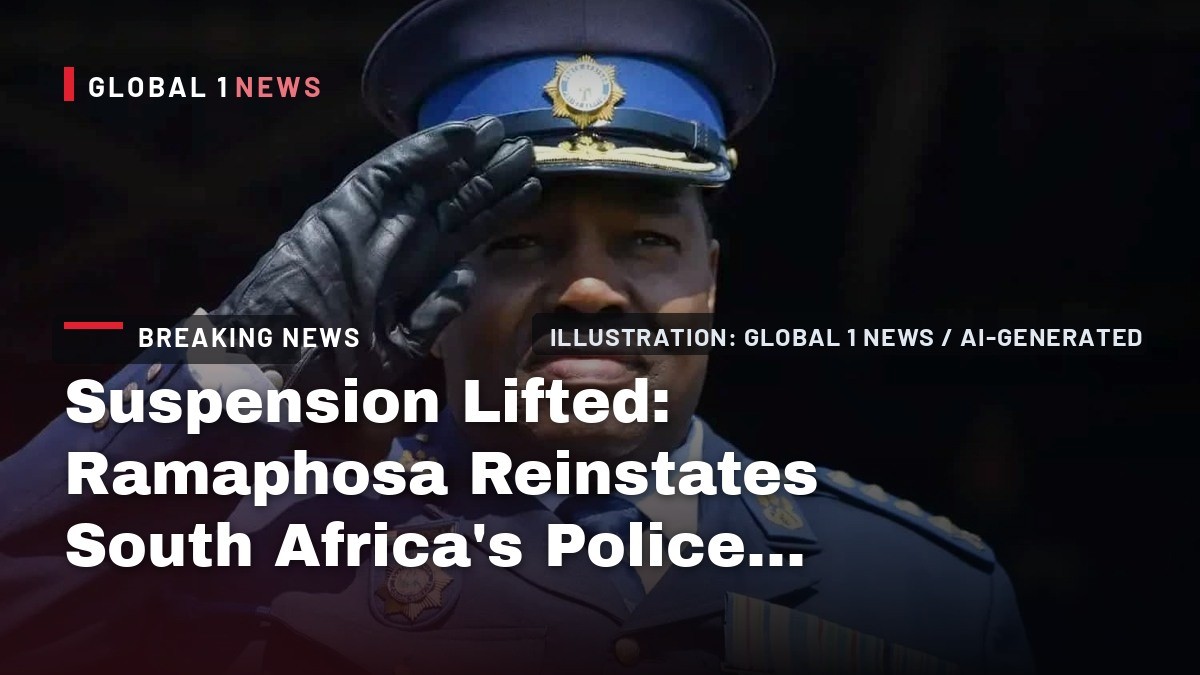
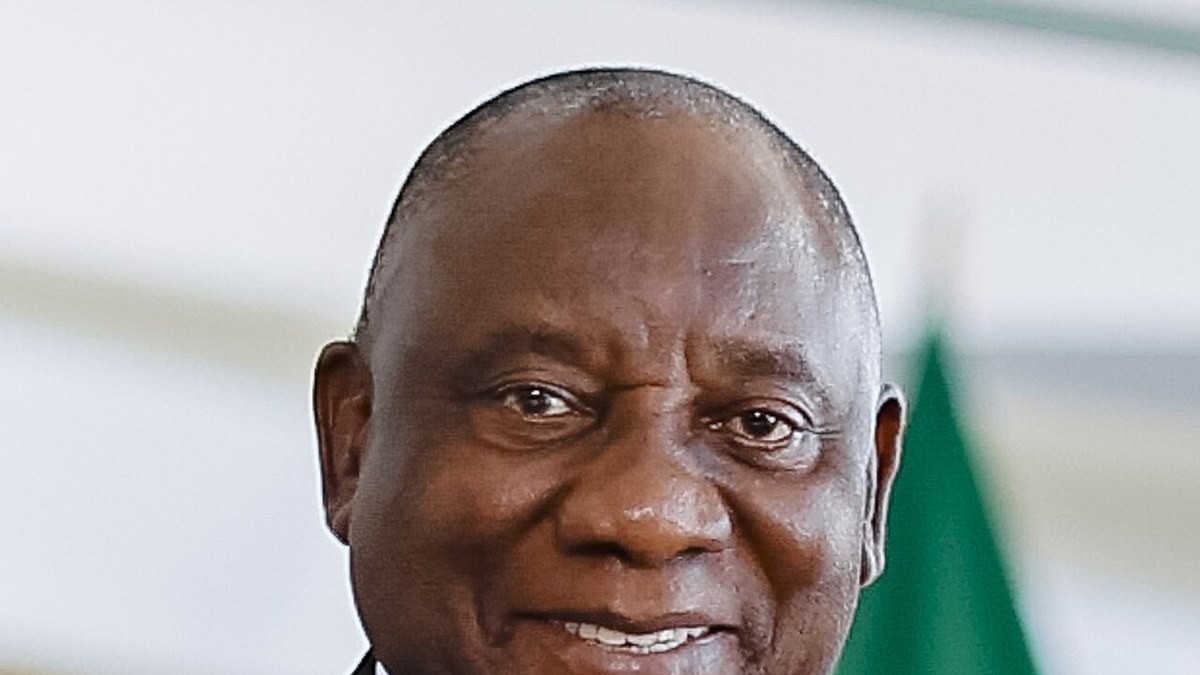
Six months ago, President Cyril Ramaphosa stood at the Union Buildings and told South Africans that the man who leads the fight against crime would step aside while the courts weighed charges against him. Today, that suspension is over. General Fannie Masemola returns to the South African Police Service on Monday. Folks, the question hanging over this reinstatement is not whether he comes back - it is what the last six months cost, and what the record actually shows.
Suspension Lifted: Ramaphosa Reinstates South Africa's Police Chief Masemola
Johannesburg, South Africa - 16 October 2026 - President Cyril Ramaphosa uplifted the precautionary suspension of National Commissioner General Fannie Masemola on Friday, and Masemola will resume his full duties on Monday 19 October 2026. The charges against him were withdrawn by the National Prosecuting Authority in September. Here is what matters: the record includes where outlets do not agree - most sharply on the value of the tender at the centre of this case, which is reported variously as R228 million and R360 million.
Six Months in Which the Country's Top Cop Was Not at Work
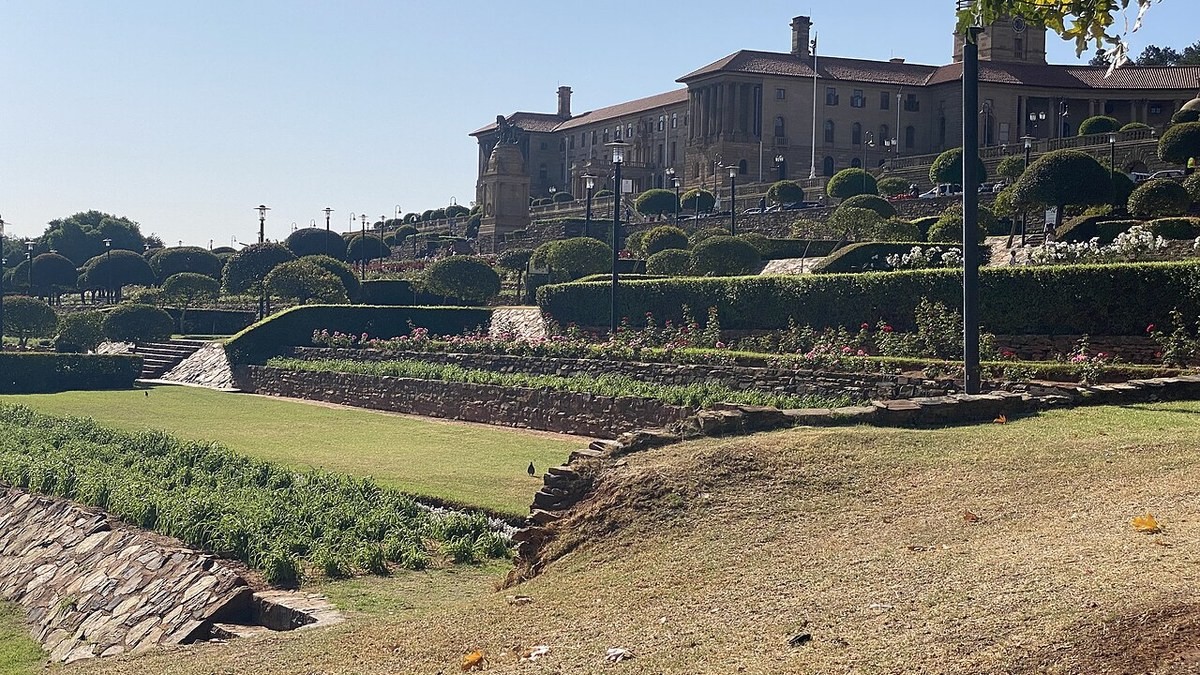
Ramaphosa and Masemola agreed in April 2026 that the National Commissioner be deemed to be on precautionary suspension, following his appearance in the Pretoria Magistrates' Court to face charges under the Public Finance Management Act. The suspension was announced on Thursday 23 April 2026 at the Union Buildings, where the President was joined by Acting Police Minister Professor Firoz Cachalia and his two deputies, Cassel Mathale and Polly Boshielo.
Ramaphosa framed the decision in the language of accountability. "In consideration of the seriousness of these charges and the critical role of the National Commissioner of Police in leading the fight against crime, I have agreed with General Masemola that he be deemed to be on precautionary suspension pending the conclusion of the case," he said. He added: "It is understandably a cause of great concern for all South Africans that the National Commissioner of Police is in court facing criminal charges."
The President appointed Lieutenant-General Puleng Dimpane, then SAPS Chief Financial Officer, as acting National Police Commissioner, and said she had been tasked with urgently addressing weaknesses in SAPS procurement. "Procurement has been identified as the source of corruption of office and instability within the police service," Ramaphosa said. Masemola's own words at the time looked past the case: "The police service must continue doing its work... We have discovered a lot of organised crime in the country, and it's the beginning. We should continue."
What He Was Actually Charged With
Masemola was formally charged on 16 April 2026 by the Independent Directorate Against Corruption. He faced four counts of contravening the Public Finance Management Act, specifically section 38, which sets out the responsibilities of accounting officers. He was charged as SAPS chief accounting officer with failing in his oversight duties in relation to the awarding of a police health-services contract to Medicare24, and one of the counts was that he failed to screen the company before it received the tender.
The distinction that matters most here is a narrow one: Masemola was the only accused in the matter who was not charged with corruption or fraud. He became the 17th co-accused, joined to the criminal case against alleged "Big 5" cartel leader Vusimuzi "Cat" Matlala, which included 12 police officials, three company directors and Matlala himself.
Masemola has maintained that he is not guilty. "I know that I'm not guilty, I'm not wrong, but the [law] must take its course," he told journalists after the April hearing. He has also denied receiving financial gratification from Matlala's contract.
The Case That Came Apart Under Review
National Director of Public Prosecutions Advocate Andy Mothibi issued instructions on 15 September 2026 that the charges against Masemola be withdrawn. The review considered IDAC's evidence, a report by the Case Assessment Panel, and an assessment by an independent senior counsel appointed to participate in the process.
NPA spokesperson Kaizer Kganyago said: "The NDPP is satisfied that there are no reasonable prospects of a successful prosecution against the National Commissioner on the PFMA charges. The NDPP has subsequently issued instructions that the charges be withdrawn." Mothibi put it plainly: "Enrolling a case for prosecution where evidence is not sufficient to sustain a successful prosecution is not in the public interest."
Mothibi invoked Section 179(5)(c) of the Constitution, read with Section 22(2)(b) of the NPA Act, to direct the withdrawal. On 22 September 2026 the Pretoria Magistrates' Court formally withdrew the charges. One thing must be said clearly: the withdrawal does not amount to a court finding of innocence or guilt. It reflects the NPA's assessment that the evidence available was insufficient to proceed.
The Judge Who Asked Why He Was in That Dock
The Madlanga Commission, chaired by retired Constitutional Court Justice Mbuyiseli Madlanga, put that question directly to former IDAC head Advocate Andrea Johnson. Madlanga asked why Masemola had been placed in the same dock as Matlala and his co-accused: "He will definitely be prejudiced in a trial that lumps him together with these other accused who are charged with fraud and corruption, both of which he is not charged with. You accept that?" Johnson replied: "I accept that."
Madlanga went further, putting a proposition to Johnson in questioning: "So, this was done, I suggest to you, to embarrass him, to taint him and to make him look as though he, too, had committed fraud and corruption. That was calculated, I suggest to you." Johnson was unable during her testimony to identify the legal basis for the decision to join Masemola to the broader case. She has since resigned from the directorate.
An Investigation Without a Complainant
In August 2026 the commission heard evidence that IDAC investigated Masemola in the Medicare24 matter without the required Section 27 complaint referral. Advocate Drushanta Ramsamy, an IDAC prosecutor, testified that former IDAC head Andrea Johnson started an investigation into Masemola's alleged involvement after a meeting with suspended police minister Senzo Mchunu on 22 January 2025, and that Johnson had flouted IDAC processes by authorising an investigation into Masemola without a complainant. "There was no Section 27 referral affidavit in existence at the time," Ramsamy said.
The commission also heard claims that IDAC investigators visited a prisoner, Nkosi, in an attempt to convince him to implicate Masemola, Crime Intelligence head Lieutenant General Dumisani Khumalo and Matlala. Johnson told the commission such conduct, if proven, would be "extremely serious". Justice Minister Mmamoloko Kubayi and Mothibi then announced a six-month reset programme for IDAC to audit its cases, review its human resources and assess its financial management.
Who Waited, and How Loudly
The pressure to reinstate built steadily after the withdrawal. The South African Communist Party called for Masemola's immediate return, saying it saw the charges as concocted: "From the outset, the SACP saw the charges as concocted, given the challenges of capture within our law enforcement authorities," said Dr Alex Mohubetswane Mashilo.
The South African Police Union demanded Ramaphosa act at once. Deputy national spokesperson Jabu Mabena said: "The country needs answers, but the captain (Masemola) of the ship is still sitting at home with no apparent reason." The MK Party wanted the suspension terminated "as soon as practically possible, preferably within the next 24 hours", with spokesperson Sifiso Mahlangu saying: "The criminal proceedings against General Masemola have collapsed, all charges have been formally withdrawn and no lawful or rational basis remains for keeping him outside his office."
ATM leader Vuyo Zungula wrote to Ramaphosa asking what legal and factual basis remained for keeping Masemola out of office, while acknowledging the withdrawal did not exempt him from accounting to Parliament. On 27 September 2026, Ramaphosa said: "Yes, the NPA has withdrawn charges. So that is something that gives me a moment to consider. So that is under consideration."
The Police Service He Comes Back To
The numbers Masemola inherits are a mixed picture. Fourth-quarter 2025/26 crime statistics, covering 1 January to 31 March 2026 and released on 22 May 2026, recorded murder falling 9.5 percent year on year, from 5,727 to 5,181 - 546 fewer lives. There were 58 murders per day on average during the quarter, and the national murder ratio was 8.2 murders per 100,000 people. Gang-related murders told their own story: 225 of 242 recorded nationally occurred in the Western Cape.
First-quarter 2026/27 statistics, covering April to June 2026 and released on 28 August 2026 by Dimpane as acting commissioner, showed murder falling 5.9 percent, from 5,770 to 5,427. Her framing was blunt: "However, 5,427 murders in 90 days remain 5,427 too many." Contact crime fell 2.3 percent and carjacking 18.2 percent. The release also recorded political killings in the run-up to the local government elections, and SAPS says homicide has now fallen for consecutive quarters from a 2024 peak.
A Leadership Bench Full of Acting Officers
Masemola returns to a service whose top layer has been held together by acting appointments. Ramaphosa thanked Dimpane, who "served with distinction as Acting National Police Commissioner in the interim", and who had previously been SAPS Chief Financial Officer and Divisional Commissioner for Financial Management Services.
Institute for Security Studies expert Willem Els suggested Ramaphosa may have been delaying in order to verify whether any further charges were pending, so that a return would be stable. Els also noted that aside from George Fivaz in 1994, no national police commissioner has finished their term since Jackie Selebi's imprisonment. Masemola is the third national police commissioner in less than two decades to face criminal charges; Selebi, a long-serving commissioner, was convicted in 2010 of accepting bribes to ignore criminal activity.
Police portfolio committee chairperson Ian Cameron said in April that suspending Masemola was "not about guilt", but about Ramaphosa fulfilling a constitutional duty, and urged the appointment of an acting commissioner "not in any way contaminated or involved in the Madlanga Commission".
A Commission With a Month Left
The Commission of Inquiry into Criminality, Political Interference and Corruption in the Criminal Justice System was announced by Ramaphosa on 13 July 2025, following serious allegations by Lieutenant General Nhlanhla Mkhwanazi about a sophisticated criminal syndicate that has allegedly infiltrated the criminal justice system. It is chaired by Madlanga, assisted by Advocate Sesi Baloyi SC and Advocate Sandile Khumalo SC.
It submitted its interim report on 17 December 2025; Ramaphosa accepted its recommendations and welcomed its referrals of matters for immediate criminal investigation and urgent decisions on prosecution. The Commission handed him a second interim report on 29 May 2026, and is due to present its final report on 16 November 2026 - 31 days from today.
Separately, Mothibi referred the circumstances surrounding the prosecution team's assessment of the evidence, the enrolment of the matter and the application of the law to Judge Takalani Joseph Raulinga, to determine whether any misconduct was involved. That review has not concluded.
What Monday Changes, and What It Does Not
On Monday, General Fannie Masemola walks back into the office of National Commissioner of the South African Police Service. Acting Police Minister Firoz Cachalia welcomed the prosecutor's decision in September and said he had always believed it was unjust for the police chief to face criminal prosecution. Masemola, after the withdrawal, said: "I'm eager to get back and serve the country, but I will still have to wait for the employer." He added that he had not considered suing the state, and had not spoken to Ramaphosa because the president had taken ill.
He also said his case had exposed the need to avoid a "conflation of function" between investigators and prosecutors: "Let investigations be done by investigators and prosecutors prosecute based on the investigations."
What Monday does not change: the NPA withdrawal is not a finding of innocence, Judge Raulinga's review is incomplete, and the Madlanga Commission still has a month to run. And the tender at the centre of all of it remains reported at figures ranging from R228 million to R360 million. Where the paperwork does not give a country precision, the record has to say so out loud.
By Jessica Ali, Staff Writer
This article was produced with AI-assisted research and editorial support. Sources: Presidency/gov.za media statement; SAnews; The Presidency (Madlanga Commission interim report); Reuters; BBC; eNCA; IOL/The Star; The Citizen; Mail & Guardian; TimesLIVE; Business Day; PoliticsWeb (NPA and IDAC statement); The Witness; The South African; ECR Newswatch; SABC News; OFM; Bloemfontein Courant; africannewsagency; imnews; Africa Daily; The Post/Weekend Argus.
What's Your Reaction?
 Like
0
Like
0
 Dislike
0
Dislike
0
 Love
0
Love
0
 Funny
0
Funny
0
 Wow
0
Wow
0
 Sad
0
Sad
0
 Angry
0
Angry
0

Editor-in-Chief at Global1.News. Atlanta-based journalist who cuts through the BS and tells it like it is. Lead anchor, host, and the voice you hear when the spin stops and the truth starts.












Comments (0)