
Israel Says No Commercial Goods Are Entering Gaza as Merchants and Truckers Trade Blame
No commercial goods have entered Gaza for two days after COGAT announced the suspension of private-sector shipments. Israel says Hamas taxation drove merchants to walk away; Gaza's truckers union says Israel imposed the restrictions. Aid agencies warn the winter market is the one that feeds the Strip.
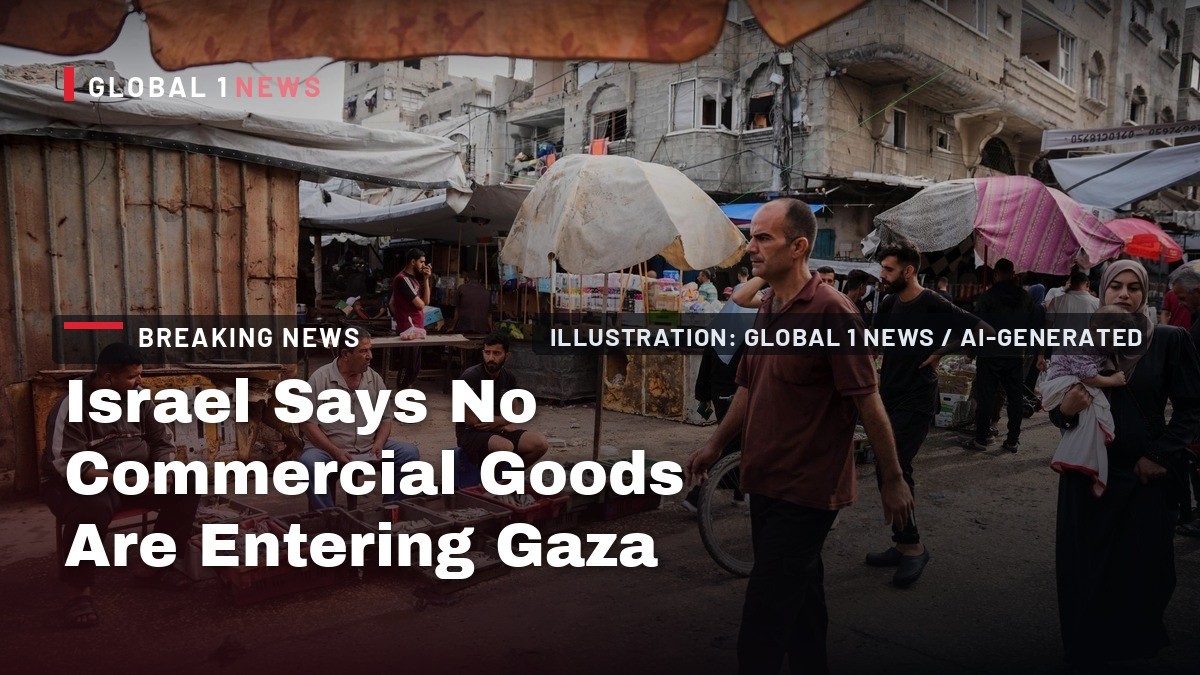
For two days, no commercial goods have crossed into Gaza. Israel says the merchants stopped it. The merchants say Israel did. Both accounts are now in writing, both are public, and neither has been independently confirmed.
Israel Says No Commercial Goods Are Entering Gaza as Merchants and Truckers Trade Blame
Jerusalem — No commercial goods have entered the Gaza Strip for two days, Israeli authorities said Thursday, after COGAT announced the suspension of commercial shipments on Wednesday. The halt covers fruit, winter clothing and other private-sector imports, and merchants have suspended coordination "until further notice." COGAT says the merchants walked away themselves. The head of Gaza's private truckers union says Israel imposed the restrictions. The two accounts cannot both be right.
Two Days, No Deliveries
COGAT, the Israeli military body that oversees humanitarian affairs in Gaza, announced the suspension of commercial shipments on Wednesday 14 October 2026. It said no private-sector vendors had attempted to import goods into Gaza since the merchants alerted Israel on Tuesday 13 October 2026. The halt is open-ended. Merchants suspended coordination "until further notice," and no end date has been given. The suspension covers commercial shipments including fruit and winter clothing, the goods that private traders normally bring in rather than the staples that aid groups distribute.
What Israel Says Hamas Is Doing
COGAT deputy spokesperson Lt. Daniel Kantorovich said: "We were prepared to coordinate the entry of their trucks as usual, but the vendors informed us that they were cancelling the coordination due to Hamas's taxation mechanism and threats against them." He added: "The merchants don't want to bring goods into Gaza." Kantorovich said COGAT was acting on a decision made by Palestinian merchants a day earlier and could reverse it at their behest. COGAT chief Maj. Gen. Yoram Halevi sent a letter on Wednesday to senior international officials, including Nickolay Mladenov, the Board of Peace's high representative for Gaza. The Halevi letter says Hamas is demanding approximately NIS 10,000, about $3,260, from private merchants for every truckload of goods entering Gaza. It says Hamas also requires merchants to sell approximately 30 percent of their goods for cash, which per the merchants is intended to let Hamas seize control of the proceeds. COGAT said the practice violates the conditions governing authorized merchants, who are required to conduct transactions through bank transfers. COGAT said its allegations are based on reports from merchants.
The Trucker Who Says Otherwise
Nahed Sheheiber, head of Gaza's private truckers union, said: "The merchants are not the ones who stopped the shipments." He added: "The Israeli coordinator is claiming that Gaza's merchants are responsible, but the truth is that the Israelis are the ones who imposed the restrictions." After COGAT's announcement, Sheheiber's union met with Gaza's Ministry of Economy to express concern and to say Israel was citing fees levied by the ministry as a pretext to cut off commercial goods. Sheheiber said the ministry had been asking merchants to pay 10,000 shekels, about $3,226, per truck entering Gaza. Palestinian importers deny Israel's account of who suspended the shipments. No third party has adjudicated the dispute.
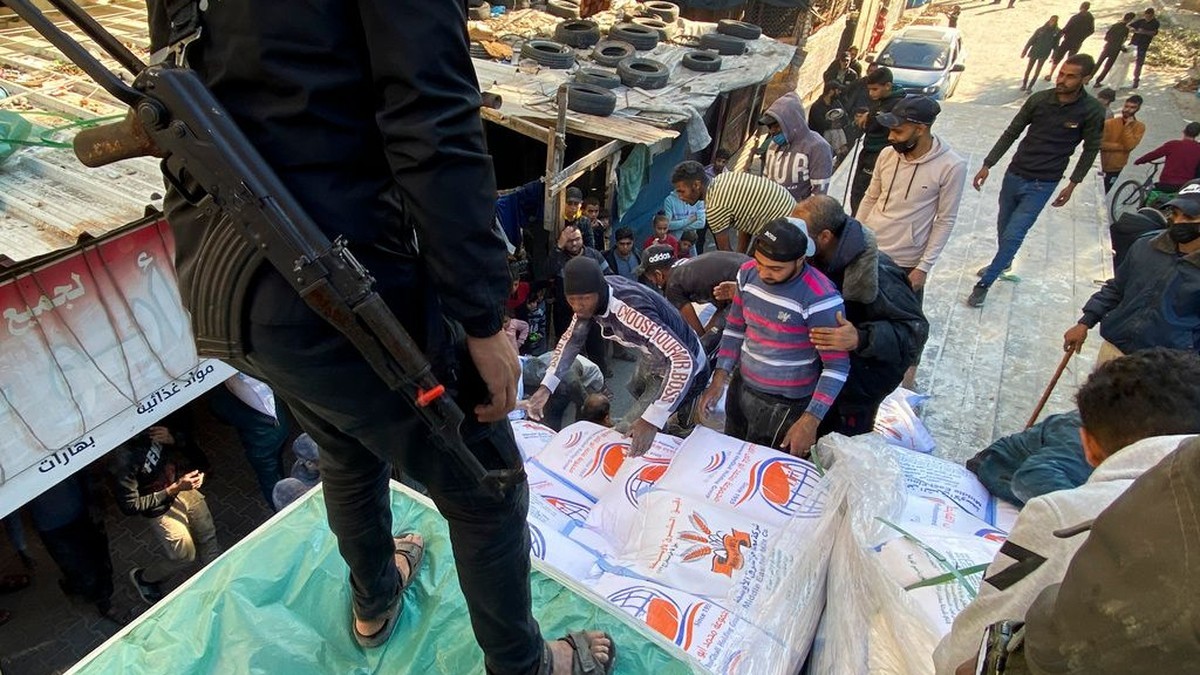
A Donation, Not a Tax
Gaza's Ministry of Economy Undersecretary Khaled Al-Raqab told the union that the amount was not a tax, but rather a donation sought by the ministry to help pay civil servants in the strip. Israel's Halevi letter calls the same payment an extortion mechanism. The two descriptions apply to the same NIS 10,000 figure, and the disagreement is not over the amount but over what it is. The dollar value is reported two ways as well: AP converts 10,000 shekels to about $3,226, while i24NEWS converts NIS 10,000 to approximately $3,260.
The Numbers Behind the Halt
The Halevi letter says the private sector accounts for approximately half, 50 percent, of all trucks entering Gaza each week. It says the payment demands extend to secondary traders and could soon affect drinking water supplies. Halevi said the suspension undermines Israel's ability to meet the target of 600 trucks per day established under the ceasefire agreement. COGAT claimed Gaza's population of roughly 2 million people required approximately 250 truckloads of goods each day, far below the minimum of 600 trucks a day stipulated by the US-brokered ceasefire a year ago. Halevi said responsibility for the consequences of the suspension lies with Hamas, not Israel, and warned that Hamas is expected to exploit the merchants' suspension to spread claims about shortages of goods and Israel's alleged failure to comply with the agreement. COGAT said Israel will continue allowing humanitarian aid and supplies into Gaza through the United Nations, international organizations and donor countries, including equipment needed ahead of winter.
The Markets Have to Function
Aid groups generally bring in staples such as flour, while merchants import more perishable foods like fruits and meat, according to COGAT data released earlier this year. Shaina Low, a spokesperson for the Norwegian Refugee Council, said: "The humanitarian sector on its own cannot meet the needs of all the people." She added: "The markets need to be functioning." The suspension is raising fears about affordability, with humanitarian workers saying a combination of aid and a robust commercial market is needed to keep prices under control. The world's leading authority on food insecurity reported earlier this year that conditions in Gaza had improved since famine was declared in the territory in August 2025, but were still at crisis levels. Most families in the war-battered enclave were not getting nearly enough to eat, the report said, adding that "even small disruptions to humanitarian access could rapidly reverse recent gains." It was not clear from the COGAT announcement whether aid agencies would be allowed to increase shipments into Gaza to compensate for the loss in commercial goods.
The Board of Peace Wants In
Nickolay Mladenov is the high representative for Gaza under the US-backed Board of Peace, the body tasked with implementing the October 2025 ceasefire plan that ended the Israel-Hamas war. On Hamas's treatment of merchants, Mladenov said: "As I have warned repeatedly, such practices are unacceptable and must end immediately." He added: "The intimidation of merchants and interference in the supply chain only deepen the suffering of Gaza's civilians." Mladenov said: "These developments demonstrate why the rapid deployment of the National Committee for the Administration of Gaza, supported by the International Stabilization Force, is urgently needed." He added: "Civilian supplies, humanitarian assistance and commercial activity must be protected from coercion, exploitation and interference." Mladenov also called for implementation of the Gaza peace plan, "including the arrangements required for NCAG and ISF operations in Gaza. This includes the decommissioning of weapons, the transition to legitimate transitional governance and the protection of humanitarian and commercial supply chains." The ceasefire began on 10 October 2025.
A Force That Has Not Arrived
The National Committee for the Administration of Gaza was founded but Israel has not granted it entry into the Strip. It reports directly to the Board of Peace and is led by Chief Commissioner Ali Shaath and other Palestinian technocrats, and operates from Cairo. Israel has not stated why the committee is not permitted to enter Gaza. No stabilization force has been deployed. Six countries, Indonesia, Morocco, Kazakhstan, Albania, Kosovo and Uganda, have so far committed personnel to form a security force of 20,000 soldiers and 12,000 police headed by the US military's Central Command. The Guardian reported on Wednesday 14 October 2026, citing a person with direct knowledge of the project, that Israel has yet to allow construction of a military outpost for international troops in Gaza. The Board of Peace awarded its first Gaza construction contract in early August 2026 to Arkel International, a Louisiana-based company, to build a fortified compound for approximately 150 international troops. More than two months later, construction has not begun because Israel has not authorized contractors or construction vehicles to enter the territory, the source said. The facility is intended to accommodate rotating deployments of 150 armed international troops, drawn from a larger contingent of approximately 500 personnel dispatched from Morocco and Kosovo, according to the report. The source told the Guardian that officials involved in the Board of Peace believe Israel will allow construction to proceed after Israel's 27 October election. In July, Israel's security cabinet approved a pilot program to restore basic services in the territory, with the first stage expected to take place in Rafah, in southern Gaza.
Who Blames Whom
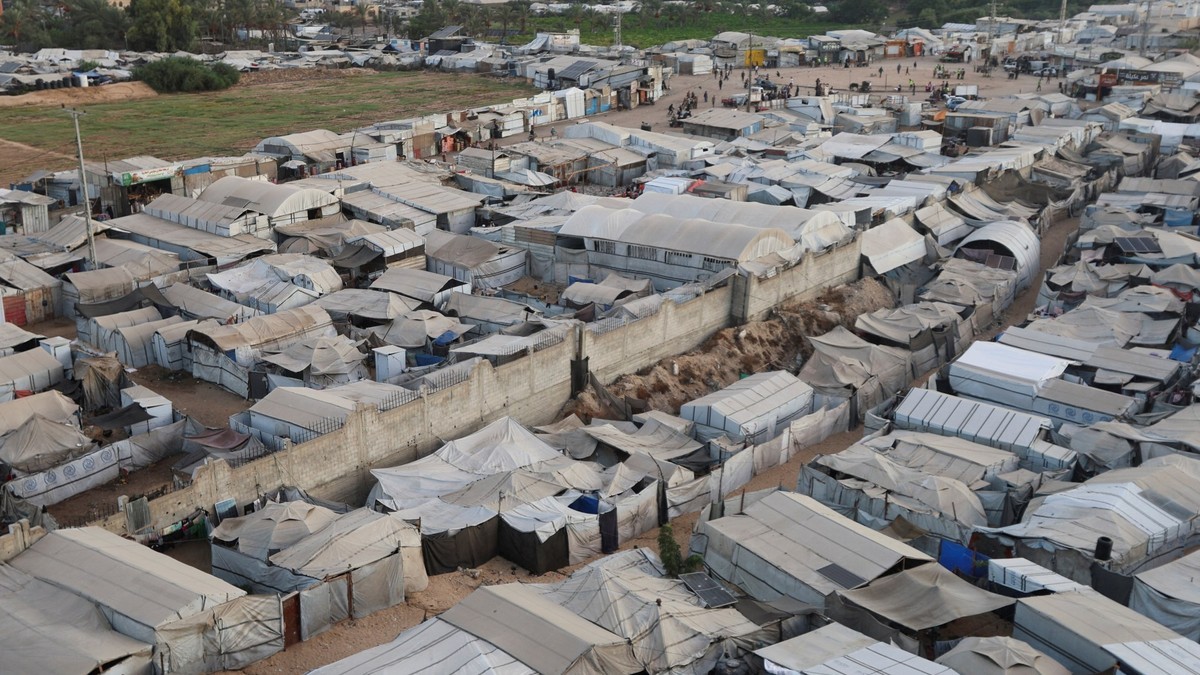
One question sits under the entire halt, and nobody neutral has answered it: who stopped the trucks. Israel's account puts the decision with Gaza's merchants. The head of the merchants' own truckers union puts it with Israel. The war that produced this arrangement started when Hamas-led militants killed some 1,200 people on 7 October 2023 and took 251 hostages. Israel responded with a massive bombardment and a ground invasion that has killed more than 74,000 Palestinians, according to the Gaza Health Ministry, including over 1,400 killed since the ceasefire took effect. Sporadic attacks have killed five Israeli soldiers in Gaza in the same period. The ministry is part of the Hamas-run government, maintains detailed records and is seen as generally reliable by UN agencies and independent experts, though it does not distinguish between civilians and militants in its toll and says women and children make up around half the dead.
Winter Does Not Negotiate
The suspension is open-ended, and the calendar is not. What has stopped is the commercial lane that normally carries perishable food and winter clothing, while the aid lane through the United Nations and donor countries is meant to keep running. Aid agencies have not said whether they will be permitted to increase shipments to fill the gap, and COGAT has not said either. The Board of Peace's members each joined in exchange for a $1 billion annual fee, and member states pledged $7 billion in funding in February, while aid agencies said reconstruction would cost closer to $70 billion. So the questions left open are the ones that matter most this month: how much food reaches the roughly 2 million people living in the Strip, and who is held responsible if it does not.
By Jessica Ali, Staff Writer
This article was produced with AI-assisted research and editorial support. Sources: Associated Press, Reuters, The Times of Israel, Israel National News, i24NEWS, Al Jazeera, The Guardian and the Norwegian Refugee Council.
What's Your Reaction?
 Like
0
Like
0
 Dislike
0
Dislike
0
 Love
0
Love
0
 Funny
0
Funny
0
 Wow
0
Wow
0
 Sad
0
Sad
0
 Angry
0
Angry
0

Editor-in-Chief at Global1.News. Atlanta-based journalist who cuts through the BS and tells it like it is. Lead anchor, host, and the voice you hear when the spin stops and the truth starts.











Comments (0)