
IMF chief urges countries to develop policies embedded in AI
At the 2026 IMF‑World Bank Annual Meetings in Thailand, Managing Director Kristalina Georgieva sounded a clear call to action for governments worldwide: design policies that are not merely responsive to artificial intelligence, but fundamentally embedded in its dynamics.
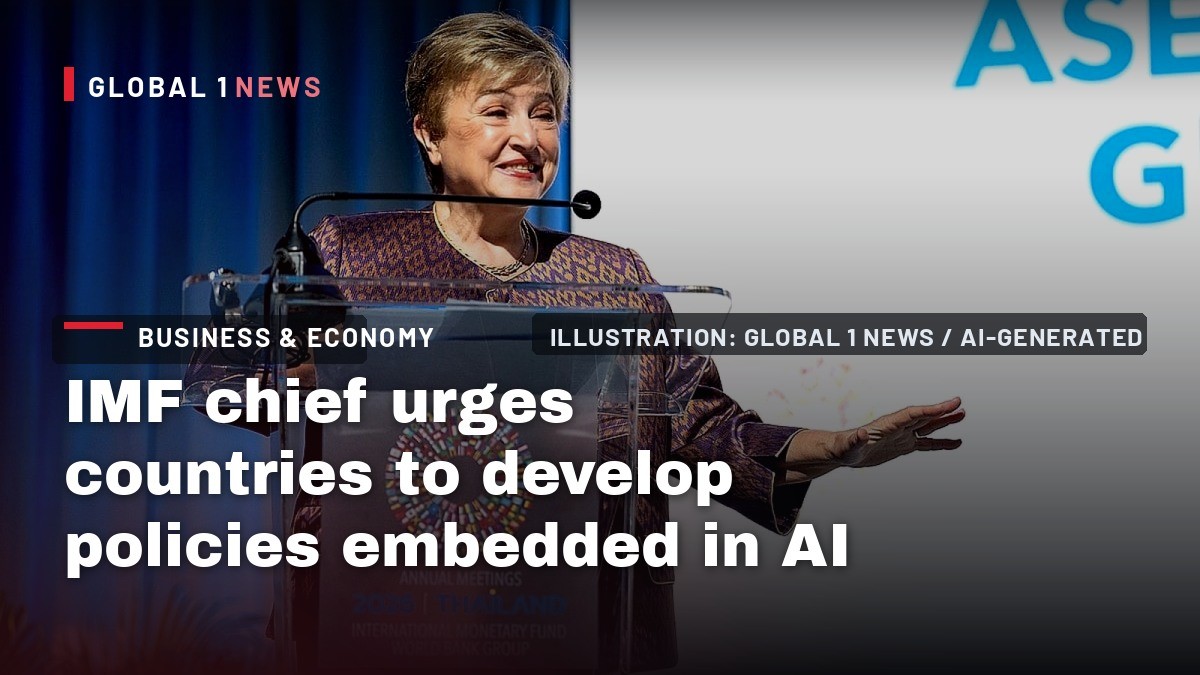
At the 2026 IMF‑World Bank Annual Meetings in Thailand, Managing Director Kristalina Georgieva sounded a clear call to action for governments worldwide: design policies that are not merely responsive to artificial intelligence, but fundamentally embedded in its dynamics. Her remarks, delivered in a written essay released on Thursday, highlighted the stark disparity in AI adoption between advanced economies and low‑income nations, warned of macro‑financial risks, and laid out three core principles to guide the AI transition. For Nigeria and the broader African continent, the message carries both a warning and an opportunity to shape a future where AI fuels inclusive growth.
Understanding the AI Gap: Why Advanced Economies Pull Ahead
Georgieva acknowledged that AI growth in advanced economies could be “more than double” that of low‑income countries, a gap she attributed to differences in preparedness and adoption capacity. The IMF chief stressed that this divergence is not inevitable; it reflects the extent to which nations have invested in reliable digital infrastructure, skilled workforces, and energy systems capable of supporting data‑intensive technologies.
In practical terms, the International Energy Agency projects that data centres will account for about three percent of global electricity consumption by 2030. While this figure may appear modest, it underscores the scale of energy demand that accompanies AI deployment. Nations that lack robust power grids or affordable broadband risk being left behind as AI‑driven services proliferate across finance, health, and agriculture.
Principle One: Safeguarding Macro‑Financial Stability
Georgieva’s first core principle urges policymakers to protect macroeconomic and financial stability while embracing AI. She recommended that regulators continue to use existing tools—such as capital adequacy and concentration requirements—to monitor and mitigate risks emerging from AI‑enabled financial services. This approach signals that, even as fintech firms deploy sophisticated algorithms, central banks and supervisory agencies must retain a vigilant stance.
In particular, the IMF chief called for a rapid scaling of cyber defences across both public and private sectors. She noted that central banks can bolster security by conducting resilience testing of banks, ensuring that critical financial infrastructure can withstand cyber‑attacks that may exploit AI vulnerabilities. For Nigeria’s Central Bank of Nigeria (CBN), this translates into an urgent need to embed AI risk assessments within its supervisory framework.
Principle Two: Investing in Infrastructure and Skills
The second principle centres on the twin pillars of infrastructure and human capital. Georgieva urged governments to re‑examine medium‑term development plans through the lens of the AI transition, investing in digital networks, reliable electricity, and data‑centre capacity. She also highlighted the necessity of tax systems that reflect the AI era, implying that fiscal policy must evolve to capture value generated by AI‑driven enterprises.
Beyond physical infrastructure, the IMF chief emphasized the importance of equipping people with “cognitive, creative, and technical skills” that enable them to harness AI. This call for a skills‑focused education agenda resonates strongly in Sub‑Saharan Africa, where the IMF noted that mobilising private finance for AI infrastructure requires both a favourable business climate and targeted government subsidies. For Nigeria, aligning vocational training, university curricula, and lifelong learning programmes with AI competencies will be essential to avoid a widening skills gap.
Principle Three: Fostering Adoption and Innovation
Georgieva’s third principle advocates a balanced mix of private capital and public‑sector investment to spur AI research and development. She pointed to Sub‑Saharan Africa as a region where public subsidies, guarantees, and a strengthened business environment can attract private finance for AI infrastructure. The IMF chief underscored that a “dynamic AI economy should allow the smooth entry and exit of firms,” suggesting that regulatory frameworks must be flexible enough to nurture start‑ups while ensuring market discipline.
In practical terms, this means that governments should address structural tax distortions that favour legacy investments, modernise insolvency regimes, and improve legal certainty. By doing so, they create an ecosystem where AI‑focused enterprises can thrive, innovate, and contribute to broader economic diversification—a goal that aligns with Nigeria’s Vision 2030 aspirations.
Policy Implications for Nigeria’s Tax and Legal Systems
Georgieva’s emphasis on modernising tax systems for the AI era carries direct relevance for Nigeria’s fiscal architecture. She urged nations to confront tax distortions that privilege outdated sectors, advocating reforms that capture the value created by AI‑enabled businesses. This could involve revisiting corporate tax rates for digital firms, introducing incentives for AI research, and ensuring that tax administration keeps pace with the rapid evolution of digital business models.
Legal certainty, another pillar of Georgieva’s agenda, calls for reforms to insolvency laws and contract enforcement mechanisms. By reducing uncertainty, Nigeria can encourage both domestic entrepreneurs and foreign investors to allocate capital toward AI projects, confident that the rule of law will protect their interests. Such reforms would also align with broader African initiatives to improve the ease of doing business, a factor the IMF highlighted as crucial for mobilising private finance.
Building a Resilient Workforce for the AI Age
Perhaps the most human‑centred aspect of Georgieva’s essay is the call to “support workers and create opportunities.” She stressed that AI’s promise lies not just in productivity gains, but in empowering people with the skills to use technology meaningfully. For Nigeria, this translates into a national strategy that blends STEM education with creative and critical thinking, ensuring that workers can adapt to AI‑augmented roles across sectors.
Public‑private partnerships could play a pivotal role here. By aligning curricula with industry needs, offering apprenticeships in AI‑related fields, and providing upskilling programmes for existing employees, Nigeria can build a labour force that not only adopts AI tools but also drives innovation. Such a workforce would be better positioned to reap the benefits of AI while mitigating the risk of job displacement—a concern that Georgieva acknowledged in her broader discussion of AI’s societal impact.
Looking Ahead: A Roadmap for African AI Integration
Georgieva’s three‑principle framework offers a clear roadmap for African nations seeking to harness AI responsibly. First, safeguard macro‑financial stability by extending existing supervisory tools to AI‑enabled financial services and strengthening cyber resilience. Second, invest decisively in digital and energy infrastructure while overhauling tax and legal systems to reflect the realities of an AI‑driven economy. Third, stimulate adoption and innovation through a blend of private capital and targeted public subsidies, ensuring that regulatory environments remain flexible and supportive.
For Nigeria, the stakes are high but the potential rewards are equally significant. By heeding the IMF chief’s guidance—grounded in the realities of global AI growth and the specific challenges of low‑income economies—Nigeria can position itself as a regional hub for AI research, development, and deployment. The journey will require coordinated action across ministries, central banks, educational institutions, and the private sector, but the promise of a more productive, inclusive future makes the effort indispensable.
This article was produced with AI-assisted research and editorial support. Reporting is based on the source material cited below. Sources: Daily Post Nigeria; dailypost.ng; Global1.News (16 October 2026).
By Sarah Okafor, Staff Writer
What's Your Reaction?
 Like
0
Like
0
 Dislike
0
Dislike
0
 Love
0
Love
0
 Funny
0
Funny
0
 Wow
0
Wow
0
 Sad
0
Sad
0
 Angry
0
Angry
0

Africa Correspondent at Global1.News. Based in Lagos, covering politics, business, technology, and culture across the continent. Focused on telling African stories beyond the headlines — the innovation, entrepreneurs, and communities shaping the region's future.














Comments (0)