
Nine Fired FBI Agents Sue Kash Patel and Todd Blanche Over the Mar-a-Lago Firings, Alleging 'Political Retribution'
Nine former FBI employees fired in February over their work on the investigation into Trump's handling of classified documents sued on Thursday, alleging unlawful political retribution and seeking reinstatement and back pay.
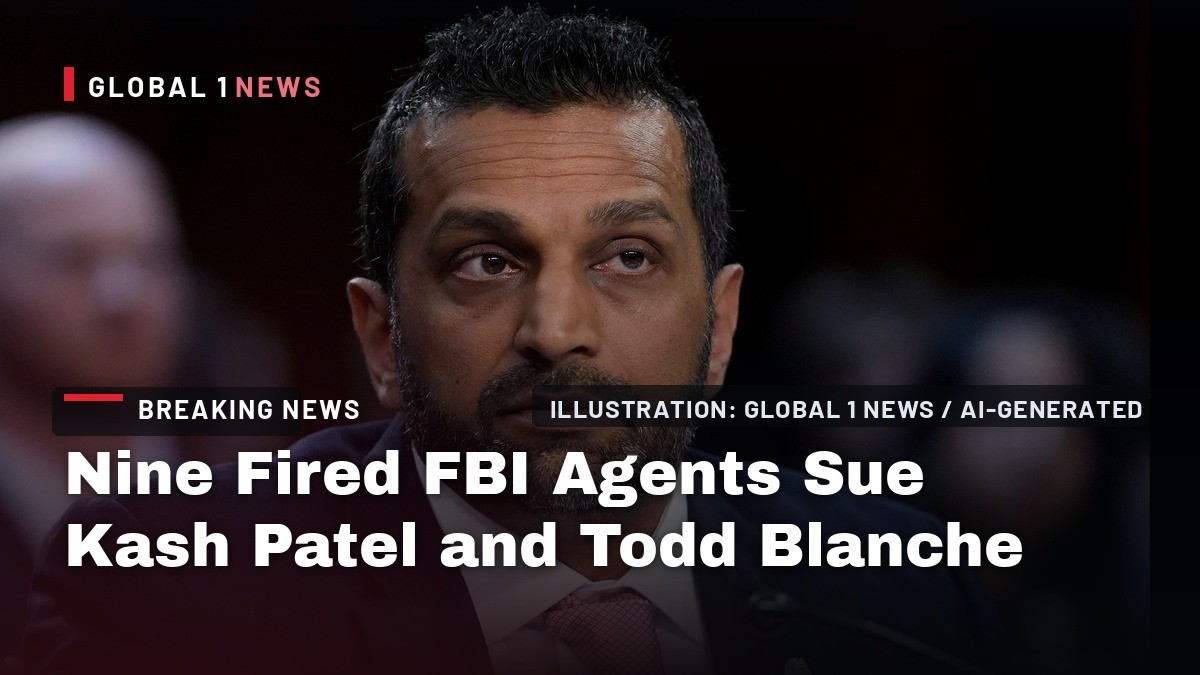
Nine former FBI employees fired in February over their work on the investigation into President Donald Trump's handling of classified documents sued on Thursday to get their jobs back, calling their terminations unlawful acts of "political retribution." The 70-page complaint names FBI Director Kash Patel and Attorney General Todd Blanche and asks a federal judge to declare the firings illegal.
Nine Fired FBI Agents Sue Kash Patel and Todd Blanche Over the Mar-a-Lago Firings, Alleging 'Political Retribution'
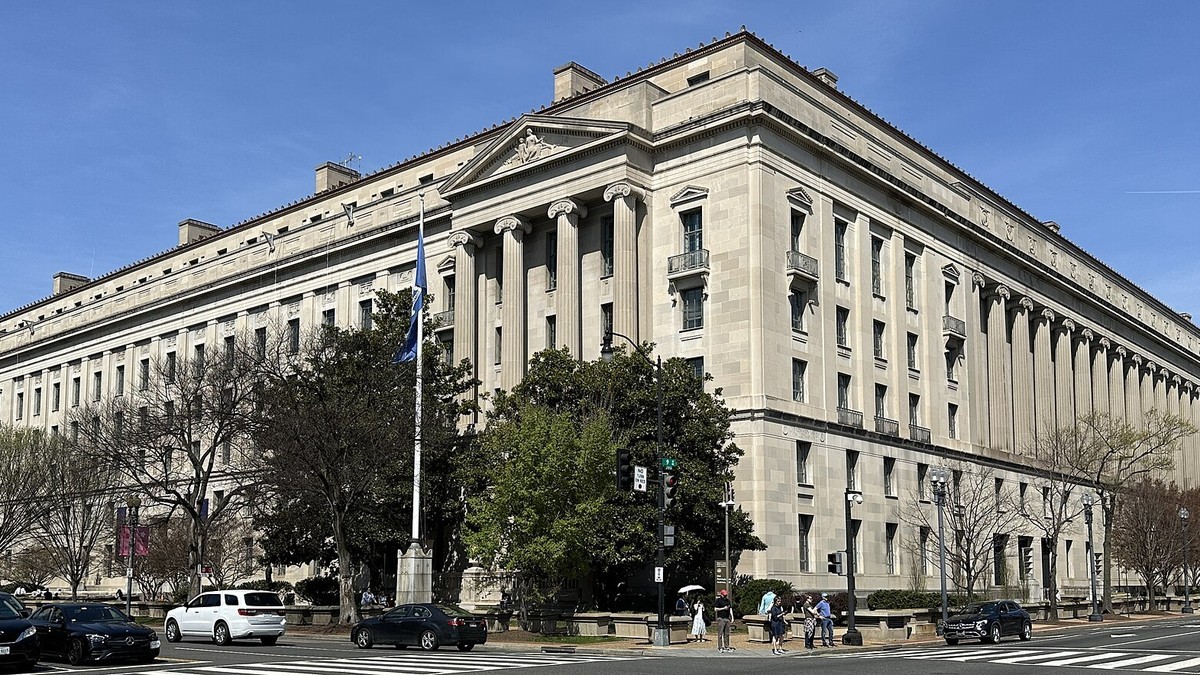
WASHINGTON - The suit was filed Thursday, October 15, 2026, in the U.S. District Court for the District of Columbia, and asks for reinstatement, back pay and declarations that the firings violated the First and Fifth Amendments. Named as defendants are Patel, in his official capacity as FBI director; the FBI; Blanche, in his official capacity as attorney general; and the Justice Department. The case is numbered 1:26-cv-03604. The plaintiffs' lawyers include Margaret M. Donovan, Abbe David Lowell and Rebecca S. Tinio. The plaintiffs' residential addresses are being filed under seal. No defendant has answered, and no court has ruled.
Nine Firings, One Lawsuit
The nine are Jennifer Bacon, Zach Feldman, Gilbert Granados, Catherine Herrera, Harrison Kaufman, Jeremy Linton, Erin Matanic, Danielle Ray and Rachel Vaccaro. According to the complaint, they were special agents, staff operations specialists and intelligence analysts who did not volunteer for the investigation but were assigned to it because they belonged to specific FBI counterintelligence and intelligence squads. Bacon was a section chief in the Counterintelligence Division and a member of the FBI's Senior Executive Service. Linton was a supervisory special agent focused on Iranian counterintelligence and a certified FBI crisis negotiator. Feldman and Ray were special agents at the Washington Field Office. Granados and Kaufman were staff operations specialists; Herrera was a supervisory intelligence analyst; Matanic worked at the Northern Virginia Resident Agency. The complaint says none of the nine had ever had any instance of misconduct or poor behavior at the FBI, and that before the firings there were no internal investigations into their conduct and no findings of wrongdoing.
What the 70-Page Complaint Alleges
The complaint brings three causes of action. The first alleges a First Amendment violation, retaliation for perceived political affiliation, against all defendants. The second alleges a Fifth Amendment procedural due process violation, based on a property interest in continued employment. The third alleges a violation of the separation of powers, brought by Bacon and Linton against Patel and the FBI. At the center is the allegation that the nine "were unlawfully terminated not for any cause or any legitimate reason, but only to satisfy the President's personal vendetta." According to the filing, "the firings did not follow any internal investigation or disciplinary process within the FBI, and Plaintiffs were not given any notice, a hearing, or an opportunity to appeal." Patel, it says, claimed to rely solely upon "Article II," a rationale the complaint calls "an invention of the current Administration" and "nothing more than a pretext for firings ... that are politically retributive and unlawful."
The Codename: Plasmic Echo
Plasmic Echo is the FBI's code name for the investigation into Trump's retention of classified material after his first term. The complaint's account says that when he left office after losing the 2020 election, dozens of boxes of "Top Secret," "Secret" and "Confidential" material were moved from the White House to The Mar-a-Lago Club in Palm Beach, Florida, and that he improperly stored the documents, traveled with them and showed them to people without the need to know or the clearance to see them. The National Archives asked repeatedly for the material back, and the Justice Department and the FBI served legal process, according to the complaint, which says Trump failed to return all of it and obstructed their efforts. The FBI executed a court-authorized search warrant at Mar-a-Lago on August 8, 2022. A grand jury returned an initial 38-count indictment, then a 42-count superseding indictment, against Trump and two of his employees in 2023 in the Southern District of Florida. Trump denied wrongdoing and claimed without evidence that he had declassified the documents. The case was dismissed in 2024 on the ground that the special counsel who oversaw Plasmic Echo had not been properly appointed, without reaching the merits, and the Justice Department withdrew its appeal after Trump won the 2024 election.
A Name List, and 48 Hours
On the afternoon of Monday, February 23, 2026, Assistant Director Roman Rozhavsky forwarded Bacon an email from Special Agent Miles Starr. Starr was detailed to an unofficial unit called the "Director's Advisory Team," which the complaint says is composed of individuals reporting directly to FBI headquarters who "appear to work on investigations into perceived political enemies of the President." Starr said he urgently needed access to the Plasmic Echo case files, that he was acting on instructions from Patel, and that he had a project due by the end of the day. He did not explain what he needed. Plasmic Echo was a "SIM" investigation, so FBI policy restricted access to those assigned to the case, and Bacon granted him access to all of the files except one specific subfile. The files held the names of all nine plaintiffs and the roles of each member of the classified-documents case team. Less than 48 hours later, on the afternoon of February 25, eight of the nine were fired. Ray was fired the following day. Starr had given grand jury testimony in the first indictment of former FBI Director James Comey, testimony a federal magistrate judge later criticized as "highly irregular and a radical departure from past DOJ practice."
The Afternoon Eight Were Fired
According to the complaint, the firings followed one pattern. Bacon was called out of a meeting and told she was being terminated; Rozhavsky, who delivered the news with Deputy Assistant Director Fred Marcks, said he did not know the specific reason but that it was related to Mar-a-Lago. She was given about an hour to pack her office. Feldman was told to wait as he was leaving for the day and was handed a letter by ADIC Darren Cox in the office of SAC Daniel Wierzbicki. Granados was told his unit chief was on his way to his house; that evening his unit chief and Marcks came to his home and told him he had been terminated. Herrera was on a train to New York on personal leave and learned by phone, late that evening, that she was being terminated effective immediately. Kaufman was recalled to the office. Linton was escorted to the office of Don Holstead, assistant director of the FBI's Counterterrorism Division. Matanic was told to report to the Northern Virginia Resident Agency without being told why. Vaccaro was called at home and told to return to work immediately. Ray was fired on February 26.
What the Director Told Congress
Patel has said in congressional testimony that employees he fired had "weaponized" the FBI; the nine deny that in the lawsuit. Testifying before the House Intelligence Committee in March 2026, he said: "When these terminations occur, there are internal investigations conducted by the careers at the F.B.I. that highlight unethical or inappropriate conduct, and it's up to me to make the decision." He said the employees "were terminated for violating their ethical obligations," and, citing pending litigation, declined to specify the violations. The lawsuit asserts that account was false. Each plaintiff, the complaint says, received a termination letter signed by Patel invoking "Article II" and stating that the employee had "exercised poor judgment and a lack of impartiality in carrying out duties, leading to the political weaponization of the government." Each also received an SF-50 personnel form recording the termination that indicated the separation was not "for cause." The administration and Blanche have argued that the president has inherent authority to fire any executive branch employee at any time and does not need to say why.
What Their Supervisors Said
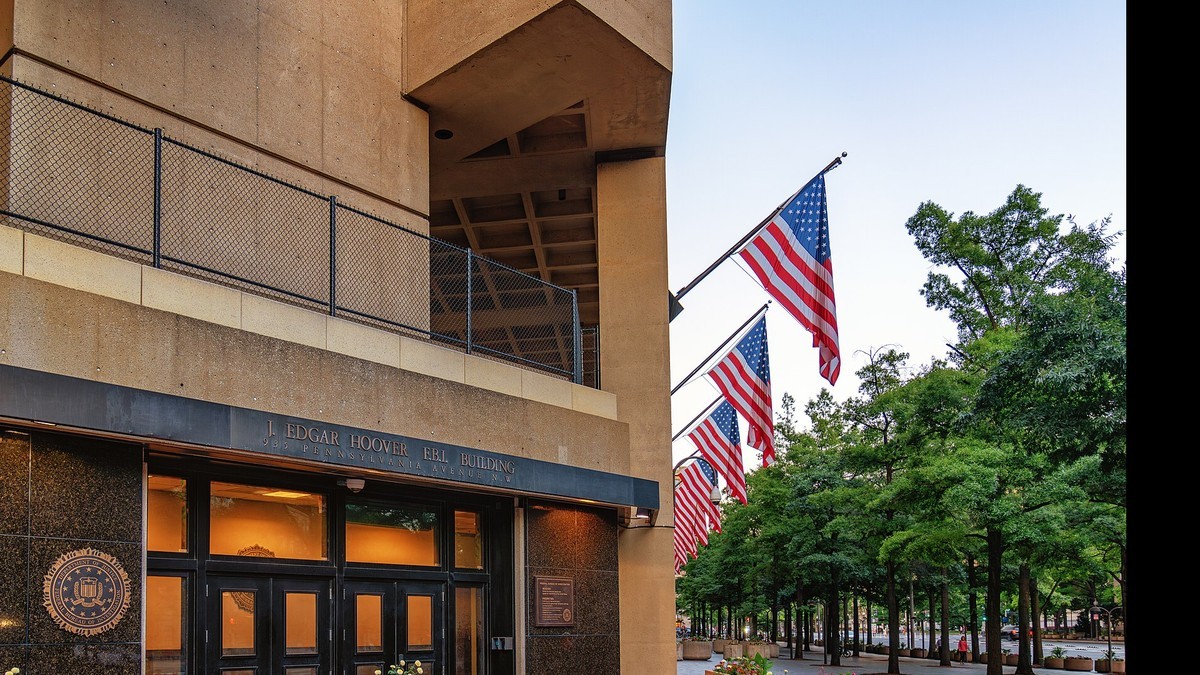
What the people in the room said forms part of the complaint. Herrera's supervisor, Deputy Assistant Director Cheryl Mimura, told her there would be no internal appeal, that she had not been given information supporting the decision, and that she was getting pressure from the "seventh floor" -- FBI leadership at the J. Edgar Hoover Building -- to effect the dismissal urgently. Mimura also said she had to argue leadership out of dispatching FBI personnel to find Herrera in New York, and told Herrera the firing was wrong. ADIC Cox told Kaufman the order had come from Patel's office earlier that day and that he did not know why; as Kaufman walked out, a few colleagues came down to applaud him. Wierzbicki told Feldman he suspected the firing was linked to news reports from that day about Patel drinking alcohol at the Winter Olympics. Holstead told Linton to walk out "with [his] head held high and with [his] dignity because [he] earned it." Phillip Bates told Matanic that Cox had called to say termination letters had to be presented to a list of individuals "that day" and that those people had to be fired that day.
A Century of Service
The complaint details the records of the nine, who it says brought "more than a century of distinguished and apolitical FBI service." Its list of their work includes the Boston Marathon bombing, the attempted assassination of Trump in Butler, Pennsylvania, the recovery of multiple American citizens held abroad, the interdiction of Iranian-made munitions intended for the Houthis, and leaks of national security information to foreign states. Bacon served more than 25 years, first as an Air Force officer and later in the FBI, and holds the FBI Medal of Excellence and the Attorney General's Award for Outstanding Counterintelligence Investigation. Feldman won the Top Shot award for the highest firearms qualification scores in his class at the FBI Academy, and in June 2024 was recognized for leading a counterespionage investigation involving national defense information sent to a foreign intelligence service. Granados earned the Department of Energy's Boris Pash Award for Counterintelligence Excellence. Herrera holds two FBI Medals of Excellence. Kaufman worked the investigation into pipe bombs placed near the Democratic and Republican National Committee headquarters in January 2021, a case in which Patel publicly praised the team's "great resolve" and personally shook Kaufman's hand. Linton was photographed with Patel after an MS-13 arrest and was later sent a signed copy.
The Files Left Unfinished
The complaint's national security argument is that the nine were working active cases when they were fired, and that because they were removed without warning their investigations were never properly transferred. "The impact of these heedless actions on America's national security is immeasurable," it says. Most of the nine had significant Iran-related counterintelligence experience, and the firings came days before the United States entered the war against Iran. Linton was managing a portfolio of active Iran counterintelligence cases when he was terminated, three days before the strikes began on February 28, 2026; the complaint says he had no time to hand over his work or to share intelligence he had received relating to Iran, and that the FBI had arranged a course he never got to attend. The others were cut off the same way. Granados never returned to his office and could not hand over his open investigations. Kaufman, Matanic and Ray were likewise given no opportunity to transfer their work.
A Growing List of Challenges
The suit adds to a growing list of legal challenges to the firings. Three former special agents, Michelle Ball, Jamie Garman and Blaire Toleman, sued in late March 2026, seeking class-action status. A separate group of three FBI employees, including former acting FBI Director Brian Driscoll, sued in September 2025, and in February 2026 Bondi issued a memo ratifying and affirming Patel's decision to remove Driscoll and his co-defendants. Two other former special agents sued anonymously to avoid what their filing called "an immediate risk of doxing, SWATting, harassment, and physical harm." The complaint also argues that the Civil Service Reform Act excludes most FBI employees from Merit Systems Protection Board appeal rights, with an exception for preference-eligible veterans, a category that covers Bacon and Linton. It says the board is down to two members affiliated with the same political party, so it is "permanently changed" and no longer describes itself as "independent," and that as of the filing multiple district courts have concluded that challenges to "Article II firings" belong in an Article III court. Bacon and Linton filed timely board appeals while reserving their right to sue in district court.
By Jessica Ali, Staff Writer
This article was produced with AI-assisted research and editorial support. Sources: the complaint in Bacon et al. v. Patel et al. (Case 1:26-cv-03604, U.S. District Court for the District of Columbia), the Associated Press, CBS News, NBC News, The New York Times, PBS NewsHour and the Los Angeles Times.
What's Your Reaction?
 Like
0
Like
0
 Dislike
0
Dislike
0
 Love
0
Love
0
 Funny
0
Funny
0
 Wow
0
Wow
0
 Sad
0
Sad
0
 Angry
0
Angry
0

Editor-in-Chief at Global1.News. Atlanta-based journalist who cuts through the BS and tells it like it is. Lead anchor, host, and the voice you hear when the spin stops and the truth starts.












Comments (0)