
Trump claims Iran's first- and second-string leaders are gone, questions who US is negotiating with
At a rally in Montana on 15 October 2026, former President Donald Trump asserted that the United States’ recent military campaign had effectively crippled Iran’s leadership and armed forces, declaring the nation no longer a “bully of the Middle East”.
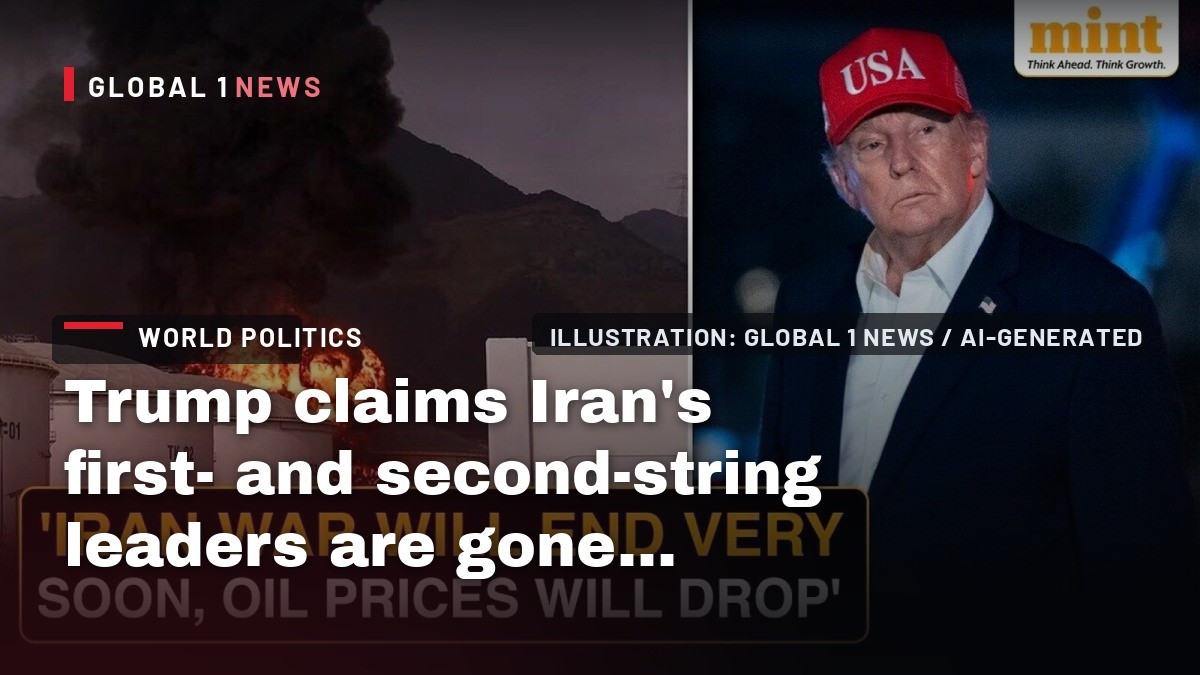
At a rally in Montana on 15 October 2026, former President Donald Trump asserted that the United States’ recent military campaign had effectively crippled Iran’s leadership and armed forces, declaring the nation no longer a “bully of the Middle East”. While the remarks were made in a domestic political setting, they reverberate across diplomatic, energy and security spheres that directly affect India’s strategic calculations. This article unpacks Trump’s statements, examines the evidence (or lack thereof) presented, and situates the claims within the broader context of U.S.–Iran relations, global oil markets and India’s own policy frameworks.
Trump’s Core Assertions About Iran’s Military Decimation
During the rally, Trump claimed that Iran’s “first‑string and second‑string leaders” had been eliminated, adding that half of its “third‑string leadership” was also gone. He further alleged that the Iranian navy no longer exists, the air force has been eradicated and the army is “decimated”. The former president emphasized that the country has “zero” fighter jets, describing them as “scattered in little tiny pieces all over the runways”. These statements were presented without any independent verification or reference to intelligence assessments.
Trump’s narrative framed the U.S. campaign as a decisive blow that has stripped Iran of its conventional military capabilities. He juxtaposed this claim with a rhetorical question about who the United States is actually negotiating with, implying that any diplomatic engagement would be with a weakened, perhaps even leaderless, Tehran.
Absence of Independent Evidence and the Role of Narrative
The rally remarks did not include any concrete evidence—such as satellite imagery, casualty figures or statements from defense analysts—to substantiate the extent of the purported damage. The source material notes explicitly that Trump “did not provide independent evidence during the rally to substantiate his claims”. This lack of corroboration is significant because, in the realm of international security, assertions about leadership decapitation and force degradation typically rely on classified intelligence or open‑source verification.
By making sweeping statements without supporting data, Trump is employing a narrative strategy that mirrors past political communication: simplifying complex military outcomes into binary outcomes (“gone” versus “not gone”). For Indian policymakers, who routinely assess U.S. statements through the lens of intelligence sharing and diplomatic briefings, such unsubstantiated claims demand cautious scrutiny.
Implications for U.S.–Iran Negotiations
Trump’s suggestion that Iran’s leaders are “gone” and that the country now asks only “Will you please allow us to live?” reframes the negotiation dynamic. If the Iranian leadership were indeed incapacitated, the United States could argue that Tehran’s bargaining position is severely weakened, potentially accelerating a settlement on contentious issues such as nuclear development. However, the source material indicates that Trump’s remarks were more rhetorical than policy‑driven, lacking concrete diplomatic proposals.
From an Indian perspective, any shift in U.S. negotiation posture could affect regional stability. India’s own diplomatic engagement with Iran—particularly concerning the Chabahar port, energy imports and the Belt and Road Initiative—relies on a predictable security environment. A sudden change in U.S. pressure could either open space for deeper Indo‑Iran cooperation or heighten tensions that spill over into the broader Gulf region, where Indian commercial vessels operate.
Oil Price Forecasts and Energy Market Dynamics
Trump linked the military campaign to oil price trajectories, predicting that prices would “drop like a rock” once hostilities end. He also claimed that “your prices have come way down” during the rally, suggesting a short‑term benefit to consumers. While the source material records these statements, it does not provide data on actual price movements or the extent of the anticipated decline.
India, as a net importer of crude, closely monitors such forecasts. A sharp fall in oil prices could ease inflationary pressures and reduce the fiscal burden of subsidies, aligning with the government’s broader economic objectives. Conversely, volatility induced by geopolitical shocks—such as a sudden escalation or an unexpected ceasefire—could disrupt supply chains and affect domestic refining margins. Indian energy policy, which emphasizes diversification through strategic reserves and renewable expansion, must therefore remain adaptable to these external price signals.
Strategic Context: Iran’s Military Capabilities Prior to the Campaign
Trump’s claim that Iran “doesn't have a Navy” and that its “air force” is nonexistent runs counter to publicly known capabilities prior to the 2026 campaign. Iran has historically maintained a modest navy operating in the Persian Gulf and a fleet of aging fighter jets, albeit limited by sanctions and maintenance challenges. The source material does not provide a comparative analysis of pre‑ and post‑campaign force structures, leaving the magnitude of degradation ambiguous.
For Indian defense analysts, the key question is whether the reported decapitation of leadership translates into a tangible reduction in Iran’s ability to project power or support proxy groups. Even with a weakened conventional force, Iran retains asymmetric tools—such as ballistic missiles, maritime militia and cyber capabilities—that can influence regional security dynamics. India’s own maritime strategy, which includes safeguarding sea lanes in the Indian Ocean Region, must account for these non‑conventional threats.
Domestic Political Motives Behind the Rhetoric
The rally took place in the context of a midterm campaign, a setting where political leaders often amplify achievements and frame narratives to energize supporters. Trump’s emphasis on the “very, very soon” end of the conflict and the portrayal of Iran as a diminished adversary serve to reinforce a narrative of decisive American action under his leadership. This political framing is consistent with his broader messaging that previous administrations “should have confronted Iran much earlier”. The source material highlights this as a “long‑overdue effort” to counter Tehran’s regional influence.
Indian observers of U.S. politics note that such rhetoric can influence congressional and public opinion, potentially shaping future funding for defense and foreign aid. A perception of a “finished” campaign might reduce pressure for continued sanctions or military assistance, thereby altering the strategic calculus for allies and partners, including India.
Policy Takeaways for India in 2026
While Trump’s statements lack independent verification, they underscore several policy considerations for India. First, the need for robust intelligence assessment to independently gauge Iran’s military status, rather than relying solely on U.S. political pronouncements. Second, the importance of maintaining flexible energy procurement strategies to mitigate price volatility that can arise from sudden geopolitical shifts. Third, the necessity of diplomatic agility: India must be prepared to engage with both Tehran and Washington, balancing its strategic autonomy with the realities of a potentially altered power balance in the Middle East.
Finally, the episode highlights the broader lesson that political rhetoric, especially when delivered in campaign settings, often simplifies complex security realities. Indian policymakers and analysts must therefore parse such statements critically, cross‑referencing them with on‑the‑ground data and regional expertise. By doing so, India can safeguard its national interests—energy security, maritime safety and regional stability—amid the evolving dynamics of U.S.–Iran relations.
This article was produced with AI-assisted research and editorial support. Reporting is based on the source material cited below. Sources: Livemint; livemint.com; Global1.News (16 October 2026).
By Dr. Raj Patel, Staff Writer
What's Your Reaction?
 Like
0
Like
0
 Dislike
0
Dislike
0
 Love
0
Love
0
 Funny
0
Funny
0
 Wow
0
Wow
0
 Sad
0
Sad
0
 Angry
0
Angry
0

India/South Asia Correspondent at Global1.News. Analytical voice with a background in science and health journalism. Based in New Delhi, covering Indian politics, education, healthcare, technology, and policy. Breaks down complex data into clear, actionable reporting.










Comments (0)