
The Trump-Xi Summit Exposed the Problems in China-US Crisis Management
In September 2026, President Xi Jinping’s visit to Washington concluded without a landmark agreement on trade or artificial‑intelligence safety, yet the diplomatic choreography revealed a deeper, less publicised fault line: crisis management between the United States and China.
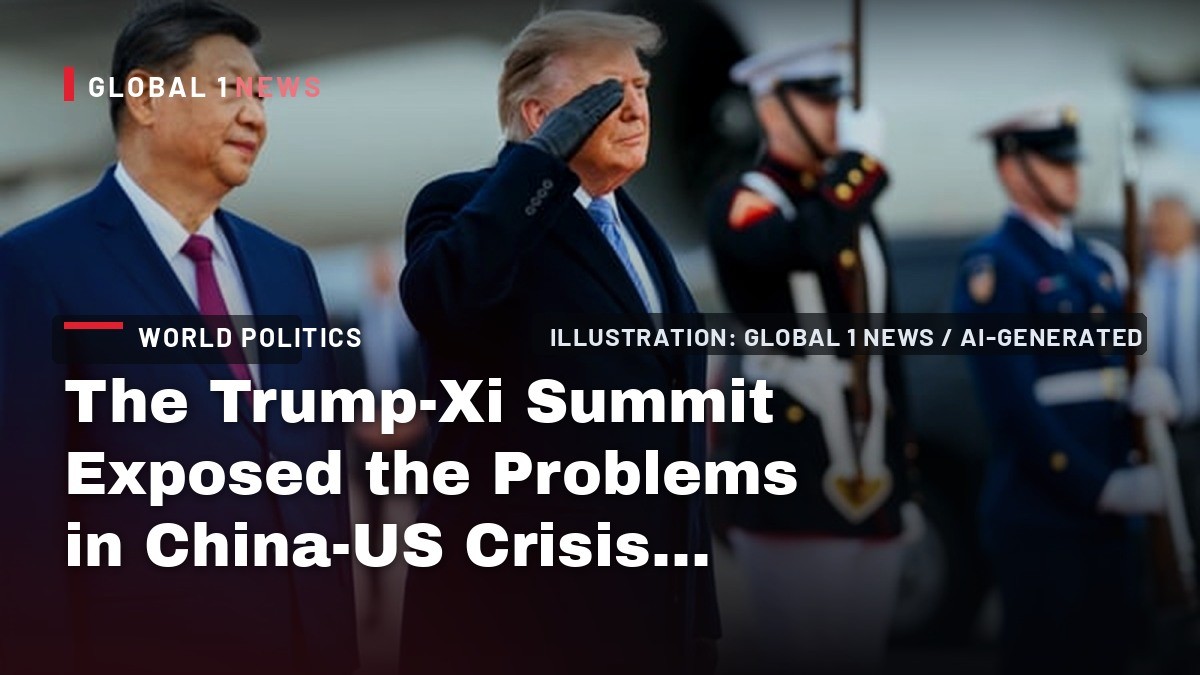
In September 2026, President Xi Jinping’s visit to Washington concluded without a landmark agreement on trade or artificial‑intelligence safety, yet the diplomatic choreography revealed a deeper, less publicised fault line: crisis management between the United States and China. While the ceremony and limited outcomes dominated headlines, the official readouts exposed divergent expectations over military communication—a gap that could prove decisive should a flashpoint erupt in the Indo‑Pacific.
Background: Existing Channels and Their Limits
Both capitals already possess a suite of mechanisms intended to prevent misunderstandings from spiralling into conflict. These include the long‑standing Defense Telephone Link, direct leader‑to‑leader contact, and regular meetings of senior defence officials. Moreover, the two sides have codified rules governing encounters at sea and in the air. In theory, such arrangements should provide a safety net when tensions flare.
In practice, however, the mere existence of these channels does not guarantee their activation in a crisis. Historical episodes illustrate that political friction can render them ineffective. After the 2022 visit of then‑U.S. House Speaker Nancy Pelosi to Taiwan, Beijing cancelled talks between theatre commanders and suspended other defence meetings as a protest. The interruption was not caused by the content of the military dialogue itself, but by the broader diplomatic fallout, demonstrating how quickly military contacts can become collateral in political disputes.
The September Summit’s Unfulfilled Commitment
During the September talks, Chinese officials announced that the two militaries had “agreed to sign a memorandum of understanding as soon as possible on strengthening crisis communication and prevention.” The White House fact sheet released after the meeting omitted any reference to this commitment, and a subsequent South China Morning Post report quoted a U.S. official denying that the discussion had taken place. This discrepancy highlights a fundamental obstacle: before any memorandum can be operationalised, both sides must first acknowledge that they have agreed to pursue it.
The lack of a shared baseline threatens to undermine the very purpose of a crisis‑management MoU. If one party proceeds under the assumption that an agreement exists while the other does not, the resulting misalignment could delay or block critical communications when they are most needed.
Procedural Delays in the Defense Telephone Link
The current Defence Telephone Link, while a valuable routine conduit, is ill‑suited for emergencies that demand immediate response. According to the International Crisis Group, arranging a call typically requires 48 hours’ notice, after which the counterpart has an additional 24 hours to reply. Such lead times are acceptable for scheduled meetings but become problematic in fast‑moving incidents—such as a potential aircraft collision in the South China Sea—where commanders must decide within minutes.
Past incidents underscore this vulnerability. In the 2001 EP‑3 collision, U.S. officials struggled to reach Chinese counterparts for the first twelve hours, receiving scant replies and little insight into Beijing’s handling of the crisis. More recently, after the U.S. shot down a Chinese surveillance balloon in early 2023, the U.S. defence secretary’s request for a call was reportedly rejected by China, leaving both sides without a rapid communication pathway.
Proposed Reforms: An Emergency Acknowledgement Protocol
Analysts suggest that a revised MoU should embed a simple, time‑bound acknowledgement mechanism. The proposal calls for the receiving officer to confirm receipt of an urgent message within thirty minutes, without committing to a substantive response or admitting fault. This “receipt‑only” step would allow the sending side to know its warning has been heard, while the receiving side retains the latitude to consult superiors before formulating a full reply.
Such a protocol respects the hierarchical decision‑making processes typical of both militaries. For Beijing, acknowledging a message does not equate to endorsing its content; it merely signals that the communication channel is open. This could prevent situations where Washington remains uncertain whether its warning has been ignored, thereby reducing the risk of miscalculation.
Simulation Exercises: Testing the System Before Real Crises
The International Crisis Group recommends joint crisis‑simulation exercises to expose procedural bottlenecks. A hypothetical aircraft collision over the South China Sea could serve as a test case ahead of the upcoming Trump‑Xi summit at the APEC meeting. In such an exercise, the U.S. would initiate a test call following standard procedures, and Chinese officials would respond, allowing both sides to measure the latency of the acknowledgement process.
These drills would illuminate how long it takes for a message to reach the officer responsible for answering it, and whether internal consultation requirements cause unacceptable delays. By making these gaps visible, the two militaries could negotiate practical adjustments—such as pre‑authorised emergency contacts or streamlined approval chains—to ensure that urgent alerts are not lost in bureaucratic red tape.
Separating Crisis Communication from Broader Disputes
A crucial design principle for any emergency channel is to keep it narrowly focused on the immediate incident. The proposed MoU emphasises that during a crisis, both sides should share essential facts: the location of the event, any casualties, and the likelihood of further contact. Broader strategic disagreements—over Taiwan, technology restrictions, or force deployments—should be addressed through existing diplomatic and defence channels, not conflated with emergency messaging.
By compartmentalising urgent operational data from political contention, senior officers can act swiftly without waiting for progress on unrelated issues. This separation also reduces the risk that a single flashpoint becomes a flashpoint for wider diplomatic escalation, preserving a functional line of communication even when overall relations are strained.
Outlook: From Symbolic Dialogue to Functional Safeguards
President Xi’s remarks in Washington called for “regular dialogue” and improved crisis‑communication mechanisms, signalling top‑level endorsement of the concept. Yet the mixed signals between the Chinese readout and the U.S. fact sheet reveal that leader‑level intent does not automatically translate into concrete progress. The forthcoming Trump‑Xi summit at APEC will test whether both sides can move beyond symbolic statements to a mutually recognised, operationally viable framework.
In the absence of a clear, shared commitment, the risk remains that existing channels will be sidelined when political tensions flare, leaving commanders to make high‑stakes decisions with limited insight into the opponent’s intentions. The proposed thirty‑minute acknowledgement protocol, coupled with joint simulation exercises, offers a pragmatic pathway to bridge this gap. If adopted, it could transform crisis communication from a diplomatic afterthought into a reliable safety valve, reducing the chance that a mis‑managed incident escalates into a broader confrontation in the Indo‑Pacific theatre.
This article was produced with AI-assisted research and editorial support. Reporting is based on the source material cited below. Sources: The Diplomat; thediplomat.com; Global1.News (16 October 2026).
By Kenji Tanaka, Staff Writer
What's Your Reaction?
 Like
0
Like
0
 Dislike
0
Dislike
0
 Love
0
Love
0
 Funny
0
Funny
0
 Wow
0
Wow
0
 Sad
0
Sad
0
 Angry
0
Angry
0

Japan Correspondent at Global1.News. Tokyo-based voice covering Japanese politics, technology, economy, and culture. Tracks the intersection of tradition and innovation in one of the world's most dynamic societies.












Comments (0)